Writing
No description available.
The Man Who Became Cabinet tells the story of an employee who, so obsessed with the routine and mechanical tasks of his work environment, eventually becomes one of the cabinets in the office.
At home, he begins a trilogy of long-term travel diaries, successful by Desertum and Exodus. I return to my parents' house, where I was born, after ten years away. What is there of me in the rooms of this house, in every corner? What are the traces of me? This search for an origin is done without psychology, but through a materialist cinema, with long-term still camera shots. The memories of the house are implicitly evoked through a radical look at its physical architecture, filled with an almost total emptying of the human figure. In a way, Em casa is an extension of the formalist researches such as Entremeio, but here the rigor of the structure that decomposes the house into presentation rooms opens up as the film continues, advancing to the outskirts of the house, and later culminating in a synthesis plan, the final plan.
(Anti)travel diary to the island of Florianópolis. Time, physical places and distance from oneself. A foreign film.
Based on a montage of mandatory political propaganda for the 1989 presidential election, the film presents a debate on politics in the country through a reflection on the speeches of the main candidates.
To be there is not to be here, is to be nowhere. Time, physical locations and distance. The foreigner is absent from himself. The author is the foreigner of foreigners. "I'm looking for a man I don't know, who's never been more myself since I started looking for him." Edmond Jabes
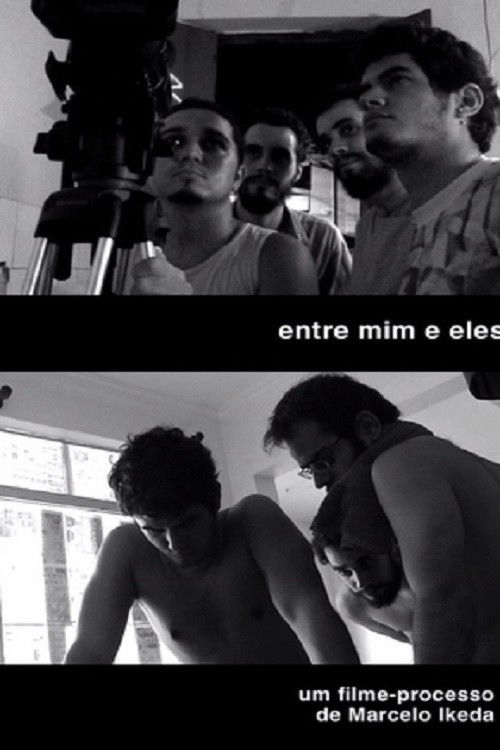
Four friends get together to make a movie. And I watch them. An essay-film about the filming process of Os monstros, by Guto Parente, Luiz and Ricardo Pretti and Pedro Diógenes (Alumbramento Filmes). A letter-film, a diary-film, an essay-film, an archive-film, a garage-film.
An old man is tired of celebrating his birthday.
The daily grind, saying goodbye to family, and a woman's dreams.
I love you. I need to love you.
Based on a montage of mandatory political propaganda for the 2014 presidential election, the film presents a debate on the political direction of the country through a reflection on the speeches of the main candidates and the role of image in the construction of these speeches.
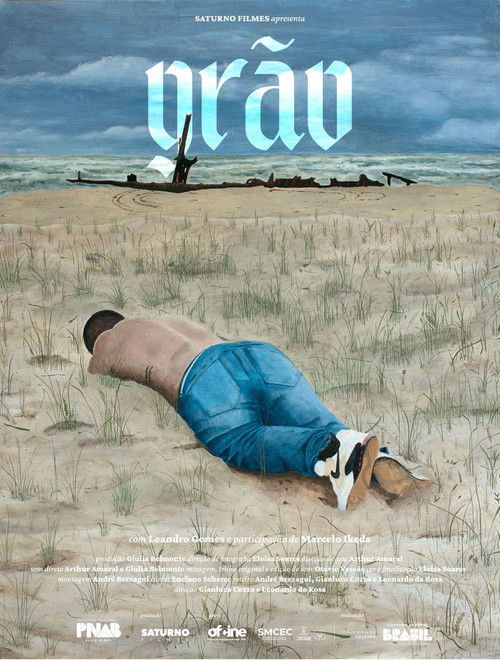
In a port in the far south of Brazil, Leandro makes a living informally collecting soybeans that were lost during transport. But the crisis gripping the country puts his livelihood at risk. Without prospects, he wanders around in his car with the music blasting. Late into the night, he sets out in search of company, but nothing goes as planned.