Kit Fitzgerald
Directing
Known For

An avant-garde omnibus that features works by off-the-wall artists in many different disciplines.
Alive from Off Center
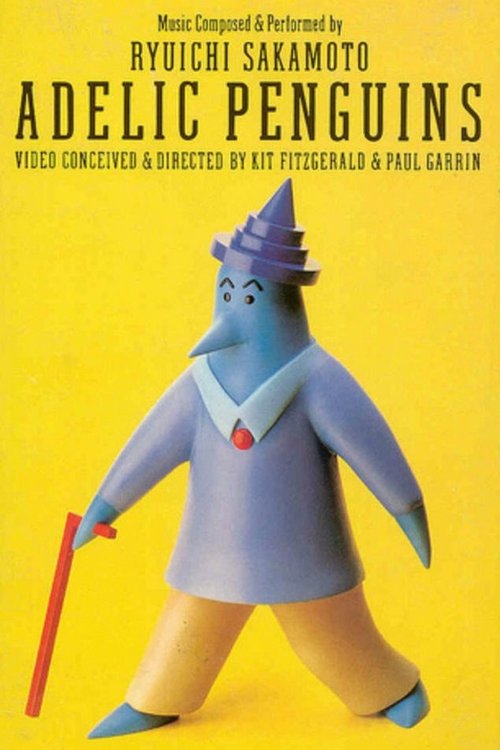
Originally commissioned by the Sony Corporation of Japan and performed live on the JumboTRON, a fourteen-story TV set at the Expo in Tsukuba, Japan, Adelic Penguins is a collaboration between Fitzgerald, artist Paul Garrin, and composer Ryuichi Sakamoto (who also appears as a performer). Structured in six segments, this technical tour-de-force is a pyrotechnic fusion of sound and image, in which the dynamic visual imagery fully complements and heightens Sakamoto's staccato, percussive score. Fitzgerald and Garrin merge terrestrial and interplanetary worlds, in which Sakamoto's figure becomes an integral part of the landscape. Set aloft in the surreal world of the artists' invention, Sakamoto dances, floats and walks through a hyperkinetic universe.
Adelic Penguins
With HOW TO FLY, Bowes abandoned plot entirely, finding other forms of structure. He wanted to show that stories do not have to obsessively organize and explain data, and that television’s hundreds of simultaneous, fragmented narratives – news, fiction, commercials, sports, etc. – had prepared audiences for this new type of structure. — Charles Ruas
How to Fly
Commissioned for the 1980 Winter Olympic Games in Lake Placid, New York, Olympic Fragments is a taut, expressive reinterpretation of athletic movement, a tour-de-force of dynamic editing and post-production techniques. Through sophisticated visual and aural juxtapositions, Fitzgerald and Sanborn isolate the gestures and movements of athletes in a controlled, powerful display. Eschewing the "thrill of victory" tradition of broadcast television sports coverage, they allow a portrait of individual skill and grace under pressure to emerge from their manipulation of highly fragmented and choreographed imagery — what they term the "skill, beauty and sheer joy of kineticism.
Olympic Fragments
A short survey of the small-gauge narrative film, beginning with the Kuchars' Sylvia's Promise (1962). Primarily focused on East Coast artists, the work of Eric Mitchell, Manuel DeLanda and Ericka Beckman is highlighted.
The Super-8 Show: Beyond Home Movies
This is a documentary about video artists Bill & Louise Etra, Woody & Steina Vasulka, and Kit Fitzgerald & John Sanborn.
Group Portrait: Six Artists in Video
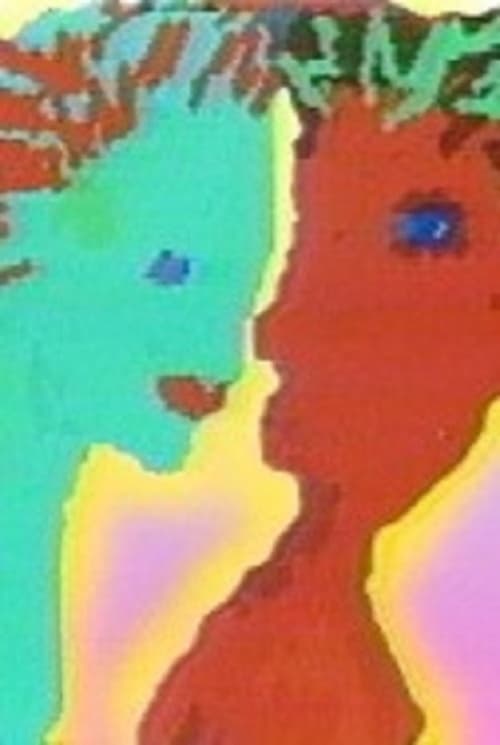
In this vibrant moving painting, Fitzgerald animates her video canvas with symbols of love and romance. Set to original music by Peter Gordon, Romance merges vivid expressionistic imagery of men, women and animals with landscape. Her strong palette of color unfolds across screen, palpitating with organic form. With a witty visual style reminiscent of Paul Klee, Fitzgerald evokes sexual passion, romantic love and conflict.
Romance
No description available.
Processing the Signal
This work explores perception, time and memory, based on the concept that "science has yet to determine the actual resolution of the eye." Using time-lapse, slow dissolves, and ghostly, ephemeral images, the artists manipulate linear time and dimensionality. Evoking subconscious memory, Remains Vivid recalls childhood experiences through use of the "after-image," while Over/Time subtly transposes physical and temporal distance as contrasting, equally resonant landscapes. POV explores the subjective eye versus the camera eye, and the nature of artistic creation. Using a split-screen technique, Similar Nature dissects the activities of four people in a study of time, motion, and simultaneity of gesture. Sax and Violins is a conflation of sound and fragmented image in which the musicians perform separately and are brought together only in the post-production process.
Resolution of the Eye
Employing single-frame edits from broadcast television, the artists construct a rapid-fire media barrage of sound and image.
Black & White
Holy Cross is the first in a series of video paintings that Fitzgerald generated with the Fairlight Computer Video Instrument and then manipulated in real time. Fitzgerald writes that "Holy Cross encompasses apocalyptic images of religion, repression and universal destruction, with the underlying question, 'Is religion salvation or an age-old provocateur of death and destruction?'" Highly gestural, at once vividly colorful and ominously dark, this work reveals the gesture of the human hand through a maelstrom of electronic brush strokes evocative of Expressionist painting.
Holy Cross
Rife with feeling and movement, Video Drawings is an expressionistic, animistic work that evokes the human condition. Created and then manipulated in real time with the Fairlight CVI, and scored to haunting Senegalese music (with Peter Gordon on saxophone), Fitzgerald's painterly landscape suggests human and animal life, suffering, destruction and hope through a cacophony of shifting, organic shapes and bright colors. The sensuous and harrowing images coalesce to form a video lament of emotional power.