Christian Bau
Directing
Biography
Christian Bau is a German film director, cinematographer and film producer.
Known For
Detective Peter Flowers has to deal with Nola, the "most beautiful and corrupt woman in the world"...
Blinker
The filmmaker Monika Treut documents in this very personal film her travels, which she undertook between 1999 and 2002. She attended film festivals in metropolises on all continents, from San Francisco to Jerusalem, from Rio de Janeiro to Paris and Jerusalem, where she tried to capture the social and political peculiarities of the respective country.
Axensprung
A documentary about the 'critical mass', the Film Coop, a group of young filmmakers in Hamburg during the 1960s - a small group far from the Mainstream or the New German Cinema.
The Critical Mass
Short-documentary about the squat at Amandastraße 73 in Hamburg.
Amandastraße 73
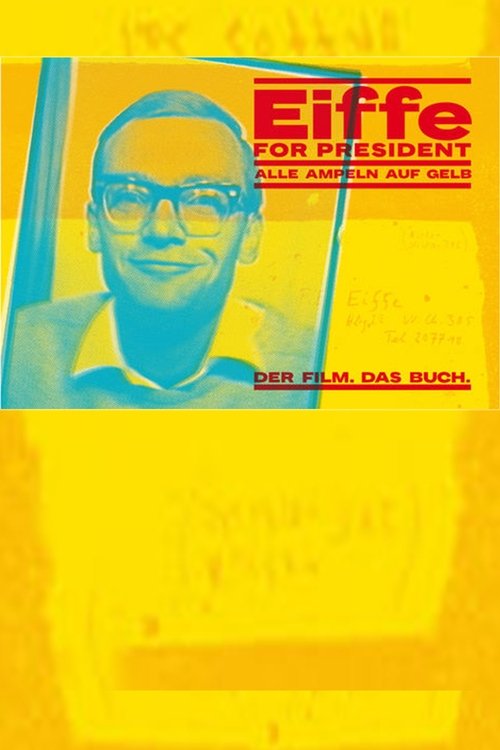
In May 1968, no one passes him by: day and night, Peter Ernst Eiffe, who grew up in a Hanseatic family, is on the road in Hamburg with the felt-tip pen and covers toilets, traffic signs, mailboxes with his sayings. Presumably he is the first graffiti tagger in Germany. Highlight of his career: He drives a Fiat Topolino into the Wandelhalle of the main station and proclaims the "Free Republic of Eiffe". Forcibly admitted to psychiatry, he founded the party »Eiffe Brothers«. Christmas 1983 he escapes from the institution and is found frozen months later. In the 1990s, the filmmaker Christian Bau and Artur Dieckhoff began to deal with Eiffe.
Eiffe for President - Alle Ampeln auf Gelb
Before a figure skating championship, a television announcement reminds young girls about the emancipation of women.
Programmhinweise
Three police officers are visiting the construction site of their new guard. The citizen-oriented official shows destroyed glass tiles at the back of the station and tells of his experiences with dogs in the new development area. His colleague demonstrates his new bulletproof vest. A supervisor talks about his fears, the term prevention and draws a positive balance of the work of the police. A normal day.
Allermöhe Film #5
Five young men ride their bicycles through the city, each of them having a piece of a huge movie advertisement attached to his bike.
Anfangszeiten
In 1922, Max Ernst produced a painting entitled “The Rendezvous of Friends”. In surrealist style, it shows his friends from Paris - including Robert Desnos, Hans Arp, Paul Éluard and André Breton - all avant-gardists. The documentary follows the painting's journey from the artist's easel to the Museum Ludwig.
Rendezvous der Freunde
A movie that shows conversations with a friend. It longs for clarity, not necessarily wisdom; he is looking for connections that give him meaning. This film gives reason to think about why young people go to the Hitler Youth in the early 1930s and find what they are looking for there.
Wiedersehen
Film about the Hamburg district of Ottensen and the resistance of the residents against the planned renovation. It was shot from 1972 to 1975.
Ottensen kämpft, wenn das so kommt
After the Fukushima disaster, a new word was created in the Japanese language, in the calligraphy composed of the terms "atom" and "divorce". Christian Bau created this word in 2011 on the east coast of Japan.
Snapshot Mon Amour
“Should one turn to high culture, dive into the armed underground, or rather enjoy life?” A perplexing dilemma between art, war, and sex, filmed in 1969 on the stage of the auditorium at the Hamburg University of Fine Arts; the two main actresses were the university's nude models.
Kubla Khan
A whimsical depiction of the Hamburg city port (life?).
Sabotage an Dock 11
The attempt to deal with a magazine format. Topic: Work situations. "We had a binding structure. From the idea to completion four weeks à five working days. The beginning was the 1. May, we finished in time; hence the title. Nevertheless, it is not only the result of a concept, but also the masterpiece of several years of cooperation.
Mai Tape

Documentary to prevent the closing of the Thedebad in Hamburg-Altona.
Thedebadfilm

On the occasion of the »Construction Days« in the autumn of 1969, the Hamburg Building Authority commissioned five HFBK film students to film one Hamburg commercial each. Christian Bau opted for a critical portrait of Osdorfer Born, Hamburg's first large-scale, prefabricated housing estate, which had been built from 1967 by Neue Heimat, SAGA and other housing companies on the western edge of the city. The images, shot on 16mm, were accompanied by interview passages and a text taken from SAGA's housing construction program. The client was less than enthusiastic, the film disappeared into a closet for decades and can now be shown for the first time in the cinema.
Osdorfer Born. Werbefilm für die “Hamburger Bautage 1969”
During an art auction, at which Gerhard Richter's “Abstraktes Bild (H.M.)” is being offered for sale, a photo of a dead man appears on the livestream. A paranormal phenomenon?
Dead on Livestream
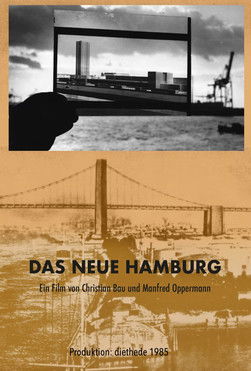
In 1937, on behalf of Hitler, a competition was announced among the most important architects in Germany. The task was the redesign of the Hamburg Elbe bank. The face of the city was to be moved from the Alster to the Elbe. In addition to Berlin, Linz, Nuremberg and Munich, the Hanseatic city was thus declared a "Führerstadt". Representation and administrative buildings for the party and the private economy were to be created. The architects involved in the project are interviewed. They reflect their activity and function at that time.
Das neue Hamburg
Emilia Klein from Norilsk, Siberia, and her daughter Christina have organized a dance group in Allermöhe. 300 girls and boys participate, and the trend is increasing.