Françoise Mallet-Joris
Writing
Biography
Françoise Mallet-Joris (6 July 1930 – 13 August 2016), pen name of Françoise Lilar, was a Belgian author who was a member of the Prix Femina committee from 1969 to 1971 and appointed to the Académie Goncourt from November 1971 to 2011. Françoise-Eugenie-Julienne Lilar was born on 6 July 1930 in Antwerp. She was the first child of writer Suzanne Lilar (first woman admitted to the Antwerp Bar) and Albert Lilar, Belgian Minister of Justice and Minister of State. Françoise was also the older sister of Marie Fredericq-Lilar, an 18th century art historian. The household was French-speaking, but Françoise picked up Flemish from a maid. As a teenager, Lilar was quite rebellious, and desperately sought her independence from her parents. To defy them, she began dating an older man, playwright Louis Decreux. When her parents found out, they sent her to Bryn Mawr College in Pennsylvania, but it didn't last long. To further annoy her parents, she married a Yale graduate student, Robert Amadou in 1948. The same year, Lilar gave birth to their son, Daniel Amadou. Robert Amadou was French, and through him, Lilar gained French citizenship. After obtaining that, Lilar and Amadou divorced. During her time in Paris, Lilar attended the Sorbonne. Around this time, Lilar and her parents reconciled their relationship. Lilar began her literary career with the publication of Le rempart des Béguines in 1951. She published under the name Françoise Mallet to avoid embarrassing her family, due to the novel's scandalous (lesbian) content. Later on in her career, however, she altered her penname to Françoise Mallet-Joris so as not to be confused with Robert Mallet. Le rempart des Béguines was translated and published in America as The Illusionist and later on it was reprinted under the titles Into the Labyrinth and The Loving and the Daring. It is set in a town that resembles Mallet-Joris' native Antwerp and addresses the themes of social class and lesbianism. She followed her first work with a sequel in 1955 named La chambre rouge, in English; The Red Room. In it, she focused less on lesbian themes but continued her treatment of social class and norms in Belgium. Lilar became quite a prominent literary and public figure in France. As her career progressed, she mostly abandoned her Belgian roots, instead opting for a very Parisian career. Her last novel, Ni vous sans moi, ni moi sans vous, was published in 2007. Mallet-Joris' novels frequently deal with interpersonal relationships and social class in France and Belgium. Often, characters must deal with disappointment as they realize they have unrealistic expectations. She also depicts social climbers and deceitful characters. In Allegra (1976) Mallet-Joris tackled the themes of racism and feminism in France. She has also written works of non-fiction, like The Uncompromising Heart: A Life of Marie Mancini, Louis XIV's First Love in 1964, and she has written essays about her philosophy of life and writing in Lettre à moi-même (A Letter to Myself) in 1963 and La Maison de papier (The Paper House) in 1970. Source: Article "Françoise Mallet-Joris" from Wikipedia in English, licensed under CC-BY-SA 3.0.
Known For

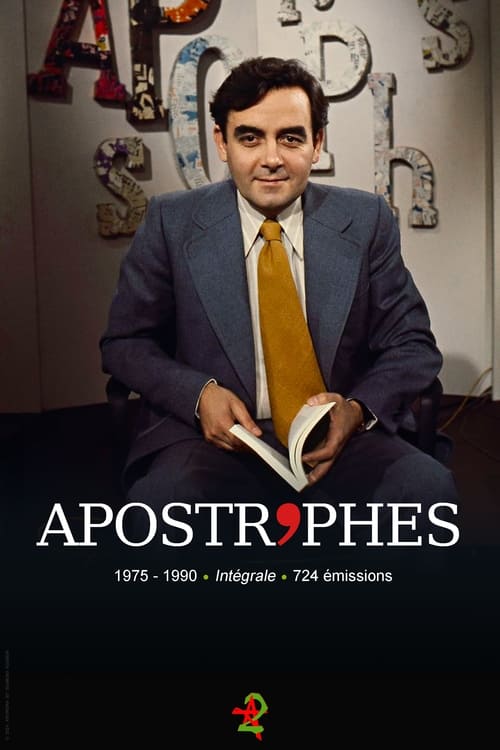
Apostrophes was a live, weekly, literary, prime-time, talk show on French television created and hosted by Bernard Pivot. It ran for fifteen years (724 episodes) from January 10, 1975, to June 22, 1990, and was one of the most watched shows on French television (around 6 million regular viewers). It was broadcast on Friday nights on the channel France 2 (which was called "Antenne 2" from 1975 to 1992). The hourlong show was devoted to books, authors and literature. The format varied between one-on-one interviews with a single author and open discussions between four or five authors.
Apostrophes

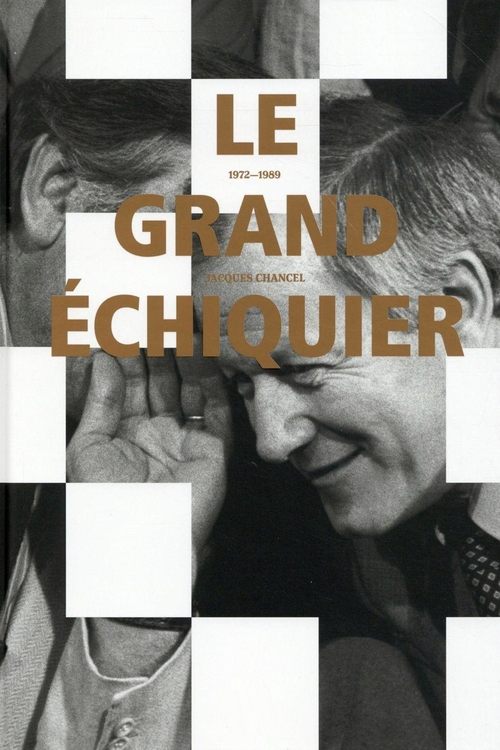
Le Grand Échiquier is a French variety television program created and presented by Jacques Chancel. It aired at 8:30 pm on the first channel of the ORTF from January 12, 1972 to July 12, 1972, then on the second color channel of the ORTF from September 1972 to December 1974, and finally on Antenne 2 from January 1975 to December 21, 1989. The program returned to France 2 on December 20, 2018 and is hosted by Anne-Sophie Lapix.
Le Grand Échiquier
No description available.
Midi trente
No description available.
Samedi soir

No description available.
30 millions d'amis
No description available.
Matin Bonheur

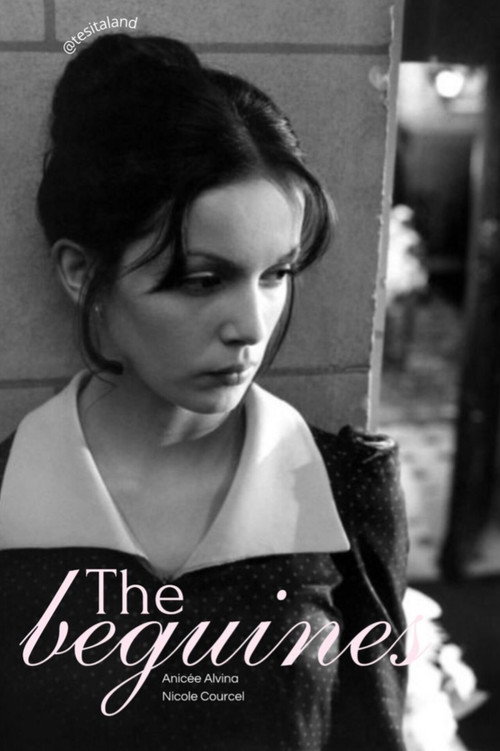
Hélène, a fragile and romantic teenager, discovers that her father, a rich business man, has a mistress. Curious, she decides to go and meet this woman who is described as strange. At the first chance she has she goes to her house in the Ramparts of Béguines... from then on she goes back often, discovering a new world of artists and nightowls where she also experiences love in the arms of Tamara.
The Beguines

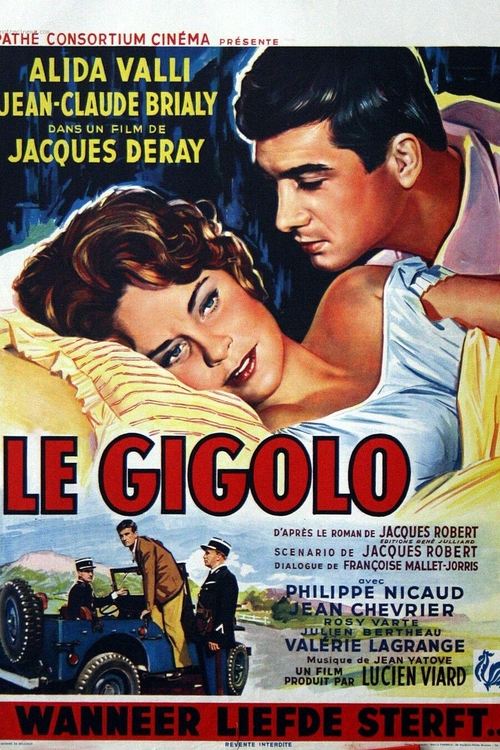
Agathe Perrin, a wealthy widow in her forties, lives with her ailing father in an estate on the shores of Lac du Bourget, not far from Aix-les-Bains. For the past four years, she has been involved in an affair with a twenty-four-year-old artist, Jackie, that is beginning to weigh heavily on her. The frequent visits of a brilliant Aix doctor to the sick old man's bedside have distracted Agathe from her very young lover. She'd like to send him away, but he clings to her desperately, and we witness the drama of this break-up, both feared and rejected by Agathe. Blinded by jealousy, Jackie decides to leave, but not without behaving like a spoiled, insolent child.
The Gigolo

Due to a garbage strike, inmates are called in to take care of the garbage collection. Taking advantage of this unexpected situation, three of them manage to elude their guards.
Work and Freedom
Françoise Sagan, Clara Malraux, Henriette Jelinek, and Françoise Mallet-Joris share their views on literature and discuss what drives them to write.
Femmes écrivains

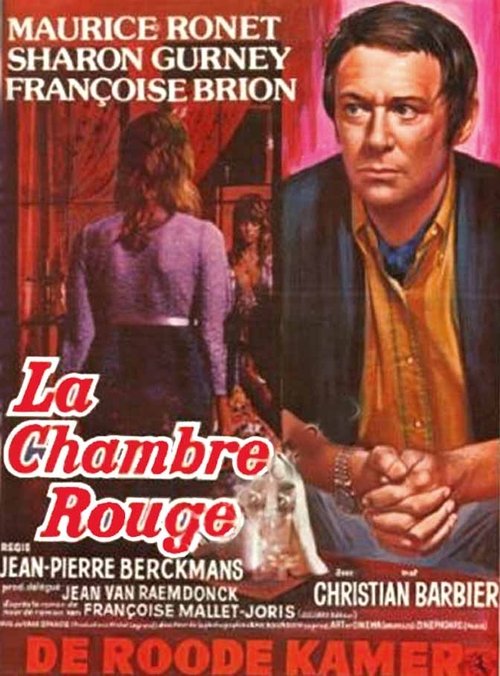
Hélène Noris, a young Belgian woman from a bourgeois family, is haunted by a past affair with Tamara — now married to her father. Torn between desire and resentment toward Tamara’s conformist life, Hélène feels alienated in the provincial world she inhabits. To boost his social image, her stepfather René invites Parisian director Jean Gerfaud to stage an avant-garde version of Tartuffe. Tamara flirts with him, but Hélène seduces him first. A passionate, destructive affair begins, entangling love, jealousy, and ambition. When the play’s scandalous premiere sparks outrage, Jean marries Hélène, provoking Tamara’s fury. Yet Hélène, restless and defiant, betrays him with a soldier. In rage and humiliation, Jean confronts her in the “red room,” the space that once embodied their love and now their ruin.
The Red Room

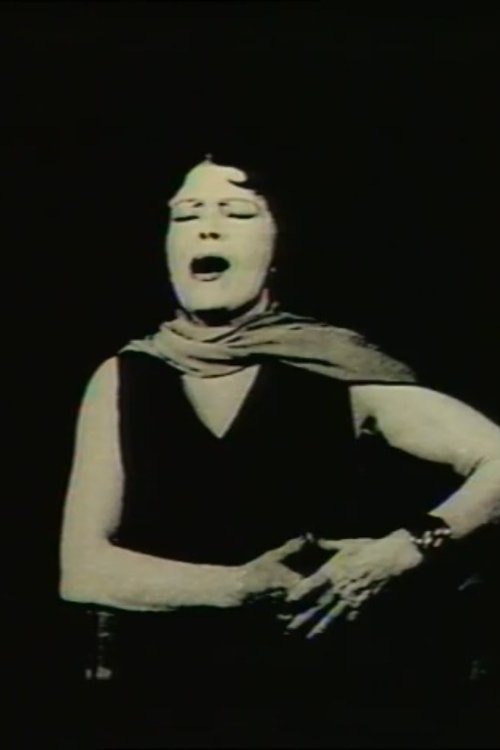
Documentary on the singer Damia made for TV.