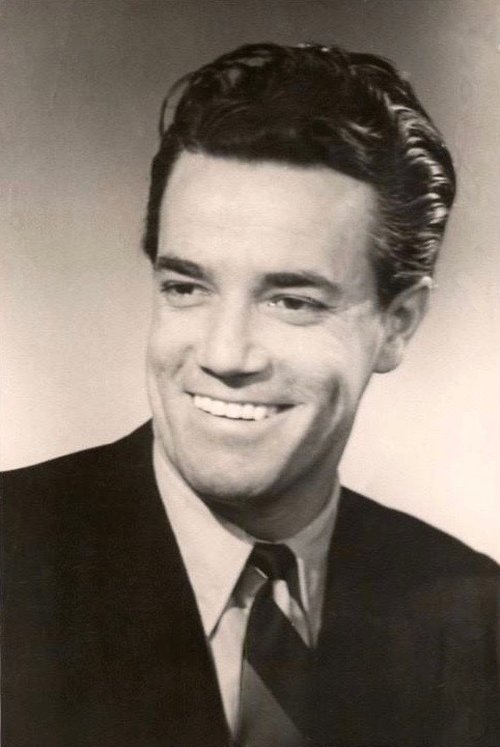
Henri Betti
Sound
Biography
Henri Betti, born Ange Betti (24 July 1917 – 7 July 2005), was a French composer and a pianist. Pianist and composer of Maurice Chevalier from 1940 to 1945, Henri Betti is best known for composing the music of the songs C'est si bon (lyrics by André Hornez), What Can I Do? (lyrics by Édith Piaf) and The Windmill Song (lyrics by Jacques Plante) that were performed by Yves Montand. Henri Betti was born at 1 rue Barillerie in the district of Vieux-Nice in a modest family : his father was a house painter and his mother was a fishmonger. His paternal family originates from the region of Emilia-Romagna in Italy: his grandfather was born in Parma and he immigrated to Nice with his wife and children in 1893. In 1935, he entered at the Conservatoire de Paris which is then directed by Henri Rabaud where he studied music in the same class as Maurice Baquet, Paul Bonneau, Henri Dutilleux and Louiguy. He is the student of Lazare Lévy for piano class and Raymond Pech for harmony class. He won a prize of harmony in 1937. He then headed for a classical pianist, but in 1940, when he has been discharged from military service of Fortified Sector of the Dauphiné in Briançon, he crosses the Corsican composer Roger Lucchesi on the Promenade des Anglais, who told him that he composed a song for Maurice Chevalier and asked him to accompany him to the piano when he the present him in his property La Louque in Cannes. Maurice Chevalier refuse the song but to ask Henri Betti be his regular accompanist. During the singing tours, he will make him play the Ballade No. 1 in G minor, Op. 23 by Frédéric Chopin between songs. Anxious to renew his repertoire, he also asked him to compose songs. Henri Betti then wrote music forty songs with the lyrics of Maurice Chevalier and Maurice Vandair until 1945 that Notre Espoir and La Chanson du maçon in 1941 or La Fête à Neu-Neu in 1943. Of the fifteen securities singing tour of Maurice Chevalier in 1945, Henri Betti sign fourteen. He joined the SACEM in 1941 as composer and was appointed Sociétaire définitif in 1949. After World War II, he knows great success with Le Régiment des mandolines in 1946 and Le Chapeau à plumes in 1947 for Lily Fayol, Mais qu’est-ce que j’ai? in 1947, Maître Pierre and Rien dans les mains, rien dans les poches in 1948 for Yves Montand and especially C'est si bon in 1947 for Jean Marco with Jacques Hélian and his Orchestra. The song is sung by Yves Montand before becoming a standard international jazz with Louis Armstrong, who recorded for the first time in New York in 1950 in the English version of Jerry Seelen. From 1949 to 1983, his music production is abundant: revues for Le Lido, the Moulin Rouge, the Folies Bergère, the Olympia, the Stardust and the Tropicana in Las Vegas, and many operettas and plays. ... Source: Article "Henri Betti" from Wikipedia in English, licensed under CC-BY-SA 3.0.
Known For

No description available.
Discorama

No description available.
La Chance aux chansons
No description available.
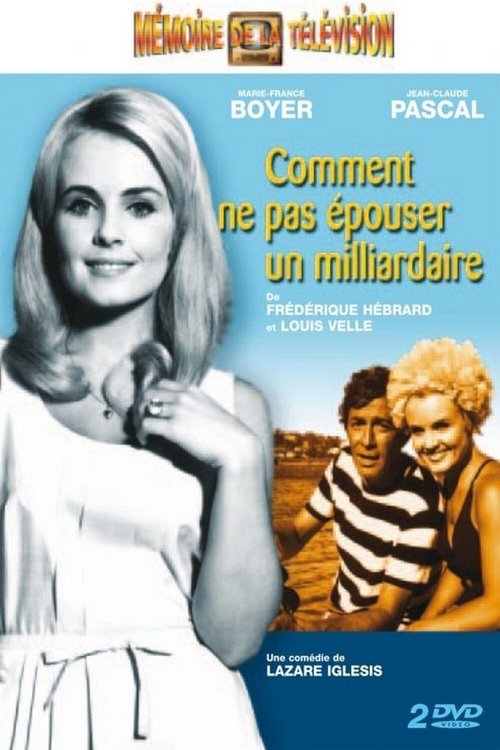
Comment ne pas épouser un milliardaire

New Faces was a musical revue with songs and comedy skits tied together by a quirky plot. It ran on Broadway for nearly a year in 1952 and was then made into a motion picture in 1954. It helped jump start the careers of several young performers including Paul Lynde, Alice Ghostley, Eartha Kitt, Carol Lawrence, performer/writer Mel Brooks (as Melvin Brooks), and lyricist Sheldon Harnick. The film was basically a reproduction of the stage revue with a thin plot added. The plot involved a producer and performer (Ronny Graham) in financial trouble and is trying to stave off an angry creditor long enough to open his show. A wealthy Texan offers to help out, on the condition that his daughter be in the show.
New Faces
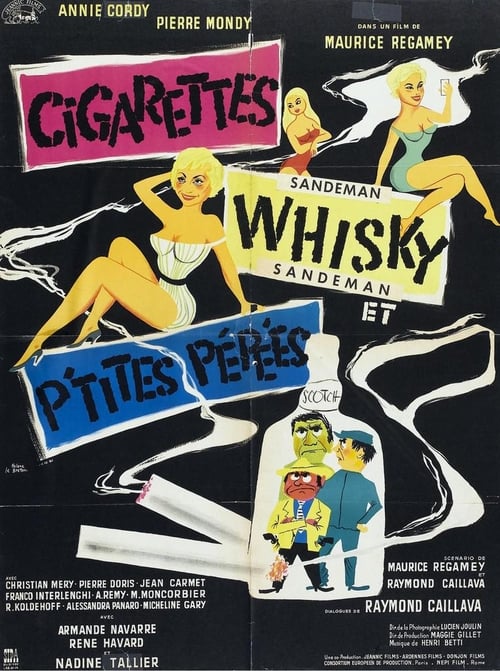
Martine runs a sports center for women ,but they are short of the readies. To avoid seizure,she turns her health club into a nightclub with plenty of whiskey and wild women.
Cigarettes, Whiskey and Wild Women
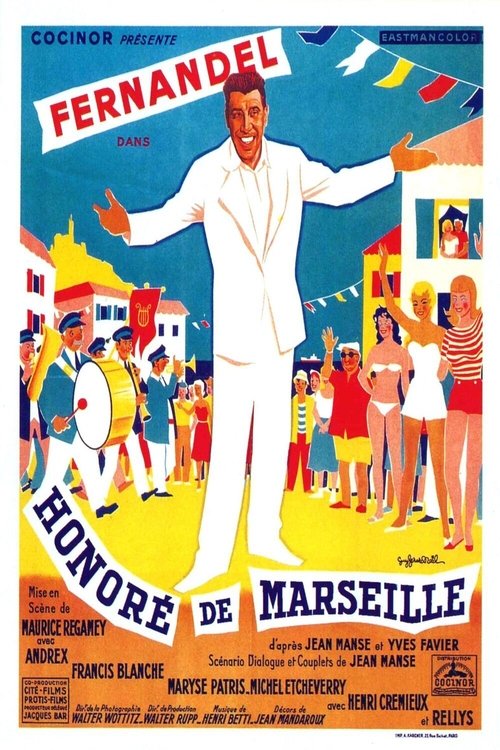
As he explains to the journalist who came to interview him, Honoré cultivates, as a perfect Marseillais, farnienté and galéjade. He evokes the Phocaean Protis, who founded the city of Marseille, and the Roman Honorius, who invented pétanque. He loves to go fishing with his friends Garrigue and Watermelon to prepare a good bouillabaisse, and even more, to rig the results of a vote to allow a little protégée to be crowned Miss flots bleus.
Honoré de Marseille
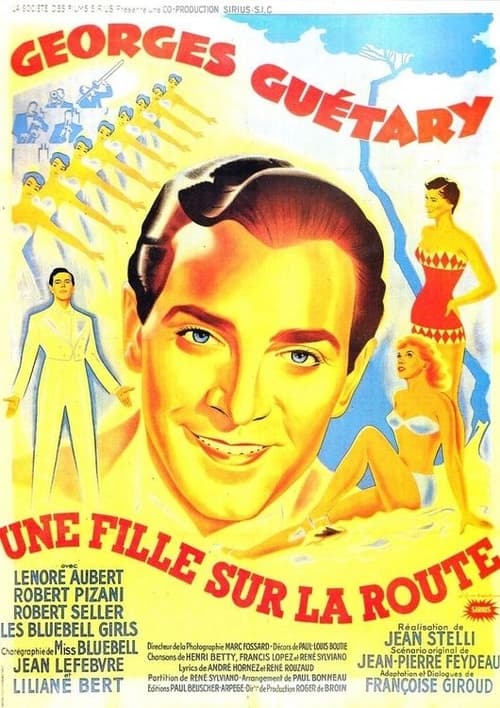
To escape his female fans, Carlos Cortez makes for the Riviera. Along the way, he picks up a hitchhiker named Annabel who invites him to go camping with her friends. Living under his real name, the incognito star wins new friends. But a theft complicates things. Fortunately, Annabel is still around and Jacques can do no better than to marry her.
A Girl on the Road
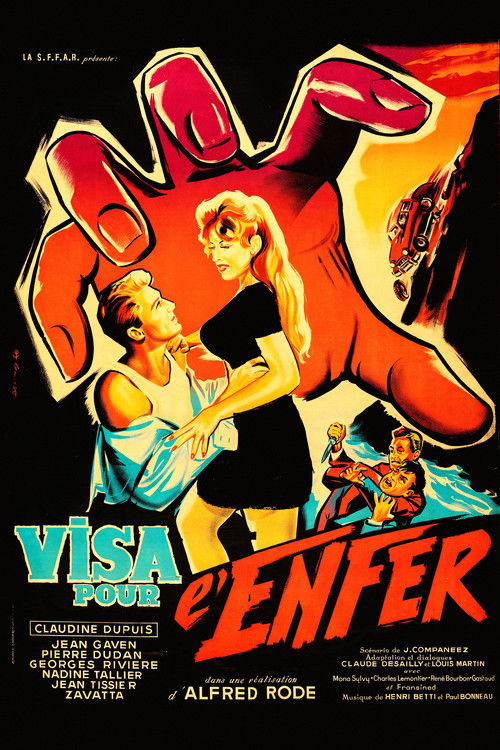
The action takes place on the coast of the eastern Pyrenees near the Spanish border. Mario Balducci escaped from prison, after settling his account with his former accomplice who had given him away, he joins his ex-mistress, Mado, a bellowing singer who he asks to help him get to Spain.
Visa to Hell
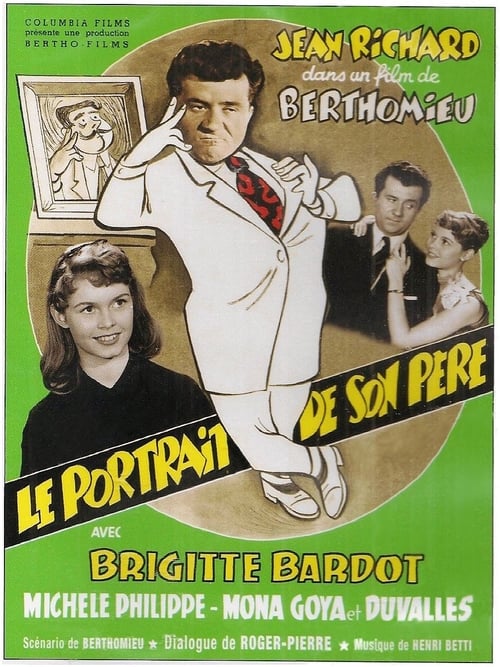
Paul has to leave his country home to collect his father's inheritance of a department store. A natural-born son, Paul's stepmother gives him a cold reception, and he's appalled by the behavior of his half-sister Dominique, an existentialist of the highest order. Paul's gumption restores the Galeries Parisiennes to its former glory, and he gives a farewell present to a more subdued Dominique. He returns to his village, arm in arm with the wise Marie-Louise, ex-saleswoman at the Grand Magasin.
His Father's Portrait

While Ludovic Dubois, a young summer camp monitor in Saint-Benoît, entertains the children by playing Robin Hood, the lord's niece is kidnapped by her uncle, in the castle next door. Helped by the children and the customs inspector, the last of the Robin Hoods will free the "Princess Isabelle", and will end up marrying her.
The Last Robin Hood
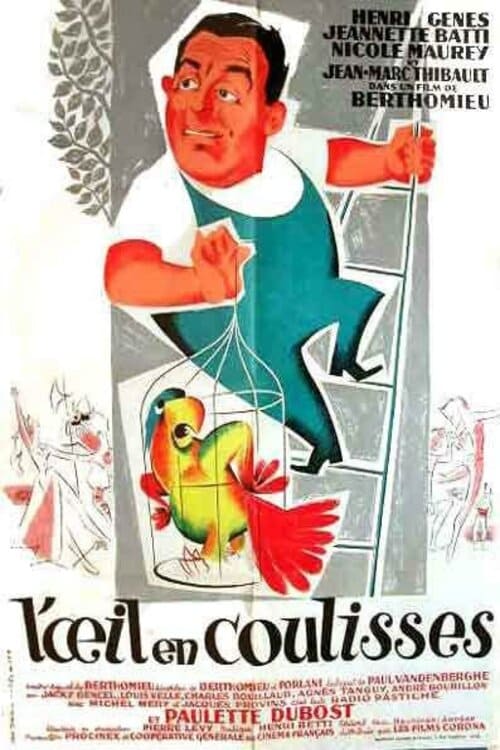
Wounded during a rugby match he'd come to Paris to play, Tonin Bonnafous, a thoroughbred southerner, settled in Paris with a former stalag mate he'd happily met. Tonin liked the asylum. His friends are charming, and there's a neighbor, Martine, a young cinema extra, whom Tonin finds to his liking. Through his electrician friend, Tonin gets a job on the radio, and through his young neighbor, he even gets a job as an extra in the cinema.
L'oeil en coulisse

Philippe, an employee at the Bourdinet firm, having been caught kissing Jacqueline, his boss's daughter, is fired. Some time later, Bourdinet launches a radio quiz show to boost his business. Philippe then decides to compete in the hope of telling the thousands of listeners what he thinks of the industrialist. A blow on the head having given him a gift of second sight, the competitor becomes impeccable and wins astronomical sums to the great despair of Bourdinet. Everything will work out in the end and Philippe will be able to marry Jacqueline.
One Hundred Francs Per Second

The leading coach the company of Jean Nohain make a program fails in a small village. The people immobilize the troops to force him to do the show there.
Welcome
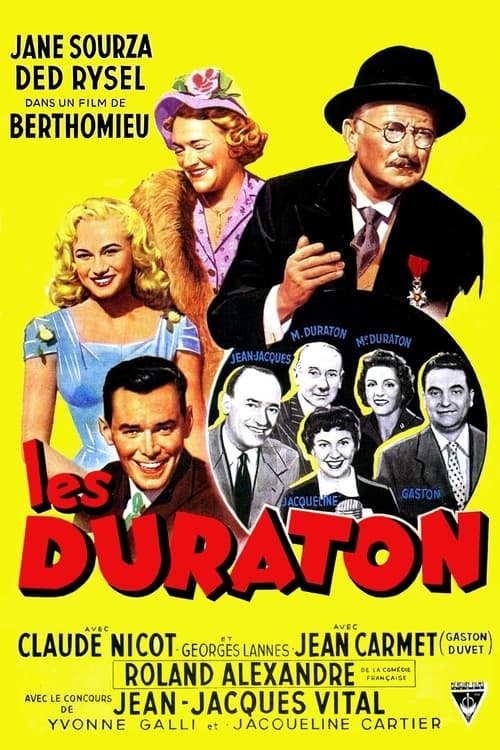
Jules Duraton is the headmaster of Chatelbourg's high school. He is happily married, has a teenage daughter named Solange, and everything would be for the best of all possible worlds if he and his family were not the namesakes of the protagonists of a famous comic series broadcast every day on Radio Monde "La Famille Duraton". Day after day, the real-life Duratons are made fun of because of their surname and Jules just can't take it any more. That is why he decides to sue the radio station responsible for his misfortune.
Les Duraton
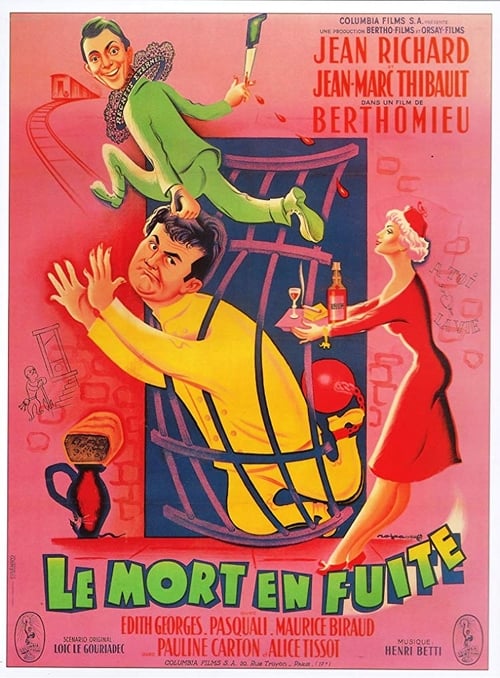
Two third-rate actors, longing to be famous, try to make the headlines by feigning a murder.
Les deux font la paire
The leader of a youth movement is suspected of the murder of his best friend and supporter. A television broadcast intended to help find witnesses reveals the organisation's troubled interior life as well as a far more personal tragedy.