Directing
Time passes. Life flows. Nature completes an entire cycle of life and death. Eve and Adam reinterpret and correct the myth of the tree of knowledge: the forbidden fruit makes us wise. As the earth revolves around the sun, the camera captures a baroque symphony of lights and colors. There is no digital manipulation: all the effects are produced analogically by the camera mechanism.
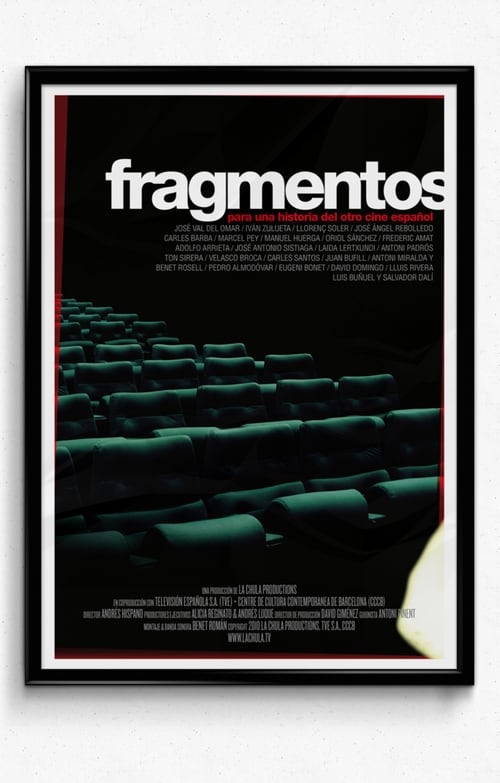
Documentary about the history of experimental cinema in Spain. FRAGMENTS is a historical survey of “the other” Spanish Cinema — films that brazenly explored their artistic, poetic and conceptual potential. Spanish experimental cinema can be glimpsed in a series of important yet isolated events that FRAGMENTS compiles through various firsthand accounts, film excerpts and documents. For the first time in Spain, a documentary brings together the most relevant of a cinema that is slowly losing its invisibility.
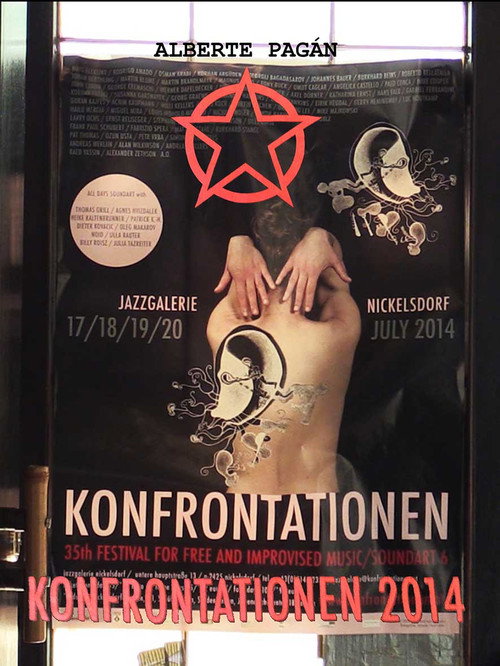
A film by Alberte Pagán commissioned by Philipp Schmickl & Hans Falb. Konfrontationen is one of the oldest festivals for free and improvised music in Europe. It takes place in Nickelsdorf, Austria, on the border with Hungary, where Syrian refugees are not allowed to continue on their trip through Europe. This is a film about the 2014 festival — twenty performances where sight and sound don’t always go hand in hand, where the image confronts the sound and the sound escapes the image. A musical in which workers and audiences are as important and necessary as musicians.
τεμενος¹: Holy precinct. Like the Acropolis of Athens. Fence, border that surrounds it. Structural Boundary. τεμενος²: Place-event near the village of Lyssarea, in Arcadia, chosen by Gregory Markopoulos for the projection of his ultimate opus Eniaios. Robert Beavers organizes the event every four years. τεμενος³: Documentation of the pilgrimage to τεμενος², from Barbança to Lyssarea and back. The times and places get mixed up when they share the same precinct, i.e. the screen. The limits of the screen as a border, as a τεμενος¹, as structural boundary of a square space where mental work can take place. The time of Eniaios becomes space in this film, the emptiness of space, space as time inside the frontiers of the frame. Five seconds, on the way out —deferred editing. 125 frames, on the way back —contiguous editing. Sometimes the movement in space breaks free from this strict time boundary.
This film is "the opposite of a combat description. It's a combat." This is how the author speaks, in an explicit reference to Marker's film, of this urgent film for Palestine. Alberte Pagán presented a short and urgent film denouncing the situation of the Palestinian people. A film that recovers the maximum actuality of these days, the population of Gaza submitted to the attacks of the Israeli army, which caused more than a few deaths. The images of Urgent Film for Palestine were shot in 2011 in the occupied territories and tell the story of Dionísio Pereira in his Galician version. As its author, referring to Chris Marker, says, this film is "the opposite of a description of a combat, it's a fight”
Eclipse metanoico emerged from the improvisations of Pablo Sax and Andrés Castro for the Noia Festival. Pagán created a video piece specifically for this performance: over six months, he filmed a pear tree and everything unfolding around it, shaping a turbulent, hypnotic composition that we will see in its original form.
In this new installment of the series “Superficies”, an anti-fascist demonstration held in Santiago de Compostela on November 20th, 2007, in homage to the 16-year-old Carlos Palomino, assassinated in Madrid a few days before by a neo-Nazi is projected on roots with live sound.
Seventy-five 6x9cm portrait photographs bought at Hietalahti's Market in Helsinki presented at a rate of one every seven seconds and a half in a double "soft (filmed) + hard (scanned)" screen version.
A work of the series Superficies, in which Pagán reflexively shoots im ages projected on different surfaces.
She liked to explore territories, literatures and arts. She gathered experiences that had left an imprint in her life and in her abode. She got to mistake her life for the objects from every corner of the world that decorated her walls, and for the ones that were product of her creativity that also hung on those walls. Some day I’ll turn all this into my autobiography, she said. But when she decided to start taking inventory the woodworm, which had been working silently for decades, had already eaten up paintings and masks and books. Nothing remained.
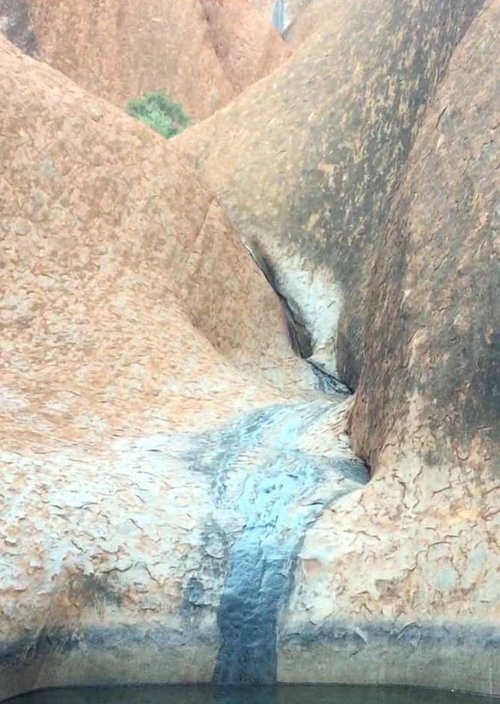
Images taken with a mini iPad, following the 11km perimeter walk going clockwise and under a temperature which reached 107ºF.
Walsed is a film study on the experimental classic “Visión fantástica” by Eugène Deslaw. Where Deslaw negativized, I negate —while recovering the original positive images—, drastically reducing the film’s 60 minutes’ length and reversing the images in space and time. I kept the same soundtrack, although equally compressed into 3 minutes’ length and divided into two channels: one, in the original direction; the other one, reversed. This negation of a negation is far from being an acceptation: the folk images and songs from a fascist country, underlying the NO-DO shots touched up by Deslaw, are negated; the filmmaker’s intentions when negativizing/negating them are understood; but, seeing that the effort is not enough, this film goes beyond his proposal on the way to total destruction. - Alberte Pagán
Nature is cruel. Life is cruel. A stupid race to escape death, a more stupid flight to death. A jungle of feelings. In the jungle there is no perspective, there are no straight lines, there are no perpendiculars or horizontality: only a mass of organs and exuberance. Cruel life The sound of death. The music of death. Nothing is true.
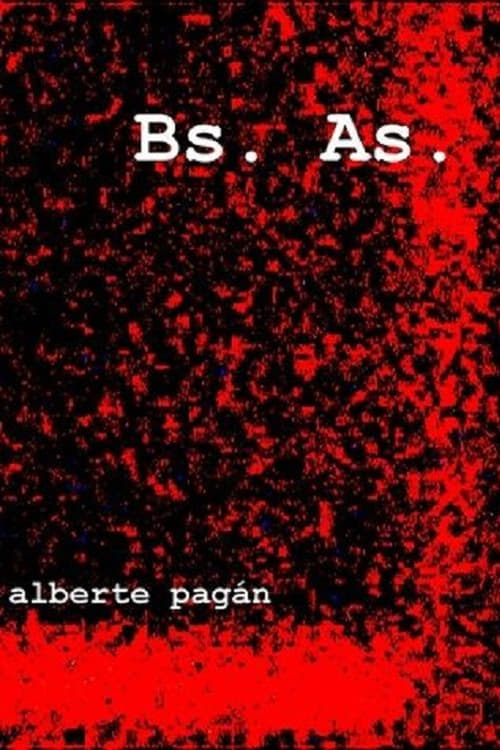
"Bs.As." is an experimental documentary film that reframes the history of immigration from Galicia (Spain) to Buenos Aires (Argentina). A Galician man's curiosity about his long-lost relatives who immigrated to Buenos Aires takes him on a surreal journey across times and space. Through travel, photographs, letters, and phone calls he explores the unpredictable ways in which immigration creates both bonds and distance between people and places. "Bs.As." received various awards including the Premio Foco Galicia (Tui, 2007).
The Waslala live in northern Nicaragua, a persecuted and overlooked people, Sandinista peasants repeatedly expelled by the army from an island in Lake Cocibolca. Pagán depicts three Waslala, carefully capturing through their gestures and voices the almost suicidal composure of those who have nothing to lose yet everything at stake.
"Thesis, antithesis, and synthesis." This is how Pagán describes this work in which the interplay between the image, its reverse, and the sound of the "Haunted House" erases and makes the boundaries between past and present, interior and exterior, collide.
No description available.
A piece included in the series Superfícies II (a continuation of Superfícies I, initiated in 2014), in which Pagán induces a clash of textures and meanings by projecting images onto different surfaces and refilming them. In this case, the Francoist symbology of the Belesar’s reservoir (under which disappeared the old village of Portomarín) is projected onto an ombu tree as a tribute to Antón Alonso Ríos and in memory of Ínhigo Berriochoa.
The origins of the universe. The mass of cells that is the earth and that is humankind. A confusing organic mass between triviality and barbarity. Pó de estrelas bombards us with images (experimenting with the formal meaning of montage) in a critique of the society of the spectacle