Sebastián Diaz Morales
Directing
Known For
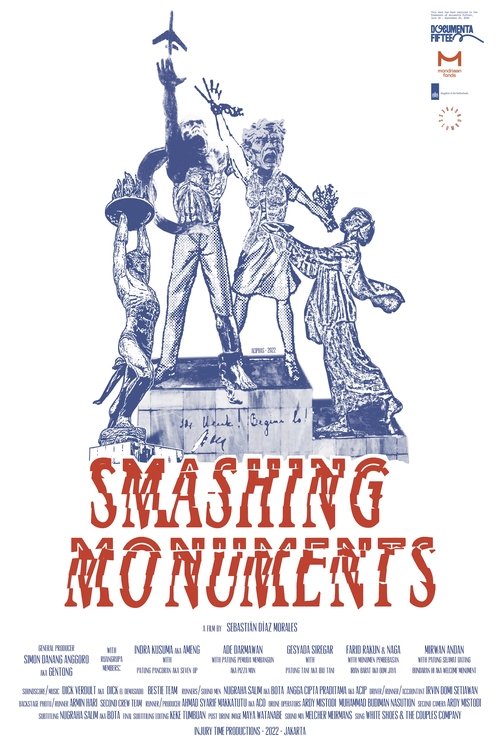
The title may evoke images of gleeful, destructive anarchism, but "smashing" here signals a relationship between people and official city statues that is friendly, jovial, even a little melancholic.
Smashing Monuments
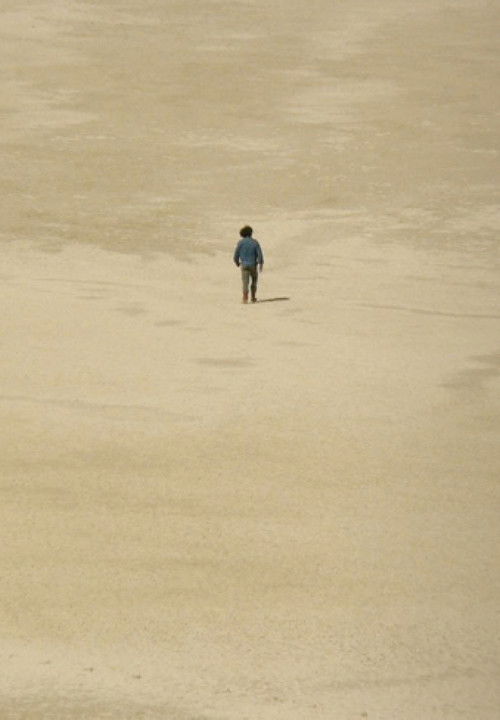
El camino entre dos puntos (The way between two points) investigates Patagonia’s tainted nature. Here, where throughout the 20th century ever enhanced methods of oil recovery, have transformed an amorphous, ambivalent and hardly populated landscape into an uncanny site of man’s supposed mastery of nature, the film traces the ways of a man, who wanders the scenes aimlessly, bound by his own implication in the menacing mechanics of oil production but drawn physically to their coevally proceeding erasure by the rough and untamed nature of this seemingly self-subsisting land.
The Way Between Two Points

In Pasajes IV the idea follows the same narrative, concept and structure as of former videos from the series. In the so far three Pasajes video works a similar formula repeats on different backdrops: a character unites places through gateways, doors, stairs and roads which would be naturally disconnected from each other. This is the geography of a story expressed in an alteration to the normal, which so far aroused from a montage of urban spaces. In this proposed formulation of Pasajes IV the video explores the landscape of Patagonia. Crisscrossing this territory in the search of the differences on the landscape, a character as a guide, unites different territories disconnected in its geography, as essential pieces of a puzzle to understand this region’s present.
passages 4
No description available.
Lucharemos hasta anular la ley
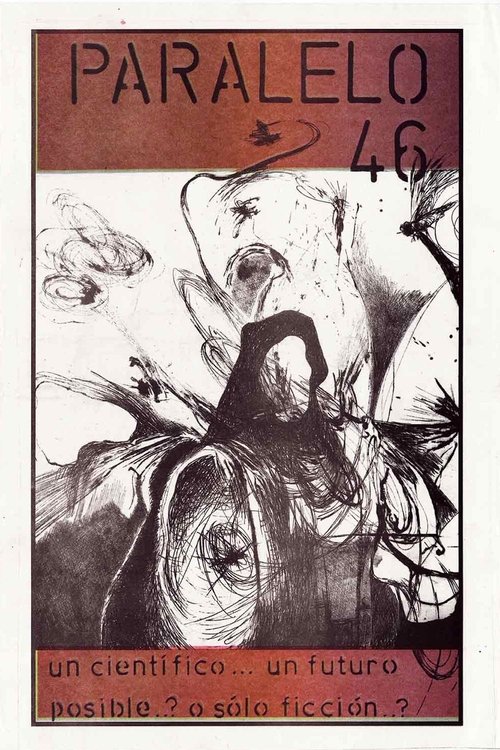
Parallel 46 was completed in record time on a tight budget in Central East Patagonia. Cano's quest in the Patagonian region is set in an imaginary landscape dotted with the remains of an oil drilling activity from a by-gone age. The camera pans across huge expansive vistas, mountain landscapes and dry gullies but the presence of polluted drilling rigs rapidly transforms the scene into an infected idyll that sums up our contemporary contradictory world in a dialectically polarized image. Like the jogging metaphor, Diaz Morales' images are constantly on the run - in a single image but also in the diachronic time span of the film. The result is a richly coded and fractal filmic progression that, like the jogging metaphor, is constantly moving on the spot or moving from point to point. This, like other of his films, is continuously passing from a concrete geographical or socio cultural context to a fictitious elsewhere.
Parallel 46˚

Talk with Dust is part of a series of videos which are ultimately sequences of a whole. Both a concept and a blurred narrative. The latter is not explicitly delineated in the course of the series but it is intuited. The sequences generate, rather than a narrative, a concept.
Talk with Dust
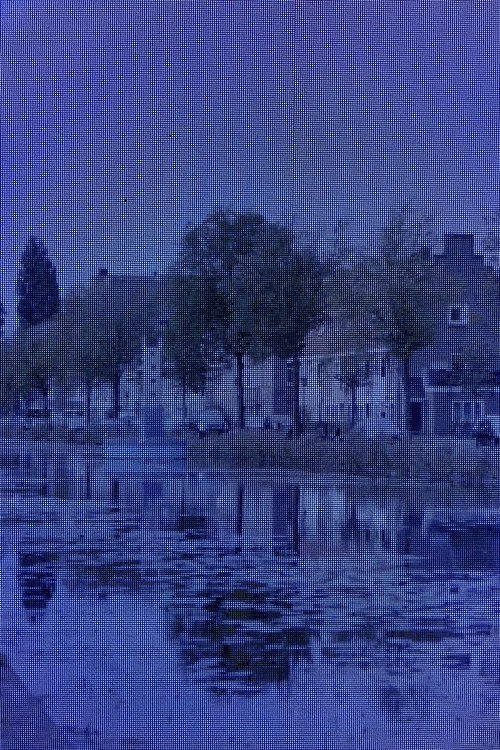
Since 2018, artist Sebastián Díaz Morales (1975) has filmed the streets of Amsterdam every first Monday of the month at 12 o'clock. His camera records daily life through every season. These serene moments blend with the testing of the air raid siren, a loud, howling sound that warned of bombardments during the Second World War. Today, wars still rage in other countries, but when the alarm sounds in Amsterdam, life continues as usual. The siren has become like an old custom. Once it signaled danger; now it's an everyday urban sound along with car horns and bicycle bells. The video reveals this odd truth: a system meant to protect us has faded into the back-ground. The air raid siren so familiar to the city will probably be terminated at the end of 2025. Díaz Morales offers a farewell salute to an alarm that no longer sounds the alarm. Hear the future!
Luchtalarm (Air Raid Siren)
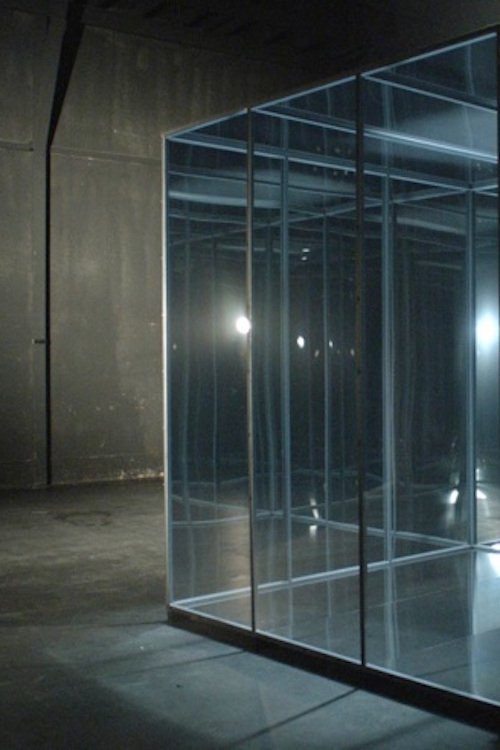
A film studio; a simple room with a bed, chair, desk and sink; a crew. A mysterious object. Following Jean Baudrillard's notion that the world has disappeared behind its own representation and it is therefore impossible to return to it, The Lost Object examines the complex mechanisms of how we perceive the constructed nature of reality and how this construction is achieved. In both the realms of our imagination and film. Fiction and reality merge into a single element.
The Lost Object
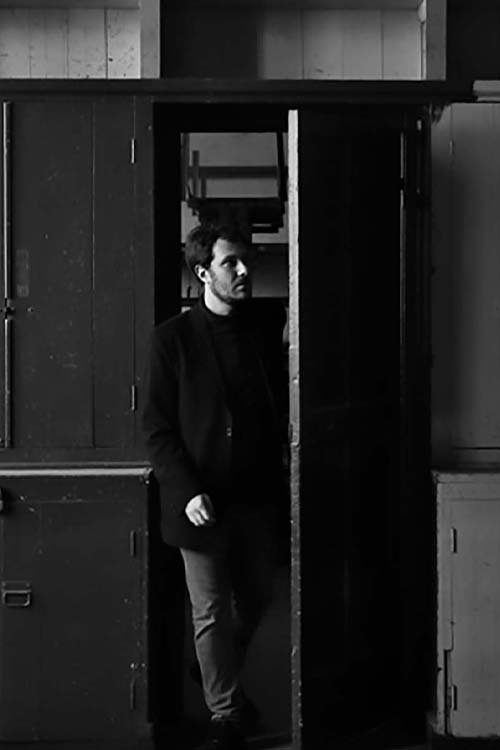
Buenos Aires appears in this video series as an endless maze where an optional image of reality takes shape. This is the geography of a story expressed in alteration of the normal, which arises from a montage of urban spaces. The urban reworking of the story is an attempt to regenerate the body of a city and its images in the form of an alternative geography.
passages 1
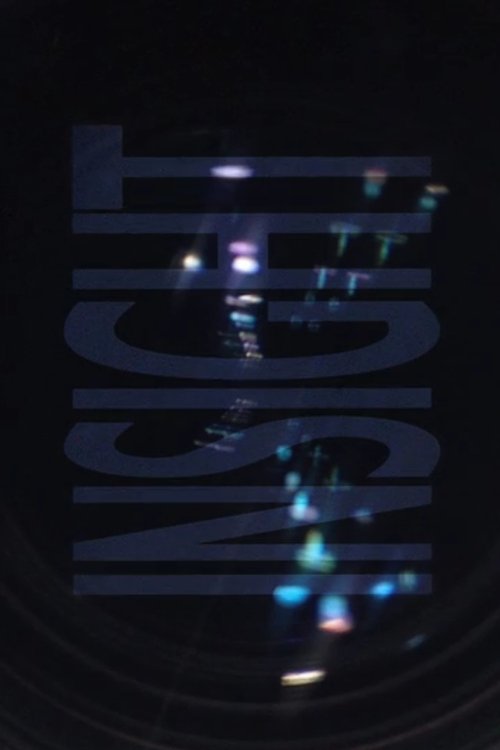
Insight is the total abstraction. A carefully assembled film-crew appears like a tableau vivant facing the viewer. Then suddenly, they shatter- an analogy of breaking through the surface to expose the simulation- a mirror slowly explodes into a thousand pieces. Filmed in beautifully rendered high definition Insight is a tribute to the camera obscuras of old mingled with a critical spirit directed towards the mass media today. Regarded as a phenomenon brought about by a world lacking distinction between real and simulacra, Diaz Morales borrows media industry tactics to expose and undermine. Revealing rather than concealing his methods allows for a moment of realisation to occur. As the pieces of glass crumble into tiny galaxies, context is deconstructed and the universalising tendency of Diaz Morales' practice literally portrayed. With timeless grace the artist contemplates the nature of existence.
Insight
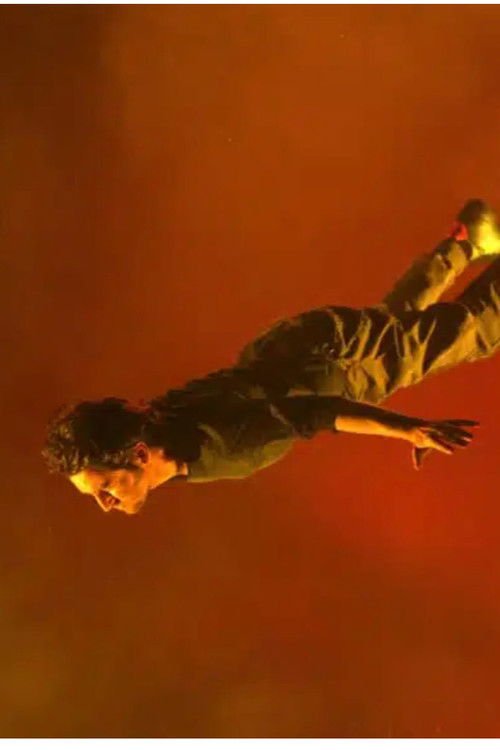
Sebastián Díaz Morales Suspension 2014 Suspension Suspension In Sebastián Díaz Morales’s Suspension a young man is hanging in the air, falling, or perhaps drifting through time and space. There is no special or definite way to understand it. And it is in this construction where Morales envisions the world as an endless void, or timeless gravity, that we fall deeper and deeper into our own humanity. Raised in an isolated location between the Atlantic Ocean and the Patagonian Desert, Sebastián Díaz Morales believes his upbringing led him to a very particular way of perceiving the world around him. Using different filmic techniques, from narrative film-like works to found-footage, he explores the relationship between large-scale socio-political power dynamics and individual objectives. His films are often surreal, include no dialogue, and create a tension between reality, fiction, and representation in a visually abstract way.
Suspension

A restless eye beholds the viewer. In its pupil, wars, natural disasters, and everyday accidents are reflected. These somber images alternate with scenes touching on recovery and new life: tiny, growing lifeforms, the expanding cosmos, and new technologies. How should we respond to these images of catastrophe? What new possibilities could emerge? The video work by Sebastián Díaz Morales (1975) was filmed in a single take. As the eye slowly moves around, the pupils reflection remains at a fixed point. The endlessly turning eye symbolizes a world that continues to spin, even in chaos. The viewer experiences a connection between destruction and rebirth, between crisis and restoration. Total collapse is an ending, but also an opportunity to reimagine the future. Envision the future!