Angelika Levi
Directing
Biography
Angelika Levi is a research based filmmaker and video artist, working with a range of media – particularly film material, video, audio, photography and text. Angelika Levi lives in Berlin. She studied at the German Film and Television Academy in Berlin (dffb). From 1985 on her work has been shown at international film festivals, cinemas, exhibitions and film programs. Her short film Faust auf Auge (1988) won the No Budget Video Prize Hamburg, and Desiree & Polylepis (1994) was rated “high quality” by the German Film Classification Board in Wiesbaden. My Life Part 2, her first full-length documentary, won several awards and had its premiere at the Forum / International Berlin Film Festival 2003. Children of Srikandi had its Premiere at the Panorama / International Berlin Film Festival 2012 and won also several awards. Her last work Miete Essen Seele Auf was shown in the exhibition “Wohnungsfrage” in Haus der Kulturen der Welt, Berlin, October 23th – December 14th, 2015. In addition to making her own films, Angelika Levi works as a script and dramatic advisor, lecturer and film editor. Films and videos are distributed by Arsenal Distribution – Institut for Film and Video Art.
Known For

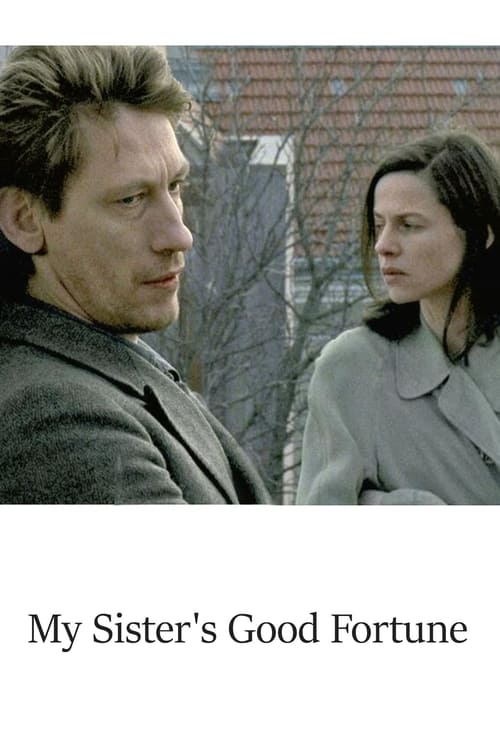
A young photographer has fallen in love with his girlfriend's sister, throwing the trio into chaos.
My Sister’s Good Fortune

By means of objects, photos, tapes and films, director Angelika Levi, half-German, half-Jewish, examines the story of her family. The film deals with trauma and the way history is produced, filed away, turned into discourse and ordered on macro and micro levels.
My Life Part 2

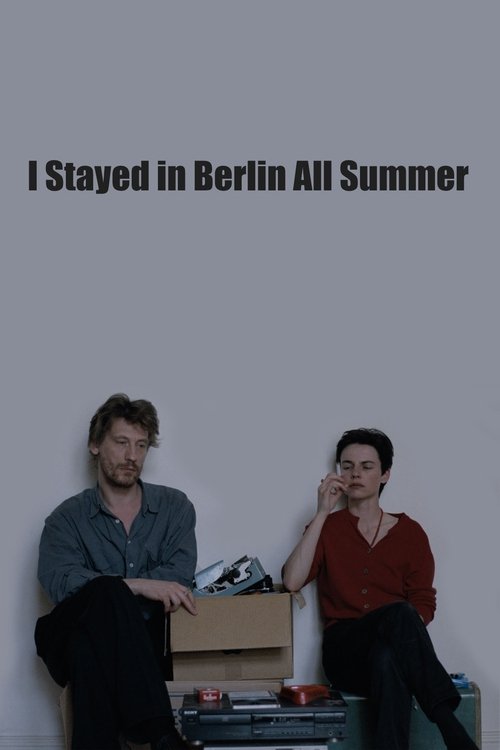
Nadine is obsessed by a memory linked to a haunting tune she can no longer sing, until she hears someone else singing and everything falls back into place again. A melancholic observation of two young couples having difficulties trusting one another. They are full of skepticism and searching for a purpose in life.
I Stayed in Berlin All Summer
The revolution is as good as over, but the captain wants to send his crew into one last battle. Before this can happen, however, he is murdered. The crew is finally free. Meanwhile, the revolutionary Snow White has hidden on the ship, but she is discovered.
Navy Cut
From September 2001 to April 2002 Nan and Nancy along with other Latin American women worked for the asbestos company “Branch,” cleaning the luxury apartments, offices, and banks of Manhattan in the hermetically sealed zone of “Ground Zero.” The women had neither residence permits nor work permits in the USA, and their dust masks had no filter for asbestos. At the PedWest border crossing in Tijuana refugees perform their stories. They play asbestos workers, American soldiers, Red Cross staff, and firefighters. Migrants from Guatemala and Venezuela and Mexicans who were deported from the USA to Tijuana: they are all stuck at the border due to the “Remain in Mexico” policy. Ahorita Frames moves the stories of the asbestos workers from New York in 2001 across the border to Tijuana in 2019, thus reconfiguring the political cartography of power relations.
Ahorita Frames

A portrait of photographer Abisag Tüllmann (1935-1996). Abisag Tüllmann’s photographs have become deeply engraved into our cultural memory. Using more than 500 black-and-white photos, all of which taken by Abisag Tüllmann, this cinematic tribute places her life and work in the context of the 1960s to the 1990s. Claudia von Alemann tries to get close to her friend via pictures and archival documents, excerpts from films by Carola Benninghoven, Helke Sander, Alexander Kluge, Günther Hörmann, and Ulrich Schamoni, via the music of composer José Luis de Delás, and via letters and memories, such as those of photographer Barbara Klemm, who still vividly remembers her former Frankfurt colleague.
Die Frau mit der Kamera

Filmmakers talk about their experiences - about success, failure and social participation. Who is seen, and who can show themselves?
To Show or Not to Show

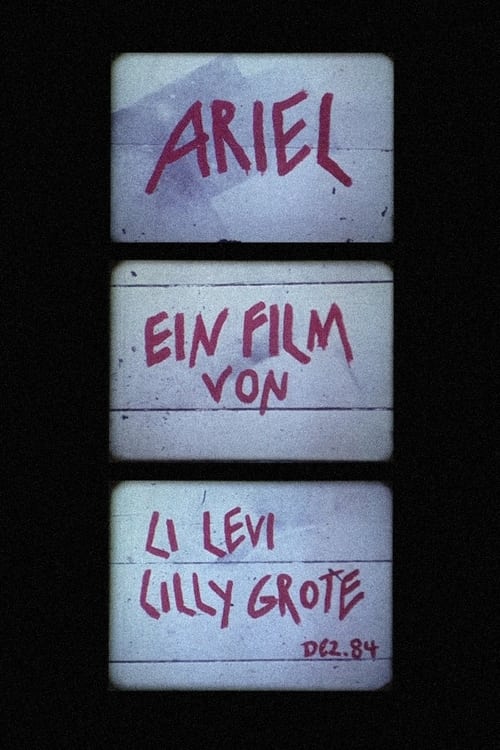
After the short story of Franz Kafka “Unhappiness”. A young woman is visited by a ghost while vacuuming. Suddenly, her apartment is located in the cellar. They argue and the ghost leaves. 2 parallels meet in the infinite, says the one: “Go out of my way, you seem to have strayed.” Says the other: “For thousands of years I’ve been looking for a formula to find you, please do not send me away again.” The first one is already slightly pissed: “The destiny of a parallel is to be eternally alone, on the way to infinity.” “No, no,” the second one desperately screams: “One parallel is nothing, alone you are only an undefined line.“
Ariel

The workers of a self-managed tea factory decide to go against the grain and play by their own rules. The problem is, how can you plan, work and survive in a world driven by ruthless competition? One day at a time, for instance. In a world ruled by profit and dominated by the exploitation of the weaker ones, the film literally offers an alternative set of ways about how to think our future and the means and tools to work for it. It is not an easy job but, as Taste of Hope carefully and precisely shows, there is still a lot that can be done if we change our relationship to production and labor. Instead of making grand gestures or political statements, the filmmaker works with the camera and with a thoughtful editing in order to understand how to weave together new possibilities of communal existence.
Taste of Hope

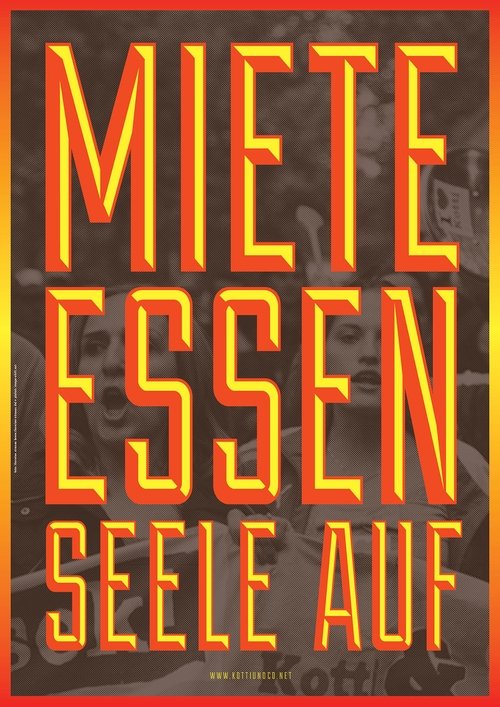
Documentation on a protest campaign against urban displacement, organized by neighbors from Kreuzberg, Berlin.
Rent Eats Soul

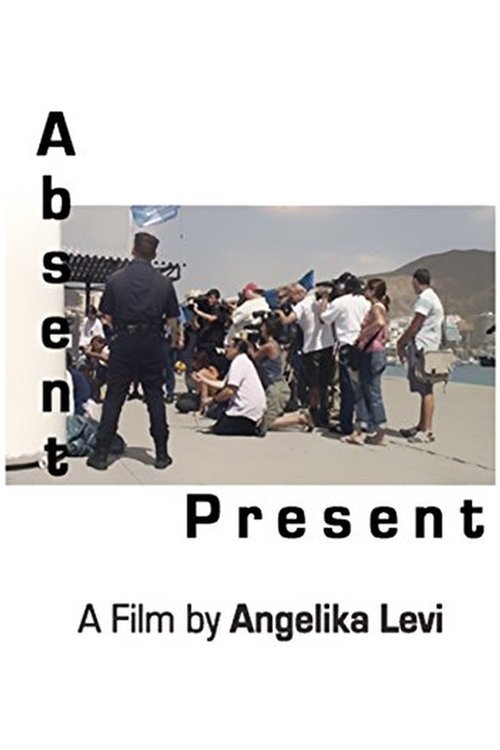
Benji was brought from Namibia to the GDR in 1979 as a young child and sent back in 1990 after German reunification. Levi got to know him there in 1991. Two years later, he hitchhiked back to Europe disguised as a tourist. But "in this film there is no main character. Benji, who should have been it, has disappeared," it is stated at the beginning of the movie. On her search for traces, Levi associatively links the story of the refugee with the stories of flight of those she meets underway. The journey leads from Germany to Namibia, to the Spanish mainland and the Canary Islands, all the way to Senegal. Without wanting to draw a geographical or political map, an essayistic documentary on the various forms of traveling emerges: vacation and migration, voluntary and forced return.
Absent Present

An german experimental film about the party culture of Berlin in the 1980s
Sex Party
Crossings is a four-channel video and sixteen-channel sound installation shot in metallurgy plants in Lavrion and Skouries, Greece, as well as in refugee camps in Lesbos and Piraeus. It is a documentary work that engages with the social dimensions and historical continuities of the region’s economic and civil wars.
Crossings

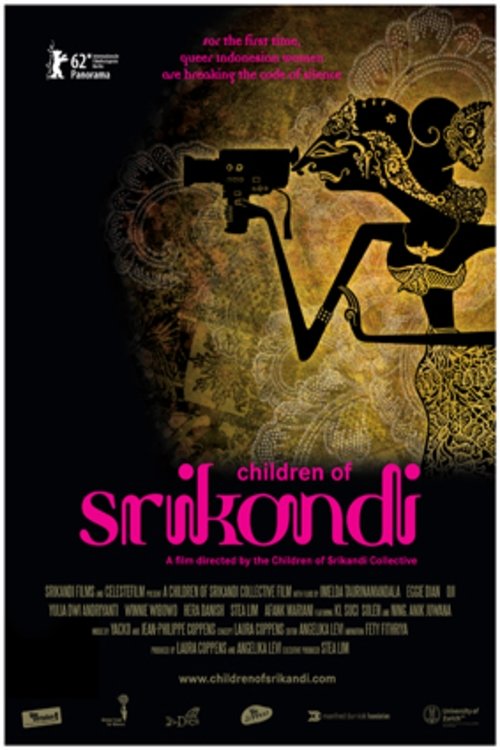
The mythical figure of Srikandi, a female figure from the Indian Mahabharata epic that changes gender to live and fight as an equal among men, is the inspiration and role model for this anthology of stories on the state of alternate sexualities in Indonesia, the country with the largest Muslim population in the world. The result is eight highly personal and profound perspectives on lesbian, bisexual and trans-identity life in Islamic Indonesia.