Acting
No description available.
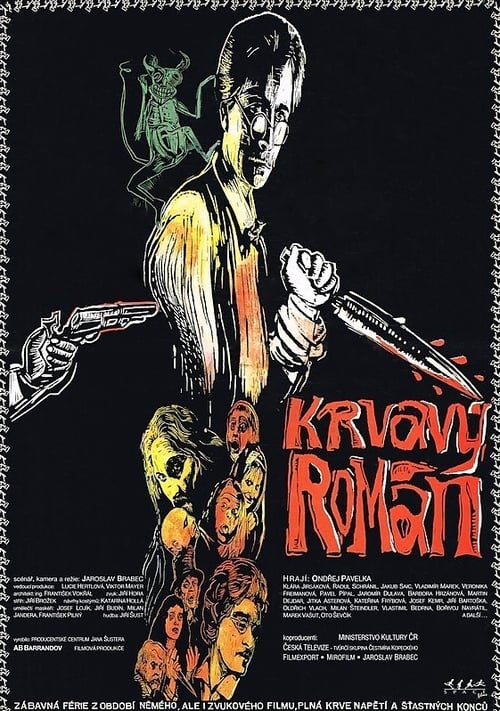
The distinctive artist, typographer, and writer Josef Váchal is known to the public primarily for his Blood Novel. The surrealistic exuberance of this defense of 19th-century pulp fiction caught the attention of Jaroslav Brabec and his colleagues, who found a corresponding image of 20th-century "trash." The authors' interest focuses primarily on the silent film era, with a journey through the history of cinema continuing through the advent of sound film to the present day (auteur cinema of the 1960s, modern horror), formally employing techniques such as tinted film. The versatile parody intertwines a colorful plot with the story of the author (Váchal/Paseky), who comments on and creates his book, and is further split in the plot into the characters of Fragonard and the Master. As with Váchal, reality increasingly enters the fiction, so that the only "happy ending" turns out to be the artist's finished work.
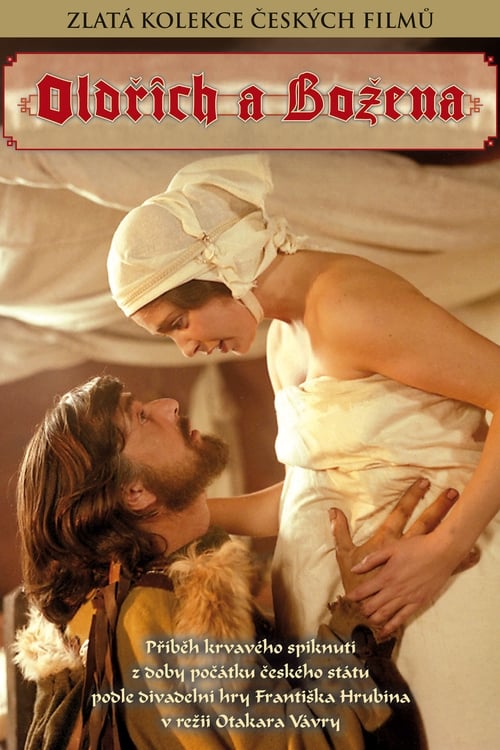
At the turn of the 10th and 11th centuries Boleslav's kingdom fell apart in the fratricidal war between the Přemyslovci and the other clans the main profiteer of this being the German emperor. At that time it seemed as if the Czech state and the lineage of its princes was awaiting its end..." It is with these words that the tale of this film begins, whose narrative is based upon the the play by František Hrubín of the same name.
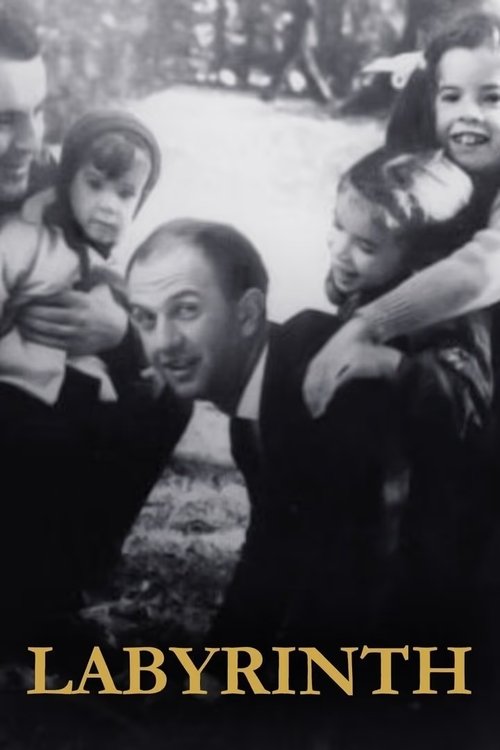
Film makes the creative process visible by letting its narrative flow in the mind of a foreign director who is researching a film about Franz Kafka in Prague. Based on the principle of dreams and free association, segments unfold that deal with the various points of view that Kafka's work, personality and fate offer. In the labyrinth of his mind, the fictional director projects himself into situations from the author's life, with Kafka himself as his guide. At the same time, he delves into the history of the persecution of the Jews and glimpses the monstrosity of the bureaucratic apparatus that Kafka anticipated but could not have foreseen the monstrous size and function it would grow to a few years after his death in the institutionalized genocide and overall machinery of Nazism.
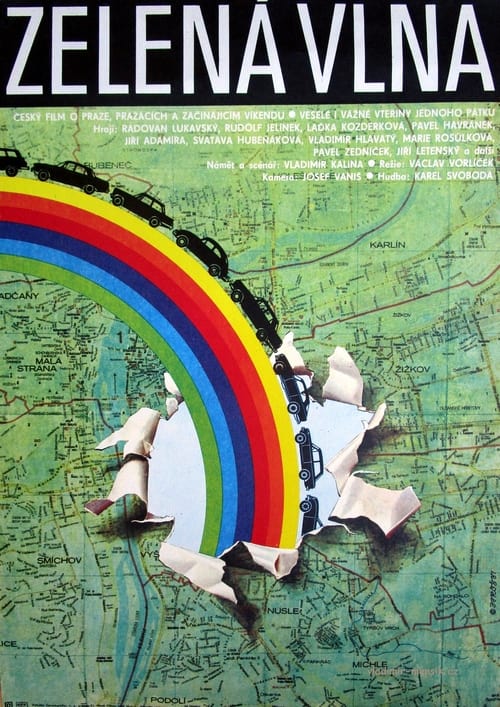
A short film about Prague, Prague residents, and the beginning of the weekend.
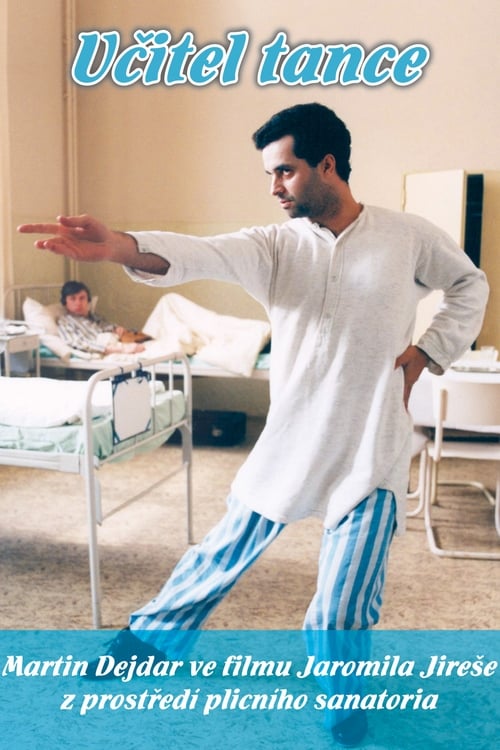
A special story about love, dance, and immortality takes place in the late 1940s. A young man, dance master Mayer, arrives at a pulmonary sanatorium. His diagnosis is serious—tuberculosis. However, he does not give in to his illness and begins to actively fight it with dance and optimism. Gradually, he wins over other patients who had previously resigned themselves to their fate. Soon, however, his illness breaks out in full force and insidiousness. Facing death, he embodies human courage and a positive attitude towards life.
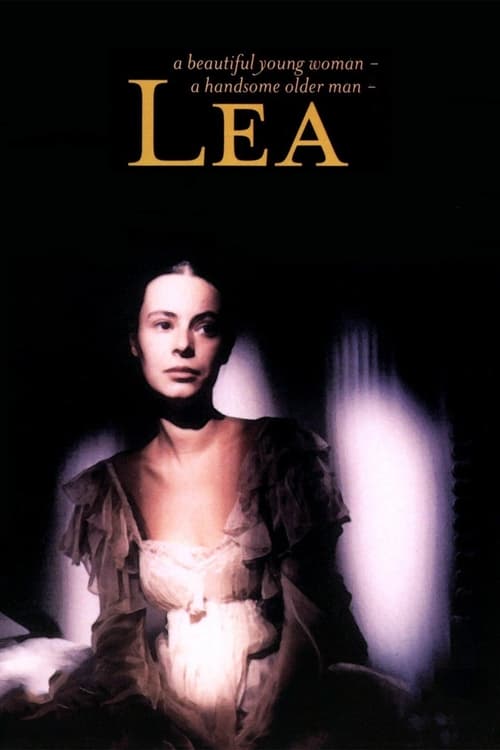
51-year-old Herbert Strehlow, a furniture restorer, falls in love with 21-year-old Lea, who has not spoken a word since childhood when her father killed her mother. She bears a striking resemblance to Herbert's dead wife. They get married, but their relationship seems doomed, until gradually each one manages to penetrate the mysterious world of the other, and they begin to realize that they are bound by a kind of spiritual relationship. For Lea it is the death of her mother, for Herbert it is the death of his first wife. His hard exterior slowly beings to thaw, and he starts to show feelings and responses that soften Lea's initial hatred and fear of him, and which put their relationship in a more positive light.
A television adaptation of Jan Neruda's short stories The Bachelor and Mr. Carpet's Marriage.