Acting
Polizeiruf 110 is a long-running German language detective television series. The first episode was broadcast 27 June 1971 in the German Democratic Republic, and after the dissolution of Fernsehen der DDR the series was picked up by ARD. It was originally created as a counterpart to the West German series Tatort, and quickly became a public favorite.
Dr. Sommerfeld – Neues vom Bülowbogen is a German television series.
Der Staatsanwalt hat das Wort was an East German television series.
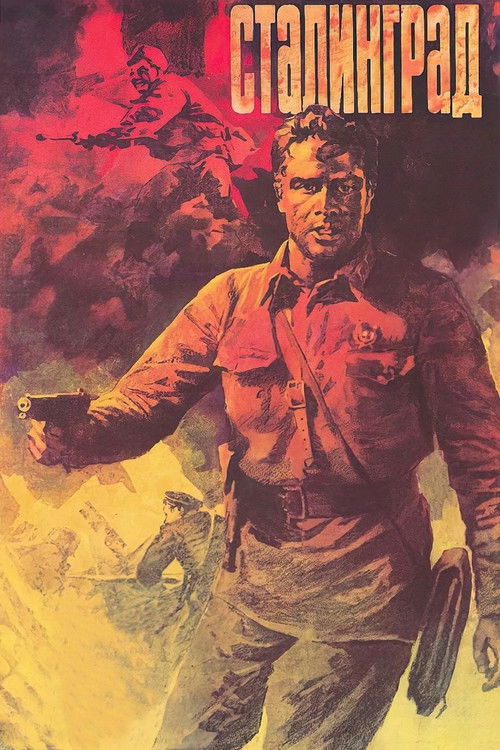
In January 1942, Adolf Hitler appoints Fedor von Bock to command Army Group South and supervise Operation Blau. The German forces advance in the south of Russia, scattering the Soviets and approaching Stalingrad, that seems on the verge of falling to the enemy's hands. The movie ends with Vasily Chuikov assuming command of the 62nd Army at September.
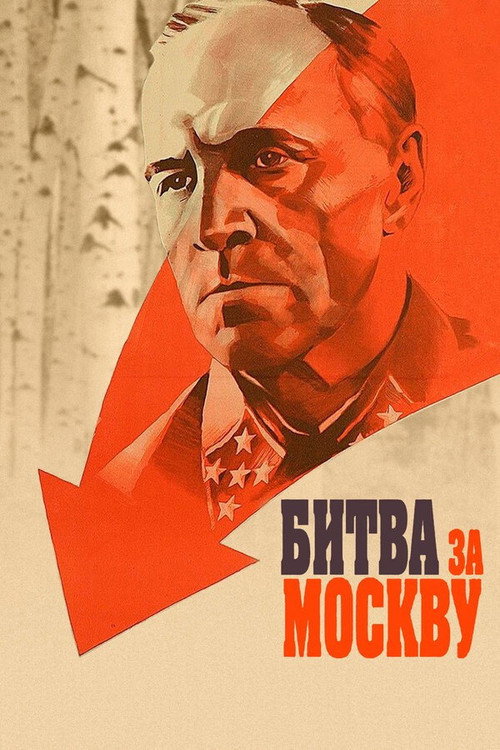
The Battle of Moscow is a 1985 Soviet multi-part war narrative, presenting a dramatized account of the 1941 Battle of Moscow and the events preceding it. The battle was the first major defeat of German Wehrmacht in the Second World War.
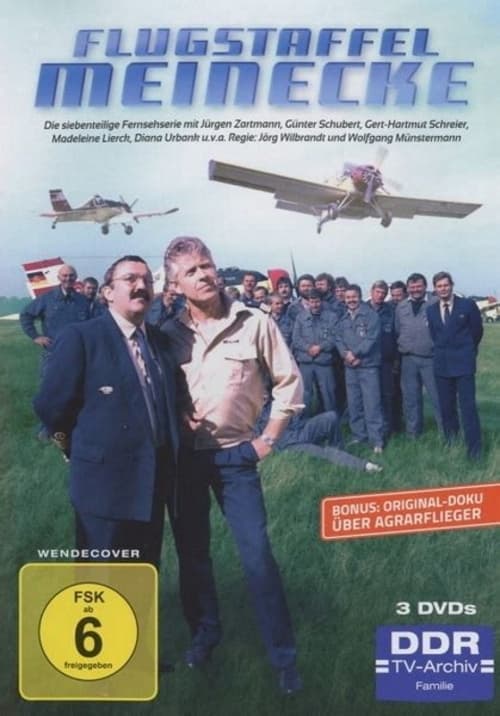
Flugstaffel Meinecke is a German television series.
No description available.
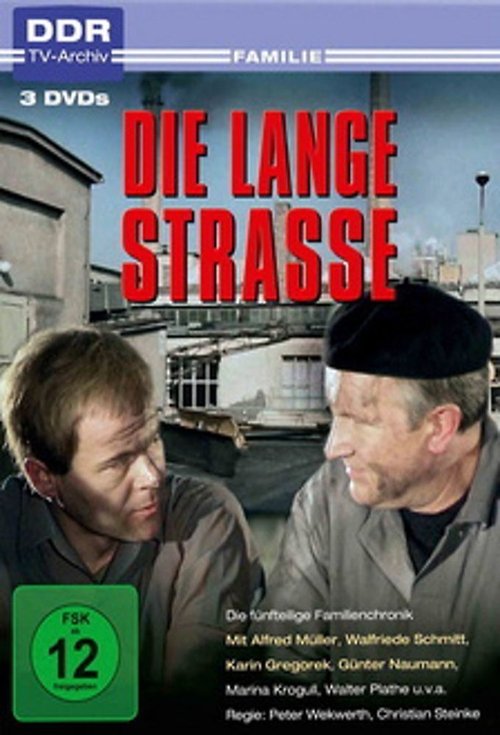
1949. Grafenberg in Brandenburg shortly before the foundation of the GDR. Here lives Michel Hollmann and works in roadmaking. His purpose in life are his wife Lotte and the two children Gerda and Heinz, for whom he is reconstructing a summerhouse into a “nest”. In Grafenberg, his siblings are living as well: His brother Karl, the mayor, and sister-in-law Edith, who works in a textile factory, with their son Jürgen. Edeltraut, his sister, has married the lamp fabricant Berthold Bennert and leads a well-off life. They as well have a son: Harald. Part of the family are further sister Hanna and brother-in-law Hermann, who is a fisherman on one of the local lakes and conducts a tenacious private war against old Stegewald and his presumptive prince-electoral rights. They are living their lives with their large and small conflicts, with different intentions, and yet remain connected always.
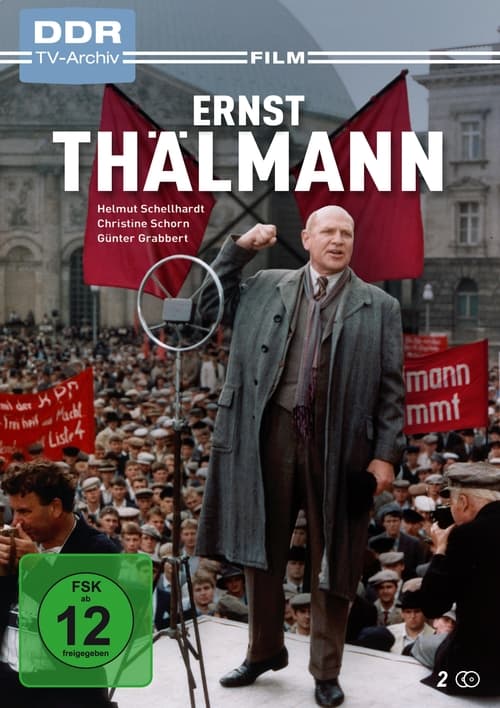
This elaborate two-part television film features a section from the life of communist worker leader Ernst Thälmann. It begins with the bloody riots on May 1, 1929 in Berlin, in which police officers shot at demonstrating workers, and ends with February 7, 1933, when Thälmann appeared as a speaker at the illegal meeting of the Central Committee of the Communist Party of Germany in goat neck. This period was marked by the struggle of the Communists against the ever stronger National Socialists and the rise of Adolf Hitler.
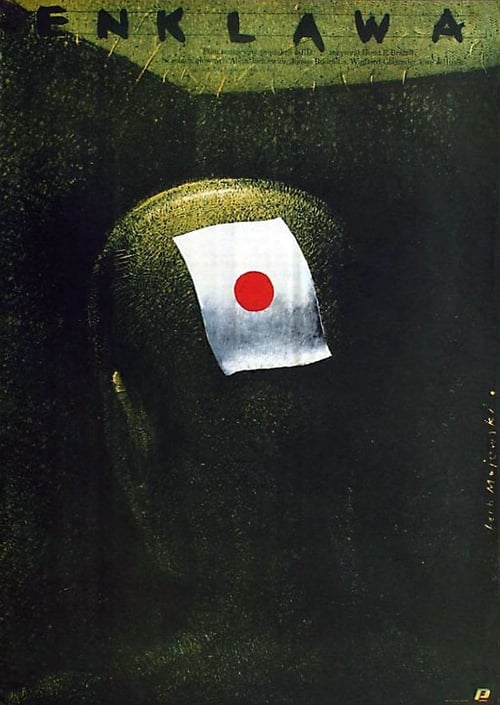
South America at the beginning of the 1980s. A man is on the run from a group of armed pursuers. He does not manage to escape and is shot down mercilessly. Young Maria witnesses the cruel event and asks her friend, the journalist Oswaldo, to find out about the backgrounds of this case. The police also start to investigate the case and find out that a mysterious German farm is involved in the shooting. But the farm lies in an exterritorial area, thus the police officers cannot investigate any further.
Colonel Maratka and Major Kalasz, employees of the Czechoslovakian defense forces, are facing a difficult task. They must complete a mission that is important for the security of their country. The Prague headquarters of the state security service had previously received information from the GDR that West German military intelligence had apparently succeeded in deciphering the secret code B/13 used in the field of missile armament.
Galileo Galilei seeks evidence to support the Copernican model of the universe, but the new theory contradicts Church dogma. Based on the design of a telescope sold in Holland, he constructs a telescope for astronomers, which he uses to substantiate his hypotheses..
In 1923, Judge Böhnsdorf and Inspector Dumke convict 22-year-old Fritz Bondersen of treason, accused of selling military secrets on the testimony of General Director Gotthardt, and sentence him to 15 years in a Zuchthaus. Despite his protestations of innocence, Bondersen can’t produce proof. Two years later, his fiancée Edith Volkmann, aided by journalist Günther Borchert, tracks down a French officer whose eyewitness account could discredit Gotthardt’s statement. Their quest to expose a massive fraud offers Bondersen a final hope for justice.
The armouring soldier and writer Werner Bertin is ordered to the Western Front to France during the First World War. The use before Verdun - with all the horrors of war in the period 1916/1917 - brings a fundamental change of consciousness for the academic from Berlin. The intellectual devoted to bravery by fate develops into a disappointed but rebellious being. He sees more and more the injustices of warlike conflicts and their social causes.
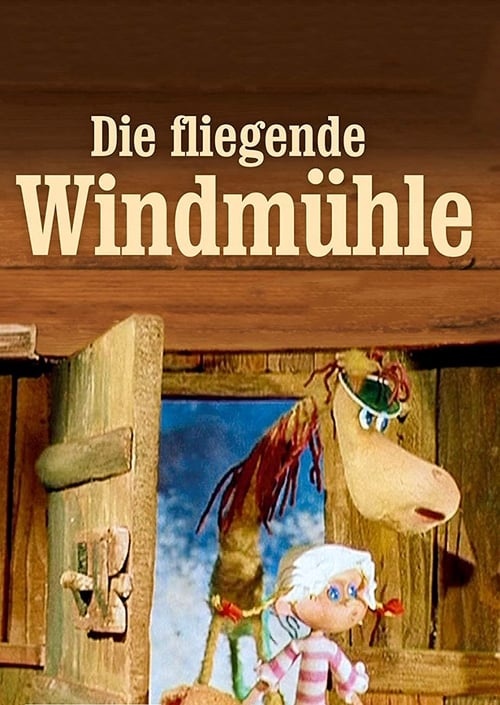
Olli, the main character in the movie, got a very bad grade and is terribly annoyed. She runs away from home and, together with a dog and a horse, finds a (mad? nutty?) scientist in a windmill. They experience the strangest adventures in this windmill and find other interesting characters, a lot of excitement and peril. While you may well interpret something as the "socialist value system" into this movie, it is more meant to be a children's movie, showing the kids that there are more exciting things out there than the ones that your parents and teachers show you, and that you will only find out most of those things on your own, if you show enough curiosity.
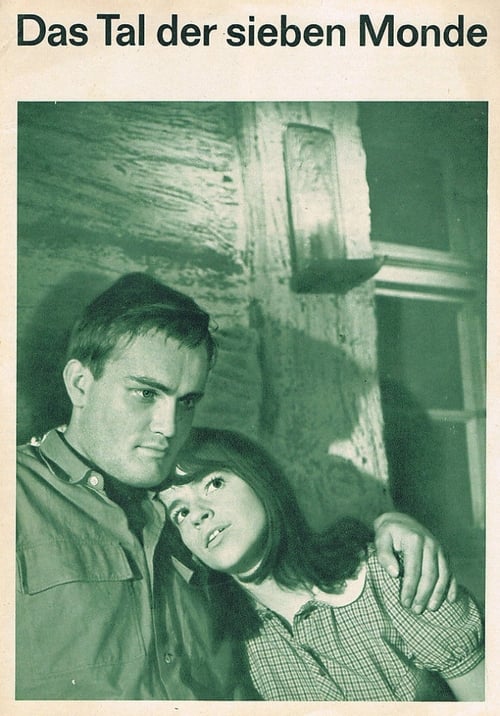
Based on the novel of the same name by Harry Turk. 1944. In occupied Poland, a railway line is being built to transport lead ore to Germany. The Valley of Seven Moons is restless, with construction materials disappearing and people vanishing. The occupiers feel uneasy on foreign soil. Despite increased security, partisans carry out one act of sabotage after another, hindering construction in every way possible. The German Rudek and the Jewish girl Martina, who at first stand aside from any struggle, join the partisan detachment.
Hitler's seizure of power in 1933 and his rule in the years that followed are transferred to the North American criminal world of the 1930s in a parable. Gangster boss Ui needs the protection of the ruling class to achieve his goals and offers his help to their representatives. They initially hesitate, but join forces after Ui violently gains their respect. His victory is perfect and the people fall silent before the revolvers of their "protectors". Ui takes the raised hands as a sign of approval... Bertolt Brecht wrote the play in 1941 in a Finnish asylum - the premiere only took place in Stuttgart after his death in November 1958. It has been staged at the Berliner Ensemble since 1959 - Ekkehard Schall has played Ui over 500 times since then. On January 13, 1974, the play was shown for the last time, recorded in color by GDR television.
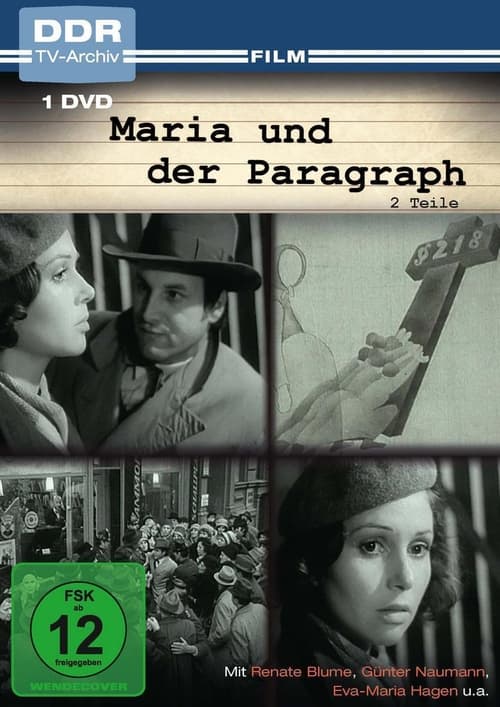
Maria is a record saleswoman by profession. She is lucky to have a job, because the year is 1930 and a major economic crisis has hit the world, accompanied by an army of unemployed people, especially in Germany. Maria is aware of her good fortune; in order to secure it, she has to do without many things. What business owner would employ an unmarried woman with a child in times like these? When Maria became pregnant, she, like many other women, had to become "active" and do something about this "misfortune". So she seeks "help" from a female doctor, trusting in her youth and hoping for better times when family happiness could come true for her.
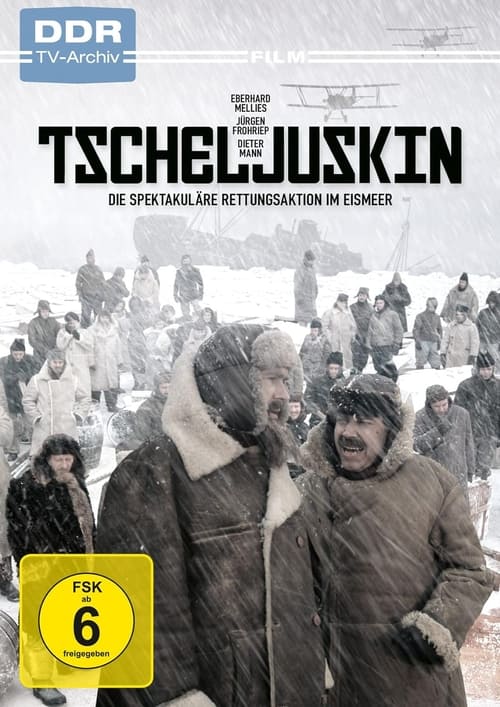
In the 1930s, the Soviet ship "Chelyuskin" embarked on an expedition to the Northern Ocean. But soon there is an accident in the ice and the team can save themselves on an ice floe. Two months, the over one hundred people have to persevere there until rescue from the air finally approaches.