FEEL IT.STREAM
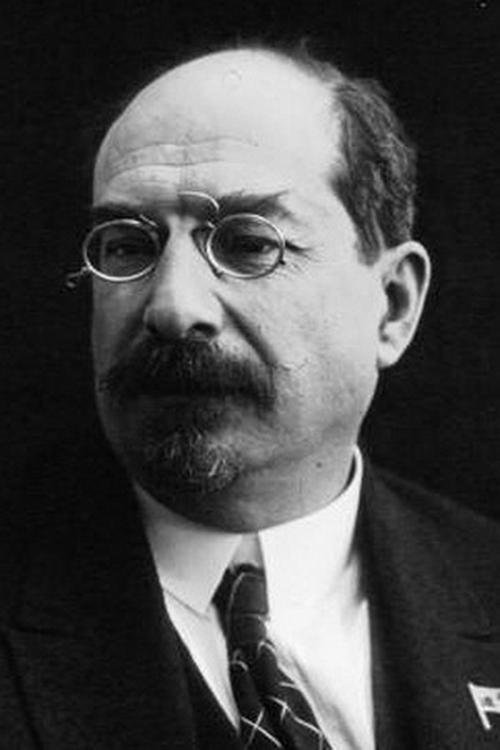
Anatoli Lunacharsky

Anatoli Lunacharsky

Writing

Biography

Russian revolutionary, Soviet statesman, writer, translator, publicist, critic, art critic. From October 1917 to September 1929 - the first People's Commissar of Education of the RSFSR, an active participant in the revolution of 1905 and the October Revolution. Academician of the USSR Academy of Sciences (February 1, 1930). In 1896-1898, the young Lunacharsky traveled to France and Italy, and in 1898 he came to Moscow, where he began to engage in revolutionary work. In 1904, after the end of his exile, Lunacharsky moved to Kiev, and then to Geneva, where he became a member of the editorial boards of the Bolshevik newspapers Proletary and Vperyod. Soon Lunacharsky became one of the leaders of the Bolsheviks. He became close to A. A. Bogdanov and V. I. Lenin; under the leadership of the latter, he participated in the struggle against the Mensheviks - Martov, Dan and others. He took part in the work of the III Congress of the RSDLP, where he made a report on the armed uprising and the IV Congress of the RSDLP (1906). In October 1905 he went to Russia for agitation. Started working for the newspaper "New Life"; was soon arrested and put on trial for revolutionary agitation, but fled abroad. In 1906-1908 he was the head of the art department of the magazine "Education". By the end of the 1900s, the philosophical differences between Lunacharsky and Lenin intensified, soon escalating into a political struggle. In 1909, Lunacharsky took an active part in organizing the extreme left group "Vperyod", which included "ultimatumists" and "otzovists", who believed that Social Democrats had no place in the Stolypin Duma, and who demanded the withdrawal of the Social Democratic faction. Since the Bolshevik faction excluded this group from its ranks, later, until 1917, Lunacharsky stayed outside the factions. “Lunacharsky will return to the party,” Lenin said to Gorky, “he is less individualistic than those two (Bogdanov and Bazarov). An extremely richly gifted nature. " Lunacharsky himself noted about his relationship with Lenin (refers to 1910): "We personally did not break off relations and did not aggravate them." Together with other "vperyodovtsy" he participated in the creation of party schools for Russian workers in Capri and Bologna; representatives of all factions of the RSDLP were invited to give lectures at this school. During this period he was influenced by the empirio-critical philosophers; was subjected to harsh criticism by Lenin (in the work "Materialism and Empirio-Criticism", 1908). In 1907, Lunacharsky took part in the Stuttgart Congress of the International, then in Copenhagen. He worked as a columnist for Western European literature in many Russian newspapers and magazines, spoke out against chauvinism in art. From the very beginning of the First World War, Lunacharsky took an internationalist position, which was strengthened under the influence of Lenin; was one of the founders of the pacifist newspaper Nashe Slovo, about which I. Deutscher wrote: "Nashe Slovo gathered a wonderful circle of authors, almost each of whom wrote his name in the annals of the revolution." At the end of 1915, he moved with his family from Paris to Switzerland.
Known For

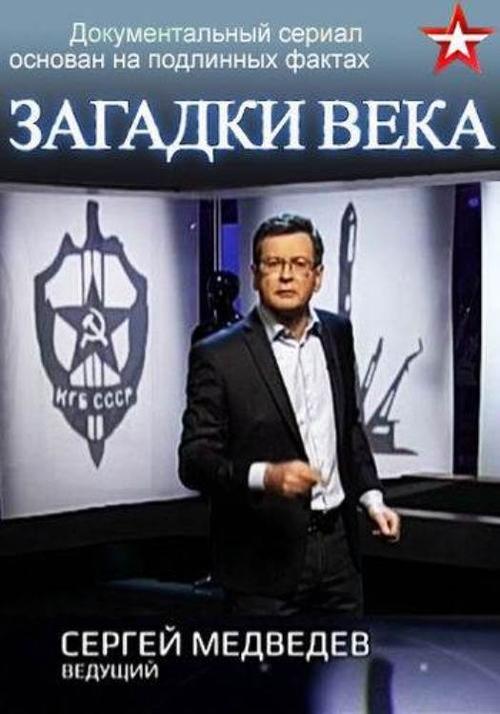
Загадки века с Сергеем Медведевым
N/A

No description available.

Загадки века с Сергеем Медведевым

2016
Country of the Soviets. Forgotten leaders
9.0

This is a project that talks about the key figures in the leadership of the Soviet Union from 1917 to 1953. Felix Dzerzhinsky, Kliment Voroshilov, Semyon Budyonny, Vyacheslav Molotov, Andrey Zhdanov, Victor Abakumov, Lavrenty Beria. Their names are known throughout the country today, but few people remember how they went down in history and what they did for their state. They were in the midst of civil confrontation and social upheaval, changing the course of history. Cities, streets and mountain peaks were named in their honor, monuments were erected to them, their victories were told in schools, but they could not know that after years their biographies would undergo careful editing, and all achievements would be forgotten.

Country of the Soviets. Forgotten leaders

2017
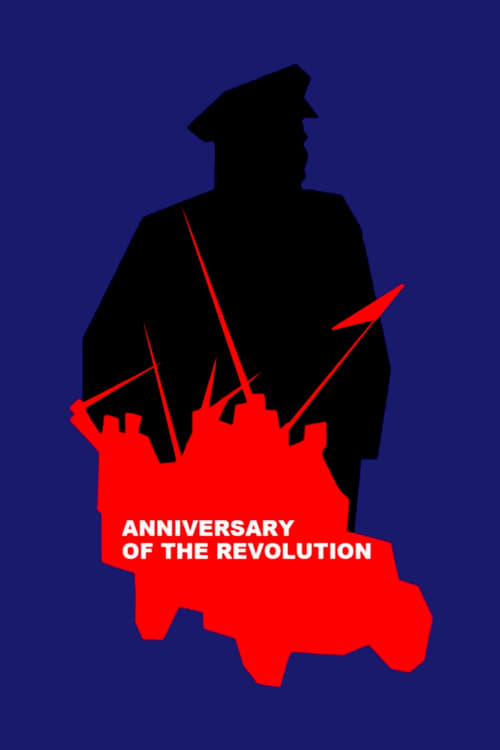
Anniversary of the Revolution
6.8

A chronicle of the Russian Revolution of 1917, from the bourgeois democratic February Revolution to the great socialist October Revolution and the final triumph.

Anniversary of the Revolution

1918
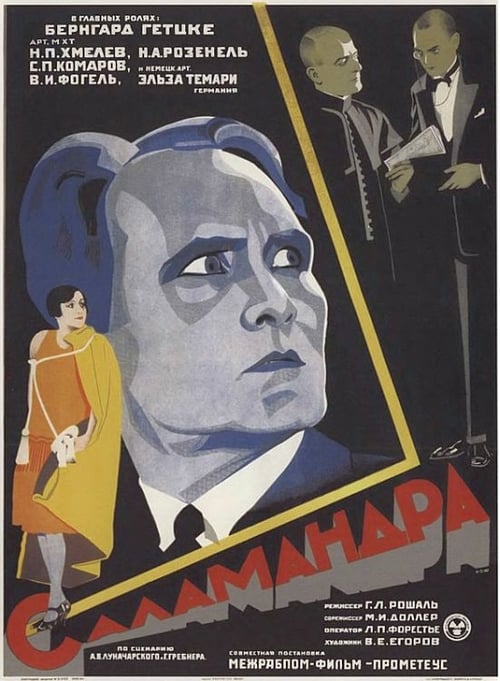
Salamander
6.3

The film is based on real events and reveals the tragic episodes from the life of the Austrian biologist scientist-materialist Paul Kammerer (1880-1926), hunted by regressive scientists and Catholic reactionaries who committed suicide.

Salamander

1928
Locksmith and Chancellor
7.0

The Government of the fictional country Norland has unleashed a war with the neighboring Galikania and is suffering one defeat after another. A group of conspirators who were dissatisfied with this state of affairs, led by the Social Democrat Frank Frey arrange a coup to overthrew the emperor of Norland. But the working class does not like the new order either. Workers expose Frank Frey's policy of continuing the war and a revolution breaks out in the country. The leader of the socialist revolution becomes a mechanic of the name Franz Stark.

Locksmith and Chancellor

1924
Liberated Don Quixote
7.0

Russian stop motion animation depicting the court of the Duke and Duchess as they mock and abuse the titular hero.

Liberated Don Quixote

1987
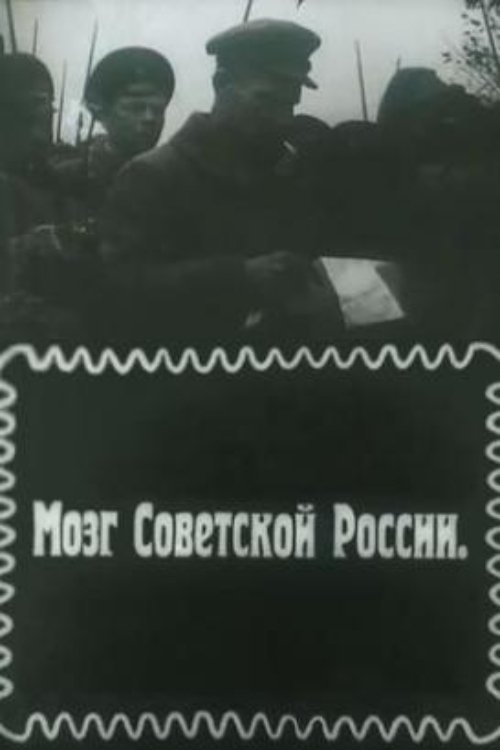
The Brain of Soviet Russia
5.9

This film shows the leaders of organizations that emerged after the Russian Revolution. It is the fragment of ‘Anniversary of the Revolution’ made by Vertov in 1918.

The Brain of Soviet Russia

1919
The Gentlefolks of Skotinin
8.0

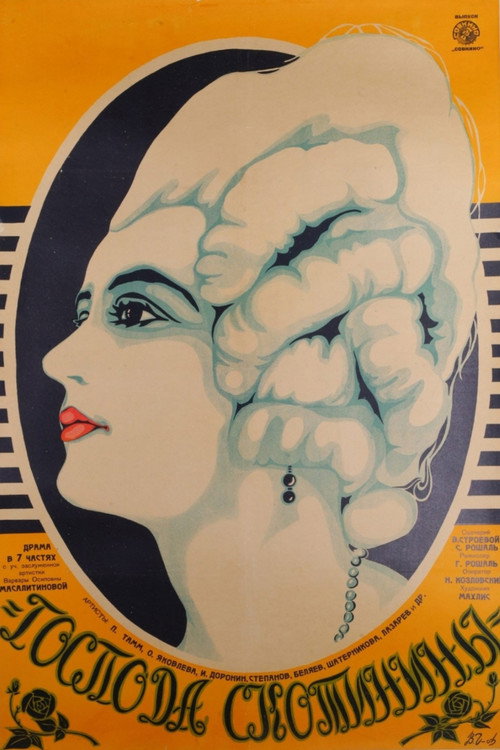
A comedy starring Nina Shaternikova, The Skotinins is loosely based on the 18th century play The Minor by Denis Fonvizin. In it, the upper class is shown as both depraved and stupid, engaging a variety of absurd, over-the-top follies.

The Gentlefolks of Skotinin

1927
The Bear's Wedding
5.4

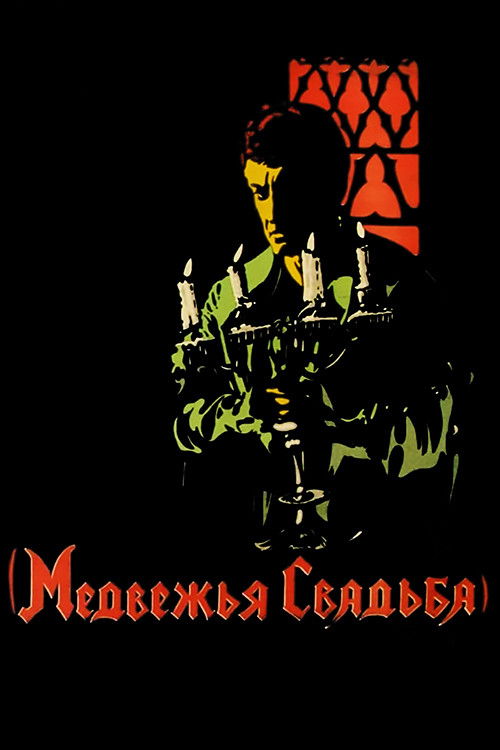
Konstantin Eggert both directed and starred as Count Shemet, cursed by his insane mother’s traumatic experience with a bear to have seizures during which he himself becomes a “bear” on the kill.

The Bear's Wedding

1925
No image
10.0

A screen adaptation of excerpts from Jack London's dystopian novel of the same name describing the rise of the Oligarchy (the "Iron Heel") in the United States. The film was meant to be screened during theatre performances performed by the same actors.

The Iron Heel

1919
No image
N/A

No description available.

Seansa

1970
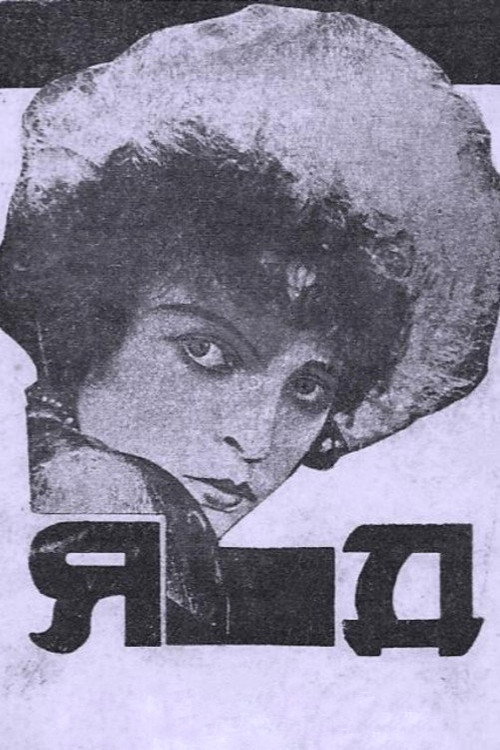
Poison
10.0

Partially lost.

Poison

1927
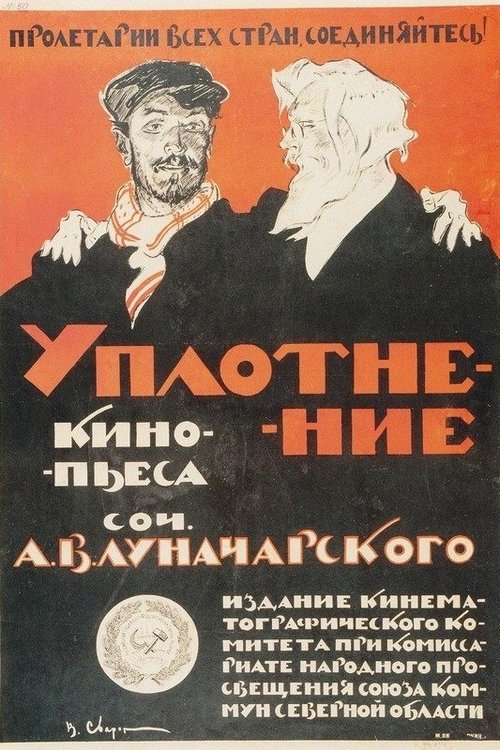
Uplotneniye
4.9

In the process of housing redistribution, a worker and his daughter are relocated from a damp basement to one of the rooms at a professor's spacious flat. Factory workers begin to visit and the number of guests grows and grows; the professor begins to hold widely attended lectures at the workers' club. Romance blossoms between the professor's youngest son and the worker's daughter, and the two decide to marry...

Uplotneniye

1918
Smelchak
8.0

Propaganda film directed by Mikhail Narokov and Nikandr Turkin. Partially lost.

Smelchak

1919