Pierre L'Amare
Directing
Biography
Pierre L'Amare was a cartoonist, illustrator, animator. and film director. He worked for the National Film Board of Canada, producing films like “Struggle for a Border” and “Eleven Steps to Survival”.
Known For

This documentary shows how an Inuit artist's drawings are transferred to stone, printed and sold. Kenojuak Ashevak became the first woman involved with the printmaking co-operative in Cape Dorset. This film was nominated for the 1963 Documentary Short Subject Oscar.
Eskimo Artist: Kenojuak
In this short documentary we learn the back story of the Buddha – the religion he founded and how it is manifested today. Travel through Southeast Asia to India, Burma, Sri Lanka (formerly Ceylon), Thailand, Japan, China and many other countries to discover the history and ideas behind Buddhism.
Buddhism
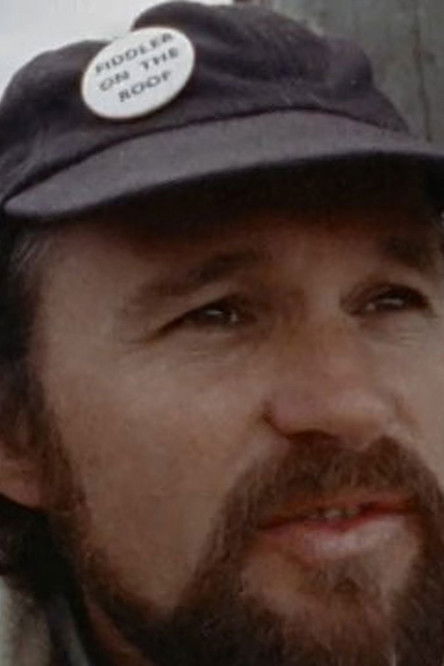
Toronto-born Norman Jewison first gained prominence producing for Canadian television, then went on to greater success making Hollywood theatrical features. In this film he is seen directing a large international cast and crew in the film version of the musical hit 'Fiddler on the Roof'. Between scenes, Jewison talks freely about many aspects of the film industry and some of his experiences in it. A candid study of a director in action.
Norman Jewison, Film Maker
Here you will see Marie Dressler, Mary Pickford, Norma Shearer, Walter Huston and a host of other Canadians who achieved world renown on the silver screen. Slapstick, romance, tragedy, comedy--it's all here in an entertaining sampling of what audiences have applauded down the years. You see the audiences too, and the theatres where early movies first drew in the fans. As guide you could hardly find a more knowledgeable or familiar figure than Walter Pidgeon, a Canadian with eighty or more films to his credit. He recalls the personalities of the great stars he has known and explains how the technology developed that shows the stars on the screen.
Anniversary
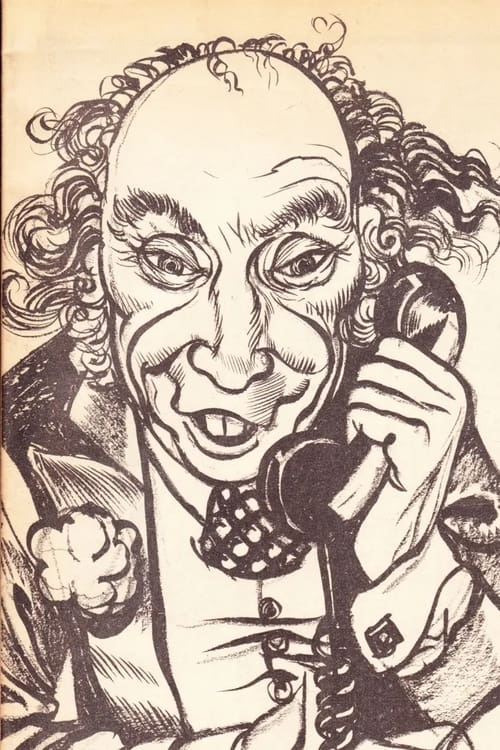
An imaginative history of editorial cartooning in Canada. The documentary provides a witty take on Canada's history through the eyes of political cartoonists like Duncan Macpherson, Robert LaPalme, and Aislin (Terry Mosher). Over 50 artists' notable cartoons and their impact are explored, capturing reactions from their subjects. One cartoonist sums it up: "A picture is worth a thousand words, but a well-crafted cartoon is worth a thousand pictures." An absolute must for cartoon buffs.
The Hecklers
A two-part study of nuclear power with Larry Henderson, skilled observer, analyst and commentator on public affairs as guide. Part 1 shows civilian applications outside Canada. Part 2 shows the history of atomic energy development in Canada, from the outset of World War II to the installations at Chalk River.
The Power of Matter
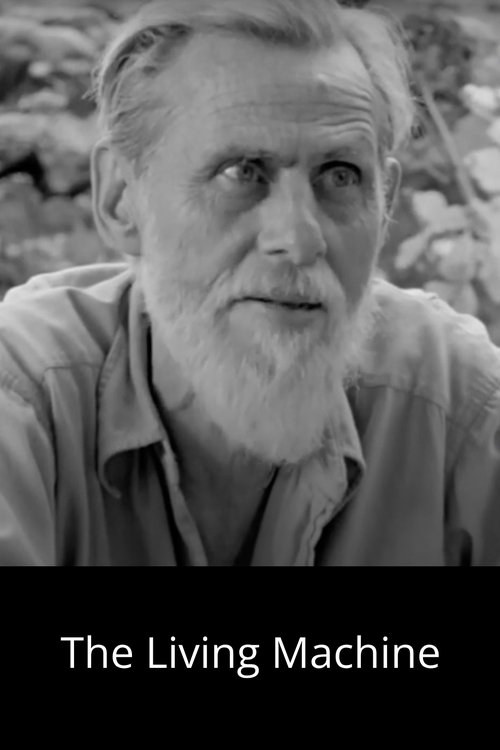
In two half-hour parts, The Living Machine explores the progress made in electronics technology and looks forward to an exciting world-to-be. Produced in 1962, the first part demonstrates the capacities of a computer's "artificial intelligence," far exceeding that of any one human brain. The second part shows experiments in electronically duplicating some sensory perceptions.
The Living Machine
A look at the ruins of the ancient city of Angkor. The largest collection of sculptures the world has ever seen - an entire metropolis of palaces and temples recovered from the jungle.
Angkor - The Lost City
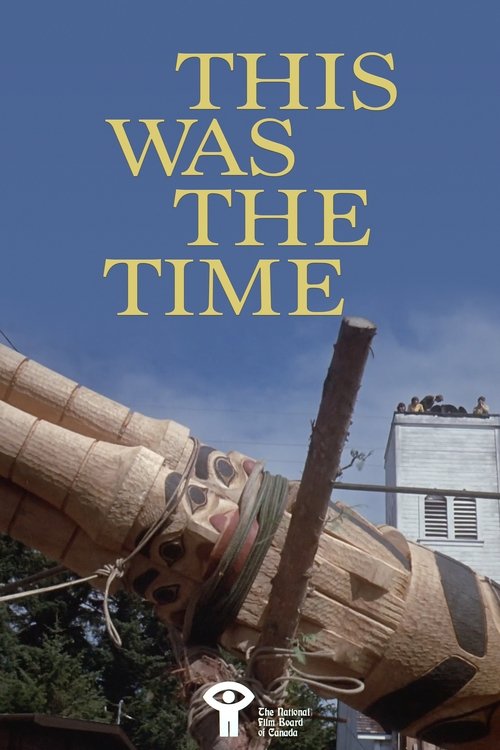
When Masset, a Haida village in Haida Gwaii (formerly known as the Queen Charlotte Islands), held a potlatch, it seemed as if the past grandeur of the people had returned. This is a colourful recreation of Indigenous life that faded more than two generations ago when the great totems were toppled by the missionaries and the costly potlatch was forbidden by law. The film shows how one village lived again the old glory, with singing, dancing, feasting, and the raising of a towering totem as a lasting reminder of what once was.
This Was the Time
Canada struggles to preserve her borders after the Treaty of Washington in this feature documentary. The country's survival as a nation independent of the United States rests in the balance, as the film shows in its exploration of historical context, underlying factors, and possible alternatives. Part 9 of the series Struggle for a Border: Canada's Relations with the United States.
A Second Transcontinental Nation
No description available.
Mon numéro 9 en or
This documentary focuses on the contest for the continental interior. It examines the American advantages and the problems plaguing Canada internally. It also looks at the Oregon and Maine boundaries, American anti-monarchism, and a potential sign of a transcontinental nation to come. Part 4 of the series Struggle for a Border: Canada's Relations with the United States.
Dangerous Decades (1818-1846)
This feature documentary recounts the opposition between American revolutionaries and Canadian communities settled along the St. Lawrence River during the period leading up to the American Revolution. The flames of rebellion spread northward but Canada resisted encroachment. Part 2 of the series Struggle for a Border: Canada's Relations with the United States.
Canada and the American Revolution (1763-1783)

A study of the automobile and its pervasive effect on the history of North America. Focusing on the Ford dynasty, from the original Henry car through to Henry II, the film demonstrates how society has adapted to fit the needs of the automobile.
Henry Ford's America
This documentary explores the years following Canadian Confederation, a delicate period in regard to American attitudes towards Canada. This was a critical time for the two countries, and the complex diplomacy of the Treaty of Washington is brought to life. Part 8 of the series Struggle for a Border: Canada's Relations with the United States.
The Border Confirmed: The Treaty of Washington (1867-1871)
This documentary takes us from the 1850s to 1863. We see several historical episodes from this period interwoven in a unique fashion. The film reveals the complex relationship between Great Britain, Canada, the North and the South—before, during, and after the American Civil War. Part 6 of the series Struggle for a Border: Canada's Relations with the United States.
The Friendly Fifties and the Sinister Sixties (1850-1863)
This documentary presents a fascinating study of the great and enduring principles of international relations. Through this close look at Canada and the American Civil War, and the relationship between Canada, Britain, the North and the South, we get a sense of the delicate balance between war and peace, and the diplomacy involved. Part 7 of the series Struggle for a Border: Canada's Relations with the United States.
The Triumphant Union and the Canadian Confederation (1863-1867)
A film demonstrating steps to take in the event of a nuclear attack. Animated drawings show the effects of atomic explosions in the air and at ground level. How wide an area is affected by light and heat flash, radiation and radioactive fall-out are clearly illustrated. How to build or improvise a fall-out shelter, what to stock in it, when to take shelter and how long to stay there are similarly explained. Produced by the National Film Board of Canada for Emergency Planning Canada.
11 Steps to Survival
Why are there just two nations occupying that enormous expanse of the North American continent north of the Rio Grande? Why not just one unlimited American empire? Or why not several nations? This unique work gives clear and vivid form to the immense and complex forces--economic, political, military, diplomatic, social, and geographic--that created and confirmed the U.S.-Canada border. The largest single work ever undertaken by the National Film Board of Canada, Stuggle for a Border is the result of painstaking scholarship and research, and imaginative filmmaking. Each of the nine one-hour films is entirely self-contained, though part of a larger continuity. There are no interviews, but an on-screen narrator provides commentary and perspective. The films are so constructed that, if need be, they may be shown in half-hour, or shorter, segments.
Struggle for a Border: Canada's Relations with the United States
This feature documentary addresses the struggle between New England and New France, from the first uneasy contacts to the culminating conflicts. The economic battle between the St. Lawrence trade system and that of the Atlantic-Hudson is also explored. Part 1 of the series Struggle for a Border: Canada's Relations with the United States.