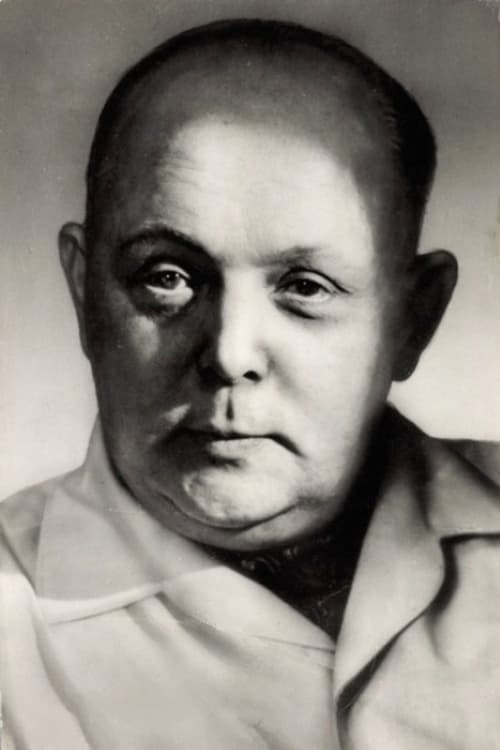
Peter Kiwitt
Acting
Known For

A film about the historical uprising of the seamen in Kiel: During the Russian October Revolution of 1917, German and Russian soldiers start to solidarize with each other. By disarming the officers, machinist Henne Lonke and stoker Jens Kasten prevent the attack on a Russian freighter. When German admiralty gives out orders for operation "Nibelungen", which would lead the German fleet into a suicidal attack against England and quell the revolutionary spirit, seamen and soldiers from different political backgrounds unite in protest.
The Sailor's Song
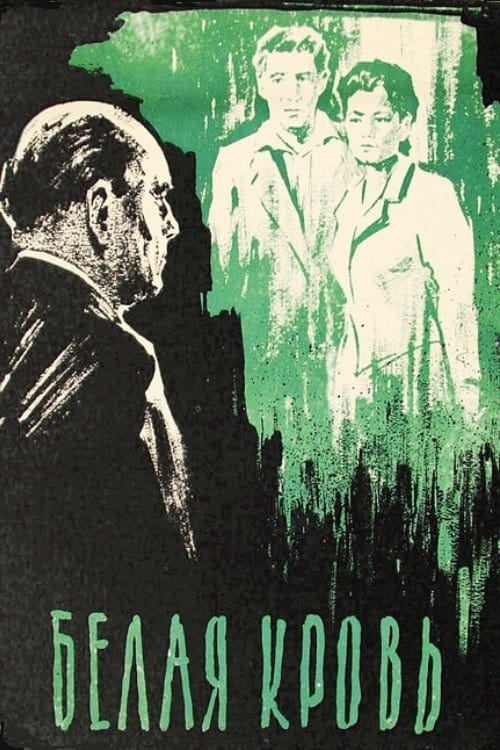
The military officer Manfred von der Lohe has just been on a training course in the USA. During atomic bomb tests there, he was radioactively contaminated and has been incurably ill ever since. In order not to endanger the planned nuclear armament of the Bundeswehr and the economic interests involved, von der Lohe and his wife Eleonore are to disappear. But the couple turns to Professor Soltau, an anti-nuclear activist. Their goal is to inform the public about the danger …
White Blood

A mysterious magnetic spool found during a construction project is discovered to have originated from Venus. A rocket expedition to Venus is launched to discover the origin of the spool and the race that created it.
The Silent Star
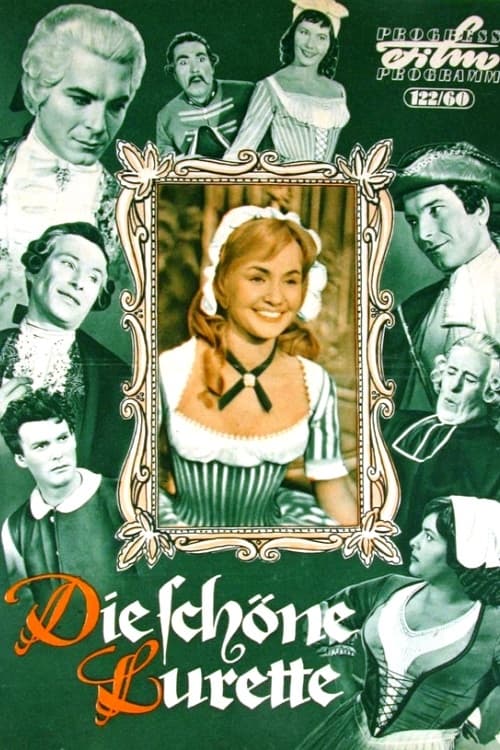
The beautiful and charming laundress Lurette is a well sought-after young woman in Ludwig XV’s Paris. Her heart is already taken, however, and she makes elaborate plans during Carnival to obtain the man she truly loves, the carpenter Campistrel. During her plans to make Campistrel jealous and recognize his love for her, she meets the Duke of Marly, who plans to make her his mistress. The unsuspecting Lurette finds herself caught in a love triangle, and her peer, Marcelline, must save the beautiful Lurette from these scandalous schemes.
The Beautiful Lurette
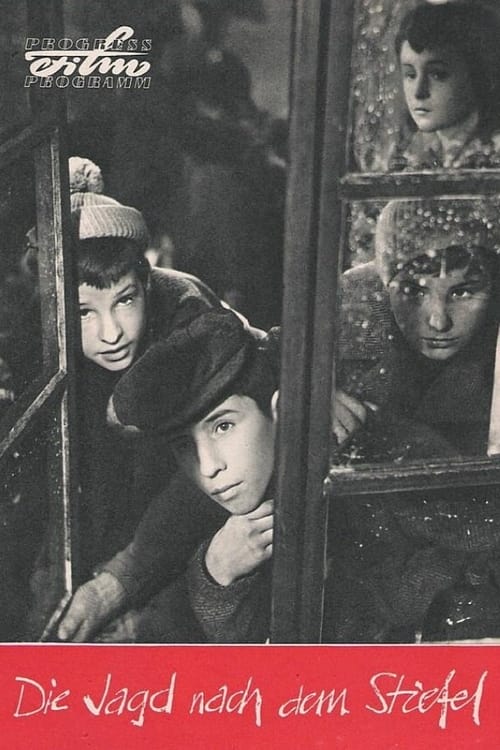
Germany 1932, constant fights between Communists and Nazis tear the country apart. When a Communist is found dead, the police accuses another Communist being his murderer. But the Communist youth group follows another trail - the murderer left a characteristic boot print at the scene of the crime.
The Hunt for the Boot

Albert Hauptmann is an out of work waiter in Cologne who is often confused with a former Captain of the Nazi Army. Albert uses this to his advantage and becomes the Director of the Montan Corporation, and a member of the West German Parliament. Herr Karjanke, the real Captain, learns of Albert’s ruse, and wants to claim his "rightful" position in Parliament. But Karjanke cannot come forward until his politicking "Doppelganger" succeeds in passing an amnesty law for war criminals. When Albert is finally brought before a judge on charges of fraud, he learns that this own amnesty law does not apply to him.
The Captain from Cologne
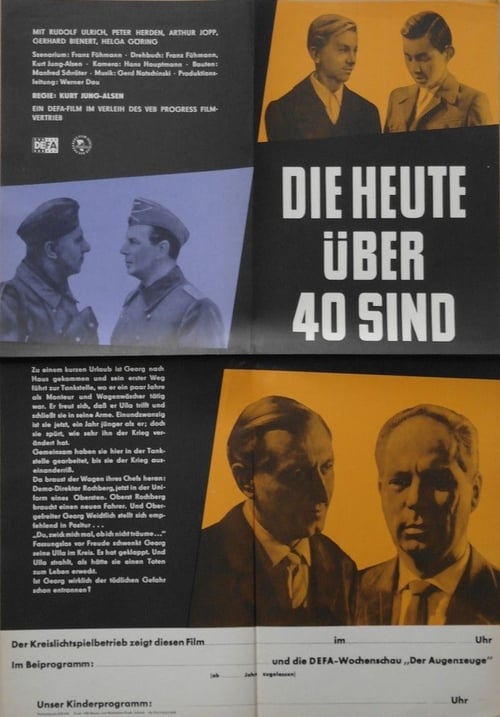
Film by Kurt Jung-Alsen.
Die heute über 40 sind
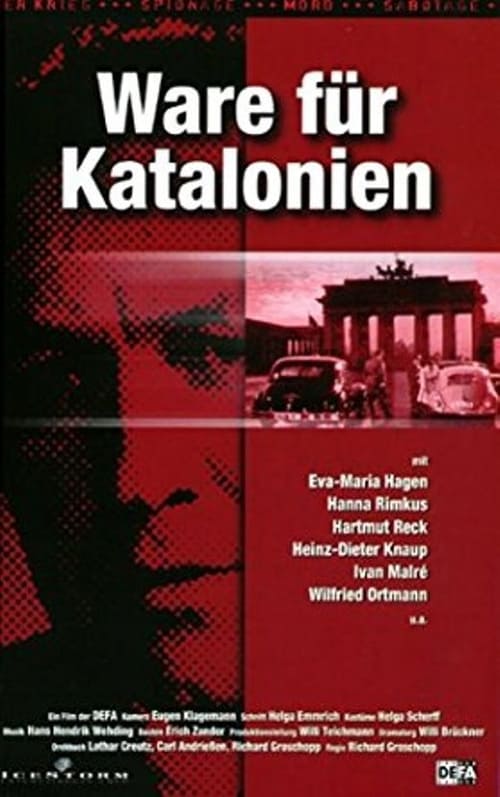
At the end of the 1950s, the production of optics in the German Democratic Republic has reached top quality and instigates interest in the West. When national demand rises strongly and at the same time the export to South America heavily decreases, the Volkspolizei - the GDR police force - starts to look into the case. Two seemingly unrelated cases are the starting point for the investigation by second lieutenant Schellenberg of the department for optics racketeering: An old woman who was arrested in the Berlin city railway for trying to smuggle a pair of binoculars to West Berlin, and a dead person in an area of allotments who was involved in obscure dealings with optical devices.
Ware für Katalonien

Co-pilot Horst Schubert is a braggart and a true Don Juan. Thus, he tells young Ilse that he is in fact an "aircraft commander". This assertion brings about an embarrassing situation, for he suddenly meets her onboard his new work place, an IL-14 charter plane where Ilse acts as a stewardess. It gets worse, however: During a stop in Varna the police appear because Horst’s former lover Madelon has vanished. At home, meanwhile, his landlady has her hands full with her lodger’s current and former playmates. Ilse decides to put an end to this mixup and since the dull captain of the plane, Richard, makes no move to confront his co-pilot about his unstable private life, the smart stewardess appeals to the rest of the crew to help her teach Horst a few lessons in love.
Die Liebe und der Co-Pilot
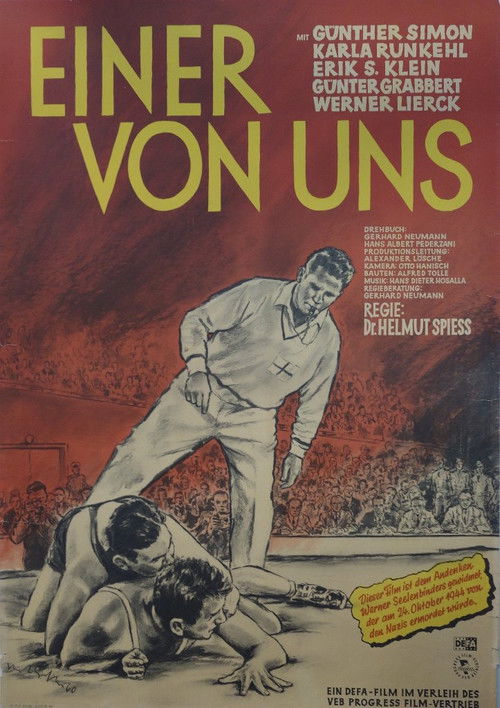
A wrestler finds his political interest and activism through sport. However, this is extremely dangerous during the Nazi era and the workers' sports movement starts a resistance against the Nazi regime...
Einer von uns

The corner Schönhauser Allee in East Berlin is the main meeting-point for a group of adolescents. Dieter is a construction worker who falls in love with Angela. She, in turn, spends time with the clique whenever her mother is occupied with her new lover. "Kohle" stays away from home to avoid his dad's alcohol problem, and Karl-Heinz is on his way to becoming a small-time criminal. Due to their interest in western music and culture they are regarded as no-goods and rowdies. Things get interesting when an incident forces Dieter and "Kohle" to escape to West Germany. Written by c.winter
Berlin - Ecke Schönhauser...
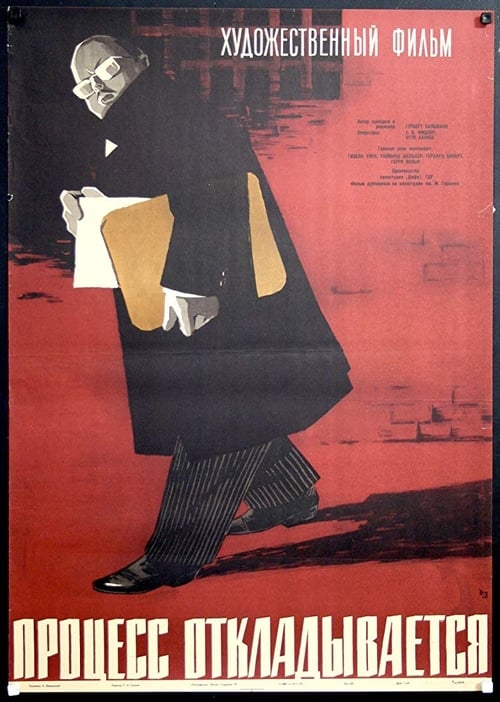
In 1955, Michael Vierkant, a Jew who had emigrated during the Nazi era, returns from abroad to the Federal Republic of Germany to obtain the conviction of Korn, the former informer responsible for the murder of his sister. Korn is back in office; Michael's efforts remain unsuccessful. There is a direct confrontation between the two, and Michael shoots Korn in self-defense. He flees and is hidden by the young, reclusive artist Marie Jäger, but is then caught by the police and charged with premeditated murder. The case is taken out of the hands of the criminal investigation department by the Office for the Protection of the Constitution, which constructs an act of political revenge on behalf of the communists. Michael manages to escape from prison. Marie and her friends organize a press conference at which Michael reveals the connections. The trial is postponed.
Der Prozeß wird vertagt
No description available.
The Shadow
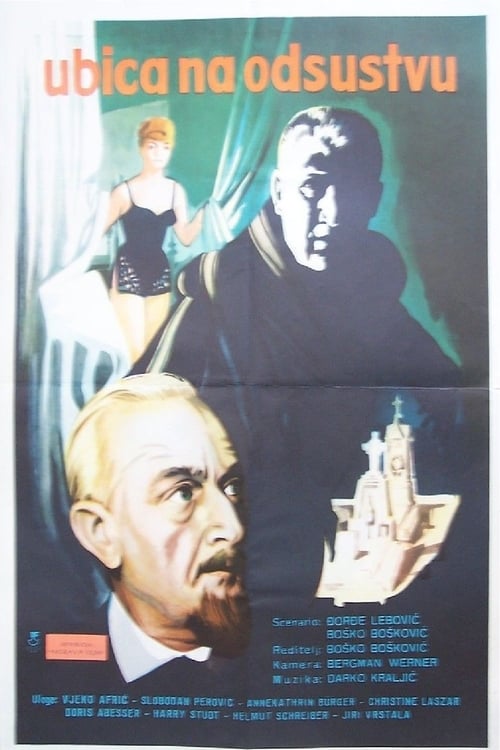
The plot takes place in a picturesque Montenegrin islet of Sveti Stefan. The local authorities investigate the murder of a tourist, which background turns out to be connected with the Nazi crimes.
The Criminal on Vacation

A new world full of excitement and temptation opens up for 18-year-old Erika when her father flees from Krüselin, a small village in Brandenburg, to West Berlin, taking his daughter with him. Her uncle's luxurious house, the turbulence of life in the big city, and her cousin's progressive thinking and quick wit all turn her head at first. But behind all this glitter and tinsel lurks the cold, hard world of money and Erika begins to feel homesick for the town where she grew up and for Rolf, her first real boyfriend.
Life Begins
In San Marengo, master thief Cesare Giovanini’s heists leave local merchants profiting from hefty insurance claims. When captured, he’s granted luxury prison comforts, and even nightly “private visits”, in exchange for continuing his work under police supervision. Bored, Cesare escapes, only to be recaptured with an unexpected offer: a lucrative board position instead of bars.
Der Dieb von San Marengo

The young architect Hannelore becomes part of the all-male brigade Fröhlich whose members are supposed to build houses at the Strausberger Platz in Berlin. The brigade men drink a lot of beer and are less than thrilled about the new girl. Hanne is the only one who is absolutely delighted with Hannelore. When he starts a drunken fight on May Day, he is arrested and accused of armed robbery. Hannelore immediately convinces the other men in the brigade to help Hanne.
In Love and Previously Convicted

Engineer Strebel′s apprentices think of nothing else but music and dancing, although they should really concentrate on their marks. Consequently, Strebel is anything but delighted with his pupil. To top it all, a TV show becomes interested in a performance by Strebel′s apprentices. To calm down their teacher, Jutta Fröhlich, who has already cast an eye on Strebel, makes him an offer: When they better their marks, Strebel would permit them to make a performance on television.
Guten Tag, lieber Tag
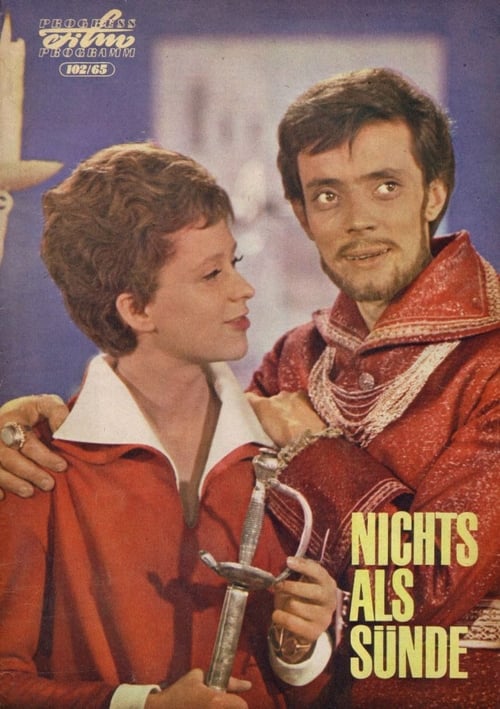
Based upon Shakespeare′s "Twelfth Night", the movie tells the story of the Duke of Illyria who is in love with the Countess Olivia. Olivia, however, keeps eluding him. When the Duke sends her a page to bring her a message, Olivia falls in love with the messenger who is in fact a woman called Viola. After she was shipwrecked on the shores of Illyria, Viola assumed the role of her missing brother. She cannot return Olivia′s love because she, in turn, adores the Duke.
Nichts als Sünde
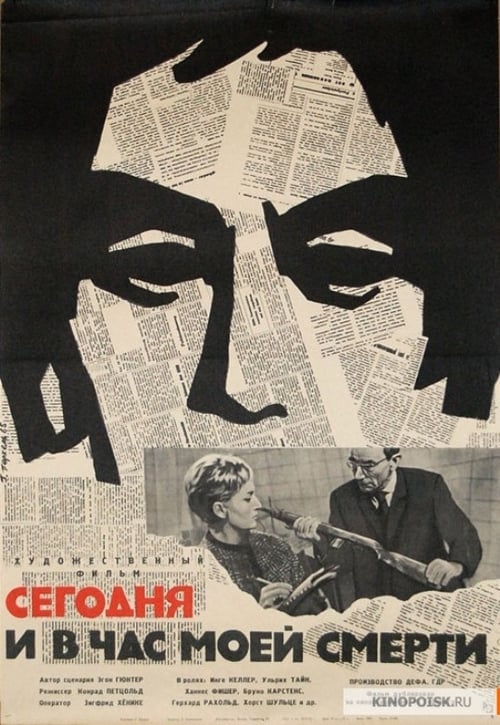
Ella Conradi, a dedicated journalist from Germany, is in Jerusalem to report about the trial against the Nazi criminal Eichmann. Disgusted by the monstrosities that are revealed, she eventually returns to Germany. There, she wants to cover common cases and trials again. Her first assignment is a murder trial against a man called Ralf Jordan who constantly maintains his innocence. Conradi, who believes Jordan and wants to help him, starts to investigate the case - and thus opens up a political can of worms. The backgrounds of the case reach back to the Nazi period and involve officials of the Third Reich, who in the meantime have returned to their powerful positions.