Ulrike Pfeiffer
Directing
Biography
Ulrike Pfeiffer is a German director and cinematographer.
Known For
In conversations with his friends and colleagues, among them Bernd Upnmoor, Helmut Herbst, Alexander Kluge, Klaus Wyborny, Daniel Kothenschulte and Helge Schneider, Ulrike Pfeiffer takes us on a journey into the broad expanse of Nekes' cabinet of wonder and his cinematic works. At the same time, this documentary provides an insight into the history of experimental film in Germany.
Werner Nekes - Life Between the Pictures
Experimental film about a train ride. The carriage window becomes a screen, the landscape a mood, the mood a landscape.
Detour
No description available.
Strom - Versuche im Dunklen
Women and their children disappeared without a trace in a mountain near Rome. The case remains unsolved and therefore becomes a myth and the film sets out to discover what this and a myth actually is, namely an expression of past history in time and space. We see like in a very old play the appearance of the actors playing the myth, who become more and more intensely mythical themselves. They speak up and yet suffer, they are just playing and yet they are guilty. The narrator, the choir, the revenge, the madness, the love, the death. This is what Blue is made of!
A Kilo of Blue (The Music)
Flug durch die Nacht, shot during Ilona Baltrusch's studies at the Deutsche Film- und Fernsehakademie Berlin - DFFB, explores the relationship between language and image. The film follows the two protagonists, Gretel Kemeny and Martin Peter, through 1980s nocturnal Berlin.
Flight through the Night

In Gascony, a sparsely populated region in the southwest of France, lives Dr. Jean Cadéot, a ninety-year-old veterinarian who continues to work tirelessly and still enjoys doing so. Although his eyesight is getting worse and worse, he treats his animal patients with all his senses and all his love.
The Fabulous World of Doctor Cadéot
This experimental short film plays on genre conventions and expectations. Loosely connected elements from the Nouvelle Vague, thrillers and silent film raise questions: What do the three young men in the car have to do with the woman in the café? Who is she waiting for? Electronic sounds from the artist padeluun, reminiscent of radio noises, link the scenes and give the impression that aliens are the observers of these mysterious events.
This Is an End
No description available.
Noch einmal
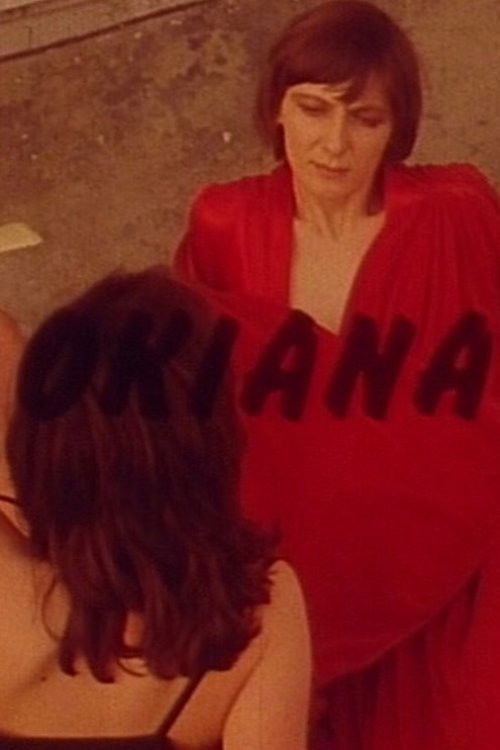
An imaginary journey on a ship. We turned the building of the Film Academy into a ship. Claire and Solange from a Jean Genet piece, a polish woman with her Madonna, screaming sailors are a few of the passengers on this artifical journey.
Okiana
Children act as adults and adults behave like children. A neglected French castle, its surroundings and 18th century music are the stage for a costume comedy.
Rokoko
The rules of the game are set by a child who is asked questions by the director about love, jealousy, the number of people involved, kissing and kissing in the film. Two women and two men then act out human relationships according to set rules - as desire, love, jealousy, anger, indifference, tenderness, arguments, separation, staying together, conversation, getting used to each other, longing.
Die Spielregeln
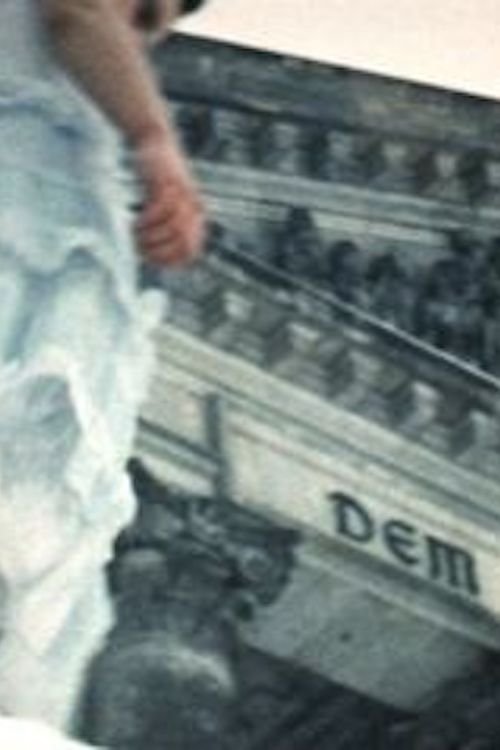
Aurand and Pfeiffer filmed each other at four famous sites in Europe: walking in a summer dress through the snow in front of the Reichstag in Berlin, spinning a young boy again and again through the air in Red Square in Moscow, climbing on a hot day into the waterfall at the Place de la Concorde in Paris, and, as two angels in London, walking through the night of the City. The film begins with a text about improvisation by Jonas Mekas read by himself.
Oh! The Four Seasons
Experimental short partly in colour.
Gala
No description available.
Rokoko
Four seasons in four major European cities form a four-part film cycle. This is the third part about autumn in London.