
Ryoji Ikeda
Directing
Biography
Japan’s leading electronic composer and visual artist Ryoji Ikeda focuses on the essential characteristics of sound itself and that of visuals as light by means of both mathematical precision and mathematical aesthetics. Ikeda has gained a reputation as one of the few international artists working convincingly across both visual and sonic media. He elaborately orchestrates sound, visuals, materials, physical phenomena and mathematical notions into immersive live performances and installations.
Known For

An anthology film consisting of four segments based on literary works by Edogawa Ranpo.
Rampo Noir
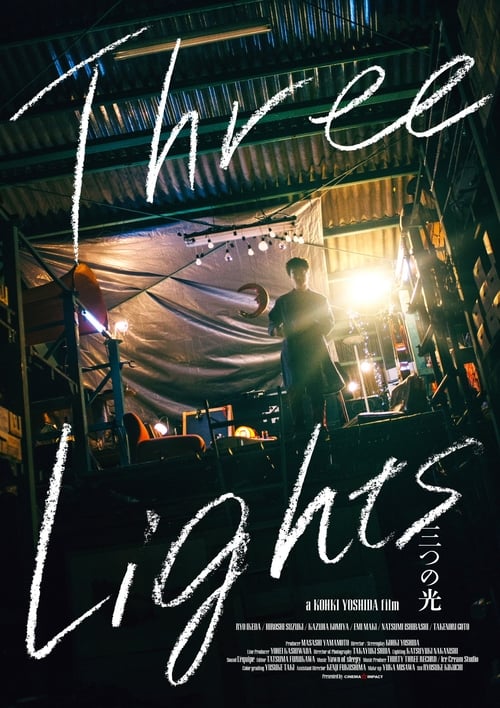
Aoi is a young nursery school teacher whose fiancé leaves her. Her friend Michiko works in a call centre and has ‘lots of free time, but little freedom’. She no longer interacts with her husband, aside from the occasional sad blow job. Then there’s her attractive tennis teacher Masaki, with whom she’s having an affair that’s conducted when they’re pulled up in parking lots. And finally there’s his friend K., a self-proclaimed genius with authoritarian tendencies.
Three Lights
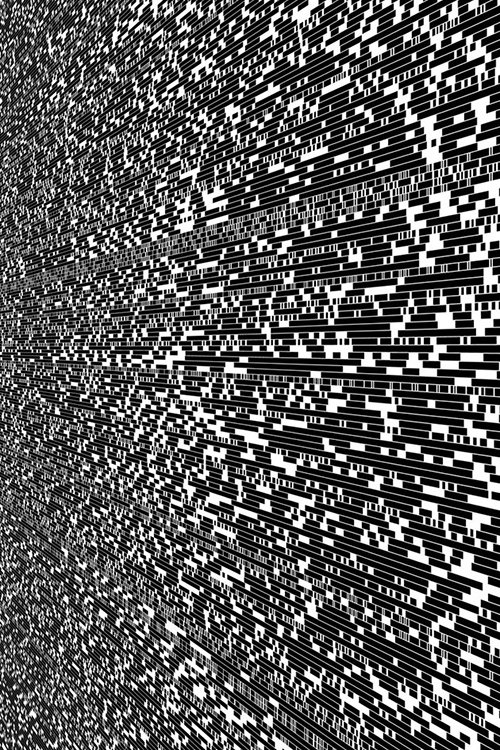
Using musical pitch as a medium, Ryoji Ikeda translates various kinds of data into an almost abstract code—a perfect sequence of “phrases” that create audiovisual compositions like those in code-verse. A universe of code and a code poem, the installation transforms mathematical code into an independent symphonic or polyphonic work. code-verse has no narrative: it communicates with the viewer’s senses. Immersed in white noise, viewers are invited to contemplate the poetry of mathematical relationships and variations in code in the same way one listens to music.
code-verse
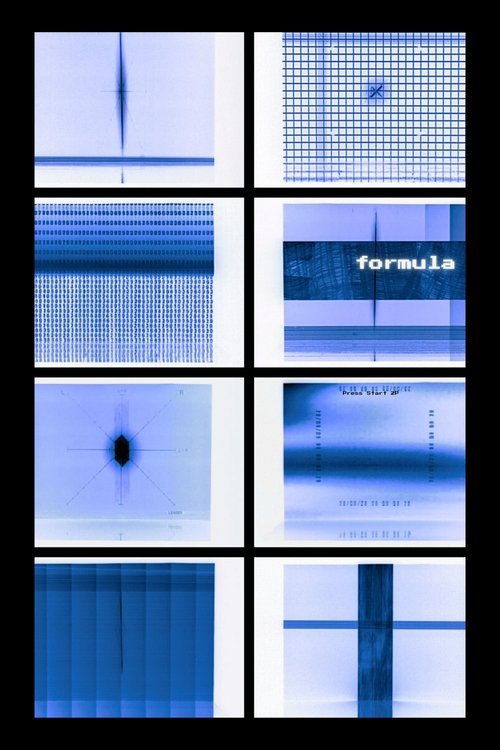
formula, a constantly evolving work updated with each presentation, is a perfect synchronisation between sound frequencies and the movements on the screen. It places the viewer in a binary geometry of space and exploits the darkness to amplify one's perceptions. There is a complete integration of the various elements, composing music, images, lighting and orchestrating the relationships between them through a highly precise score.
formula
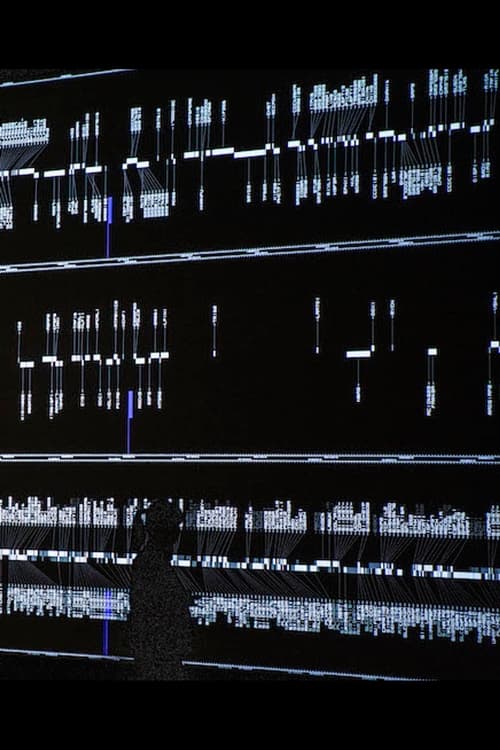
data-verse is a data-driven audio-visual trilogy by artist and composer Ryoji Ikeda which marks a two-decade culmination in the artist’s research. The trilogy addresses the layered dimensions of our world, from the microscopic, to the human, to the macroscopic. Through Ikeda’s process, massive scientific data sets have been transcribed, converted, transformed, de/re/meta-constructed and orchestrated to visualise and sonify the different dimensions that co-exist in our world between the visible and the invisible. Each variation immerses visitors in the vast data universe in which we live, capturing hidden facets of nature and the vast scientific knowledge underpinning our existence. This large-scale data-driven trilogy is generated by extremely precise computer programming and features a minimalist electronic soundtrack, harmonised with Hollywood-standard, high-definition, 4K DCI video projections of scientific data onto a large screen.
data-verse 2
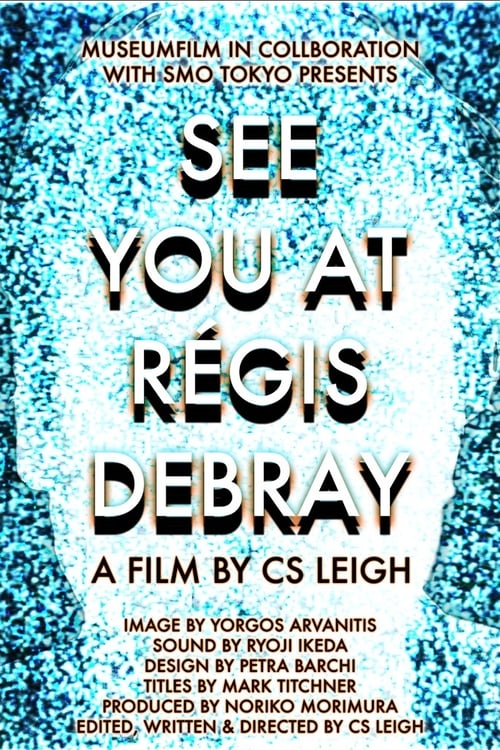
Paris. The year is 1969. Andreas Baader on the run from the law in Germany hides out in the apartment of the political intellectual Régis Debray who at the same time is serving what is supposed to be a long prison term in Bolivia.
See You at Régis Debray
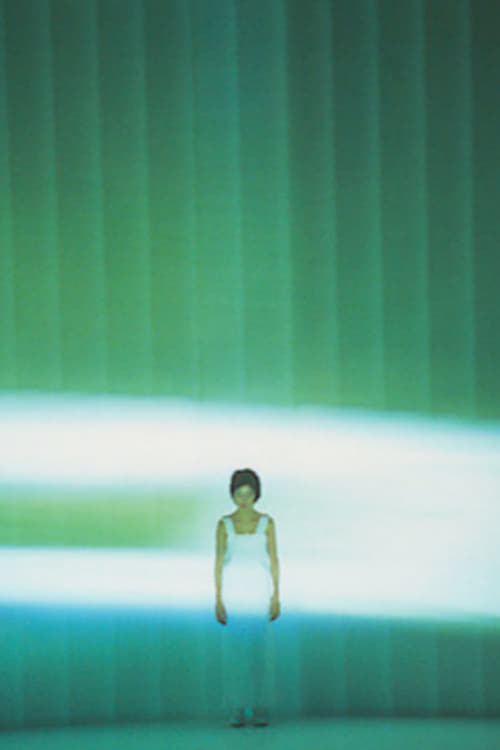
Looked from various view points, be it religious, philosophical, medical, cultural or emotional, on a stage flooded in flickering light, with an advanced technique of combining bodies, images, video, sounds and lighting, [OR] is a meditation on the "grey humour" overhanging the space between life and death.
Dumb Type: OR
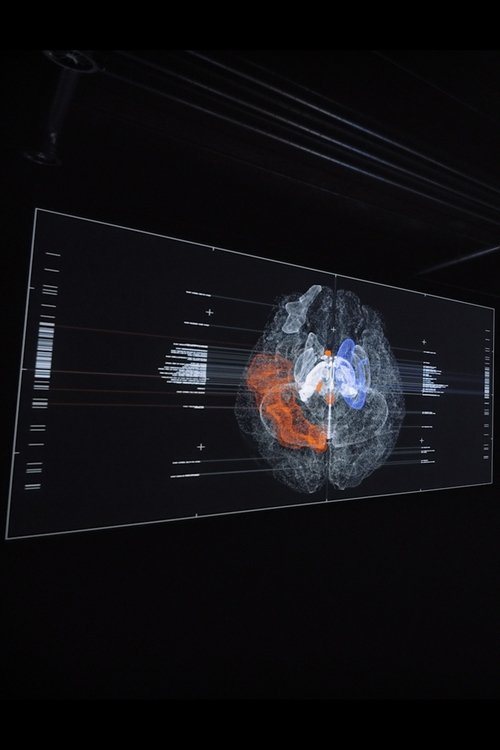
data-verse is a data-driven audio-visual trilogy by artist and composer Ryoji Ikeda which marks a two-decade culmination in the artist’s research. The trilogy addresses the layered dimensions of our world, from the microscopic, to the human, to the macroscopic. Through Ikeda’s process, massive scientific data sets have been transcribed, converted, transformed, de/re/meta-constructed and orchestrated to visualise and sonify the different dimensions that co-exist in our world between the visible and the invisible. Each variation immerses visitors in the vast data universe in which we live, capturing hidden facets of nature and the vast scientific knowledge underpinning our existence. This large-scale data-driven trilogy is generated by extremely precise computer programming and features a minimalist electronic soundtrack, harmonised with Hollywood-standard, high-definition, 4K DCI video projections of scientific data onto a large screen.
data-verse 3
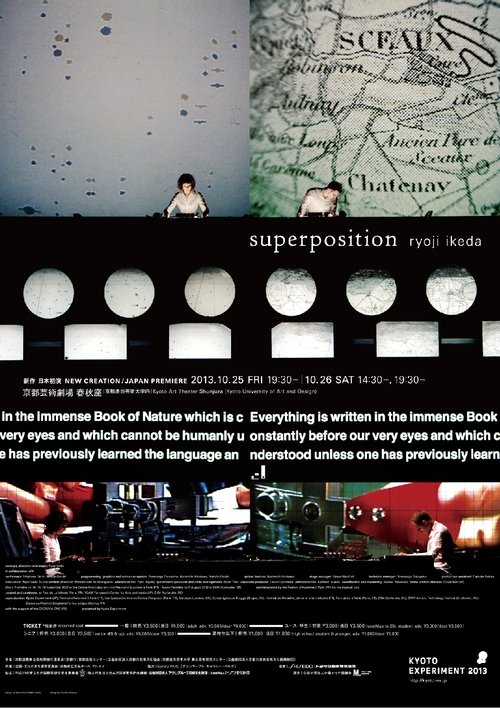
superposition is a project about the way we understand the reality of nature on an atomic scale and is inspired by the mathematical notions of quantum mechanics. Performers will appear in Ikeda’s work for the first time, performing as operator/conductor/observer/examiners. All the components on stage will be in a state of superposition; sound, visuals, physical phenomena, mathematical concepts, human behaviour and randomness – these will be constantly orchestrated and de-orchestrated simultaneously in a single performance piece.
superposition
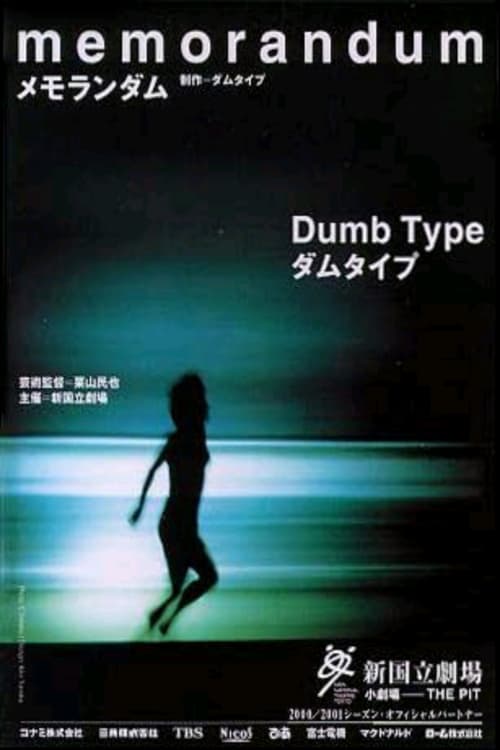
Combining elements of multimedia, dance and fragmented narrative, memorandum explores the hazy dimensions of recall that ground and disquietly erode our experience minute-by-minute. The set is simple - almost an abstraction. A bare stage is bisected by an impenetrable but translucent wall, a screen onto which will be projected a barrage of images. Amidst a cascade of white noise and REM-speed visual flashes, the performers break down the motions into displaced gestures in silhouette. Penetrating deeper beneath the surface of moment, dancers drift in a slow sensual subconscious slidestep through the "forest of memory" haunted by voices and desires.
Dumb Type: Memorandum
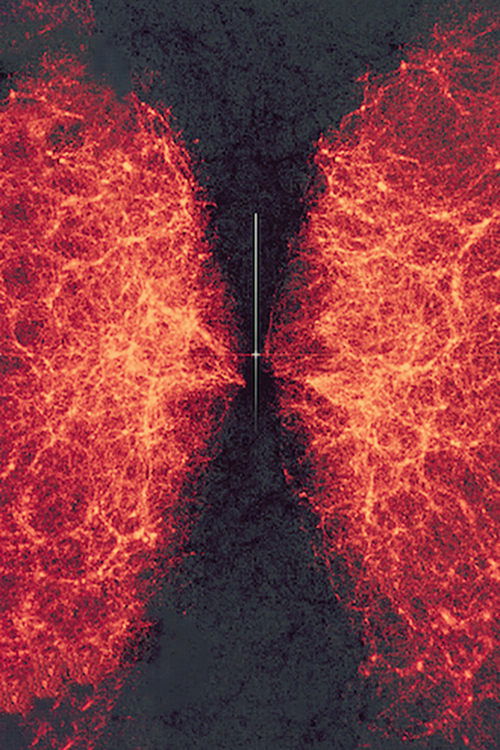
data-verse is a data-driven audio-visual trilogy by artist and composer Ryoji Ikeda which marks a two-decade culmination in the artist’s research. The trilogy addresses the layered dimensions of our world, from the microscopic, to the human, to the macroscopic. Through Ikeda’s process, massive scientific data sets have been transcribed, converted, transformed, de/re/meta-constructed and orchestrated to visualise and sonify the different dimensions that co-exist in our world between the visible and the invisible. Each variation immerses visitors in the vast data universe in which we live, capturing hidden facets of nature and the vast scientific knowledge underpinning our existence. This large-scale data-driven trilogy is generated by extremely precise computer programming and features a minimalist electronic soundtrack, harmonised with Hollywood-standard, high-definition, 4K DCI video projections of scientific data onto a large screen.
data-verse 1
![the planck universe [micro]](https://image.tmdb.org/t/p/w500/3i96US9Y4mI1bryNr7zk6P1MHpU.jpg)
The Japanese sound and visual artist thoroughly investigates data, light and sound on the basis of mathematical methods and physical theories to create immersive, large-scale installations that challenge visitors’ perception in their complex temporal and spatial presentation.
the planck universe [micro]
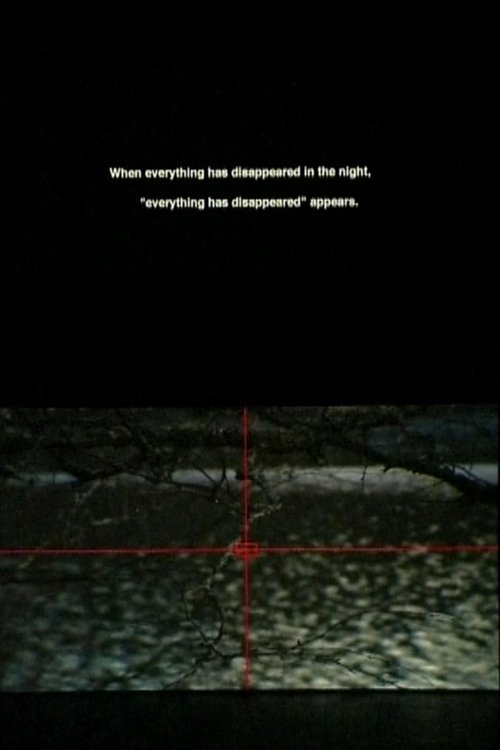
This piece is both a concert and a film that uses data as its material and theme, highlighting the ways in which data shapes our understanding of the world. Video images of landscapes are progressively abstracted into a language of data.
C4I
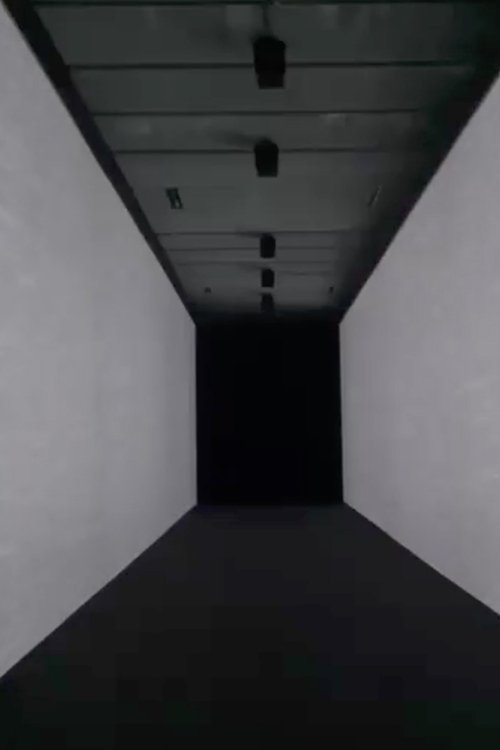
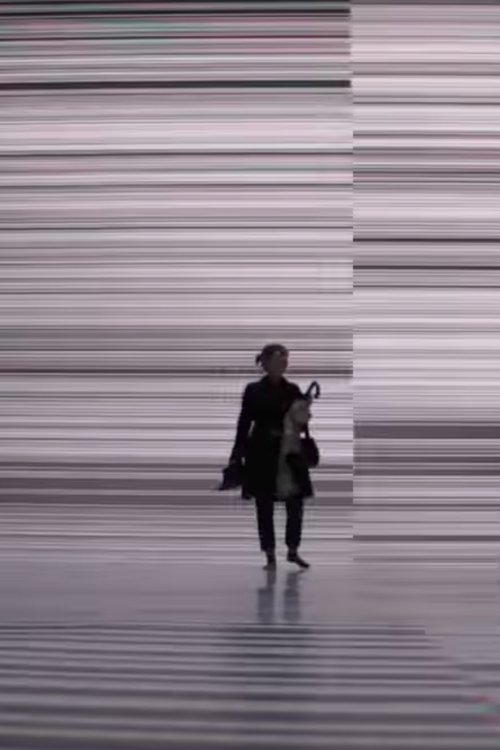
Usually presented in exhibition, using 7 DLP projectors and two blank walls.
data.path
3 DLP projectors, computers, speakers
test pattern (enhanced version), "the transfinite"
![Data.tron [WUXGA]](https://image.tmdb.org/t/p/w500/zCjY2glFtY7nQbEwKGBm80fK67z.jpg)
data.tron [WUXGA version] is an audiovisual installation in which every single pixel of a visual image is strictly calculated by a mathematical principle. These images are projected onto an immense screen reflected with a minimal yet intense soundtrack that produces a powerful and hypnotic effect on the visitor. The installation is an alternative entry point into the complexity of data and challenges our assumptions on what kind of visual vocabulary belongs to the world of art versus tech.
Data.tron [WUXGA]
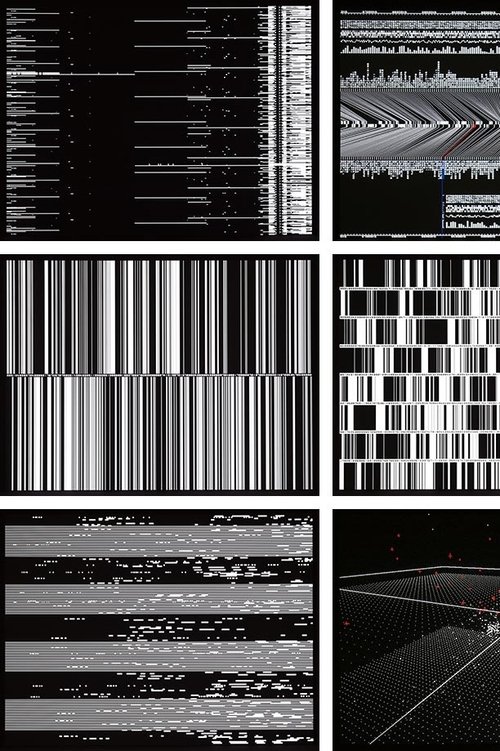
datamatics showed Ikeda at the height of his artistic powers, building on his own unmistakable artistic language. The Wire on Ryoji Ikeda, 2006 datamatics is the latest audiovisual concert in Ikedas datamatics series‚ an art project that explores the potential to perceive the invisible multisubstance of data that permeates our world. Using pure data as a source for sound and visuals, datamatics combines abstract and mimetic presentations of matter, time and space in a powerful and breathtakingly accomplished work. The technical dynamics of the piece, such as its extremely fast frame rates and variable bit depths, continue to challenge and explore the thresholds of our perceptions.
Datamatics - ver2.0
![data-cosm [n°1]](https://image.tmdb.org/t/p/w500/cIIWU7pd7bP4NsN5up4m2rxsTcn.jpg)
Commissioned by 180 Studios, Ryoji Ikeda's new site-specific audio-visual installation data-cosm [n°1] is a unique immersive experience charting the full spectrum of data on nature – from the microscopic scale of particle physics to the macroscopic of astrophysics, as was previously evident in the artist's data-verse project. data-cosm [n°1] functions as a giant microscope, a scientific apparatus, a clinical device, a monitoring system, and a window to an infinitely vast space. Visitors are invited to lie down on the floor and look up at the large LED screen set on the ceiling above them, their bodies surrounded by Ikeda's soundscapes – a total sensory experience.