Luigi Di Gianni
Directing
Biography
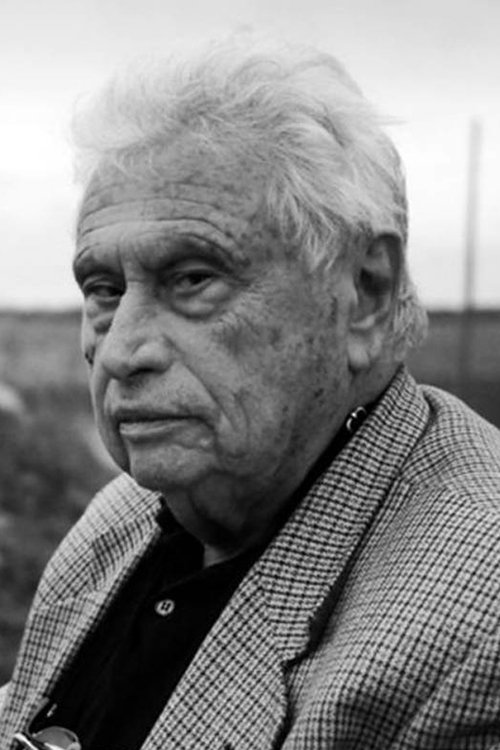
Luigi Di Gianni (born in Naples on October 20, 1926 and died in Rome on May 10, 2019) is an Italian screenwriter and director. Luigi Di Gianni believes in the power of cinema. It is this spirit, tragic and rogue, that has always possessed him. And that makes his films an experience difficult to forget in any hurry. It is an insinuating spirit, which ends up delighting and even tormenting the spectator, at first alien to her. It has multiform and unpredictable tentacles, which evade the safety of easy classification. Every time one tries to venture a definition, one has the suspicion of falling into reductionism, as if something is always missing. Starting with an inevitable question, however tedious it may seem: can we be content to speak, in his case, about documentary cinema? If asked, Di Gianni would certainly answer with a peremptory no, and for good reason. His is a decidedly authorial cinema. It is crossed by cultural and intellectual tensions that embrace literature, music, philosophy and great cinema. It is sustained by a sometimes unsatisfied desire to control rhythms, atmospheres, sounds, lights, movements… Above all, it is driven by the conviction that cinema is an expressive instrument that offers us a vision (turned black) of man and the world. And yet it is clear that few filmmakers have been able to document in such depth some of the most surprising, heartbreaking and disturbing aspects of our society, especially those rooted in the atavistic miseries of the South, as if tracing the deep folds of an Italian “anti-miracle.” Let’s take a guess. Di Gianni brings to light what elsewhere we tend to sweep under the carpet of rationality and respectability, but which, inexorably, is there underneath, applying pressure: his cinema is the documentation of social repression. Let’s follow with the thread of apparent contradictions. Di Gianni is an apolitical director, he does not believe in progress (he prefers the infinite labyrinth), he tends to be on the side of history. But, at the same time, one senses in his films a cry of rebellion, a love for the last; in short, an ethical and civil tension that is often lacking in those directors whose primary aim is to change the world. Once again: the characters in his films seem inexorably shrouded in cloaks of tragedy, and yet we are surprised, at certain moments, by the mockery of an unexpectedly grotesque twist. Armed with civic presumption, we are tempted to be indignant at manifestations that seem to plunge into the abysses of ignorance and backwardness, but at the same time, it is difficult to find filmmakers who place themselves before the world they choose to represent with more respect, avoiding the temptation to judge. And do we want to call his cinema “ethnographic”? Of course, he is one of its undisputed masters. It’s a pity that he is the first to strongly deny it, claiming instead that his films are about something else. It is not surprising that Di Gianni’s cinema is a magnificently isolated object, not only in Italy (this is unmistakably demonstrated by his only feature film, Il tempo dell’inizio, a kind of slow-motion nightmare, alien and elusive). Perhaps this is also one of the reasons for its charm, unalterable with the passage of time. The revival of his films seems to us, quite simply, necessary.
Known For

A "symbolic" character traces the path of man in search of salvation in this world within his own ghosts and deformations.
The Time of the Beginning

In the military academy of the Nisida Air Force a new course begins which sees among the new recruits called "chicks": Giorgio, forced by his father after he squandered millions at the gaming table; De Montel son of a general, Mario who wants to follow in the footsteps of his father who died in combat; Antonio who declares himself Neapolitan while coming from the province and Ugo who comes from the north.
Altair

In a working-class neighborhood of Naples, a woman works as a sorceress and healer. Gianni spends a day with her, observing her work with poor clients, the sick, those suffering from love, and, of course, the superstitious.
L'attaccatura

When he is granted a day off to celebrate his daughter's wedding, office worker Krehler begins to realize how alienated he is.
Il cancelliere Krehler
Through the character of a model, there is an almost science fiction-like reference to a certain fashion trend projected into the future that is quite inhuman.
La ragazza di plastica
Three shady-looking men arrive at a small mountain inn in an attempt to recover the treasure hidden in the hotel by the old owner and her grandson, who was killed by the three crooks. During dinner, the waitress recounts the legend of the mountain rooster. If the rooster crows at midnight, it warns that the angel of death is coming for one of the inhabitants of the house.
Il gallo canta a mezzanotte

The life of the Lucan peasant faces not only atavistic poverty, but also the ferocity of nature. When bad weather rages, the hard-won shelters are at risk of being destroyed by landslides. The only thing to do is to leave home, hoping to find it intact on the way back.
Landslide in Lucania
The Peace Newsreel is the prototype of those independent and collective film initiatives on topics of social and political interest that Cesare Zavattini later promoted further through the “Free Newsreels.” Here, the general theme is peace, and it is introduced by Mario Soldati.
Il Cinegiornale della pace

In a southern town, San Cataldo, a woman gives birth to a child, but the latter is destined to live a life of hardship like the other members of her family.
Nascita e morte nel meridione (S. Cataldo)

In a small town in Lazio every year a procession is held in honor of San Giovanni, to ask forgiveness for the sins committed, recalling an ancient legend.
L'Apparizione
The alien Achtab lands in the garden of a couple in the middle of a party. The extraterrestrial, who has fled his planet, is greeted with curiosity and fear by his hosts, despite being unable to remove the heavy space suit that conceals his appearance. Achtab's arrival particularly intrigues Alice, who embarks on a special and intimate relationship with the alien, driven by her curiosity to discover what lies behind the stars.
L' ultima faccia di Medusa

Starting in 1954 (the year broadcasting began), RAI began broadcasting educational programs, operas, and symphonic and chamber music concerts, spreading knowledge of classical music as an artistic and cultural heritage.
Concerto in miniatura

Set in upper Irpinia, the documentary examines the practice of exorcism in what was the poorest region of Italy.
The Power of the Spirits

In Raiano, Italy, the feast of S. Venanzio is celebrated every year. Beside the official celebrations, the most secret and oldest ceremony is the "Cult of Stones": the devotees enter the caves where the saint used to live according to tradition, and rub their bodies on the stones to heal from evil.
Il culto delle pietre
Impressions of backwardness in southern Italy. In particular, the film focuses on Calabria.
Una malattia che si chiama Sud
Short documentary focusing on the mountainous region of Belogradčick (north-west Bulgaria).
Le rocce di Belogradčick

Short documentary about pagan rites in the countryside.
Magia Lucana

A day in Rome viewed by sixteen different directors under the supervision of the great screenwriter Cesare Zavattini.
I misteri di Roma

Di Gianni records an archaic festivity that takes place on August 15th on the mountains near Potenza.
La Madonna di Pierno
Film based on the first chapter of Kafka's “The Trial.”