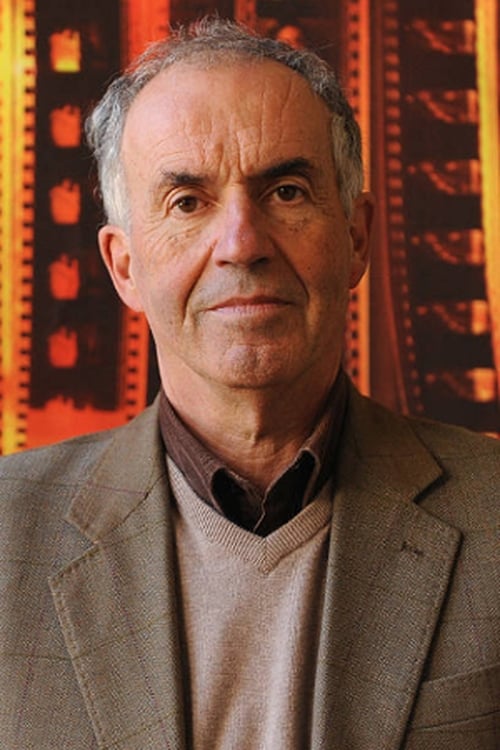
Massimo Bacigalupo
Directing
Biography
Massimo Bacigalupo (Rapallo, Genoa, Italy, 1947). His first works were produced for the local Amateur Film Club. For some years he helped organize the Rapallo International Amateur Film Festival. In 1966 his feature Quasi una tangente was awarded first prize in the Montecatini Film Festival. Bacigalupo, who was nineteen-year-old at the time, remembers that he was sitting in the audience with Lillian Gish and Anita Loos, who happened to be visiting Montecatini (Lillian was a friend of Massimo’s parents). Early on, through his personal acquaintance with poet Ezra Pound, Bacigalupo met film-makers and associates of the New American Cinema, among them Guy Davenport, Stan Brakhage, Gregory Markopoulos, Jonas Mekas, and Abbott Meader. In 1970 he prepared an Italian translation of Brakhage’s Metaphors on Vision. He brought to Rapallo in 1964 a selection of American films, among them works by Ron Rice and Maya Deren, which made a lasting impression. In 1966-71 he was a university student in Rome, where he was a founding member of the Italian Film-makers’ Cooperative, and was involved in producing and distributing independent films. In 1968 he shot 200 Feet for March 31, an uncut and silent 8mm film- happening. He went on in 1969-70 to create Eringio, a series of four films running over two hours. The title refers to Dürer’s self-portrait, and this film quartet amounts to a collective self-portrait of the student and art world in Italy at the time. The longest film of the series, Migration, a celebration of the Great Mother and her many incarnations, was premiered at the 1970 London Film Festival. Bacigalupo travelled with a showcase of Italian underground films to Denmark, Sweden, Germany (1970), and later Spain (1974) and England (Tate Gallery, 1983). He enrolled as a graduate student at Columbia University, receiving his Ph.D. in American literature in 1975. Warming Up, a color film shot in Italy and America, was premiered at the Anthology Film Archives, NYC, on Bacigalupo's 26th birthday, April 20, 1973. In 1975 he shot Postcards from America, a dream travelogue, and Into the House, an homage to his American mother’s family. Subsequently Bacigalupo has been chiefly active as a scholar, critic and educator. He is Professor of American Literature at the University of Genoa and has received numerous awards for his work as a translator, chiefly of English and American poetry. He lives in Rapallo.
Known For

This exhibition focuses on Jonas Mekas’ 365 Day Project, a succession of films and videos in calendar form. Every day as of January 1st, 2007 and for an entire year, as indicated in the title, a large public (the artist's friends, as well as unknowns) were invited to view a diary of short films of various lengths (from one to twenty minutes) on the Internet. A movie was posted each day, adding to the previously posted pieces, resulting altogether in nearly thirty-eight hours of moving images.
365 Day Project

Collective manifesto by the members of C.C.I. It is a collective film, the result of an operation devoid of any aesthetic purpose: to verify the existence of any harmony between a fairly large group (twelve people) of members of the independent Cooperative. Someone, who had the idea, turned 60 meters of Ektachrome according to the moods –or discontent – of the moment and gave them to others to see. The others reacted, each with their own piece. It was then thought to call the film “circular letter”. It was not so simple and so quick: the operation, which started in June of ’68, ended in March of ’69.
Tutto, tutto nello stesso istante
A short film featuring shot in 1987 at Chiavari.
Il collezionista in azione

Tonino De Bernardi and Massimo Bacigalupo met in the second half of the 60s and since then they have always remained friends, the two of them and their families. Massimo appears in several of Tonino's films and Tonino is in some of Massimo's films, an uninterrupted relationship, theirs, which has been a source of comparison and sharing for both.
Canto infinito
Rapallo, Italy, summer 1998.
Watchman, What of the Night?

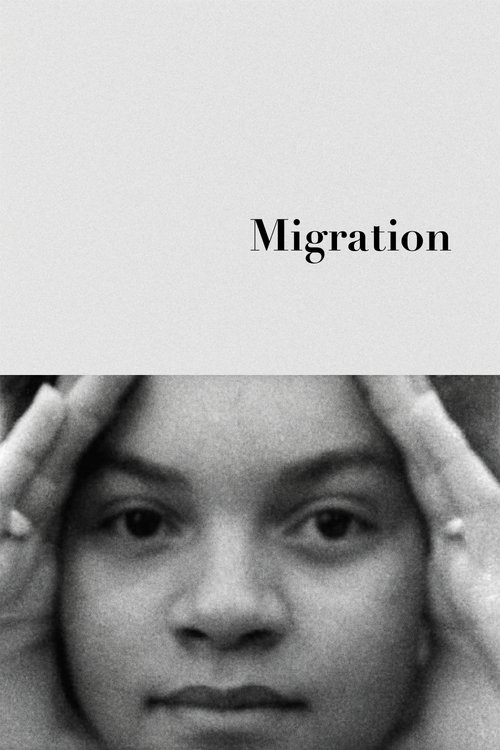
A series of migrants who at times narrate and impersonate shards of myths, among them the Great Goddess, the Virgin of Bach’s Magnificat, the Sulamite of Stockhausen’s Song of Solomon (“I am black but comely”), tales by Herodotus, Kafka, Villon (as set to music by Ezra Pound). Third part of the Flower of Eryngium cycle.
Migration

After the author’s period of experimentation, these American notes are extremely straightforward. As in Migration, however, this America could be a more remote country, and the inspiration is avowedly Japanese (Basho’s Narrow Road to the Deep North). Implicitly, the film-maker compares himself to an old peddler of drawings, Sam, hawking his wares at the entrance of Columbia’s Butler Library.
Postcard from America
Shot between Italy and New York City, Warming Up is the journal of a season of creativity. The film-maker and his characters improvise scenes and sequences, and wonder how to make up a story as they go along. The recurring theme is how to make the world (or read it as) an imaginative place...
Warming Up

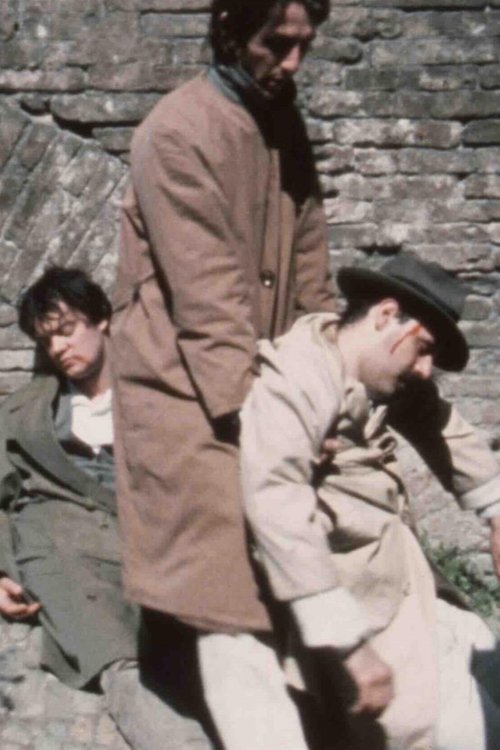
A conclusion and recapitulation of the Eryngium cycle, Coda deals directly with the theme of self-portraiture. The first shot alludes to the end of Erichvon Stroheim's Foolish Wives, where the corpse of the hero-director is dispatched in a man-hole. Other dramatic self-portraits follow: Caravaggio's Goliath, Dante's Sestina (read by the film-maker), and Dürer's Self-portrait with Eryngium. The abandoned villa of Migrazione is revisited. But the finale is hopeful.
Coda
Mirco Santi, who carries on the Home Movies project/archive with Paolo Simoni, briefly recounts the cinema of Massimo Bacigalupo. Home Movies has restored a number of works by Bacigalupo, a filmmaker who brought amateur cinema to the status of an art form in Italy, and keeps a large part of his archive, in which Frammento catanese was recently found.
Un cineasta underground – Un intervento di Mirco Santi
No description available.
Il battello ebbro

A previously unreleased film that documents the relationship between Bacigalupo and the American poet who introduced him to the underground scene. “Filmed in Venice during the production of a documentary by Bayerischer Rundfunk, in which I participated as a consultant.” - M. Bacigalupo
Ezra Pound in Venice

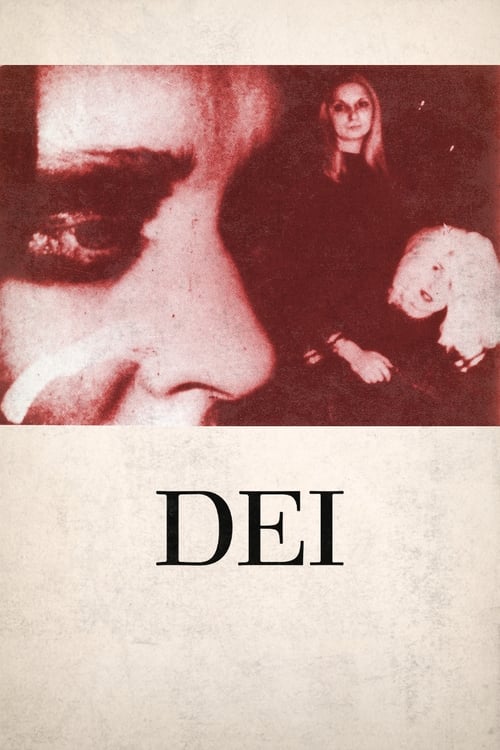
The construction of the film is very simple. Most of the time we see faces in close-up. Three pairs of faces, usually, on three different levels of superimpositions. At first, the faces are very theatrical, made-up. It's not clear whether they are men or women. They move only slightly. They are, indeed, godlike. As the film progresses, very unnoticeably, these faces begin to gain more life and masculine and feminine qualities. At the end of the film, after three hours, the faces are very real, and very human, and sexes and ages are very clearly defined: men, women, children.
Dei

Italian film-maker Tonino De Bernardi meets in rural Liguria an old countrywoman, Agnese, and her chickens.
Tonino e le galline
It exists only in a fragmented state.
Bacino Casa del lupo o di Tonino Massimo e Piero

14Reels is a collective film in Super 8, where 14 directors in 14 cities around the world have filmed and edited in camera one reel each on the theme of the city.
14Reels

Dedicated to Dieter Meier. voice-over by Gregory Markopoulos, reading an excerpt in English translation of Paul Valéry’s L’Homme et la nuit (Man and the Night).
Political Portraits

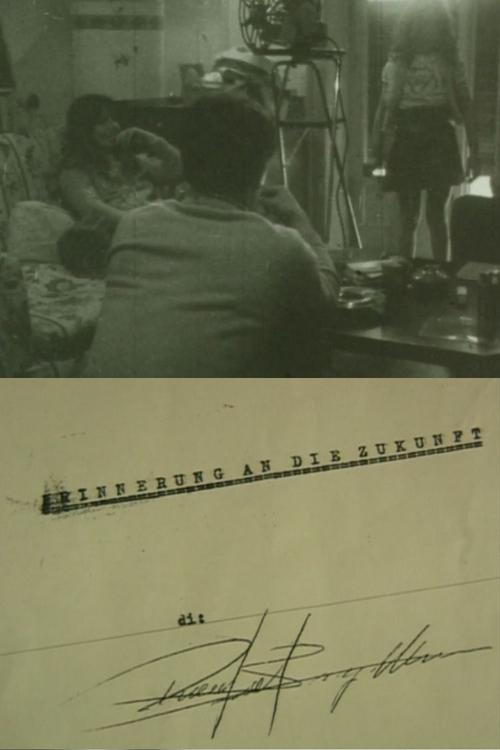
Unfinished feature film by Piero Bargellini.
Erinnerung An Die Zukunft

German dancer Angela Kirsten rehearses and dances (from memory) Balanchine's choreography of "Ricercar" by Bach-Webern, in New York 1973 where Massimo Bacigalupo met her before she would become his wife and mother of his two children.
Ricercar

The film seeks to question how a certain image is perceived. The point of departure is a photograph of a street in Palestine. Later the camera moves to show that the photo includes (in a rear mirror) the image of the photographer with a camera. Finally, the image is reversed as in a mirror. The film is constituted of four unedited rolls of 100-feet 16mm reels, one of which was previously exposed in an 8mm camera.