Directing
Stories from the lesbian subculture in West Berlin, about being in love, clichés, desire, and conflict – "shot as a narrative, with real lesbians at real locations about real feelings."
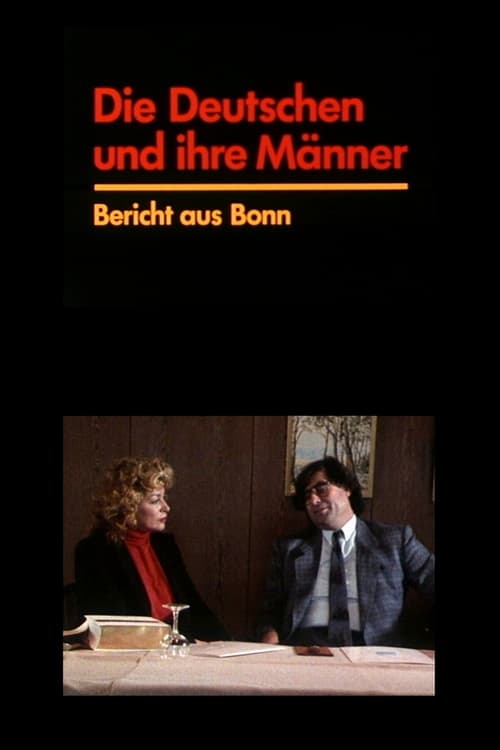
A documentary with fictious elements. Ms. Elisabeth (Lieschen) Müller from Austria comes to Bonn, Germany to find herself a man. During the search she investigates the connections between neckties, political power and prostitution, and tries to look for the influence the german feminist movement had on the men in Germany's capital.
A satire of the cult of genius worship surrounding famous film directors. Bettina Flitner plays the young genius as she’s interviewed and at work. Hella von Sinnen is captivating in multiple roles, including mother, aunt, school principal, and actor.
This story is told by the boy's father: "My father wrote letters from the front. He didn't come back from the war. In my dream, I saw a hundred thousand letters falling from the sky." The letters are memories and trauma. No one talks about them. The boy knows nothing yet about the legacy of all wars. The setting for this story is a former military airfield and its surroundings.
No description available.
History in a hurry: Namibia becomes independent in March 1990, in July the Publicly Owned Enterprise DEFA becomes a GmbH, in October GDR becomes FRG East, in August a West and an East German filmmaker record one of the last GDR inconsistencies for DEFA. The state in pre-retirement sends 425 Namibian children, whom it had rescued from Angolan camps eleven years earlier, “home.” Hastily. But why? When Grote, Kunert and the children arrive, a Namibian minister explains that the East German supporters of these colonial war victims are now out of power. The new powers had no interest … In the Leipzig festival selection in 1990, and again in 1991, this film about German-Namibian foreignness and alienation cannot be found. The Retrospective 2024 makes up for this strange omission.
Documentary about Austrian city Judenburg and its art scene.
Only the chosen few know this woman who started working as a secretary for the German Film and Television Academy (DFFB) on 13 February, 1966. The path of Helen’s career is paved with famous names – including that of Wolfgang Petersen, Holger Meins (who later became a member of the Red Army Faction) as well as directors Wolfgang Becker, Detlev Buck and Christian Petzold. All have fond memories of forgetting their troubles after having poured their hearts out over a cup of coffee in Helene’s office – for Helene was both friend and advisor to countless film students.
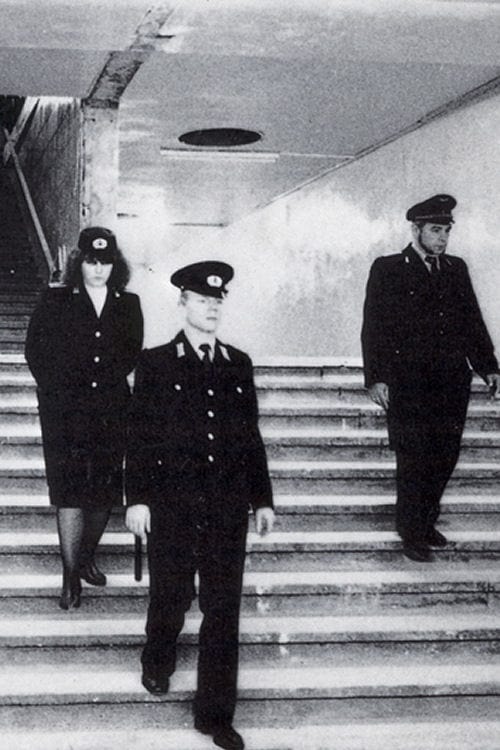
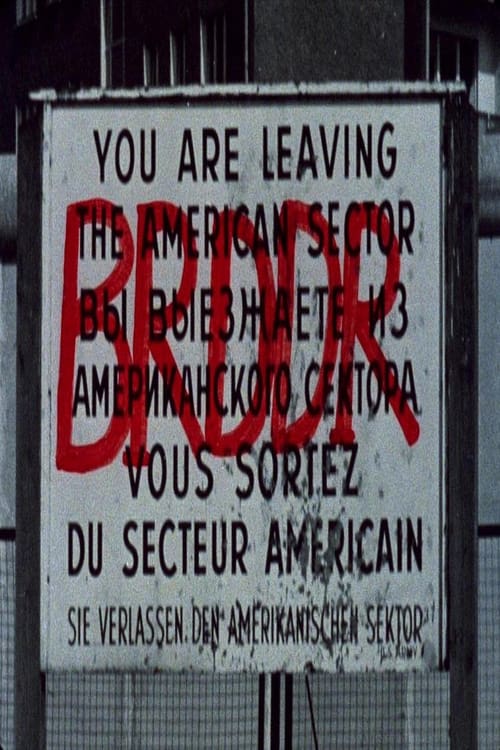
A changing of track. Observations and interviews with border guards and commuters at Berlin’s Friedrichstrasse station in 1990, as the border between East and West Germany was becoming ever more porous and this crossing was already being dismantled.
This film tells the story of Markus Anatol Weisse, who, astonishingly enough, became an artist, in spite of being only very partially sighted. Markus also builds strange machine-like beings and wishes that he himself were a biological robot, or cyborg.
A man and a woman fall in love, and get involved in a crime story.
Documentary short.
Elfi Mikesch accompanies Werner Schroeter in staging a tribute to Lautréamont in Berlin.
Webern's “Opus 5” comments through three very different translations: an abstract image sequence of moving lights and shadows, an almost abstract image sequence of a lava landscape and a monochrome film section that forces the viewer to bring in their own associations.
After the short story of Franz Kafka “Unhappiness”. A young woman is visited by a ghost while vacuuming. Suddenly, her apartment is located in the cellar. They argue and the ghost leaves. 2 parallels meet in the infinite, says the one: “Go out of my way, you seem to have strayed.” Says the other: “For thousands of years I’ve been looking for a formula to find you, please do not send me away again.” The first one is already slightly pissed: “The destiny of a parallel is to be eternally alone, on the way to infinity.” “No, no,” the second one desperately screams: “One parallel is nothing, alone you are only an undefined line.“
Two sisters try to manage life alone after their mother's accident.
Sixty years after the Holocaust, director Peter Lilienthal, himself a victim and refugee of the Nazi regime, sheds a light on Jewish life in Germany in the early 2000s.
Documentary about the film pioneer Guido Seeber.
At the documentary film seminar given by Gisela Tuchtenhagen at the dffb in 1979, three documentary portraits of women were made that were combined under the title “Küche, Theater, Krankenhaus” (Kitchen, Theatre, Krankenhaus). Students Lilly Grote, Irina Hoppe and Christine Domkowski took turns at doing the camerawork, sound and editing, supported by film editing lecturer Heide Breitel. [...] Lilly Grote’s film Beobachtungen auf Station 33 was made at the Urban-Krankenhaus hospital in Kreuzberg and doesn’t follow an individual person but rather the patients and nurses there during their everyday work. (Frederik Lang)