Editing
A woman leaves her son on his 5th birthday and goes out to look for what she doesn't have: a job. What could be just another party becomes complicated when a shrewd grandmother suspects that the child does not belong to her grandson's group of classmates.
Pablo and Victoria, an Argentine couple who have been married for eight years, decide to go to Colonia, Uruguay, to celebrate Victoria's birthday and to try and improve their relationship.
Facundo is a normal and normal boy, who needs a job to survive. He has just finished high school and is in a critical situation that does not allow him to continue studying. This is how he begins to wander around the city for several days until one morning, through a classified ad, he meets Doctor Benavidez, a man of respectable appearance, who offers him a job in decent conditions. But not everything is what it seems.
Julio works for an accounting firm, at the beginning of the '50s. Celina, his wife, married him without knowing that he was addicted to gambling. This problem leads him to increasingly denigrating situations. Celina, who has lost contact with her upper-class world, meets a friend from the past again and meets Alberto, who seduces her. Little by little, Julio enters into an irreversible debacle.
Ara lives in Corrientes, where he meets Kossi who is from Togo, Africa. The first one participates in clandestine fights while the second one dreams of being part of a football team. A sentimental relationship will arise between the two of them.
No description available.
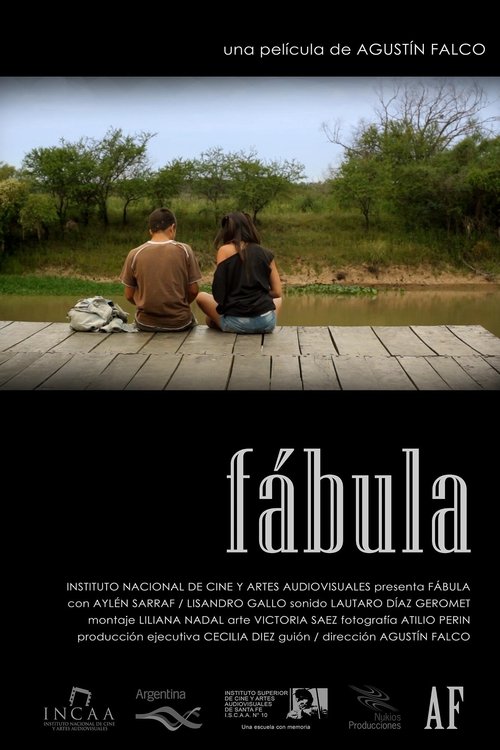
One summer afternoon, on the banks of a river, a boy and a girl are starting to get to know each other. The landscape and the distance are the scene of a possible beginning.
The Amado's decide to spend a weekend at the family's country home, but the plan is disrupted when Dominga, the Amado's cleaning woman, gives birth to a baby in the middle of a family gathering.
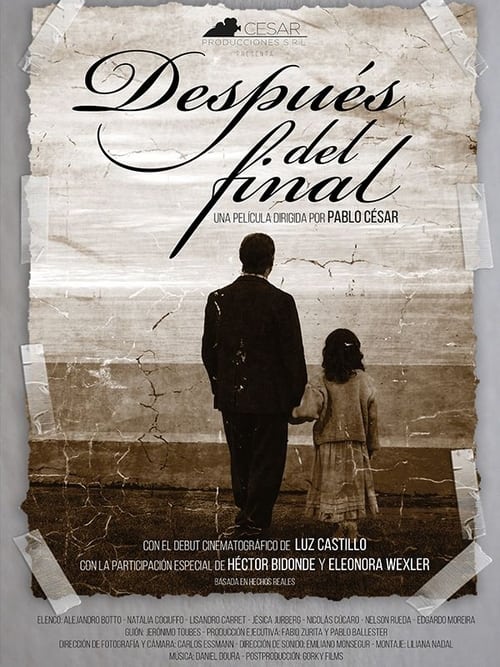
Gloria is a distinguished painter, writer and gallerist from Argentina. After a long and intense life, dedicated to her family and art, she faces the darkest years: her husband, with whom she has been since adolescence, decides to distance herself from her and leave the country. And illnesses begin to stalk her, feeling that every step is a fight with the Lorca elf. After the end is based on real events.
Stimulated by the studies of a French ethnologist, his Argentine colleague, Hermes, travels through his country, Angola and Ethiopia to determine with the help of the young Angolan Oko, Ayelen and the Egyptologist Esteban if humanity is the creation of extraterrestrial amphibian beings.
In the mid-1950s, Sara Facio burst into the world of photography. A tireless precursor, a photographer with a unique gaze, an audacious photojournalist, with the camera on her back, “was there” whenever she wanted.
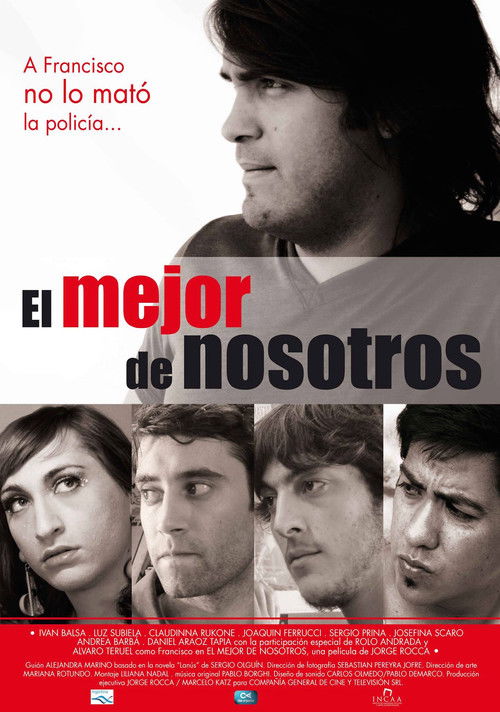
A journalist trying to give up alcohol investigates the murder of a transgender girl with the help of a friend of the victim.
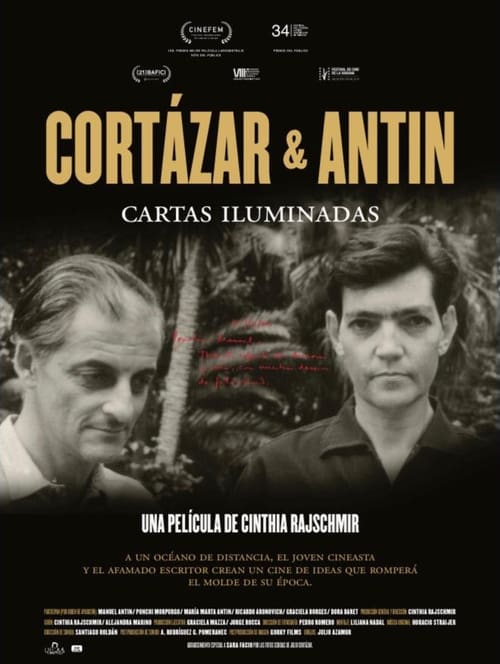
In the 60s and thanks to the epistolary exchange, the young filmmaker Manuel AntĂn and the famous writer Julio Cortázar devised four films. An ocean away, a fruitful collaboration and genuine friendship are born.
Two stories intertwine over the time. In the present, Felix, pessimistic and lazy teacher encounters a book that dazzles him, while he teaches geography in a detention center for minors. In the past, Rabindranath Tagore, Bengali poet, author of the book that has come to Felix, arrives in Argentina and is hosted by Victoria Ocampo, who lives a brief and innocent romance. Felix becomes more and more obsessed with the story of the poet.
While sick in the small town of Saldán, the General JosĂ© de San MartĂn remembers his life and achievements
This film weaves out of reality and fantasy and present day to the past through flashbacks from it's very beginning that the viewer is playing catchup to a film that never really gets off the ground. This is the story of Olmo whose mother left his father when he was young and is brought up to believe she is dead. The father and son live under an Argentine dictatorship and live in a warehouse spending their days cataloging and archiving anything and everything from toys to chairs and a vast collection of subversive propaganda. After the father's sudden death, Olmo sets off in the real world with the help of a young woman he has met to Galicia, Spain clutching a postcard that his mother had sent from there many years before.
Clara, a psychologist, and her husband Gustavo have been separated since the disappearance of their son, Lucas. A year after Lucas' disappearance, Gustavo finds on Facebook information about a girl, Augustina, who went missing just two days after Lucas. The broken couple go Augustina's parents in an attempt to find clues about their sons disappearance.
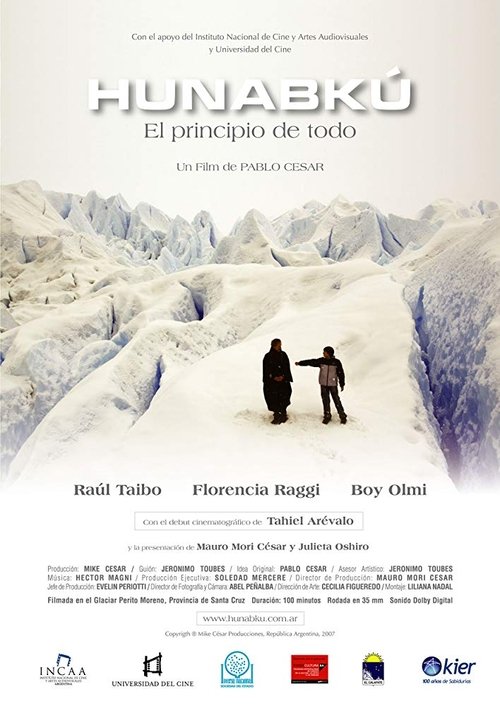
Federico, Mabel, and their son Lucas leave their life in Buenos Aires and move south, lured by a promising job opportunity for Federico. Once there, Lucas is awestruck by the majesty of a glacier and begins exploring the ice in search of answers to its many mysteries, sensing something beneath those enormous blocks of ice that he cannot describe. In this context, Lucas connects with an Asian girl and an anthropologist who listen to him and accompany him on his quest.
In a downtown building, old and beautiful, of the turbulent Buenos Aires, stories of men and women who keep secrets behind solid walls are intertwined. For Lucy, it is the secret price for freedom; for the Ukrainian immigrant and the Tucuman teenager, it is a refuge; for Lorenzo, it is debauchery; for Gaby and Mariano, disagreement; for MĂłnica and Sergio, the promise of new life. The stories are intertwined. No one is the same after opening the door to their most intimate desire
Two very competitive friends decide to take a car trip together along a lonely provincial road, when they unexpectedly become stranded in the middle of nowhere.