Sound
It's Friday night. Pedro and Anastácia are at home, like millions of other couples in São Paulo. Locked away in the living room of their apartment, Pedro and Anastácia's relationship finds an opportunity to reveal its degree of wear and tear. História Familiar portrays the banality of everyday life and contemporary emotional malaise.
No description available.
Selma, a retired nurse, is an extremely loving mother for his son Raimundo, in an almost incestuous relationship. One day, she becomes aware of some changes in her son's behavior. At first, she thinks it may be some girlfriend. But soon she learns it's something else.
Sound Letter is an experimental documentary that investigates the sensory identity of the city of São Paulo. Far from following a conventional linear narrative, the film proposes a kind of sonic correspondence in search of the hidden music of the metropolis. Through the perspectives of Arthur Nestrovski and Eduardo Santos Mendes, the work explores the idea that inhabiting the city means superimposing distinct times, where the contemporary noise of traffic and urban chaos coexist with echoes of centuries-old traditions, such as old street vendors' cries. The medium-length film challenges the traditional documentary form by privileging the sound element as the protagonist and openly presenting its own recording apparatus, transforming the journey of a motorcycle courier into a true ballet of forms and sounds that translate the complexity and vibrancy of the São Paulo capital.
A poor family, lives in a city near Salvador. The father is cleaner and, mother and daughter help making small services. Until they decide to try the luck in the big city and the father, João, get a job near Pelourinho, next to a dance academy. The daughter, Carla, in contacting music, discovers her true vocation and becomes a very successful dancer. But she does not let himself take away from fame and back to his origins, meets with poor children and teaches them to dance.
This epic Brazilian film was based on the equally epic novel by Antonio Callado. Set between 1954 and 1964, the film's focus is the saga of Jesuit priest Nando. Fed up with civilization, he ventures deep into Amazon country to live with and work among the Xingu Indians.
A short film about the meeting of a Trappist monk and a Zen Buddhist master.
Many parallel stories happen at a night club where the fun never ends.
A couple, locked up in a secluded house on a rainy night, decide to play hide and seek. She hides. He seeks. The house becomes a huge box of surprises, and terrible sights hide behind every door..
The cultural differences between the several generations of the rural maracatu: an afro-indigenous ritual which originated in the sugar mills of the state of Pernambuco.
A road movie inside a film set starring four fake blondes on the run.
Aurélia is a young black woman who works at a factory and lives in a working-class neighborhood in São Paulo, whose boyfriend Fábio gets involved with a racist neo-nazi group.
Through archive footage and testimonials from former filmgoers, this documentary presents the story of the historical movie theaters located on the avenues of São João and Ipiranga and its surroundings, in São Paulo's city centre. Known as the Cinelândia Paulistana, this area lived its heyday in the 1950s, when there were more than 15 cinemas in full operation.
A woman tries to help her twin sister, with whom she has a strong connection, recover from a trauma. But weird things surround their lives.
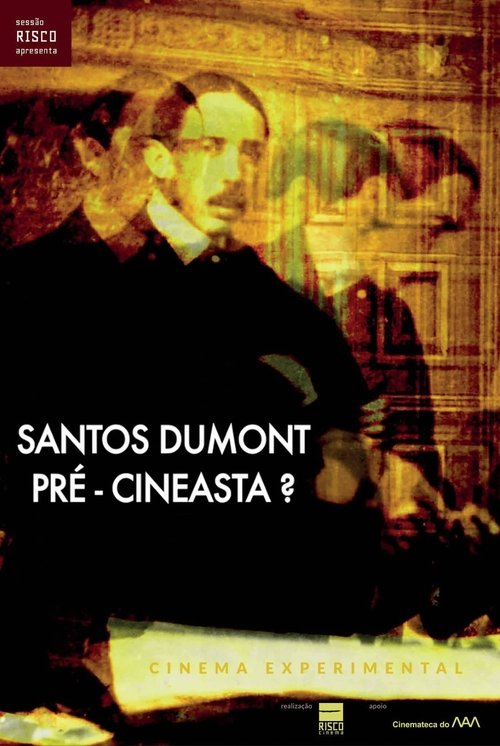
The documentary’s starting point is the discovery and restoration of a rare and unknown photography reel reproduced from a mutoscope film, made in 1901 in London, about Santos Dumont (1873 – 1932). The work approaches historic and artistic aspects from the beginning of Cinema (pre cinema, variety film) and a cinema that appropriates archive material (found footage, recycled films), through interviews, documents, visual metaphors and the articulation of a poetic essay.
In an old mansion, an old lady and her young goddaughter prepare to receive a mysterious visitor who will fulfill an old wish.
Rubens, a powerful gangster, decides to take his last big blow with the help of his adopted daughter Leônia. But not everything goes as planned during the robbery of a bank's private coffers on Avenida Paulista, in the heart of São Paulo. Rubens and Leônia will only find their true destinations, by spawning the stolen objects in Paraguay, where both characters enter into crisis with their own existential values.
Silmara, an industrial worker and a woman of exuberant beauty, supports her arsonist father and gets involved with two different pop stars, from whom she learns traumatic life lessons.
A woman ready to move away from Brazil is kidnapped by her jealous ex-lover.