Production
After losing their livelihood in a village, a Kosovar family is forced to move to the capital in pursuit of a place in a hypercapitalist society.
One summer, Dídac travels by bike along the Danube with his family, starting where the river first emerges in Germany. As they journey downstream, he begins seeing a mysterious boy, Alexander, who appears and disappears in the water. Dídac feels himself changing, drawn toward Alexander and away from his brother Biel. Their mother, Monika, who once took the same trip as a teenager, drifts into memories of a past summer love. When she sees Dídac and Alexander together, she encourages them to continue the journey alone. But as twilight falls, Dídac begins to question who Alexander truly is.
In the Brandenburg province Markus Hawemann is torn between his love for his grandmothers in need of care - one of them suffering from dementia - and his longing for urban self- determination in Berlin. Most of the time Markus is pretty alone with his worries. In his daydreams a crowd of dazzling demons are visiting him more and more often. They are harbingers of an urban elective family. When Duc enters his life, things become more complicated, as packed boxes in his apartment are already waiting for move to the big city.
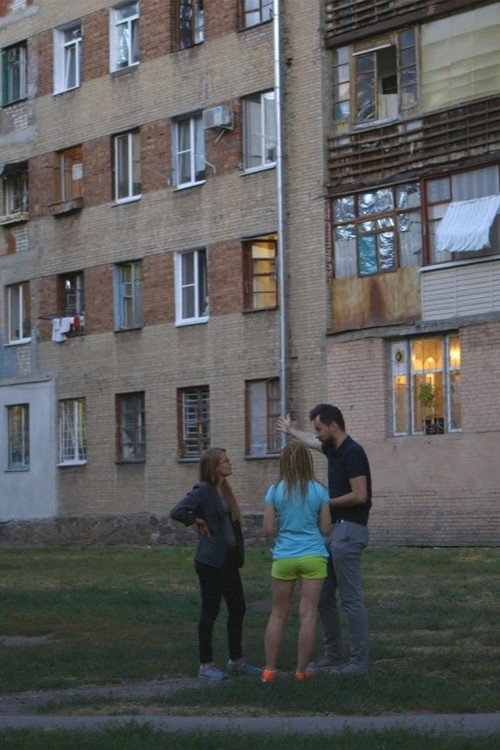
Let’s embark upon a journey to discover two collective housing projects. One in Kharkiv, Ukraine, from the early days of the Soviet era in 1930; the other, in the suburbs of Rotterdam, in the 1950s. Their connection? Lotte Stam-Beese, the first woman to train as an architect at the Bauhaus, who took part in both ventures. Two political and social spaces for two different architectural utopias. The film unfolds stories and expands them with well-informed, militant explanations, as we go back and forth, sometimes imperceptibly, from one city to another, from past to present, in a delicate weaving operation. As a game of transfer and echoes, of viewpoints opening up a counter-History, in reverse, as suggested by the superimpositions the film is peppered with. A journey through the bends of places, History, words, punctuated by the apparitions of an interpreter who translates as much as she comments, in a whispering voice, as a ghostly narrator.
The death of a young Arab man during a police stop in Berlin sparks three interconnected and tragic episodes: two young Afro-Germans struggle to channel their rage; the victim’s mother, torn by grief, feels compelled to defend her son’s honour; and a group of police officers, trapped in routine and clouded by prejudice, make a series of misguided decisions amid the city’s charged atmosphere.
Sixteen-year-old Ilay drifts through the summer on the outskirts of Berlin while a palliative nurse accompanies his ailing mother during her last days.
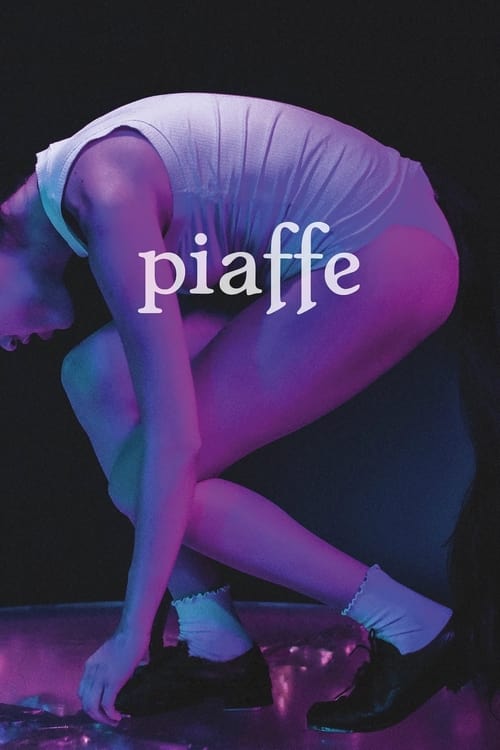
When her sibling Zara suffers a nervous breakdown, the introvert Eva is forced to take on Zara’s job as a Foley artist. She struggles to create sounds for a commercial featuring a horse, and then a horsetail starts growing out of her body. Empowered by her tail, she lures a botanist into an affair, through a game of submission. Piaffe is a visceral journey into control, gender, and artifice.
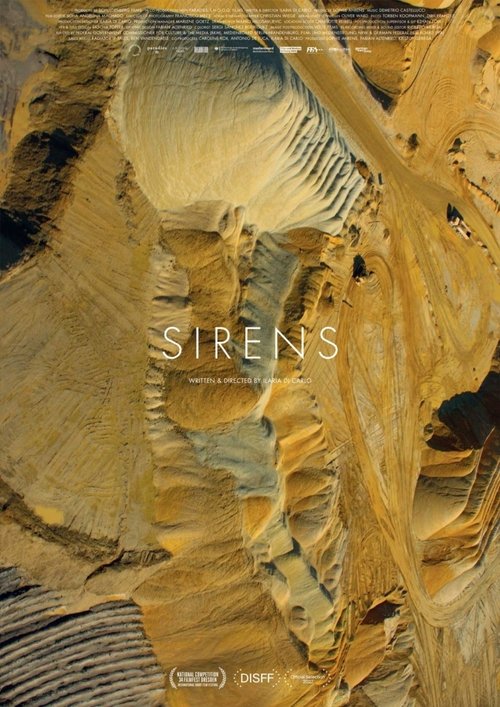
Monolithic power plants; billowing columns of smoke; the backdrop of a red sun. Sirens is an experimental short documentary that captures Germany’s coal-fired power plants in their final years of generating energy. Shot entirely from helicopters, the film takes us on a journey through industrial wastelands, thus recalling the passage of Ulysses’ boat through the Sirens’ strait. An odyssey through the dystopian industrial world that has left a permanent mark on earth’s ecosphere.
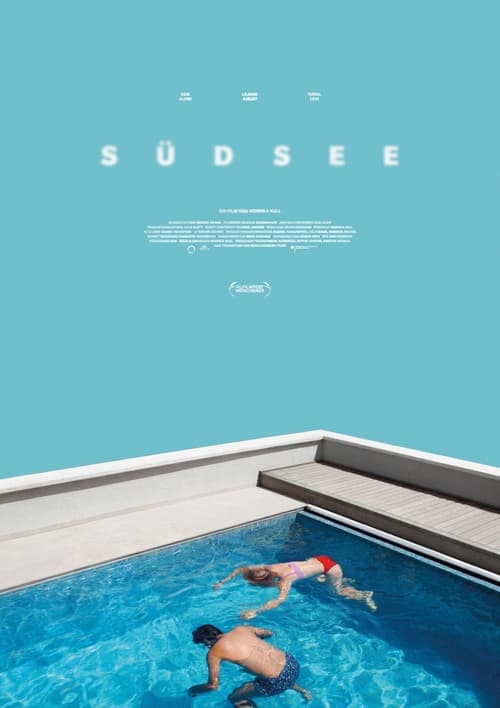
Anne and Nuri have only just been introduced by a mutual acquaintance when they travel to Nuri’s parents’ house in the mountains between Tel Aviv and Jerusalem. As the conflict between the Israeli army and Hamas escalates, they spend two intimate days by the pool under the protection of the Iron Dome missile defense system as an escape from the nightly bomb alerts in the city.
No description available.
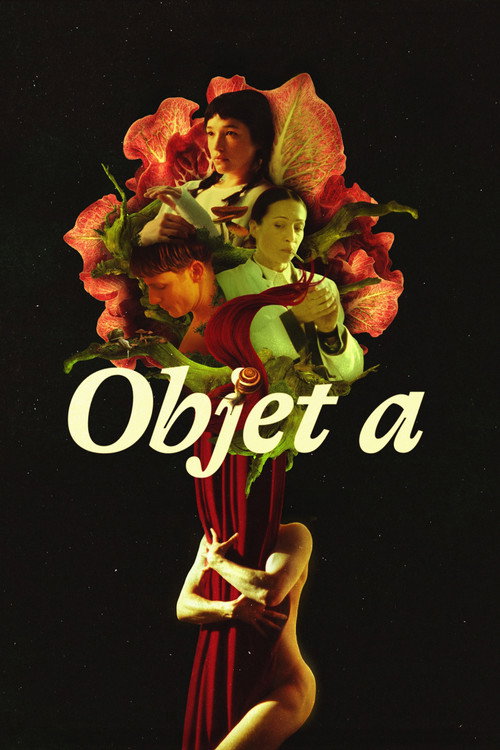
Ingeborg and Adam are visionary hand surgeons bound by love, control, and irresistible fixations. She is compelled to steal objects; he longs to become one. When an accident brings the enigmatic Gaia into their lives, unexpected desires begin to take shape, unsettling the careful balance that has long defined their relationship.
The documentary ‘No Homeland’ impressively demonstrates the absurd course that things can take when the so called national consciousness awakes and a constructed and at the same time uncontrollable hatred destroys the hitherto peaceful life of a community forever.
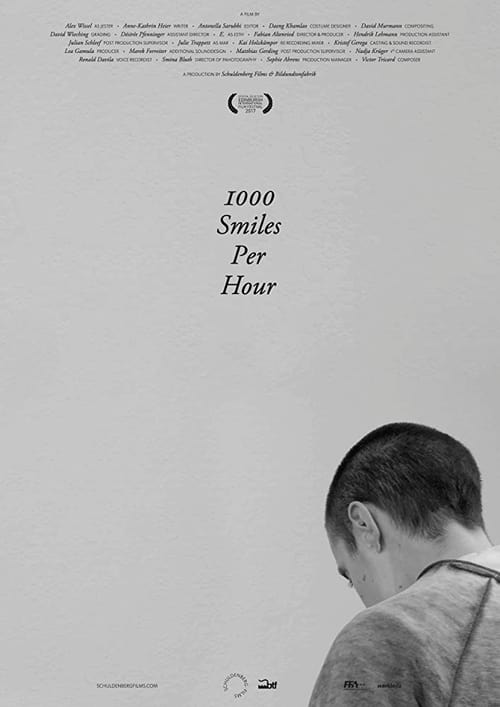
1000 Smiles Per Hour. 1000 Smiles on a stage in front of an audience that uses you as a mirror, as a chance to look at themselves, into themselves. Into their deepest desires and fears. Into their humanity. But what about yourself? Who are you? You walk the streets towards a destination we do not know. You meet a woman whose relationship to you is unclear. You remain a ghost, who needs to wash off make-up, a mask, a second personality which you squeeze yourself into for a couple of hours every day. You're the one who smiles for us, who shows us who we are and who disappears in the shadow of ourselves.
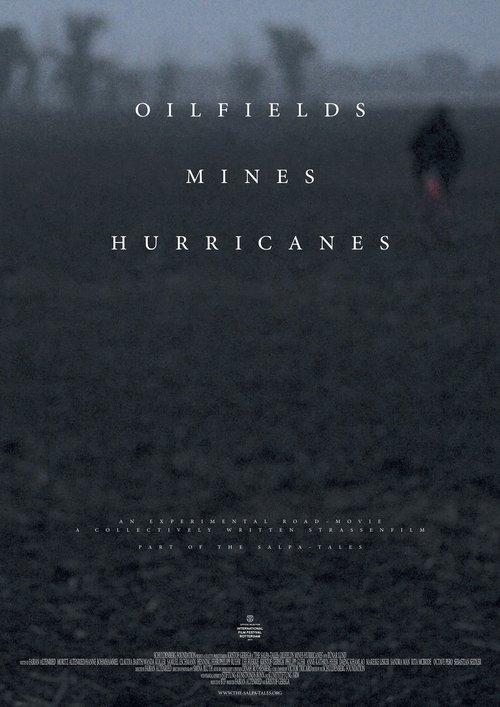
OILFIELDS MINES HURRICANES is a road-movie, in which the classical concept of that genre - the quest for and the fixation of the own identity - is lead ad absurdum: Salpa, the traveler, experiences a corrosion of his all-along-multiple identity. This is already founded within the production: 18 authors have taken turns writing the screenplay. The amount and sequence of the scenes correlate with John Cage's organ piece As Slow As Possible. The performance venue of that piece, Halberstadt, is the apparent destination of Salpa's journey. But, arrived, no redemption is waiting...
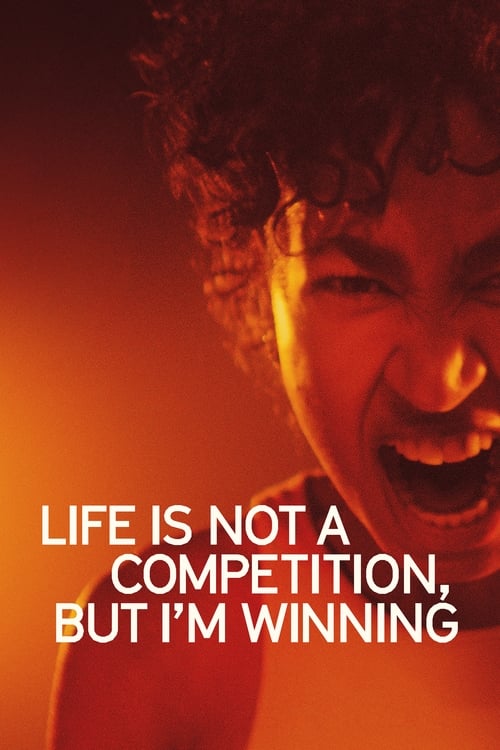
If history is written by the victors, where does that leave those who were never allowed to be part of the game? A collective of queer athletes enters the Olympic Stadium in Athens and sets out to honour those who were excluded from standing on the winners’ podium. They meet Amanda Reiter, a trans* marathon runner who has to struggle with the prejudices of sports organisers, and Annet Negesa, an 800m runner who was urged by the international sports federations to undergo hormone-altering surgery. Together they create a radical poetic utopia far from the rigid gender rules found in competitive sports.