Lucien Clergue
Directing
Biography
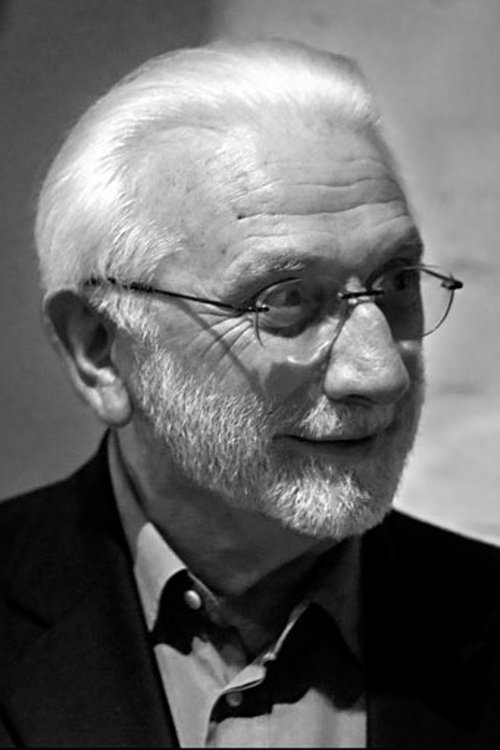
Lucien Clergue (14 August 1934 – 15 November 2014) was a French photographer. He was Chairman of the Academy of Fine Arts, Paris for 2013. Lucien Clergue was born in Arles, France. At the age of 7 he began learning to play the violin, and after several years of study his teacher admitted that he had nothing more to teach him. Clergue was from a family of shopkeepers and could not afford to pursue further studies in a college or university school of music, such as a conservatory. In 1949, he learned the basics of photography. Four years later, at a corrida in Arles, he showed his photographs to Spanish painter Pablo Picasso who, though subdued, asked to see more of his work. Within a year and a half, young Clergue worked on his photography with the goal of sending more images to Picasso. During this period, he worked on a series of photographs of travelling entertainers, acrobats and harlequins, the «Saltimbanques». He also worked on a series whose subject was carrion. On 4 November 1955 Lucien Clergue visited Picasso in Cannes, France. Their friendship lasted nearly 30 years until Picasso's death. Clergue's autobiographical book, Picasso My Friend, looks back on important moments of their relationship. In 1968, and with his friend Michel Tournier, Clergue founded the Rencontres d’Arles photography festival which is held annually in July in Arles. He exhibited his work at the festival during the years 1971–1973, 1975, 1979, 1982–1986, 1989, 1991, 1993, 1994, 2000, 2003 and 2007. Clergue also illustrated books, among them a book by writer Yves Navarre. Clergue took many photographs of the gypsies of southern France, and was instrumental in propelling the guitarist Manitas de Plata to fame. Clergue's photographs are in the collections of numerous well-known museums and private collectors. His photographs have been exhibited in over 100 solo exhibitions worldwide, with noted exhibitions such as in 1961, at the Museum of Modern Art New York, the last exhibition organized by Edward Steichen with Lucien Clergue, Bill Brandt and Yasuhiro Ishimoto. Museums with large collections of his work include The Fogg Museum at Harvard University and the Museum of Fine Arts, Boston. His work, Fontaines du Grand Palais (Fountains of the Grand Palais), is in Museo cantonale d'arte of Lugano. His photographs of Jean Cocteau are on permanent display at the Jean Cocteau Museum in Menton, France. In the U.S., an exhibition of the Cocteau photographs was premiered at Westwood Gallery, New York City. In 2007, the city of Arles honored Lucien Clergue and dedicated a retrospective collection of 360 of his photographs dating from 1953 to 2007. He also received the 2007 Lucie Award. He was named Knight of the Légion d'honneur in 2003 and elected member of the Academy of Fine Arts of the Institute of France on 31 May 2006, at the same time as a new section dedicated to photography was created. Clergue was the first photographer to enter the Academy to a position devoted specifically to photography. He was Chairman of the Academy of Fine Arts for 2013. ... Source: Article "Lucien Clergue" from Wikipedia in English, licensed under CC-BY-SA 3.0.