Acting
No description available.
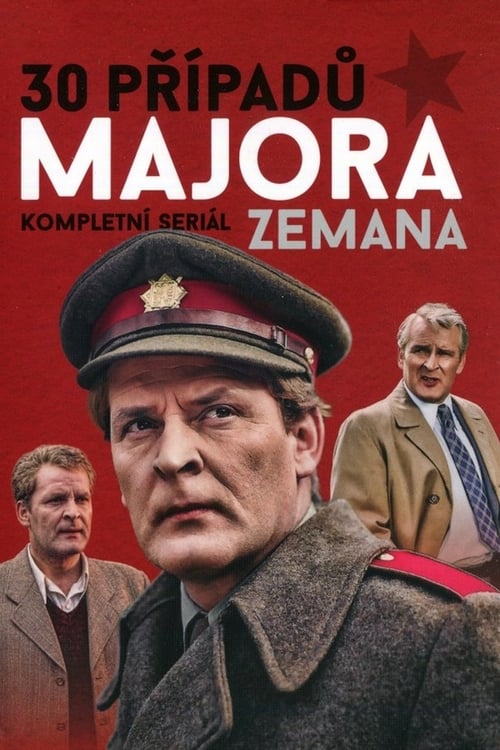
Thirty Cases of Major Zeman is a Czechoslovak action-drama television show intended as a political propaganda to support the official attitude of the communist party. The series were filmed in the 1970s. Each episode encompasses one year, and investigations are stylized to that year. Most are inspired by real cases. The series follows the life of police investigator Jan Zeman during his career from 1945 to 1975.
After an attack against the guard of the Third Reich, Nazi repression intensifies, and the Czechoslovakian resistance's organized sabotage in an aircraft factory leads to Gestapo shootings.
After a bleak childhood, Jane Eyre goes out into the world to become a governess. As she lives happily in her new position at Thornfield Hall, she meets the dark, cold, and abrupt master of the house, Edward Rochester. Jane and her employer grow close in friendship and she soon finds herself falling in love with him. Happiness seems to have found Jane at last, but could Rochester's terrible secret be about to destroy it forever?
The Czech revival movement is divided at the end of the first half of the 19th century. While the older generation, such as František Palacký, urges restraint, students lean towards radical positions. A report on the revolutionary events in Paris prompts Czech Prague residents to write down the demands of the Czech nation for self-determination and the proclamation of a constitution. Tensions peak during the All-Slavic Congress in Prague's Žofín. Vienna rejects the Czech demands and the congress is brutally dispersed by the Austrian police. Prague begins to build barricades...
In early 20th century Czechoslovakia, a gravely ill chemist recalls his discovery of a powerful explosive and how it landed in the hands of anarchists.
February 1948. The struggle of decisive social forces for the heart of Europe.
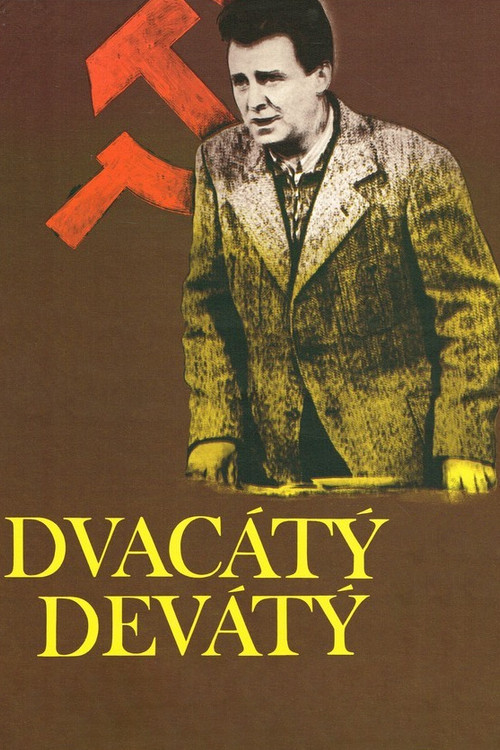
In the era of normalisation, a number of (pseudo)historical films were made, even described as reconstructions, which glorified the world-building mission of the Communist Party and attributed to it exclusively humanitarian intentions ("Days of Betrayal", "Sokolovo", "Liberation of Prague", "The Victorious People"). In 1929, when its fifth congress met, Klement Gottwald, who had taken the line of the Russian Bolsheviks, took over the leadership of the Communists...
The hero of the story is the writer Vladimír Tůma, who is invited to spend a month studying in a neighbouring country. There, the foreign office assigns him a guide, Irena Stepowska. The two young people are attracted to each other, but there is a catch - Vladimír is married, Irena is married. But as they say, opportunity makes the thief, so it's no wonder that Tůma has his work cut out for him, and Irena, too, sometimes recovers only at the last minute. And she doesn't even know that her husband is coming to visit her...
At the end of August, a young woman is chased by an angry mob of hooligans under the windows of a bus because she decides to tear down a poster grossly insulting her husband, the staunch communist and deputy Balcar. She only gets a defence from the prosecutor Ronešová, who decides to convict and prosecute the perpetrators and bystanders of the unfortunate event. The principled Ronešová is oblivious to personal problems and sets out to fight against the relics of a happily extinguished social movement, with the right-wing defence lawyer Kahan being no match for her.
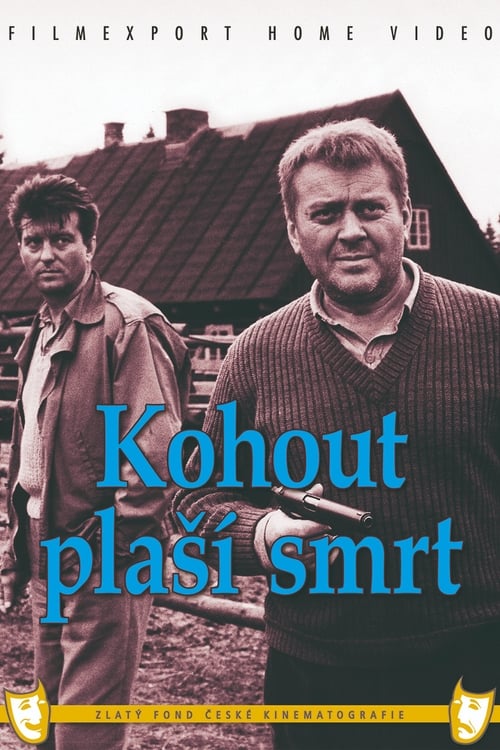
A group of saboteurs search for a weapons cache hidden by the Nazi army. Beskydy in the summer of 1950: the StB agent Borek infiltrates a group of saboteurs hidden in the Beskydy mountains. They are preparing terrorist actions against the ongoing collectivisation in the village. The group is led by Ervín Kopal and Metud Hanák. Borek is to make contact with them, secure the saboteurs and discover a weapons depot. After many dramatic events, the task is accomplished, but at the highest cost...