Kenji Kanesaka
Directing
Biography
Filmmaker, critic, and photographer. Graduated in 1957 from Keio University, Faculty of Literature, Department of English Literature. Hired by the International Department of Shochiku Film, and assigned to be interpreter for the president, Shirō Kido. He became acquainted with underground filmmakers while participating in Harvard University international seminars, then took a sabbatical from Shochiku to attend Northwestern University for one year as a Fulbright scholar. He left school after finishing the film “America, America, America”, then returned to Japan, and in 1966 finished the film “Hopscotch”. In 1964, he collaborated with Takahiko Iimura, Kōichirō Ishizaki, Nobuhiko Ōbayashi, Yōichi Takabayashi, Shigechika Satō, Donald Richie, and Masao Adachi to found the experimental film group “Film Independent”.
Known For

Correlated with Susan Sontag's theorization of kitsch as well as employing the queer lingo of "camp," this film's relentless equal opportunity pop-art montage shattered the foundations of conventional cinema, making it a true document of the Shinjuku underground scene. Director Okabe himself appears recreating his favorite roles from Bonnie and Clyde to Spaghetti Westerns, as well as incorporating quotations by inserting stills of Godard, Kennedy’s assassination and the Vietnam War.
Crazy Love

Kenji Kanesaka’s Hopscotch was presented as an event at Sogetsu Art Center in 1967, in order to create the sound recording for the film. Participants included filmmakers, musicians, and artists such as Yasunao Tone (composer), Yosuke Yamashita (jazz pianist), Jiro Takamatsu (artist), Shigechika Sato (film critic), Nobuhiko Obayashi (filmmaker), Rikyro Miyai, and others. Tone gave instructions to “hiku" (to play), a Japanese verb with multiple meanings which performers interpreted to play Majong, subtract numbers on a black board, pull the trigger of an air gun, saw a block of wood, draw a bow, etc.
Hopscotch
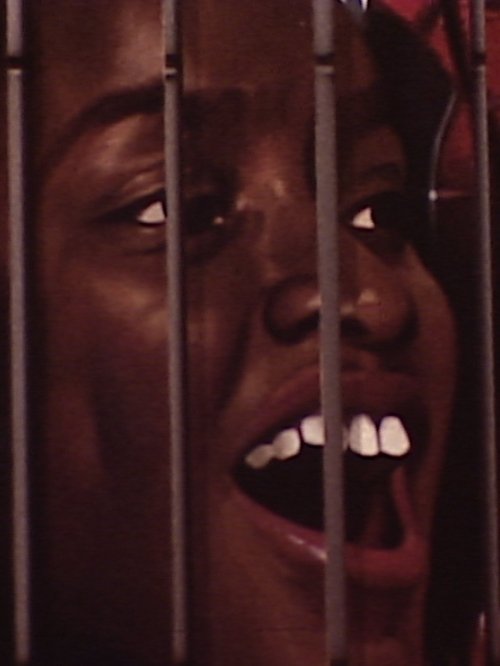
Kenji Kanesaka, one of the founding members of the “Film Independent” group and the Japan Filmmakers Co-op in Tokyo, was commissioned by Chicago producer Marv Gold to direct Super Up in 1965. The film is an exceptional and striking critique of structures of racial and class segregation, consumerism and lust, sexual energy and desire, and the domination of (and link between) advertising, consumption, sexuality, and the police.