Stéphane Huter
Directing
Known For

This is a journey of friendship, an Argentinian is going to rediscover his continent while searching for his friend from Bahia. And while the work, the records and the career of this great lady of Brazilian music are well known, the starting point, the training, the first years remained till now in a vaguely legendary and imprecise blur. Thanks to many investigations that concern as many places as times, thanks to journeys back in time through the towns and regions, the film seeks the origins of Maria Bethânia’s voice and style. Helped and led by Bethânia herself, with the assistance of Caetano Veloso and Chico Buarque, the two princes of Brazilian music, along with the complicity of the great Gilberto Gil, the author is allowed to go to the first context : the North-East. In the family home in Santo Amaro, the film finally touches the childhood of Maria Bethânia – and her brother Caetano, and this mysterious point – from which the music radiates.
Brazil's Maria Bethânia

A historical investigation that examines how, at the end of the 16th century, the devilish acts of Marthe Brossier, who claimed to be possessed, led her contemporaries to refine their thinking on the relationship between religion and science, between God and the state. Four historians dissect this plot hatched by ultra-Catholics against King Henry IV at this juncture in history marked by the end of the Wars of Religion and the birth of the state in an unstable society where the difficult genesis of a new world was looming. Our world.
L'Énergumène

"Philip Priestley's acclaimed film charts the history of Stax Records, the influential soul and blues record company founded in the 1960s by Jim Stewart and Estelle Axton. Featuring music by an impressive roster of stars, including Otis Redding, Isaac Hayes and Carla Thomas, The Soul of Stax chronicles the performers' rise through the industry and popular culture, the role played by many of them in the Civil Rights movement, and the label's eventual decline." - bfi.org.uk
The Soul of Stax
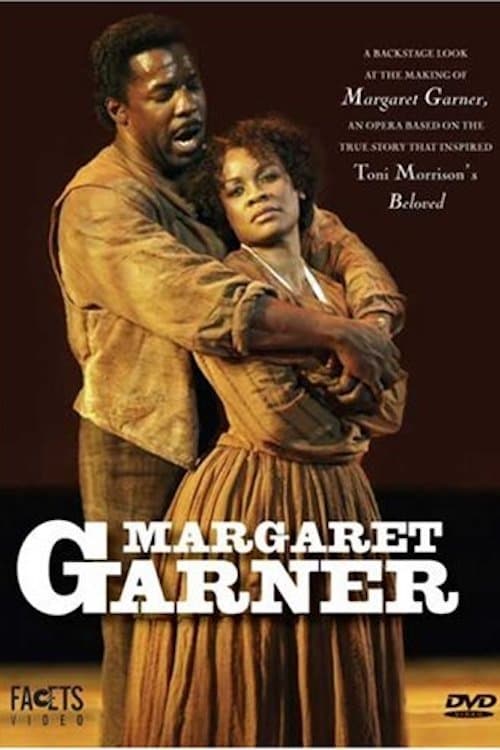
A documentary on the making of the opera 'Margaret Garner' (2005) created by Toni Morrison and Richard Danielpour. Nobel Prize-winning author Toni Morrison was inspired by the true story of Margaret Garner in writing her novel Beloved. Garner was a slave in pre-Civil War America who escaped and killed her own daughter rather than see her return to slavery. Morrison later wrote the libretto for Margaret Garner, an opera composed by Richard Danielpour and commissioned by the Michigan Opera Theatre, the Cincinnati Opera and the Opera Company of Philadelphia in 2005. By recounting Garner's tale in conjunction with the story behind this "black opera" and the harsh Washington upbringing of its mezzo soprano, Denyce Graves, the film Margaret Garner re-examines a tragic historical moment while addressing racial issues that are still prevalent today.
Margaret Garner
In this vivid transposition of contemporary music for television, Cahen "responds" to the complex musical transitions of Répons, a work by French composer Pierre Boulez. Performed by the Ensemble InterContemporain and conducted by Boulez, the intricate Répons was designed for an ensemble of twenty-four musicians, six soloists and a "real-time" digital processor. In Cahen's re-composed interpretation, he responds with visual and temporal transformations, "opening" the images in space and time and applying electronic techniques to engulf the instrumentalists in ocean, sky, and trees. Mirage-like superimpositions, temporal shifts, mirroring effects and de-synchronization result in a rhythmic confluence of the illusory and the real. Immersing the viewer in image and sound, Cahen mirrors the transformative process of Boulez's music.
Boulez-Répons
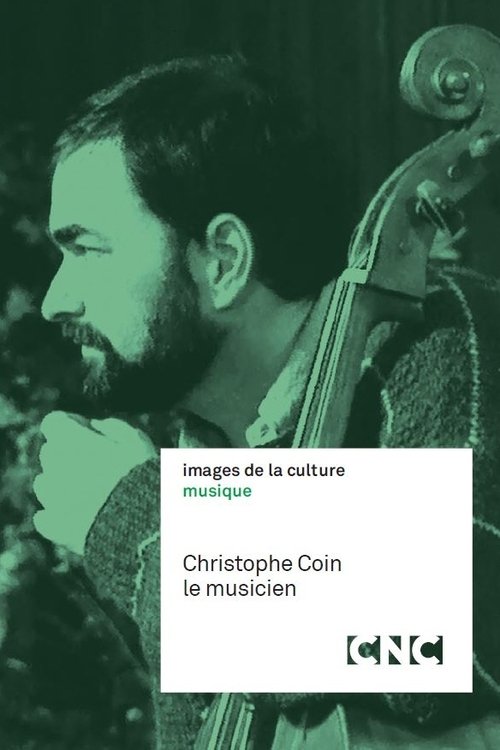
No description available.
Christophe Coin, le musicien
This film portrays the Quatuor Mosaïques from the first rehearsal of Beethoven's Quartet No. 14 opus 131 until the day of its premiere. Santiago's camera spies on the rehearsals and witnesses the meticulous analysis of the musicians deciphering the score. It is not a scholarly or virtuous film; is a passionate document about the perfectionism of technique
Mosaïques et Beethoven
The still photograph is transformed and reframed in time in these exquisite collections of thirty-second "video postcards." An image of a city appears to be captured as a traditional postcard, frozen in time. Suddenly the photograph is "released," electronically brought to life for one heightened, anecdotal moment — a single gesture, a punctuating sound — and then frozen again. Witty and often poignant, these revelatory documents of time, place and memory denote a fleeting, ephemeral reality. A 32-minute version also exists, featuring additional postcards.
Video Postcards
A fictional video excursion: on a beautiful summer day, peaceable tourists take the Montenvers cog railway right up to the Mer de glace. Full of humour and affection, it pays homage to the films of Jacques Tati.
Montenvers et Mer de glace

Temporary landscape; visual and sonic messages; blended; the city. Part of the "New Spaces" project, the film is an exploration of the landscapes and sounds of Hong Kong, seeking its identity between the old China and the new.
Hong Kong Song
A pivotal work for video art of the 1980s. Fragments of time during a journey where the changing landscapes become full players in a story shown in shadowy backplay, which relates the imagined encounter of two passengers.
Just Enough Time
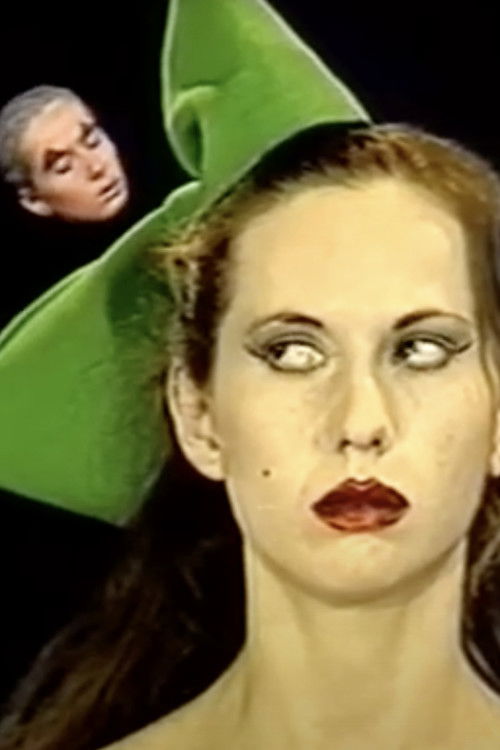
A playful and electronic choreographic interpretation to the tune of Habanera.
Cattiva Carmen

The concept of "things half seen" determined the meaning of this film. Hidden scenes, barely revealed, follow one another as living and significant views affecting our wish to see and understand what we see only as glimpses, but might see in its totality. Made as a video-short principally through a succession of quick sequences, "Glimpses" shows the maintenance of mystery between two "masked" people in a world where the curtains remain closed.