Erwin Huppert
Crew
Known For

Cinématon is a 156-hour long experimental film by French director Gérard Courant. It was the longest film ever released until 2011. Composed over 36 years from 1978 until 2006, it consists of a series of over 2,821 silent vignettes (cinématons), each 3 minutes and 25 seconds long, of various celebrities, artists, journalists and friends of the director, each doing whatever they want for the allotted time. Subjects of the film include directors Barbet Schroeder, Nagisa Oshima, Volker Schlöndorff, Ken Loach, Benjamin Cuq, Youssef Chahine, Wim Wenders, Joseph Losey, Jean-Luc Godard, Samuel Fuller and Terry Gilliam, chess grandmaster Joël Lautier, and actors Roberto Benigni, Stéphane Audran, Julie Delpy and Lesley Chatterley. Gilliam is featured eating a 100-franc note, while Fuller smokes a cigar. Courant's favourite subject was a 7-month-old baby. The film was screened in its then-entirety in Avignon in November 2009 and was screened in Redondo Beach, CA on April 9, 2010.
Cinématon

Elisabeth takes the train from Paris to Rome to join her husband Jacques, an artist. An Italian man approaches her on the train. During the meal they share, he slaps her. This does not prevent Elisabeth from feeling the desire to make love to Leonardo. In the compartment they share, she pleasures herself in front of Leonardo, who scrutinizes her closely with a flashlight. In Rome, Jacques is waiting for her. Over the next few days, Leonardo tries unsuccessfully to rekindle his relationship with Elisabeth. However, tired of painting, Jacques decides to return to Paris to pursue a career in film...
La Femme intégrale
Deeply moved by the Bosnian tragedy and, more specifically, by the nightmare that the inhabitants of Sarajevo have been living for two years, the filmmaker Marcel Hanoun, like other great creators (from Susan Sontag to Juan Goytisolo), wanted to give testimony. He has made a superb film-poem in homage to this young Bosnian couple (belonging to two enemy communities) that was killed by an anonymous sniper on Liberty Bridge, in the summer of 1993, as they were trying to flee from the besieged city. ("Le Monde Diplomatique", 1994)
The Lovers of Sarajevo
In a montage alternating with moments of Nigel Rogers' interpretation of the most beautiful passages from "Orpheus," the opera by Striggio and Monteverdi, La Nuit Claire is an evocation of the celebrated myth, within which images of the love between its two modern protagonists, Anne and Julien, are inscribed. - BAM/PFA
The Bright Night
The theme of Romeo and Juliet is the starting point from which the film spins a web of several stories. A love story between a boy and a girl whose families are Algerian: they are young, beautiful and they are trying to build a family and a social life in France. They love each other, and yet conflicts, family pressure and contradicting desires alternately tear them apart and unite them. The story of Romeo and Juliet, minus death.
Cela s'appelle l'amour
The shooting diary of a film shot in France and in the United States. Using photos of Paris and of New York City, excerpts of his former films, statements by friends of his and shooting sequences of the film itself, tormented filmmaker Marcel Hanoun has made a heterogeneous and unclassifiable film about the difficulty of filming.
Un film (autoportrait)
A couple in a hotel room in Brussels. A painting by Brueghel. In this painting, a mystery.
The Gaze
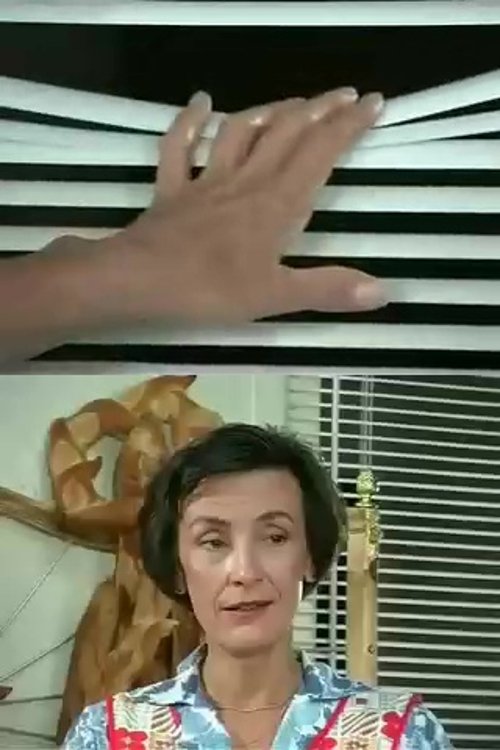
A baker knew the cosmonaut child who now revolves around Earth.
La Boulangère et le cosmonaute
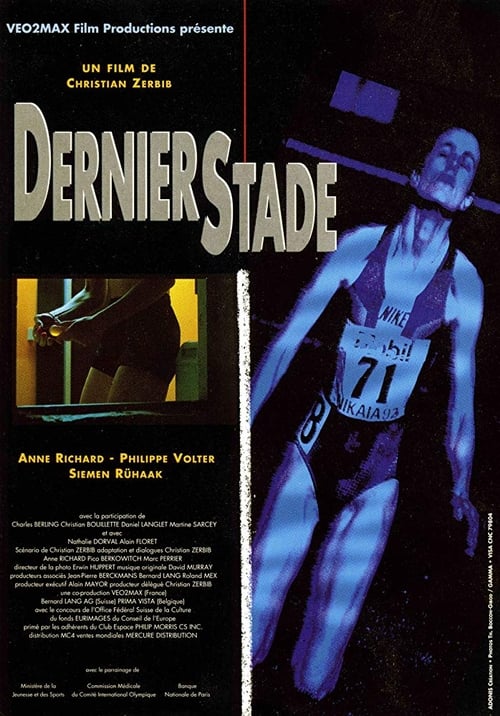
The negative physical and psychological effects of anabolic steroids, growth hormones, and masking agents are examined in this European drama which focuses upon the conflict felt by a young runner whose fear of failure exceeds her fear of the drugs. Catherine Delaunay, a 25-year old runner, has just be named French champion after the real winner is disqualified for using drugs. When she suffers a small injury herself she begins using the drugs at the insistence of her German trainer and an unethical sports doctor. Catherine becomes hooked upon her regimen of medication and begins to suffer physical and mental side-effects. To conceal her drug use, Catherine keeps a large supply of "clean" urine. When she really does become drug free, her times suffer. A federation official strongly suggests she get pregnant as they hormones produced by early pregnancy will help her speed.
Dernier stade
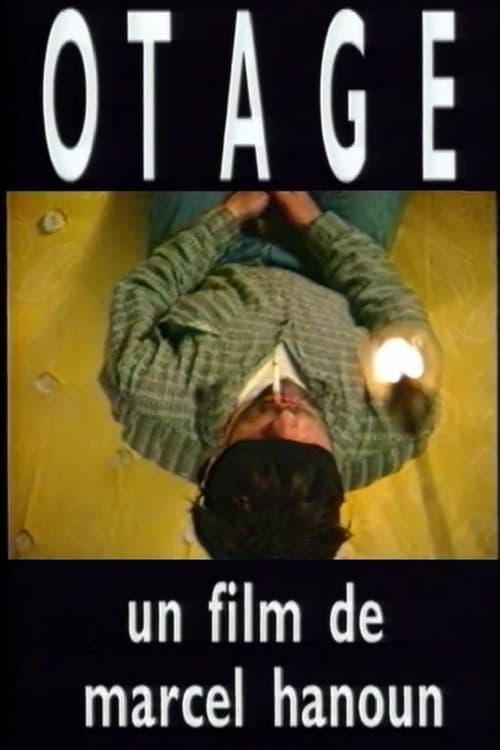
Inspired by the detention of Jean-Paul Kauffmann and Michel Seurat in Lebanon, hostages and improbable currency for terrorists...
Otage

An actress rehearses behind closed doors scenes from the trial of Joan of Arc, confronted with the view that spectators have character.
Jeanne, aujourd'hui
Reel 6 of Gérard Courant's on-going Cinematon series.
Cinématon VI

Amours décolorées is a cinematographic poem to the glory of Mariola San Martin, model, stylist, dancer and Spanish photographer.
Amours décolorées
An unknown man in an unknown place discovers a prison world where time and space escape norms.
Carcère

This two-part film revolves around the correspondence between Antoine Vitez and the filmmaker
Paroles tues ou aimer Paris en étrangère
Film about Marcel Hanoun at work while making his film Les amants de Sarajevo in 1993.
À la rencontre de Marcel Hanoun

“I’m dying to live.” These words from Saint Teresa of Ávila are said by Mother Aloïse Osée when she is about to separate forever from Don Jerome.
I Am Dying to Live
Born on January 4, 1927 in Brussels, Jean Raine became involved with Magritte and the Belgian surrealist group, then participated in the Cobra movement. he exhibited in around fifty galleries in Brussels, Paris, Mexico, Rome, Los Angeles, Copenhagen, etc. he died on June 29, 1986.
Jean Raine, artiste peintre
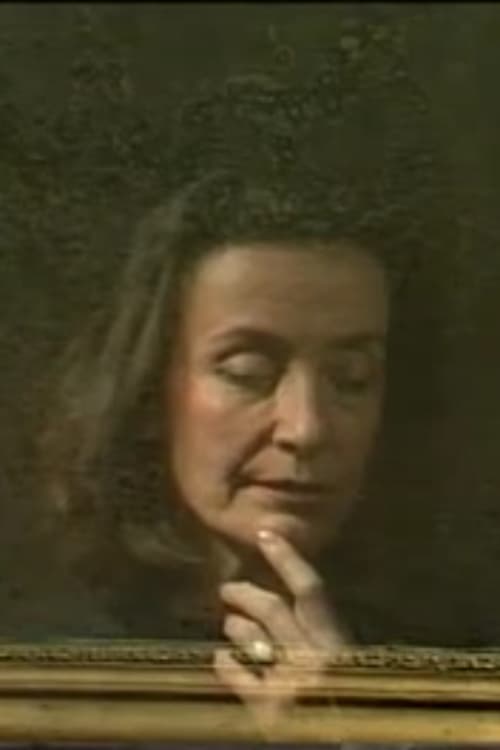
By reviving memories that remain of her disappeared friend, Sabine tries to resurrect and mourn.
Un arbre fou d'oiseaux
A collage-like work that plays with a variety of visual and auditory elements. The film combines scenes from Lausanne, Lake Geneva, and Odesa, interweaving cityscapes, stairwells, and street scenes. The images are accompanied by a mixture of distorted sound, choral singing, and marching music. Intertitles in Cyrillic script and humorous texts reinforce the film's experimental aesthetic. The film ends with a note stating that it was found in the year 3973 and dates back to 1972, with the assumption that the sound and colors were partially erased by radioactive residue.