Karel Lamač
Directing
Biography
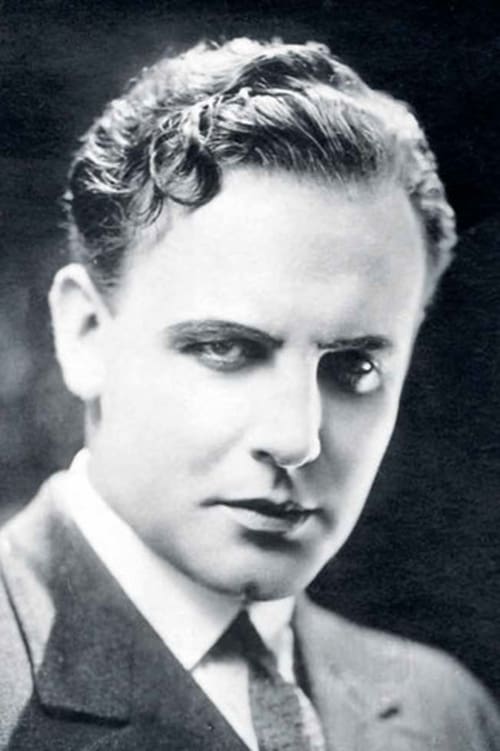
Karel Lamač (1897 – 1952) was a Czech film director, actor, screenwriter, producer and singer. After starting as a combat cameraman in WW1, Lamač went on to direct more than 100 films in Czechoslovakia, Austria, Germany, the Netherlands and the United Kingdom.
Known For

The daughter of the Parisian countess Lafitte, named "Baby", is supposed to go to an English boarding school, but she's much more interested in variety shows. Nevertheless, she travels with her friend Susette to London, who also wants to make a career for herself as a showgirl. During the journey, Baby is mistakenly considered to be a showgirl and she does nothing to dissuade two young English lords from believing so. The girls continue to live under false pretenses even when they arrive in England, with Baby being a soloist with the group "Babies" and Suzette passing herself off as the Contessa Lafitte for school exams. At the end -- a double marriage.
Baby

Helena is a 1924 German silent drama film directed by Manfred Noa and starring Edy Darclea, Vladimir Gajdarov and Albert Steinrück. The film was based on the poem the Iliad by Homer. It was released in two separate parts: The Rape of Helen and The Fall of Troy. It was produced by Bavaria Film at the Emelka Studios in Munich. The film was made on an epic scale with thousands of extras, and large sets which rivalled those of the larger Berlin-based UFA.
Helen of Troy

Film by Karel Lamac.
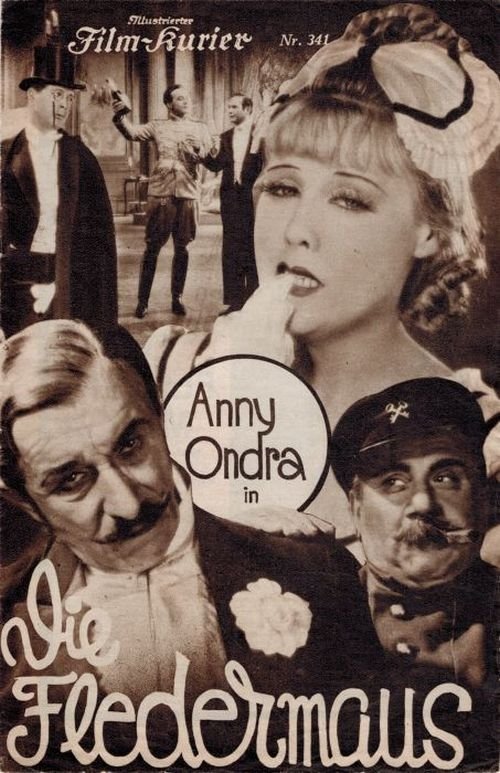
The bat
No description available.
Moderne Ehen
At the behest of the financially strapped Duke, his nephew, Crown Prince Rudolf, is to marry someone of suitable rank. But Rudolf has no interest whatsoever in his uncle's plans and works under his commoner's name as an engineer in a car factory. Then a certain Count Rasumirski appears before the Duke and explains that the famous operetta diva Vera Naldi is actually a Russian princess who knows nothing of her origins. They hatch a plan to marry Rudolf off to her. But at the theater, Rudolf falls not for the singer, but for the secretary. Instead, Rudolf's other uncle begins to take an interest in Vera. Then, however, it turns out that Rasumirski is an imposter and Vera is not a princess at all...
Frühlingsluft

Marianne is an accountant, but since she is so pretty the employment agency sends her to the theater. There, Max's gaffer falls in love with Marianne and persuades her to stay at the theater. Once he has to defend her against a professional boxer who harasses her. Although Max loses his position, but receives an offer from Box Manager Schmidtchen. When Max learns that Marianne is engaged, he goes to Schmidtchen's boxing school in Hamburg.
Knockout – Ein junges Mädchen, ein junger Mann
Watchmaker Furchtegott Palme has three beautiful daughters. The two oldest are as good as engaged. Only Anna doesn’t seem to have a clue how to get acquainted with love. And who would be the right one for that? Her boss, Dr. Hartwig, who invited her to a party or perhaps Fink, the cousin of her friend Mona, whom Anna is supposed to pick up from the rail station? Anna, however, picks up the wrong guy at the rail station, but who seems perfect for her. But then, he disappears again. A pity, Anna thinks. And she ends up at Dr. Hartwig’s party, too. When she shows up all fancy and such for the party, he’s still with General Director Schroll working on an important contract. The next day, Anna meets the “wrong cousin” again. He’s Will Uders, a young and attractive lawyer. This time, Anna’s not letting him get away.
Vor Liebe wird gewarnt

No description available.
The Squeeker

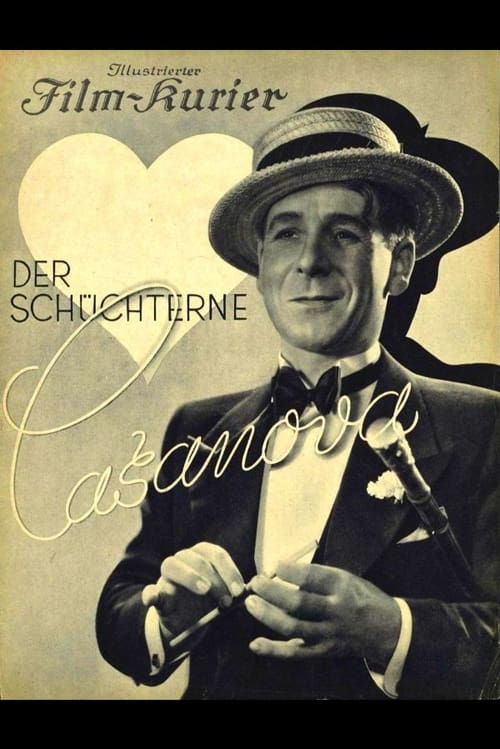
This light-hearted comedy operetta tells the story of a newly appointed high school professor who becomes an ideal target for pranks and jokes.
The Ideal Schoolmaster
A Czechoslovakian comedy directed by Carl Lamac and starring himself Theodor Pistek & Anny Ondra.
Lucerna

A customer (Karl Valentin) tries to buy a record in a record store but can not decide what he actually wants. The saleswoman (Liesl Karlstadt) tries to help him – which is in vain, as the customer eventually damages various records and even a complete cabinet during his visit.
Im Schallplattenladen

This is a real curiosity; at best a reasonable film, but also a charming little gem. There is a story (in the line of "A Star is Born"), but this merely serves as an excuse, as it is more importantly a kind of moving encyclopedia of about 35 stars making their debut in a talkie (although some of them had already made one talkie), of the technical sound possibilities and of film making. Besides all that, it is entertaining and sometimes hilarious and it has fine one-liners that split my side. The film is also remarkable for making mock of typical German film genres (like the overly sweet romances involving the military), of too heavy acting and of film making in general. I have to mention this one: a short, hysterically funny parody of "Der blaue Engel". What this film in fact says is: do not take any film too seriously. (J. Steed)
The Great Passion

An employee of the funeral home Pleticha calls his superior. He overhears that he is supposed to buy a wedding gift and deliver it to his boss's relatives. He therefore sets off to the given address to organize the funeral. When the mistake is explained, Pleticha, in return for the entertainment, performs dances and songs of various nations for the wedding guests. One of the guests, grandfather Boleslav Hnipírdo, experienced a train collision near Vrňany on his way to Prague. Since he was not injured, he does not even want to ask for compensation. Pleticha takes advantage of this and goes to the railway headquarters with his leg bandaged. He pretends to be Hnipírdo and is questioned in detail about his journey. Thanks to his talkativeness, he reveals, among other things, that he jumped on a moving train, drove illegally, spat on the window and tore off the emergency brake...
The Undertaker

KAREL LAMAČ (1987-1952), who worked in Germany for a long time, was forced to leave for France and then Great Britain before Hitler's fascism, where he continued to direct films. His film Švejk is Destroying Germany from 1943 was created under the influence of wartime circumstances and was intended mainly for a British audience. Perhaps this is also why the tone of the original Czech hero of Hašek's humorous original deviates from his traditional way of portraying him. He transfers him to the wartime reality of the time and, through a series of coincidences, makes him a military servant of the Gestapo commander, which gives Švejk the opportunity to save many people from deportation to concentration camps. Lamač is therefore not driven by the motive of an authorial interpretation but rather by the need for propaganda. This is also emphasized by Foreign Minister Jan Masaryk, whose opening words were added to this comedy in 1947, when it was released into Czechoslovak film distribution.
Svejk Wrecks Germany

A Royal navy Commander is tricked by a pretty girl who is working for the Nazis. She tricks him into revealing some military secrets and he is court martial. He vows to track her and her accomplices down.
They Met in the Dark
No description available.
Die Tochter des Regiments

The cunning lawyer Dr. Werner tries to divorce Pavel Bertl, who is considered by everyone to be a notorious gambler and drunkard. In reality, he is a weakling; although he loves his wife very much, he squanders her fortune. He is already in danger of financial ruin and Bertl, instead of truly improving himself, lets the lawyer convince him that the only way out of this situation is divorce. He secretly leaves home for the mountains with a girl whom the lawyer randomly finds for him, in order to obtain a reason for the divorce...
Důvod k rozvodu
No description available.
Unsterblicher Valentin
Henriette Lange lives only for the theater in Berlin around 1900. Her grandfather, however, has no understanding for this. He is a prompter and knows all about the hustle and bustle of the theater. Her friend, the chorus girl Liesbeth, is heartbroken because the revue star Vera Schreyvogel has his eye on her boyfriend Hans Reuter. But Liesbeth soon consoles herself with someone else, and Mrs. Schreyvogel is quickly forgotten. For Hans Reuter too, because he now loves Henriette. Liesbeth is dismissed without notice because she has fallen out with Mrs. Schreyvogel, and Henriette now has to sing her part. Her dream finally comes true. As she sings blissfully, she sees the Schreyvogel hugging her Hans in the background. She gets stuck in the middle of the song - her career is over! But not with love: she has conquered her Hans forever.
A Girl from the Chorus
Patriotic Austrian costume drama, about the martyr Medardus who opposed Napoleon's occupation of Vienna in 1809. The plot proceeds in a series of confrontations with Medardus, his mother and sister, the blind exiled Count of Valois, his ambitious daughter, and Napoleon himself (portrayed as a cool strategist), including several brief flashbacks.