Son Kwang-Ju
Directing
Biography
Kwang-Ju Son is an artist and filmmaker whose work embraces a wide range of filmmaking modes such as fiction, documentary, experimental film and installation. She works on film and video projects to unlearn the stubbornly persistent illusion of linear progression, attempting to conceptualize discontinuity and investigate how space and time are inextricably linked. Since The Third Tongue(2003), she has presented her varied projects of film and video at diverse venues and international film festivals: Seoul Museum of Art(SeMA) Bunker(2022, 2018), Atelier Hermès(2020), National Museum of Modern and Contemporary Art(MMCA), JCC Art Center (2018), Arko Art Center(2016), Swatch Faces 2015 (2015), International Film Festival Rotterdam(2011, 2007, 2005), International Documentary Film Festival Amsterdam(2007), International Short Film Festival Oberhausen(2005), Busan International Film Festival(2008, 2004, 2003) and Jeonju International Film Festival(2011, 2008, 2007). She's awarded Best Korean Short Film Awards in BIFF 2003 and 2004, consecutively.
Known For
A researcher's blind struggle for her thesis inside the engulfing white space creates the uncertainty of her own research.
Re-Search
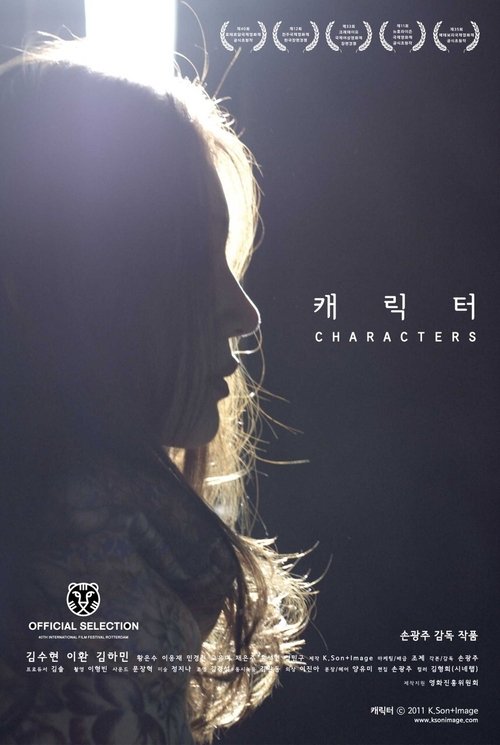
A once-emerging writer, Soo-Yeon is now making a living by working as an assistant scriptwriter for a great box-office hit maker, Moh. Despite repeating cheesy stories full of stereotypical characters, Moh wants to constantly believe his film to have something new and to be based on the reality. That makes Moh as well as Soo-Yeon feel exhausted. Soo-Yeon carefully dreams to emancipate characters from story, but she realizes that her dream is only treated as a 'feminine' vanity in reality.
Characters
On his way to a blind date, Mr. No Jae-Won, a young, rich and elitist man, desperately searches for his own answer to her most likely question: "Who is your favourite classical music composer?"
Punk Eek
Through exploring the process of practicing English, the film The Third Tongue represents a fear engendered by a sense of loss of historical identity in post-colonial society.