Marc Ferro
Directing
Biography
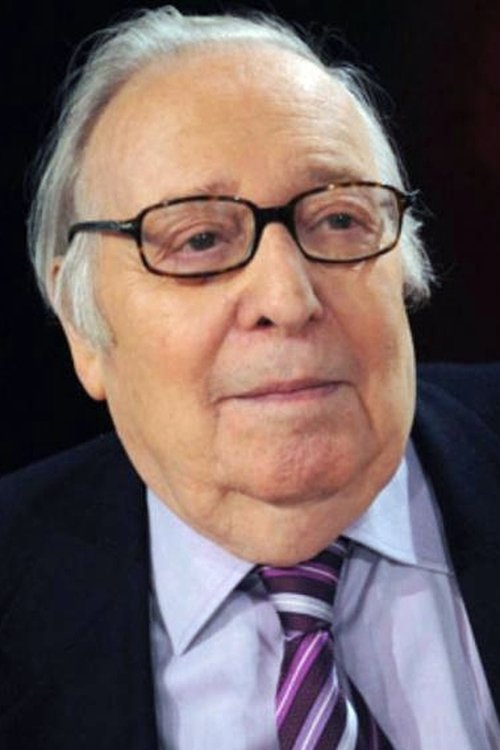
Marc Ferro (24 December 1924 – 21 April 2021) was a French historian. His Ukrainian-Jewish mother was murdered during the Holocaust. Ferro worked on early twentieth-century European history, specialising in the history of Russia and the USSR, as well as the history of cinema. He was Director of Studies in Social Sciences at the École des hautes études en sciences sociales. He was a co-director of the French review Annales and co-editor of the Journal of Contemporary History. He also directed and presented television documentaries on the rise of the Nazis, Lenin and the Russian revolution and on the representation of history in cinema. Ferro died from COVID-19 complications in Maisons-Laffitte in April 2021, at the age of 96.
Known For

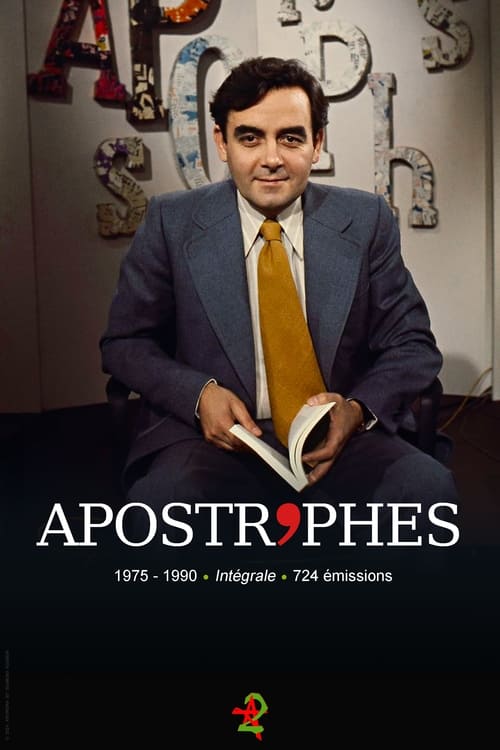
Apostrophes was a live, weekly, literary, prime-time, talk show on French television created and hosted by Bernard Pivot. It ran for fifteen years (724 episodes) from January 10, 1975, to June 22, 1990, and was one of the most watched shows on French television (around 6 million regular viewers). It was broadcast on Friday nights on the channel France 2 (which was called "Antenne 2" from 1975 to 1992). The hourlong show was devoted to books, authors and literature. The format varied between one-on-one interviews with a single author and open discussions between four or five authors.
Apostrophes

No description available.
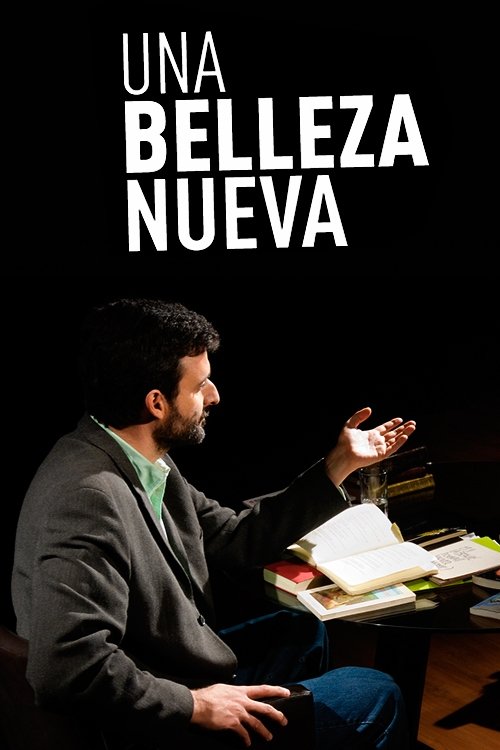
Una belleza nueva

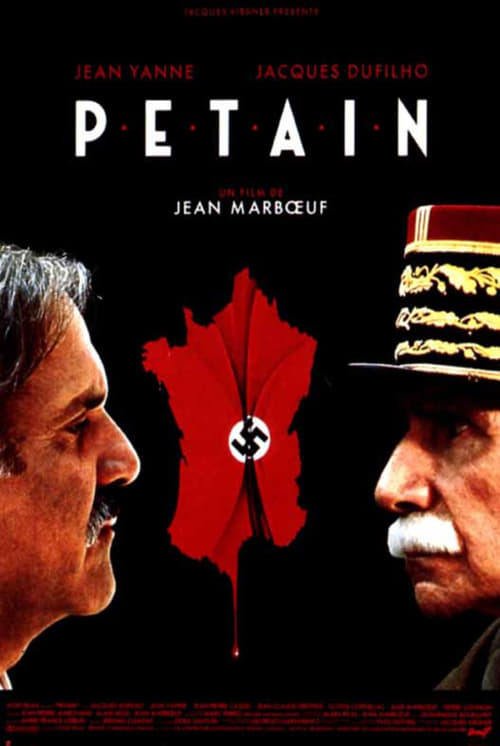
During second world war,Philippe Pétain gets absolute powers.The war ends with the arrival of allied forces by Petainism has not been put on trial.
Pétain

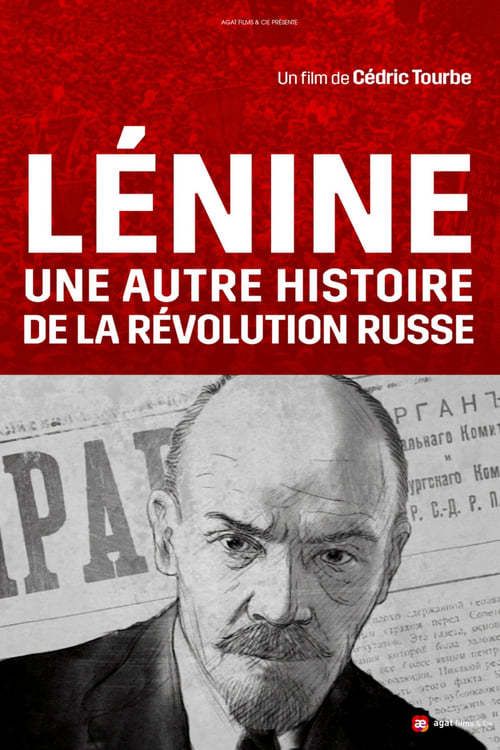
Vladimir Ilyich Ulyanov, better known as Lenin, is remembered as the instigator of the October Revolution of 1917 and, therefore, as one of the men who changed the shape of the world at that time and forever, but perhaps the actual events happened in a way different from that narrated in the history books…
Lenin and the Other Story of the Russian Revolution
No description available.
Les carnets d'Histoire parallèle

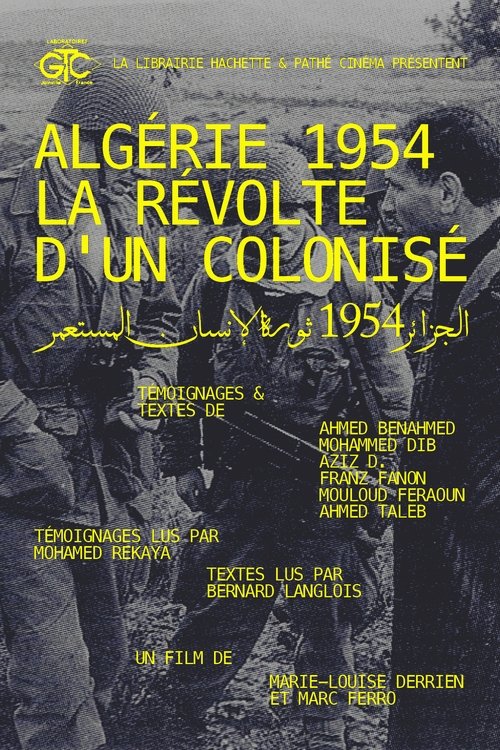
This film presents the point of view of an Arab from Algeria who rebels against colonization. He analyzes the process of awareness, the transition to revolt, to armed insurrection. Algeria and the settlers are seen through this lens and not the way a Frenchman saw the country. He gives voice to the Arabs at a time when this word was not heard: sometimes it was not even produced, at least publicly. The testimonies are based on real propositions, most of them were made to the author during his stay in Algeria from 1948 to 1956, then in 1958 and 1959. The comments are borrowed from the texts of Arab theorists of the revolution Algerian. This film thus completely evacuates the point of view of those who are not insurgents; he does not give the opinion of the colonists. It is the direct expression of what was the revolt of a colonized person: it thus constitutes the very type of the historical document.
Algeria 1954, The Revolt Of A Colonized
No description available.
Histoire parallèle
This program shows how simple and logical it all was—one step at a time, from the bitter defeat of World War I and the humiliating Treaty of Versailles, the wrangling of the Weimar democracy, the economic crisis... Then the fear of Communism, the threat of violence, and the Nazi promise of law and order was so seductive that the mass of Germans were willing to overlook a little repression here and a little there, until it became a point of honor for Germans to witness brutality without flinching. Forced after the war to look at what they had done, the Germans would not or could not see.
How the Nazis Came to Power

No description available.
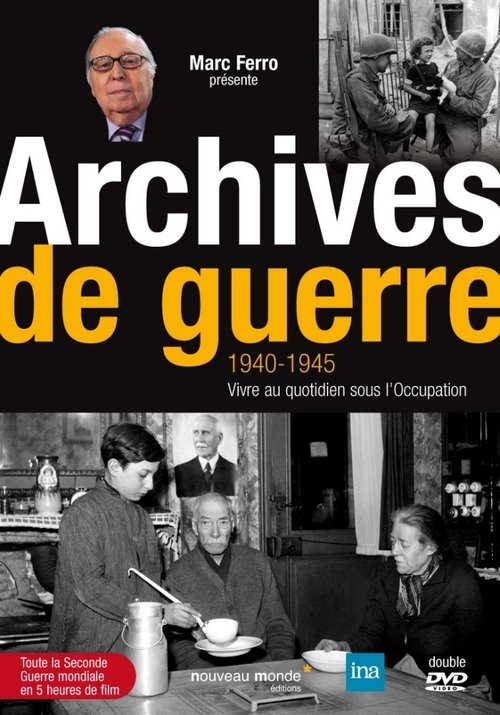
Archives de Guerre 1940 - 1945. Vivre au quotidien sous l'occupation
This program uses Lenin’s own words to tell the story of the Bolshevik rise to power: the overthrow of the Tsar and of the Kerensky government, the efforts at world Communist revolutions and the readiness to compromise in order to save the revolution in the Soviet Union, the ascendancy of the struggle against socialism over the struggle against capitalism. Thus the program explains the political background of the establishment of the totalitarian Soviet state and of its economic, social, and cultural policies—the precise institutions and policies that would in our time cause the destruction of what Lenin created by the force of his single-minded personality, his political acuity, his powerful oratory...and the weaknesses of the divided democratic opposition.
Lenin According to Lenin
No description available.