Christiane Taubira
Acting
Biography
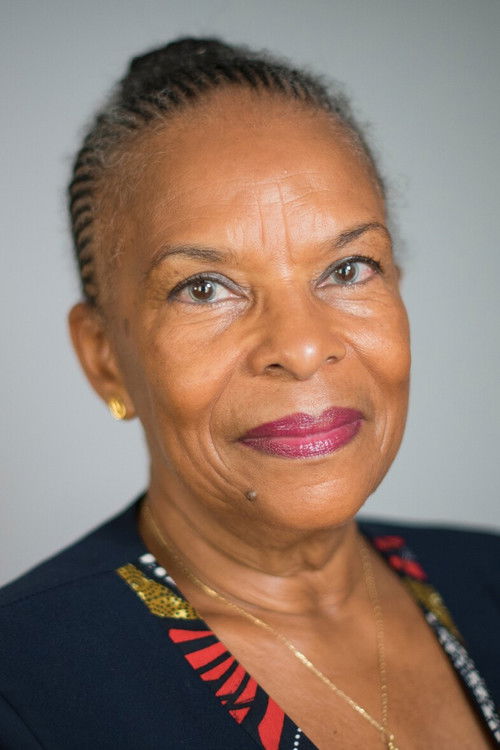
Christiane Marie Taubira was born on February 2, 1952 in Cayenne (French Guiana). She is a French left-wing politician and former French Justice Minister. Taubira, who used to teach economics, is the former director of the National Conservatory of Arts and Crafts of French Guiana (Conservatoire National des Arts et Métiers). She co-founded the Caricoop agricultural association for French Guiana (Caribbean confederation for agricultural cooperation) that she directed from 1982 to 1985. She was then appointed Director of the Technical Assistance to Artisanal Fishing in French Guiana before running the Guiana Foreign Trade and Economic Cooperation Office in 1990. In 1993, Taubira founded the Guianese party Walwari and was elected Member of the National Assembly of France for French Guiana. She was re-elected in 1997, 2002 and 2007. In 1994, she was elected Member of European Parliament. In 2002, she was the candidate of Parti Radical de Gauche (PRG) (left-wing Party) for the presidential election. Christiane Taubira gave her name to the 21st May 2001 law that recognizes the Atlantic slave trade and slavery as a crime against humanity. She published a book “Slavery told to my daughter”. In June 2012, after the election of François Hollande as President of the Republic of France, she was appointed Justice Minister, Keeper of the Seals. As Justice Minister, she has been defending more than twenty texts in French Parliament. In 2013, she introduced the law that legalized same-sex marriage in France. That law allows same-sex couples to adopt children. The same year, she passed a bill that created a national General Prosecutor specialized in financial matters. In 2014, she reformed the criminal justice, establishing individualized and efficient sentences. Opposed to the draft bill on deprivation of nationality, Taubira quit the French government on January 27th 2016. Christiane Taubira is a woman of convictions who is strongly committed to civil rights and women’s rights. In 2013, she published an essay “Words of Freedom” in which she addressed discrimination and racism issues (Racism she’s been a victim of). In her last book, “Murmures à la Jeunesse”, she addresses the youth. Tackling the terrorist attacks France suffered in 2015, she argues that the Republic has within itself the resources to fight terrorism. Taubira’s first novel, Gran Balan (Paris: Plon) was published in September 2020. Deeply fond of poesy and literature, she is a great fan of jazz (Nina Simone, Miles Davis, Arethla Franklin are some of her idols). A divorced woman, she has four children and two grand-children.
Known For

Quotidien (nicknamed "The French Show with the Good Lighting" abroad) is a French daily infotainment television program broadcast in the early evening on TMC since September 12, 2016. The show is hosted by Yann Barthès and produced by Bangumi. It consists of segments and reports produced by the team of commentators and journalists surrounding Yann Barthès and features daily guests including newsmakers, intellectuals, politicians, and French and international celebrities.
Quotidien

Host Guy A. Lepage brings together six to eight personalities from different milieus—sports, politics, stage productions and more—that are the subject of everyone’s conversations and/or are important figures in recent events. Participants are invited to speak freely, voicing their opinions on headline news or on a subject that is near and dear to them.
Tout le monde en parle

No description available.
28 minutes

On n'est pas couché was a French talk show broadcast on France 2 on Saturdays at 11 p.m., hosted by Laurent Ruquier assisted by various columnists.
On n'est pas couché

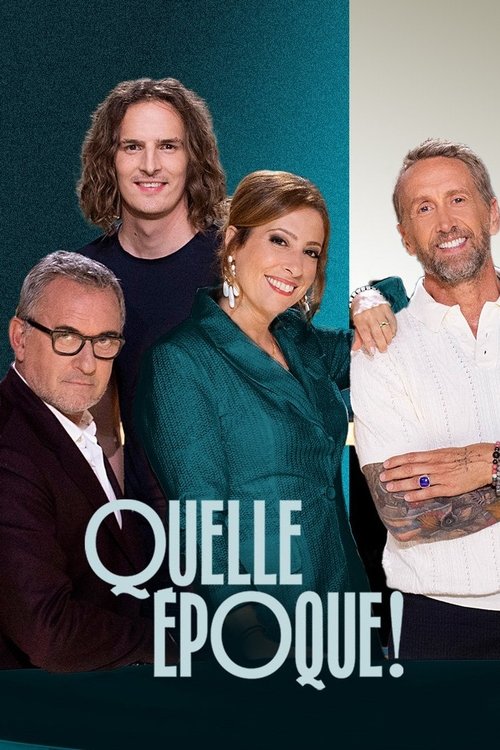
Talk show hosted by Léa Salamé, featuring incisive, funny, and surprising personalities debating current events in culture, society, politics, and the media. The set is designed as an arena where artists, polemicists, intellectuals, politicians, top athletes, and powerful figures come together. Permanent guest Christophe Dechavanne can intervene at any time during the show. Comedian Philippe Caverivière is also present with a segment dedicated to the political week and another devoted to celebrity news and social media.
Quelle époque !

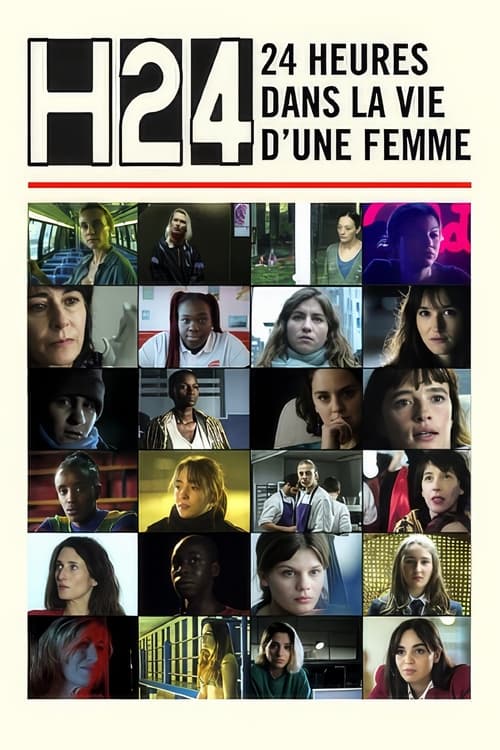
Twenty-four short films by 24 female writers, performed by 24 women actors, all based on women’s real life experiences of sexism, harassment, and violence. A diversity of female voices and talent from across Europe come together for a series that tackles head-on the everyday brutality experienced by women.
H24: 24 Hours, 24 Women, 24 Stories

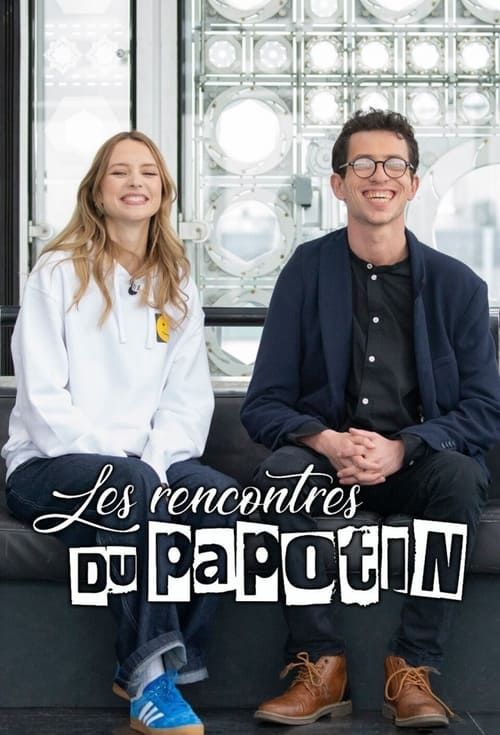
In each episode, one of the Nation’s most popular celebrities (actor/actress, singer, TV host, athlete) faces a group of 30 atypical journalists, all with ASD (Autism Spectrum Disorder). All have very different personalities, but one thing in common: a disarming naturalness that is full of truth! Through surprising, unpredictable, sometimes funny or poignant questions, viewers discover celebrities as they have never seen them before! In these questions: no calculations, no traps, but also no taboos and no filters. Faced with these very special interviewers, the guests naturally drop the masks and each meeting becomes a magical moment, out of time, filled with emotion, laughter, poetry and impertinence. The show is also nourished by various artistic sequences (music, poetry, drawing…) delivered by journalists endowed with an unsuspected talent.
The A Talks

25 youngsters, aged 10 to 12 years, probe political party leaders on a range of topics.
Face the Classroom

No description available.
À la tribune

No description available.
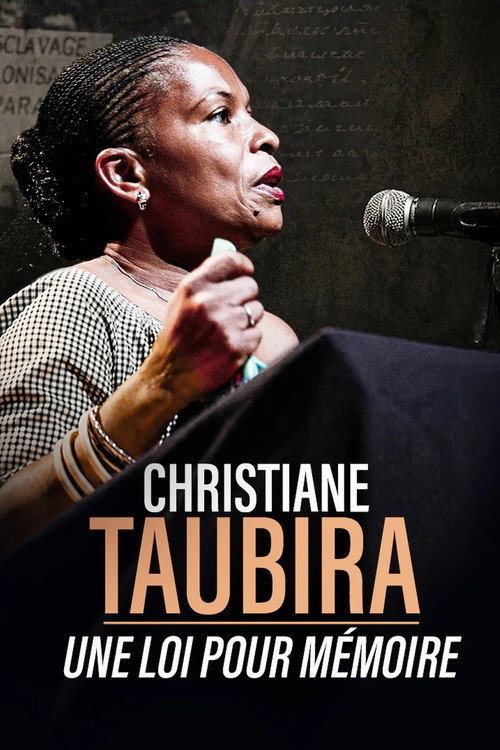
Christiane Taubira : une loi pour mémoire

No description available.
L'Adieu à Solférino

No description available.
François Hollande, le mal-aimé

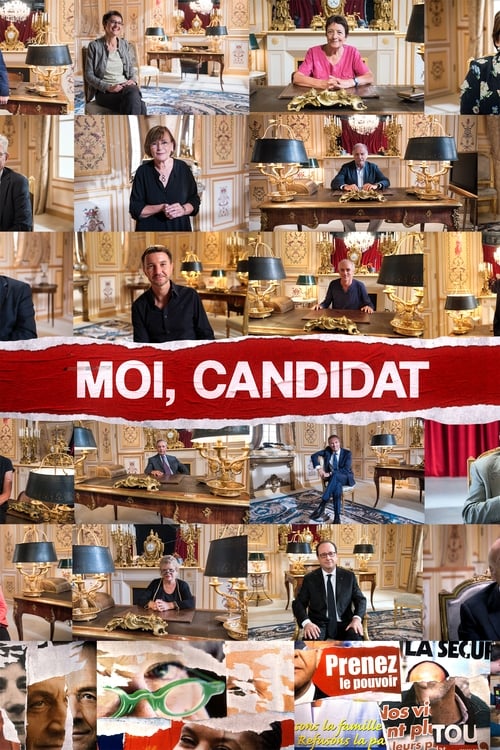
François Hollande, François Bayrou, Christiane Taubira, Valéry Giscard d'Estaing, Jean-Luc Mélenchon, Arlette Laguiller, Jean-Marie Le Pen... reveal the driving forces behind their strategies, recount their joys and doubts, and talk about the exhilaration of popular jubilation and the harshness of an exhausting marathon—the adrenaline, the staging, the blows that are dealt and received, the hopes of victory and, in the end, more often than not, defeat. Through the testimonies of eighteen former candidates, "big" and "small," who participated in the Elysée competition between 1969 and 2012, this documentary directed by Jean-Baptiste Péretié reveals the human and political comedy of the presidential elections, the great theater of the conquest of power.
Moi, candidat

"Il suffit d'écouter les femmes": these famous words were pronounced by Simone Veil when she defended her law on abortion, in 1974, before the National Assembly. For the first time, women who have used a clandestine abortion in France before 1975 evoke their painful, release or traumatic experience. These moving testimonies make it possible to discover the incredible diversity of the means employed, the dangers incurred, the participation of children, the role of men, that of doctors, sometimes even the violence committed on women.
Il suffit d’écouter les femmes

No description available.