Germaine Dieterlen
Directing
Biography
Germaine Dieterlen was a French anthropologist. She was a student of Marcel Mauss, worked with noted French anthropologists Marcel Griaule (1898-1956) and Jean Rouch, wrote on a large range of ethnographic topics and made pioneering contributions to the study of myths, initiations, techniques (particularly "descriptive ethnography"), graphic systems, objects, classifications, ritual and social structure.

Known For

In Sangha, through the window of her house, Germaine greets Djamgouno, her main informant. He then translates for her a conversation she has with a half-blind old man. She recounts her memories of a past party at which Amadigné worked with her as an informant. Later, in front of the cliff, Germaine, Djamgouno and Pangalé are sitting on rocks, and Germaine talks about the many caves that can be visited by climbing small spelunking ladders. Rouch intervenes during the interview, asking the protagonists about the settlement of the cliff by the Dogon, who learned from the Tellem how to climb the cliff. Rouch then asks about the Tellem's predecessors who lived there 2,400 years ago. Germaine admits the ignorance of researchers on the subject, and Rouch concludes by joking about the new task that now falls to Germaine Dieterlen.
Germaine et ses copains

The fourth year of the Sigui ceremonies, celebrated every sixty years by the Dogons of the Bandiagara cliffs, Mali, takes place in the village of Amani.
Sigui 1970: The Clamours of Amani

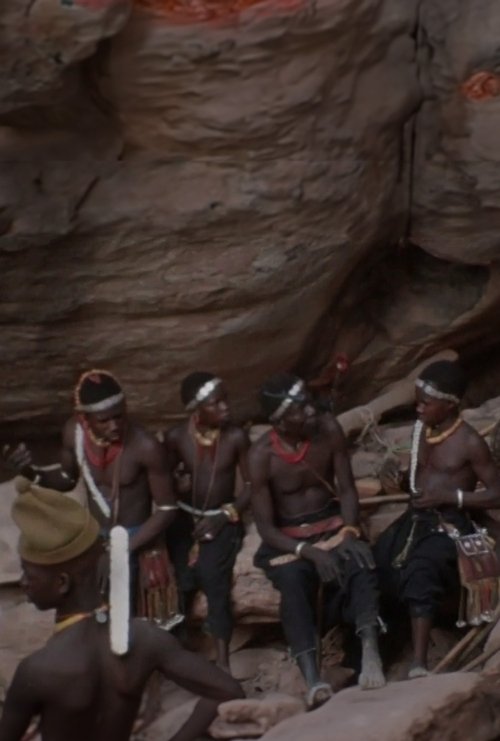
Germaine Dierterlen talks about Dogon mythology at a conference on the Bandiagara cliffs. The Songo canopy is a sacred site in Bandiagara. Its walls are covered with paintings depicting the different phases of creation. A little further on, in a cave near the village of Bongo, symposium participants are discussing the Tellem, the people who lived in the houses built into the cliffs before the arrival of the Dogon. The archaeological remains and migratory movements of these two peoples are discussed.
Hommage à Marcel Mauss. Germaine Dieterlen

In front of Jean Rouch's camera, Germaine Dieterlen recalls her ethnographic itinerary, at the Musée de l'Homme, in Mali and in the Paris of the 1930s.
Germaine chez elle

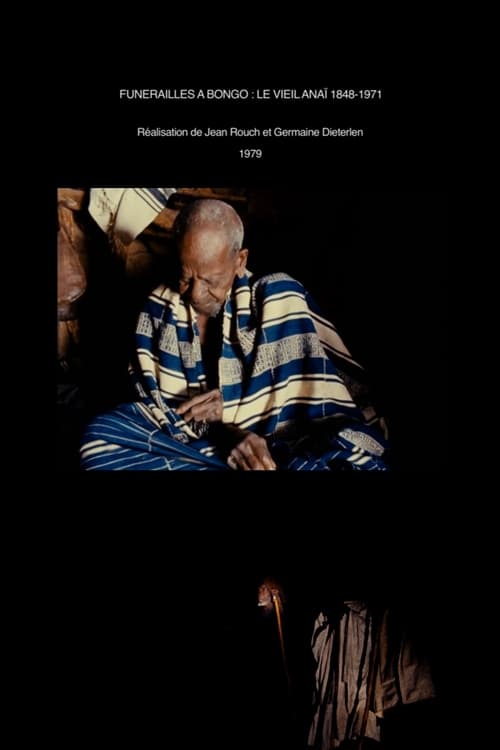
In 1972, the Dogon of the Bandiagara cliff in Mali celebrated the funeral of Anaï Dolo, head of the Bongo Masks Society, who died at the age of 122. On this occasion, the large Bongo mask, is erected and for twenty days, family members, elders, men from neighbouring villages purify the village.
Funeral at Bongo: The Death of Old Anai

The young goat herders from the cliff of Bandiagara practice on the stone drums of their ancestors. An ethnomusicological film experiment describing the subtle plays of the right and left hand of Dogon drummers.
Dogon Drums, Elements of a Study in Rhythm

Belgian filmmaker Eric Pauwels' meditation on dream, travel and film.
The Dreamed Films
The sixth year of the Sigui ceremonies, celebrated every sixty years by the Dogons of the Bandiagara cliffs, Mali.
Sigui 1972: The Loincloths of Yamé
Sigui 1967-1973: invention de la parole et de la mort is a never-before-seen synthesis of the roaming ceremony of the Dogon people living in Mali, the Sigui. It is celebrated for seven years every sixty years, and it is to commemorate the first forefather’s death and funeral and the bestowal of speech to humans.
Sigui Synthesis: The Invention of Speech and Death

Beginning of the sextenary festival of the Sigui among the Dogon of the Bandiagara cliff in Mali. This first ceremony takes place at the village of Yougo Dogorou. The men, shaved and dressed in ritual clothes of the Sigui, enter the public square dancing the snake dance. They honor the terraces of the famous dead of the last sixty years and go to drink the sacramental millet beer.
Sigui 1967: L'enclume de Yougo

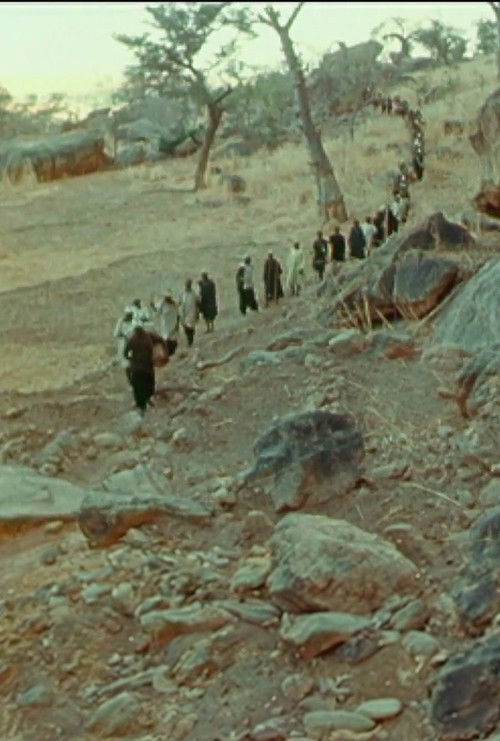
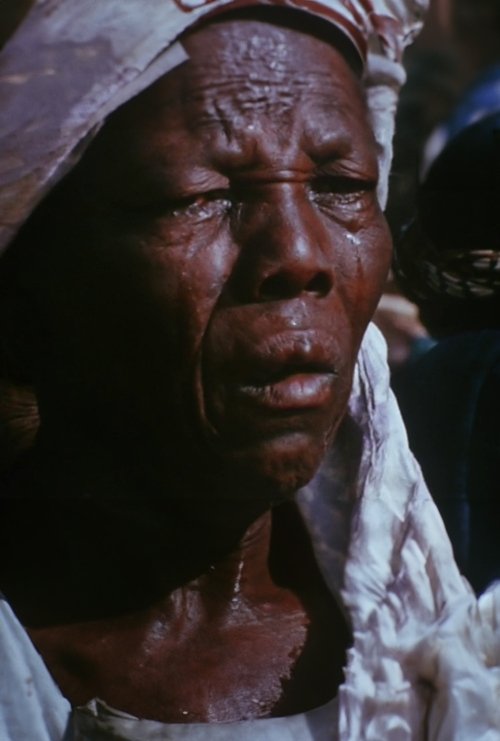
Burial of the Hogon of Sanga, Dogon religious leader of Lower Ogol, Mali.