Directing
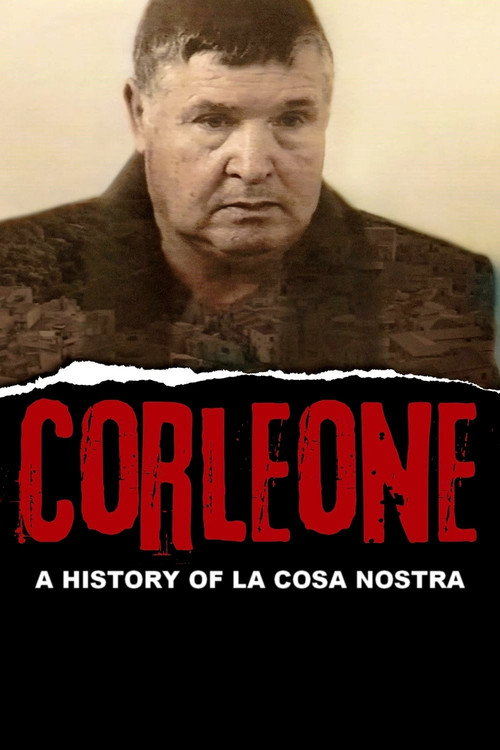
How, from 1974 to 1993, Totò Riina (1930-2017), supreme boss of the Corleone family, ruled by blood and terror over the Sicilian Mafia. An implacable account, based on the testimony of his men and those who fought against them.
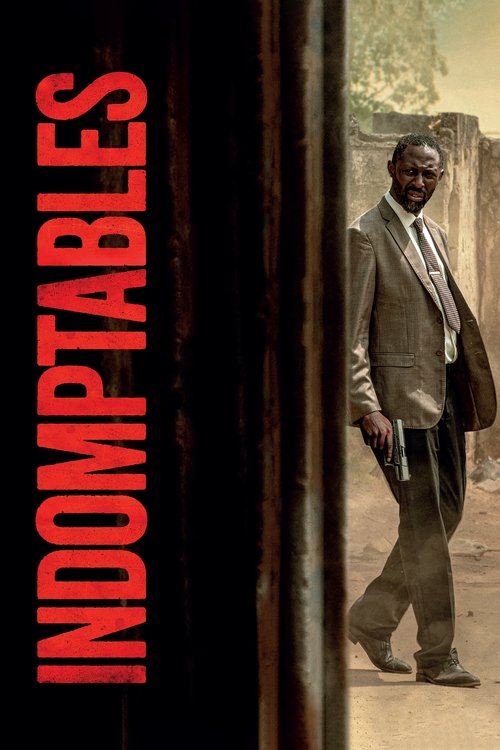
In Yaounde, Police Chief Billong is investigating the murder of a police officer. In the streets and at home, he struggles to maintain order. A man of principle and tradition, he is reaching breaking point.
A police chief in northern France tries to solve a case where an old woman was brutally murdered on Christmas Eve. However, in a neighborhood rife with crime, everyone seems to be a suspect.
No description available.
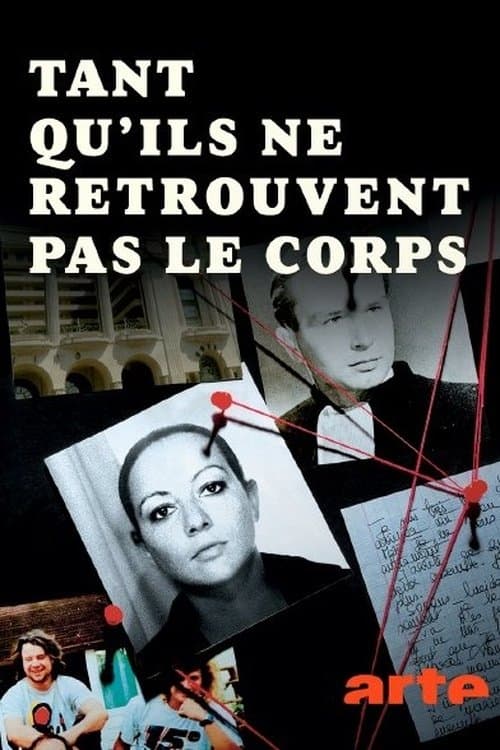
In three poignant acts, as rigorous as a major assize trial, Rémi Lainé and Pascale Robert-Diard deliver the human truth of the Le Roux-Agnelet case, over the course of a dizzying legal series spanning nearly forty years.
On March 1, 1996, 15-year-old Shafeeq Murrel was killed on the street in South Philadelphia — innocently caught in the crossfire between rival pairs of crack dealers out for revenge. Shafeeq’s murder was one of 435 in Philadelphia that year, and it was soon shelved as a cold case. Then, detectives David Baker and Julie Hill took it on— two middle-aged white cops working a Black neighborhood in their battered Plymouth Gran Fury. Filmed like a taut police procedural, THE SHOOTING ON MOLE STREET chronicles the investigation, as Baker and Hill knock on doors, shake down dealers, and beg, threaten and cajole residents in an effort to get someone — anyone — to talk. Baker rejects any accusation of police racism in the unsolved murders of young Black men. Isn’t he out here trying to close the case? But racism is more complicated than intent.
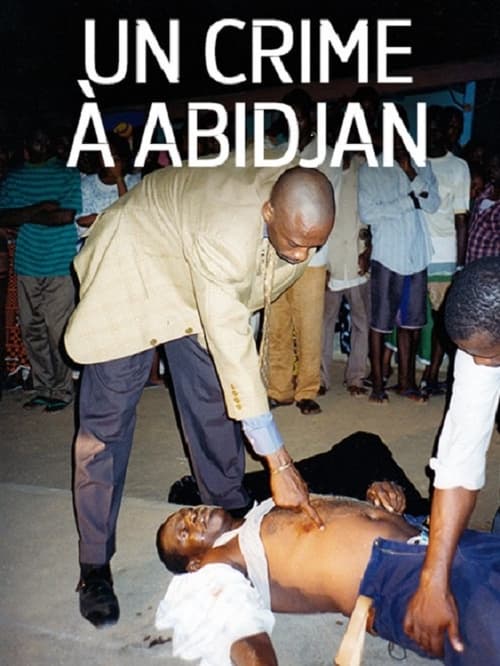
1995. On the outskirts of Abidjan, the largest city in Ivory Coast, a policeman is murdered. Shot outside his vehicle, while his fiancée sits in the car, terrified. Superintendent Kouassi is the detective in charge of the investigation. Tall and lanky, he moves with the tired energy of a man who has seen it all. Drawing on a network of underworld characters with dubious information, Kouassi’s team begins bringing in potential suspects and subjecting them to horrific brutality: beating them with sticks, hanging them upside-down, threatening their lives. Some of the men are left so broken they have to literally drag themselves into Kouassi’s office later, to be interrogated while lying on the floor, their bodies a mess of bruises, broken bones, and lacerations.
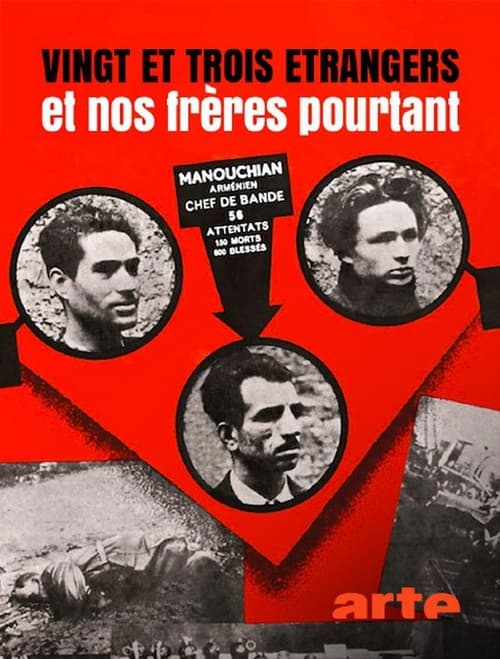
Not just another documentary on the French resistance movement, this film focuses on one particular group of underground fighters in France: those from Eastern Europe. Many were Jews and all had fled their native countries before the war broke out. They were among the most staunch and fearless enemies of fascism, as shown here in personal interviews and memoirs of war-time experiences. But the most famous of these immigrants were 23 who were rounded up among several hundred Parisians in 1943, tried for their activities, and executed -- all were immigrants under the leadership of the Armenian poet Manouchian. After their execution, Paris was papered with posters decrying these 23 martyrs as "foreign communists."
Formed in 1970, the organization sought to create a “revolutionary” state through armed struggle, and to remove Italy from the North Atlantic Treaty Organization. The Red Brigades attained notoriety in the 1970s and early 1980s with their violent attempts to destabilise Italy by acts of sabotage, bank robberies, kidnappings and murders. Models for the Red Brigades included the Latin American urban guerrilla movements and the World War II Italian partisan movement, which was itself a mostly leftist, anti-fascist revolutionary movement. The group was influenced by volumes on the Tupamaros published by Feltrinelli, “a sort of do-it-yourself manual for the early Red Brigades”, and was influenced by and saw itself as a continuation of the Italian partisan resistance movement of the 1940s, which was interpreted as an example of a youthful anti-fascist minority using violent means for just ends.
The dream of a man from the East confronted with the realities of the West.
Three members of the Cosa Nostra, the Sicilian Mafia, who were captured in the early nineties and cooperated with the authorities in exchange for immunity, tell how they became criminals, what their experiences were within the bloody organization and how they managed to leave it.
Boulevard de Belfort, the police headquarters. Six investigations depict a formerly prosperous town, decaying neighbourhoods, a society with no prospects.
Just outside Paris, in a peaceful clearing surrounded by woods, a French flag flies above a bare concrete pad. Here, on February 21, 1944, Nazi occupiers executed 23 Resistance fighters by firing squad. After the executions, the Nazis highlighted many of the murdered fighters on a notorious red poster, labelling them as foreigners, communists, and Jews. 23 FOREIGNERS — OUR BROTHERS tells the stories behind some of the faces on that poster, exploring their lives through archival photos, letters they wrote on the eve of their deaths, and moving interviews with their descendants.
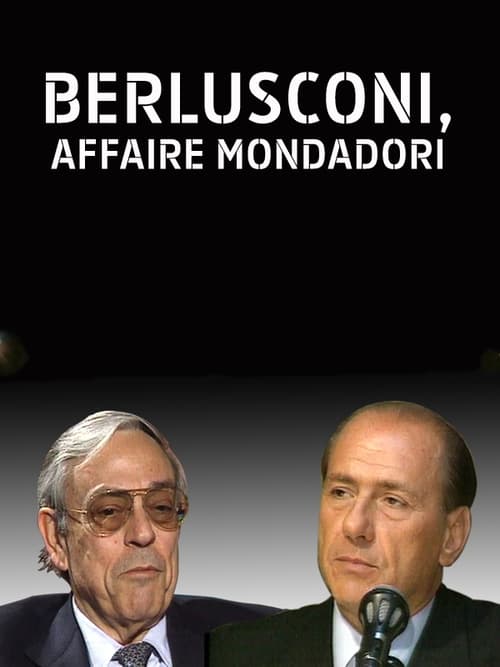
How the head of the Italian government took over the country's largest publishing house. A brisk, fierce and biting enquiry into the heart of high finance, the legal system and politics.
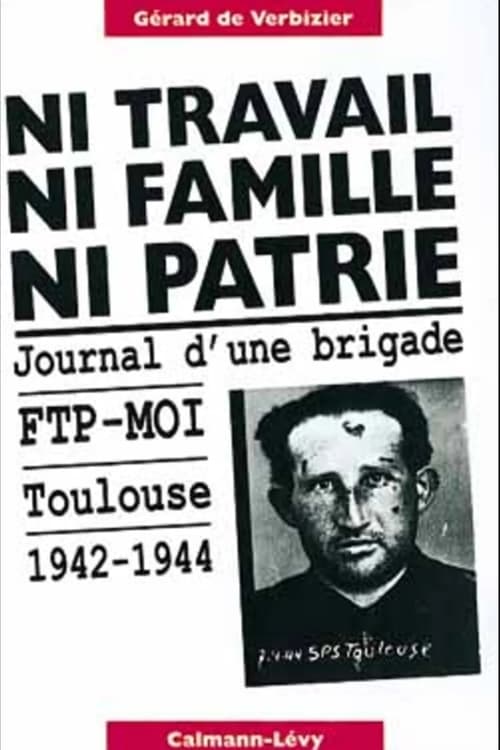
They were high schoolers, students, sons of peasants, workers. Among them were Jews, foreigners and Communists. Some were born in France, others in Poland, Hungary, Romania, Italy, Spain or Brazil. In 1939, they didn't know each other. In 1943, they took up arms together in Toulouse to fight the Nazi occupiers and the Vichy regime. Here, they tell their stories.