FEEL IT.STREAM
Heiner Müller

Heiner Müller

Acting

Biography

Heiner Müller was a German dramatist, poet, writer, essayist and theatre director. His "enigmatic, fragmentary pieces" are a significant contribution to postmodern drama and postdramatic theatre.

Known For

Zeugen des Jahrhunderts
N/A

No description available.

Zeugen des Jahrhunderts

1979
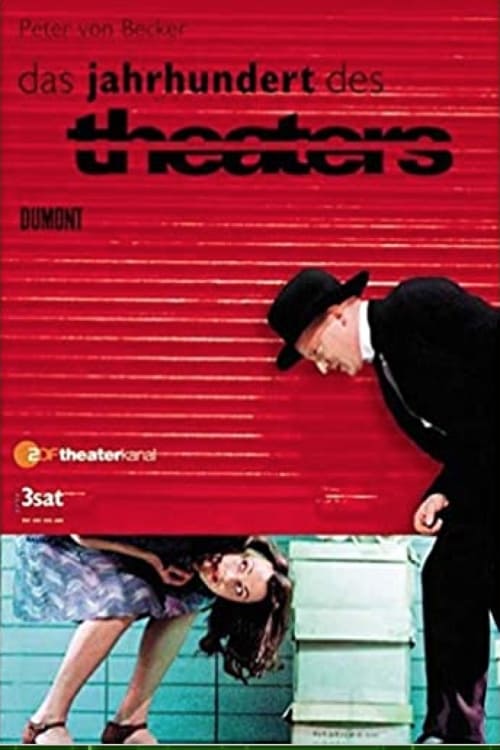
Das Jahrhundert des Theaters
9.0

"The Century of the Theater" - From the "birth of the director" to the "heroes of modernity" - an overview of the world of theater - illuminates the interaction with the history of the past hundred years is also shown.

Das Jahrhundert des Theaters

2002
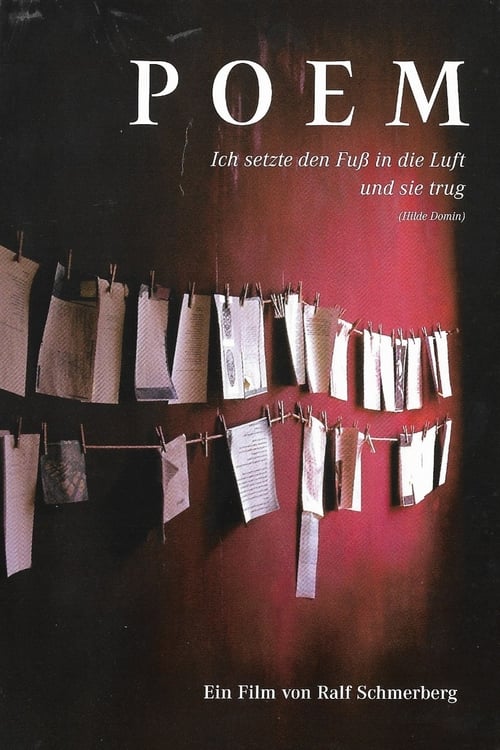
Poem: I Set My Foot Upon the Air and It Carried Me
9.5

A series of poems.

Poem: I Set My Foot Upon the Air and It Carried Me

2003
No image
N/A

Movie scenes, montages of images and text, as well as conversations between Alexander Kluge, playwright Heiner Müller and classicist Wilfried Stroh provide a multifaceted insight in the far-away world of Ancient Rome. The conversation with Müller revolves around Tacitus' representation of the Roman Empire around 112 AD. First, Müller reads passages from the historicist's annals that describe Tiberius' tragic death (37 AD). Kluge and Müller discuss the text's aesthetic qualities. Müller is interested in Tacitus for the aesthetic pleasures rather than out of historical curiosity. He describes Tacitus' style as "transition from chronicle to literature," which manifests in his "elliptical," sometimes laconic narration.

Rome, as Far Away as the Moon

1991
No image
N/A

No description available.

Autoren erzählen

2012
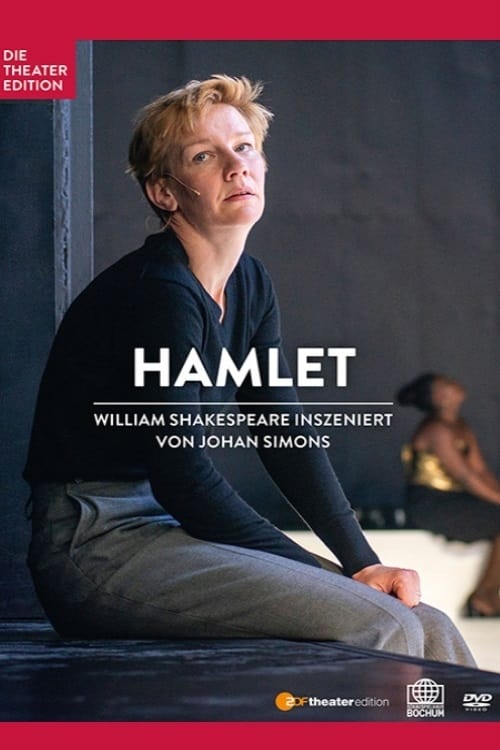
Hamlet
N/A

No description available.

Hamlet

2020
No image
N/A

One of Müllers's vocal cords was paralyzed as a result of a life-saving radical operation (1995). At the beginning of the discussion Müller observes that figures from Greek mythology live on today as trademarks for products (Ajax as a cleaning agent, Polydor as a record).

The Voice of the Playwright

1995
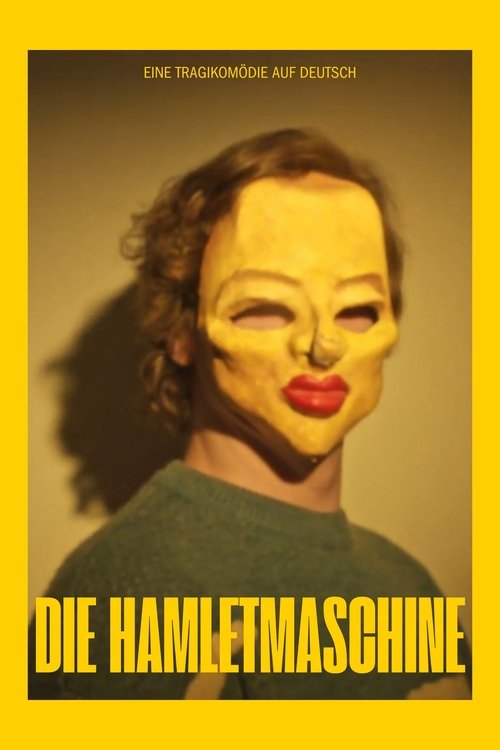
Hamletmachine
N/A

Hamlet and Ophelia reckon with their doomed narratives. Adapted from the 1977 East German Heiner Müller play of the same name.

Hamletmachine

2026
"Kino 81" - Stillness, a film magazine by film critics
N/A

An issue of the magazine Kino 81, designed for the film department of WDR by staff of FILMKRITIK

"Kino 81" - Stillness, a film magazine by film critics

1981
No image
N/A

This film not only illuminates Heiner Müller's life and works, it is more about questioning the "Sphinx" of the East and its saying about the loss of utopias and examining whether Heiner Müller's texts, as he himself said, were messages in a bottle for the future or not.

Ich will nicht wissen, wer ich bin - Heiner Müller

2009
No image
7.0

On the run from her criminal Italian husband, a young French woman meets a German lover in West Berlin who offers her shelter but who also gets entangled in her threatened life ever deeper.

Keine Hand wäscht die Andere

1988
Unter Deutschen
8.5

Documentary filmmaker Troller criss-crosses post-reunified “Transgermania” for a year, probing German identity through festivals (Carnival, Oktoberfest), films, small towns and big cities. He attends a Black–Bavarian wedding at an “animal fair,” chats with chimney sweeps, students, artists and elites (from Grass to Müller), and asks uneasy questions about unity, memory and the future - all from his outsider’s lens.

Unter Deutschen

1995
Robert Wilson and the Civil Wars
9.0

Robert Wilson and the Civil Wars is an in-depth documentation of Robert Wilson’s ambitious attempt to stage an epic, twelve-hour, multinational opera for the 1984 Summer Olympics. Filmmaker Howard Brookner follows the avant-garde theatre director as he confronts a hectic work schedule, funding difficulties and relentless international travel in attempt to complete his preparations. The film examines Wilson’s unique theatrical style during The Civil Wars: A Tree Is Best Measured When It Is Down, which involves the continual creation of evocative stage sets, owing to a unique juxtaposition of movement, sound, text and image. Known for his precise, painterly images Wilson’s work derives more from visual art than the orthodox literary traditions of theatre. As a result, Wilson often challenges actors to perform in a boldly minimalist style, as well as collaborating with non-actors, such as young autistic poet Christopher Knowles in Einstein on the Beach.

Robert Wilson and the Civil Wars

1987
No image
N/A

The conversation begins on the topic of Müller’s plans for new plays. Müller tells us that he has promised to write a libretto for Boulez, and that he wishes to use the myth of Heracles as material for a stage play.

On the Way to a Theater of Darknesses

1995
No image
N/A

In 1989, Heiner Müller staged an unabridged seven-and-a-half hour Hamlet, because in the process of German reunification "a leave-taking from the Hamlet principle in favor of the market economy" was taking place. In this interview, he elaborates on the parallels between the play and contemporary reality in terms of the plot and the characters (for example, Günter Schabowski as well as the problematic role of Fortinbras).

Conversation with Heiner Müller in Garath

1989
Der Ausländer
N/A

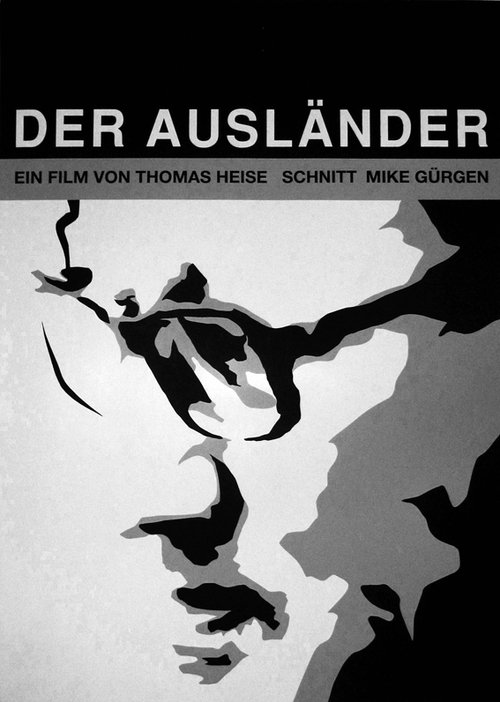
Documentary by Thomas Heise filmed in East Berlin in 1987/88.

Der Ausländer

2004
Die Zeit ist aus den Fugen
8.0

From August 1989 to March 1990, Heiner Müller and the Deutsches Theater ensemble develop “Hamlet/Maschine” amid East Germany’s peaceful uprising. Actors help organize the November 4, 1989 Alexanderplatz demonstration. After the wall falls, artists split between a “third way” and reunification.

Die Zeit ist aus den Fugen

1990
No image
N/A

A few months before his death, Müller responded to the keywords "breathing" and "smoking" with an anecdote that interprets breathing as an indiscretion towards the dead. In his view, smoking is a means of practicing stoicism: "Whoever smokes looks cold-blooded" (Brecht) and "Whoever smokes becomes cold-blooded" (Müller).

He Who Smokes Looks Cold-Blooded

1996
No image
N/A

The central topic of the interview is the ancient concept of a necessary balance between the dead and the living, which also assumes the notion of a constant potential for force in the world. Müller and Kluge examine this mythical conception of life with reference to personal, historical, and political examples like the father-daughter relationship (Agamemnon and/or Müller himself), East Germans' hopes of finding a place in capitalism, or violence in the middle ages and in the modern period.

The World is Not Bad, but Full

1994
No image
N/A

In this conversation, taking place shortly after the German reunification, Alexander Kluge and Heiner Müller discuss historical developments from the perspective of playwright Heiner Müller’s view on subjectivity. Among other things, they talk about the theoretical work of political philosopher Carl Schmitt, Russian literature, Müller’s play “Mauser” and an artwork by Anselm Kiefer.

“Wastage” of humans / Comrade Mauser / “Victim of History”

1991