Diego Marcon
Directing
Known For

No description available.
Il malatino
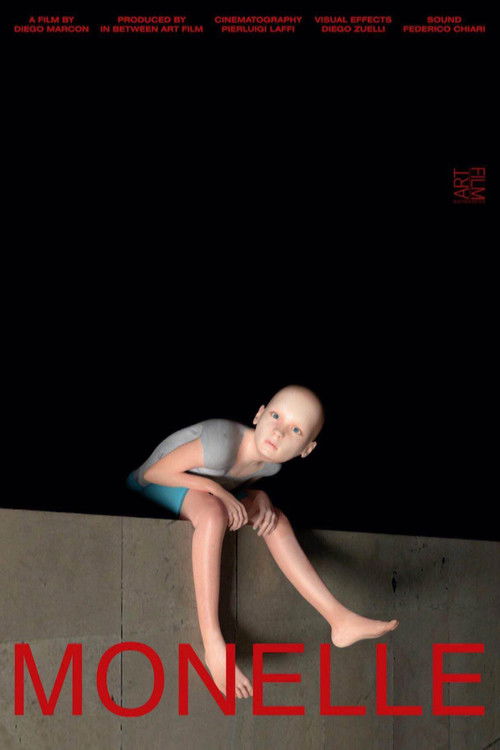
Around the sleeping bodies, some presences occupy the architecture and move around the space in obscure activities: nothing of their actions is visible to us, except in the fragments in which the image shows itself under the flashlight. Monelle is a circular film without any narrative or hierarchy, without a beginning or an end, and it circumscribes a place of promiscuity and ambiguity between the different formats used—35mm and CGI animation—and the approaches of two opposites film attitudes—the structural cinema and the horror genre.
Monelle
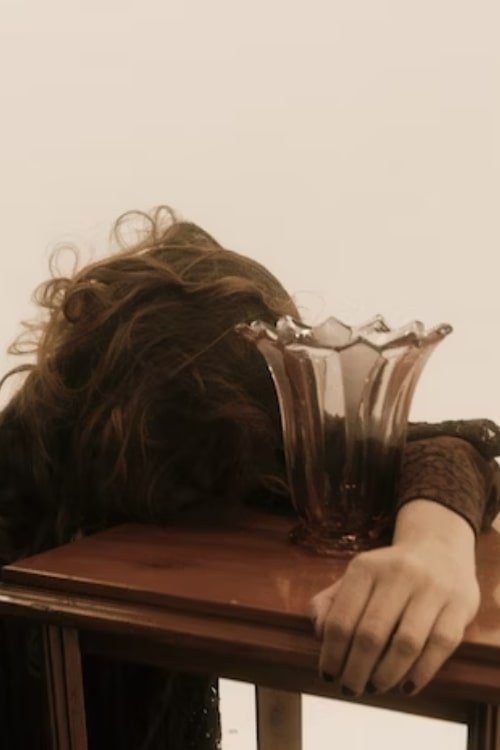
Capital was shot at various locations including the CityLife residential complex in Milan, the Nile riverfront in Cairo, residential neighborhoods in Alexandria, and construction sites of new cities—places where architectural histories are romanticized even as they are being erased. Through these sites, al-Sharif explores the desires that drive politicians, urban planners, and their imagined ideal residents as well as how the resulting designs, with their disregard for the historical failures of colonial architecture, seek to transform and control the cultural and political landscape. Together the film and installation hint at the limits of free speech and reveal how the legacies of fascism live on in the present.
Capital
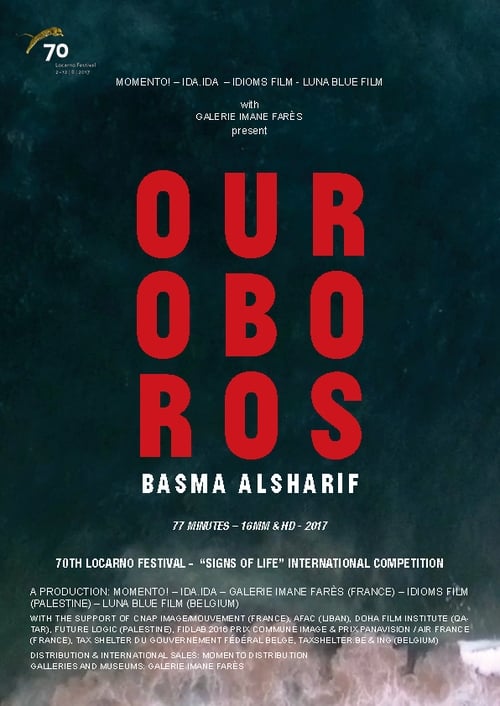
This film is an homage to the Gaza Strip and to the possibility of hope beyond hopelessness. Ouroboros, the symbol of the snake eating its tail, is both end and beginning: death as regeneration. A 74-minute experimental narrative film that turns the destruction of Gaza into a story of heartbreak, Ouroboros asks what it means to be human when humanity has failed. Taking the form of a love story, the film's central character is Diego Marcon, a man who embarks on a circular journey to shed his pain only to experience it, again and again. In the course of a single day, his travel fuses together Native American territories, the ancient Italian city of Matera, a castle in Brittany, and the ruins of the Gaza Strip into a single landscape.
Ouroboros
No description available.
She Loves You (Outtake)
Hand-processed Super 8 transferred to digital, tests the physical limits of vision by recording images of milky clouds dissolving into air. Clouds brought Marcon, by association, to speech bubbles in cartoons and their boundless visual liquidity.
Pour vos beaux yeux

Video, CGI animation, color, sound, loop, 2018
LUDWIG

No description available.
Dolle

Cameraless animation, fabric ink, permanent ink and scratches on 16mm clear film leader, color, silent, 5 loops of 10" each, 2015 Five short animated pieces conceived as loops, in which the first frame overlaps with the last one. Five nodding-offs; five heads shown in the moment of falling asleep and waking up again. The films are made by painting directly onto 16mm clear leader with fabric and permanent ink, then scratched with engraving needles.
Untitled (Head falling 01, 02, 03, 04, 05)

Inside a woodshed illuminated by an autumn dawn, a young boy is yodeling. Traditionally employed in the Central Alps to call the cattle back to the barns or to communicate with distant villages, Fritz’s yodel is instead a muffled call and a lugubrious requiem, accompanied by other voices coming back from nearby valleys and mountains.
Fritz

No description available.
She Loves You
La Gola (The Belly), Diego Marcon’s film commissioned by the Kunstverein in Hamburg, revolves around the correspondence between Gianni and Rossana. The two characters are portrayed by hyperrealistic dolls with digitally animated eyes and facial expressions. The combination of human voices, analogue dolls, and digital (post-)production brings forth hybrid characters whose status between analogue and digital defies clear distinction.
La Gola
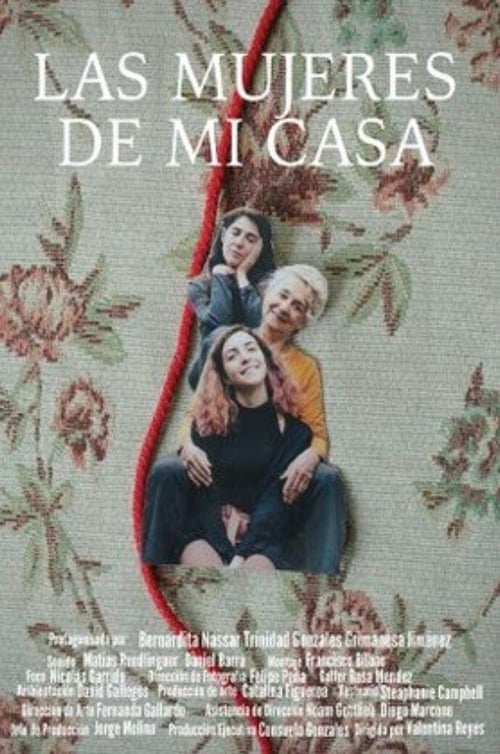
A family composed of three generations of women live in an old house in the neighborhood of Ñuñoa. On one hand, Leonor must decide her future, on the other hand, Monica must decide if she sells the house in which they have lived their entire lives while Emilia, must face her Alzheimer’s disease.
Las mujeres de mi casa
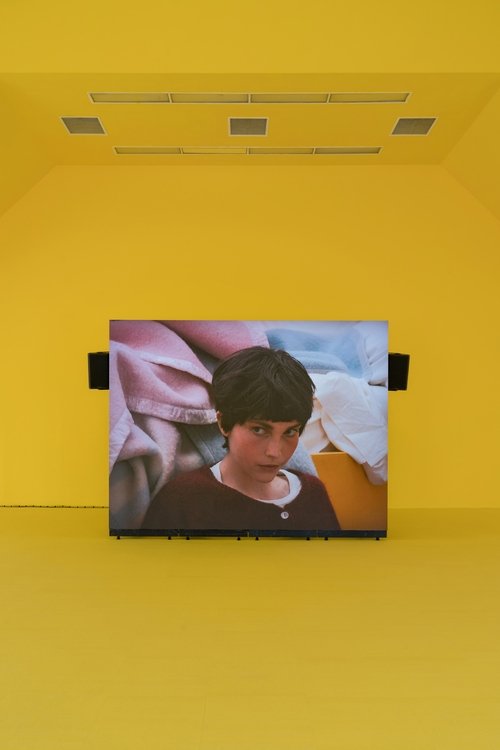
An encounter between the kid and four characters represented by costume props: gloves, foulard, trousers, and pullover, and an encounter between the golden age of American animation and Italian opera.
Krapfen
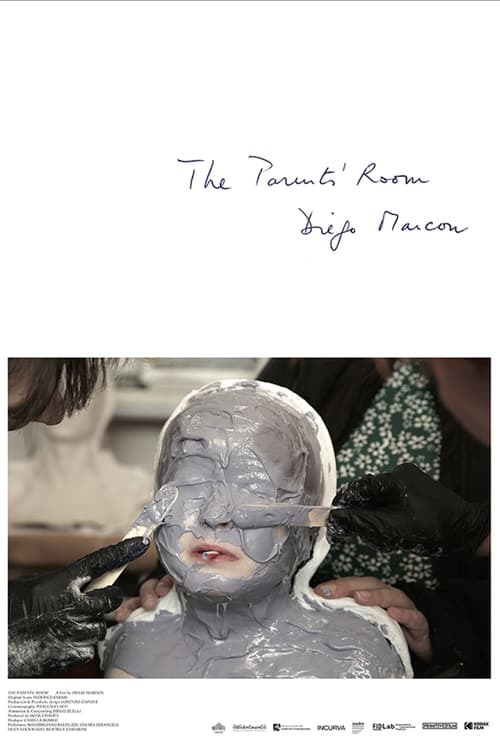
A family gathers around a bed to sing a lament to their own deaths, accompanied by a blackbird.
The Parents' Room

The video is filmed in Medjugorjie, Bosnia, known for being place of the apparitions of the Virgin Mary and, nowadays, as an important destination of Catholic pilgrimage. Immersed into a stream of sound, pilgrims climb to the mountains, at the feet of statues. In front of these icons, they compose their thoughts in prayer; around them, slowly, it gets dark. In its cadence, Litania is a gradual fading to black of the frame.
Litania
ToonsTunes is a musical composition that consists of four distinct movements put together by editing and looping lo-fi audios taken from Donald Duck cartoons. The different compositions alternate fast and slow rhythms and rueful sounds with more excited ones, from which the calls and quacks of the character’s voice emerge.
ToonsTunes (Four Pathetic Movements)
Filmed into the house of a hunter and clockmaker, the video is composed of a sequence of fixed frames pointed at the enormous number of images piled in his rooms: paintings, prints, photographs, little statues, knick-knacks. Through the use of a rigorous linear structure and a careful work on the sound, the video activates in the viewer an imaginative process able to reanimate each single image into a new, possible narration: the gaze is intended as a responsible act, as a powerful tool able to carve the real and to unfold its deepest dimension.