Acting
Polizeiruf 110 is a long-running German language detective television series. The first episode was broadcast 27 June 1971 in the German Democratic Republic, and after the dissolution of Fernsehen der DDR the series was picked up by ARD. It was originally created as a counterpart to the West German series Tatort, and quickly became a public favorite.
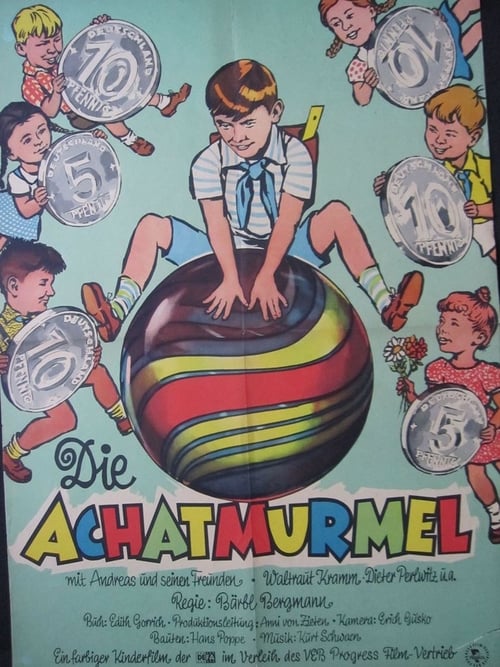
Andreas wanted a special marble for his birthday, but didn't get one. His friends then buy him one and lose it in the tall grass. Andreas finds the marble and quietly keeps it...
The young lady Lisa Gau probably took her own life at Seilergasse 8 in Rostock, at least that's what it looks like. Captain Schirding, who has been assigned to the case, sees things differently. Together with forensic scientist Kurt Lisowski, he investigates the case and soon discovers that Lisa was poisoned and is shocked when all the evidence points to his...
A new pupil has joined the seventh grade and - as is often the case - is met with scepticism. What is more: Mathias' classmates are angry because he is frequently late, goes home early and, on top of it, performs badly at school. They have to acknowledge, however; that he is very gutsy. This proves especially true when it becomes a question of passing a dangerous test: who can hold out longest in the ice cellar?
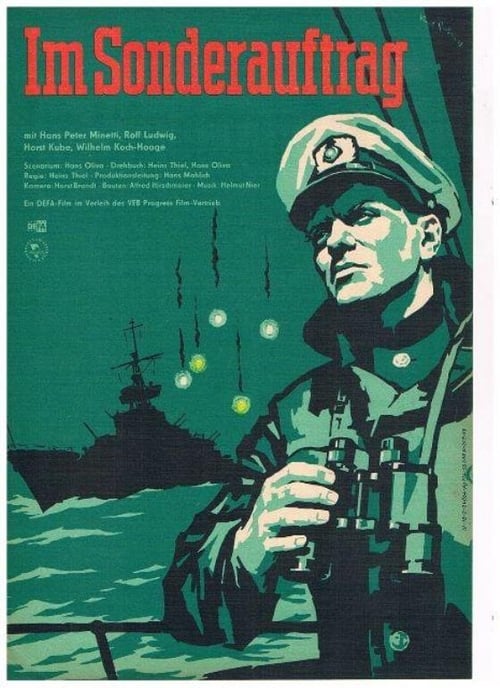
A warship returning from a training exercise was tasked with apprehending an unknown schooner that had violated GDR territorial waters. Although nothing illegal was found during the search of the ship, the ship's commander Fischer was suspicious of the owner of the schooner, Arendt, a former lieutenant of a Nazi coastal battery. Fischer's doubts were confirmed when a diver came aboard the schooner and photographed a military object underwater. The investigation showed that the detained schooner was on a sabotage mission, and the "activities" of Arendt, a former Gestapo Obersturmführer, were also revealed.
Lifelong hard work for the count makes the servant Anton a cripple. Everybody calls him Crooked Anton. When, after the end of the war, the land of the count gets divided amongst the farmers, Anton receives a piece and hopes to be able to work freely. But an old debt and intrigue keep Anton and his family from finding peace. The farmers of the village begin to discover their own power when Annegret, Anton's daughter, leaves. Is a new beginning possible for Anton? This film paints an impressive panorama of the development of a minor village in Mecklenburg from the end of the war to the uprising of 17 June 1953.
Frieda and August Walkowiak celebrate their 30th wedding anniversary. However, the marriage has been in crisis for some time. August wants to spend his old age in peace, while Frieda has no intention of giving up her position as LPG chairman. The problems in the countryside are huge, collectivization is not progressing fast enough, even comrade Heinrich Rantsch is clinging to his individual farm. Frieda fights for progress, even in her private life, because not only her burden but also her higher position is a thorn in her husband's side. During the wedding anniversary celebrations, Frieda is called to the LPG. This is the cause of the family quarrel that has been in the air for a long time. August demands her resignation. In vain - and so he moves in with Rantsch. Their daughter Helga also leaves the house because of the tensions. Frieda collapses. When she is in hospital, August comes to his senses.
Rosa von Praunheim, the director of the film, parodies himself and his time as a professor at the Film School in Potsdam Babelsberg, where he taught for six years.
Shortly before the outbreak of World War II, the paths of three people on the run cross by chance in the small Baltic Sea port of Rerig: Gregor, a member of the Communist Party of Germany (KPD); Judith, a Jewish woman; and a pastor who wants to save an Ernst Barlach sculpture classified as degenerate art. All those involved share a common fate and the dream of a fisherman's boy from Zanzibar, which is less a real goal than a utopia of a better future. Adaptation of Alfred Andersch's novel.
Peter is unwilling to learn the multiplication tables at school. He would rather work as an acrobat at the circus, just like his friend Susanne. When the class plans a trip to the circus, Peter is supposed to buy the tickets. Since he miscounts and buys one ticket less than needed, he cannot join his schoolmates. Susanne, however, comes up with an idea and lets him work in the circus arena where he is supposed to check on the arithmetic problems of a numerate donkey. When Peter fails to control the donkey, he feels deeply ashamed and has to assess that math is needed in all parts of life.
Railway employee Fritz Marr is not regarded well by his superiors. It is the year 1920, and trains regularly pass the railway hub of Erfurt to the East to secretly transport weapons for the fight against the young Soviet Union. Marr knows about this and wants to mobilise other workers to stop these illegal deliveries. To muzzle him, Marr is relocated to a remote rail work construction site.
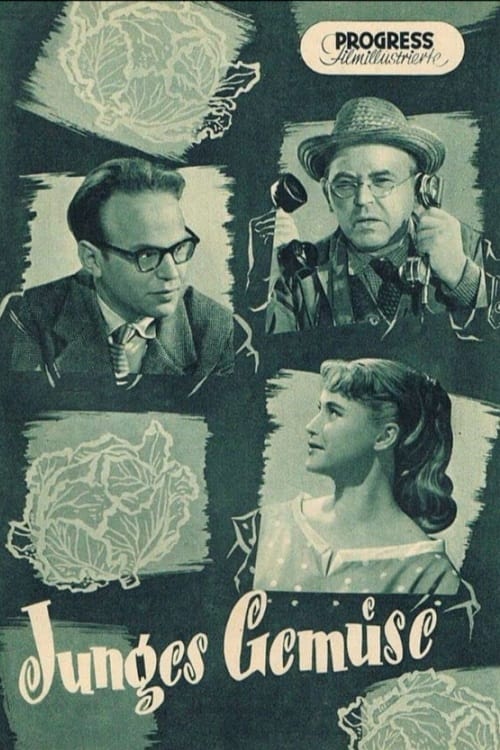
At a GDR farm, VEAB chief Amann bans cabbage in favor of cauliflower, enraging LPG accountant Gritt. Mistaking visiting writer Hans Brauer for a high-level inspector, Amann backpedals, clearing the harvest issue, while Brauer and Gritt spark an unexpected romance.
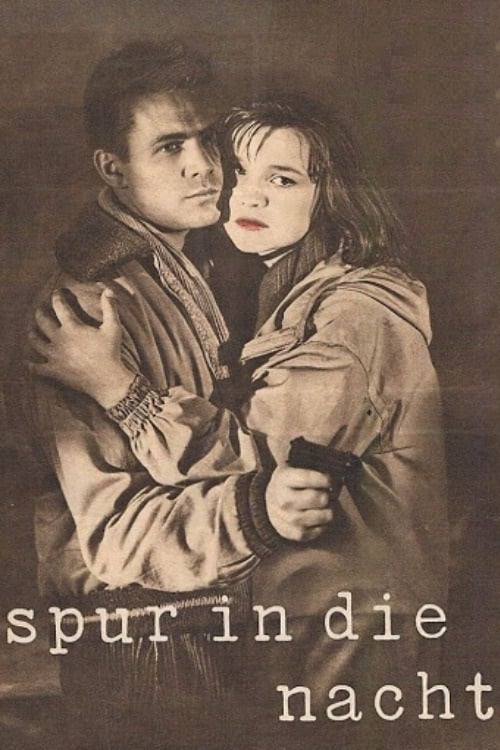
The bricklayer Ulli has received a letter from his girlfriend Sabine asking him to come to her from Berlin as soon as possible. Sabine works as a sales clerk in a small village in the Zittau Mountains near the border with Czechoslovakia. However, when Ulli arrives at the station, Sabine is not waiting for him. He goes alone to the Fuchsbau inn. Sabine's friend Traudel only knows that Sabine has made her way to the station. When she notices that Sabine's room has been cleared out, she calls the police. All the police find in Sabine's room is a map showing a trip to Hamburg. They now consider Sabine to be a fugitive from the republic.
No description available.
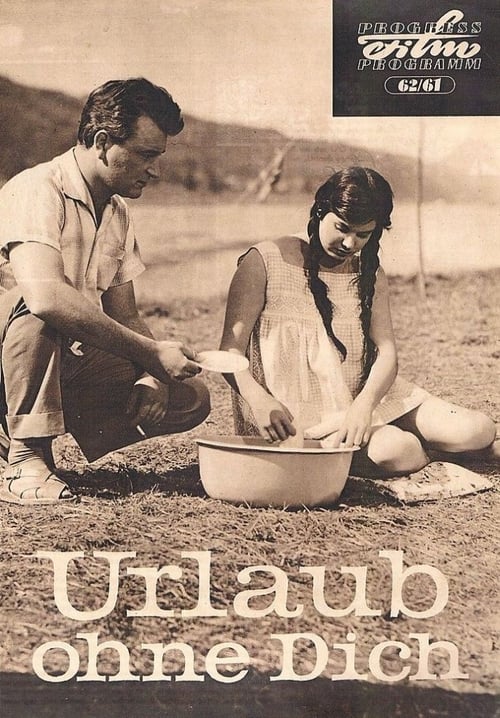
Hannes comes forward with a suggestion on how to make his brigade more efficient. Due to his success, he and all of his colleagues are granted a special leave. They decide to spend their free time in a holiday home. Hannes, however, does not join them. Instead, he pretends that he has to help his wife Irma with the installation of a machine for the agricultural cooperative. While Irma thinks that he spends his holiday with the brigade, Hannes goes on a road trip with the young and pretty Monika who has no idea that he is married.
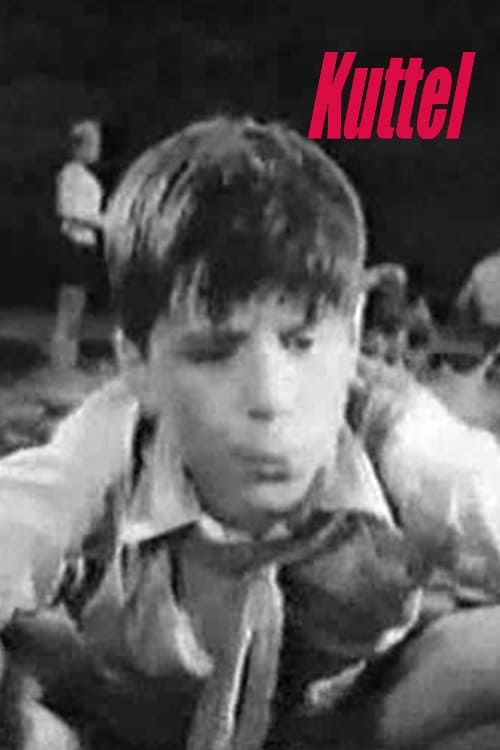
Young Kuttel belongs to a group of working-class children who live in Berlin at the beginning of the 1930s. In the big summer holidays in 1931, the children want to make a race with their model boats and choose as a venue for the small artificial water in the park of their neighborhood. All children in the area are invited to participate in the competition. But there is a traitor among them, who tells the company to the local police officers, who in any case look with arrogance on the "Reds"...
Bad planning and shortages prevail on an East German construction site. Foreman Hannes Balla uses unconventional methods to overcome the problems. New Socialist Unity Party secretary Werner Horrath is charged with bringing the rough-and-ready builder crew into line. The task seems doomed to fail as the two men compete for the affections of young engineer Kati Klee. But when she gets pregnant by married man Horrath, he is in danger of being expelled from the party, and Balla takes his side...
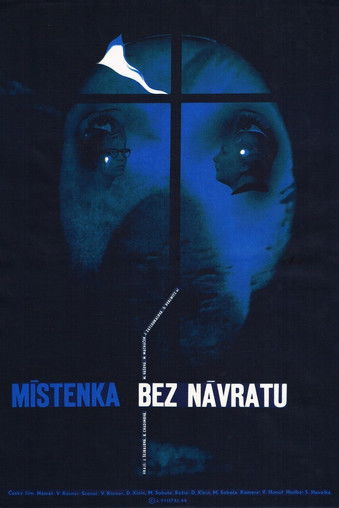
It is almost twenty years after the war. Wounds of the past that have never fully healed, but are still carried by many in their hearts. Marie Vláčilová, a survivor of one of the prison camps in Germany, also carries the traumas of the time with her. Now, so many years later, a mass grave of prisoners from that camp has been found and investigators visit Marie to get any information they can from her about the camp. With her important information, she is then to become a crown witness for the prosecution in Germany and now prepares to travel. But this brings back more and more unpleasant memories - especially of her daughter Paula, who has been through German re-education and hardly knew her mother after the reunion...
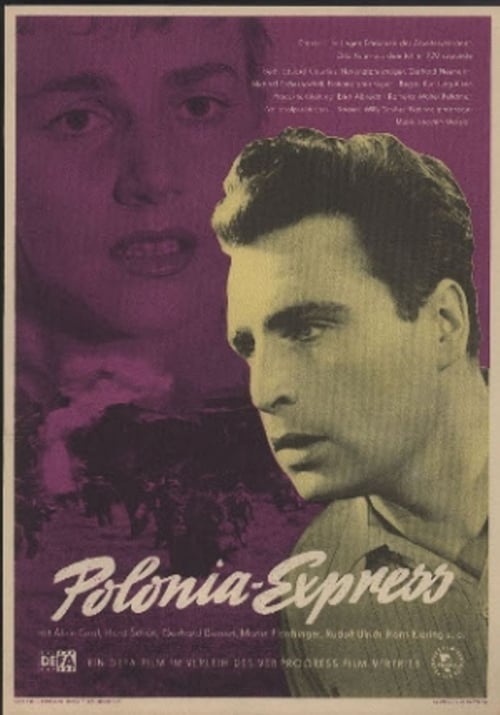
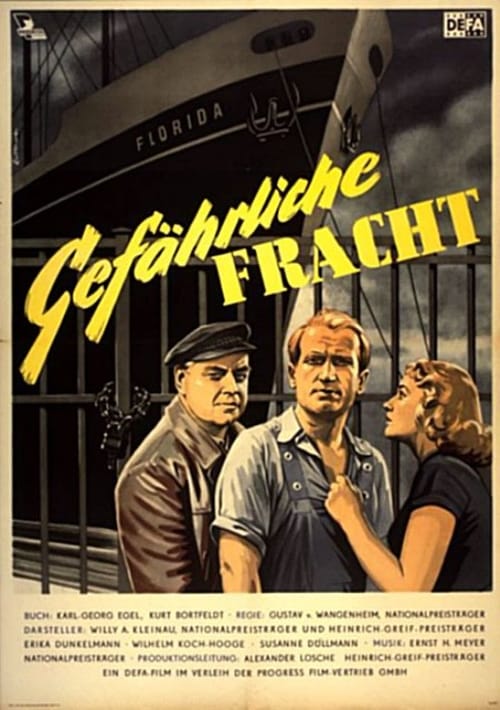
During the unloading of the freighter "Florida", West German dock workers discover napalm bombs instead of the specified precision machines - and a deceptive maneuver by the American occupying forces: the workers had already refused to unload the ship in France, where it was named "Chicago". It was refloated on the voyage to Germany. The German dockers also went on strike. Among them was Hein Jensen, who found it particularly difficult to take part. He had just found work again with difficulty. He needs the money because he wants to get married. His bride Helga has just given birth. When the Americans try to blackmail him into changing his colleagues' minds, he knows where his place is. The strike turns into a huge peace demonstration.
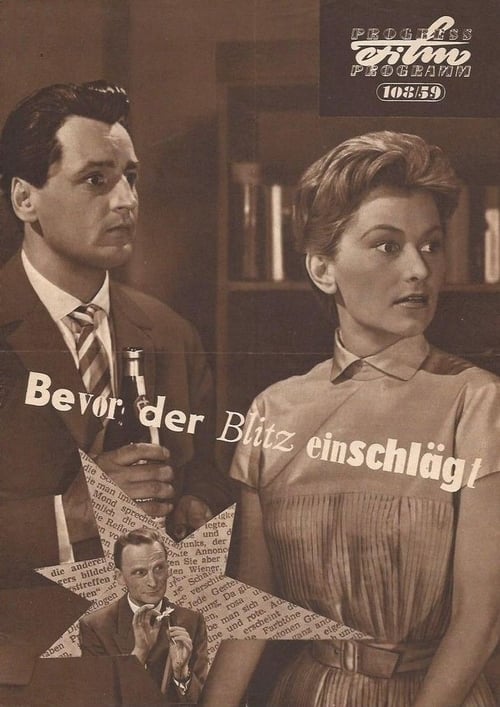
A car factory in the GDR. During a test ride there is a major accident. One driver is dead, another is seriously injured. The investigation reveals: sabotage.