
Daria Martin
Directing
Biography
Daria Martin’s 16mm films aim to create a continuity or parity between disparate artistic media (such as painting and performance), between people and objects, and between internal and social worlds. Human gesture and seductive imagery meet physically mannered artifice to pry loose viewers’ learned habits of perception. Mistranslation opens holes for imagination to enter or exit. Subjects such as robots, an archive of dream diaries and close-up card magic, are explored within isolated spaces such as the wings of a theatre, a military academy, or a scaled up modernist sculpture. These protective yet fragmented settings, full of seams and shadows, stand in for the capacities of the film medium itself, a permeable container that consumes and recycles the world at large.
Known For
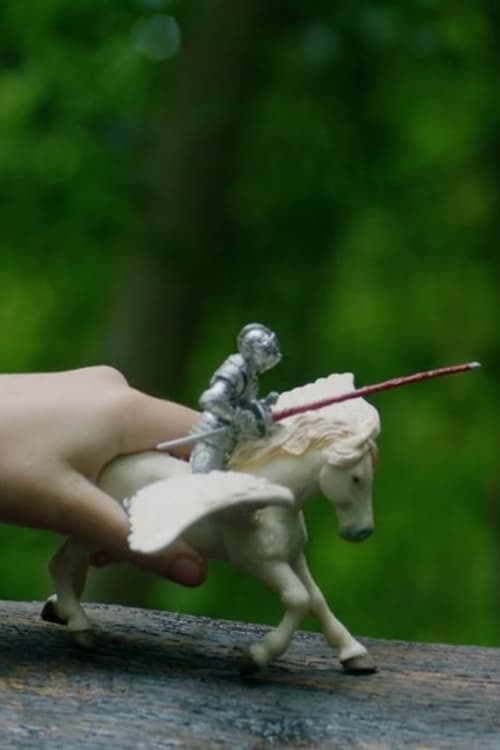
In the woods, two 12-year-old step-sisters play a game that turns violent. Their struggle is interrupted by mysterious sighs, which, they discover, emanate from a woman deeply concentrated on her own pleasures, as she travels back in time to her ‘inner child’, supported by an oversized rocking horse.
Adults in the Room
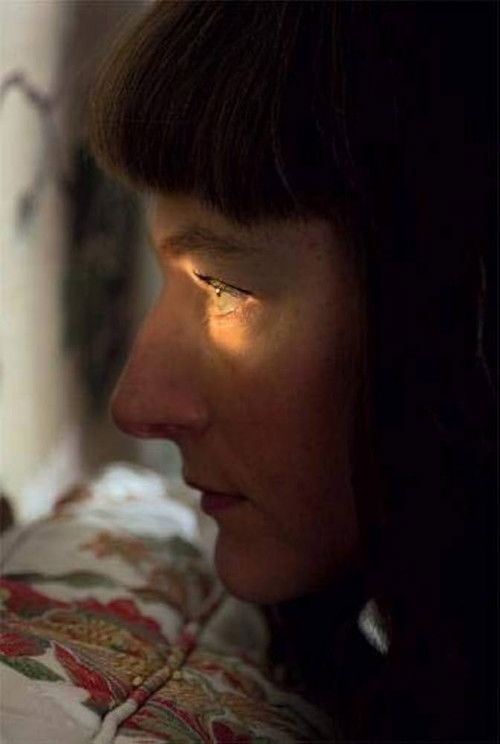
Tonight the World draws from a cross-section of dream diaries kept by Martin’s grandmother, Susi Stiassni, who fled the imminent Nazi occupation of Czechoslavakia in 1938. Through five chapters, the film links as many dreams sited in Susi’s childhood home, Villa Stiassni, a modernist mansion built by Susi’s parents, who were prominent Jewish textile manufacturers in the industrial hub of Brno. Conjured in Susi’s imagination from her middle-age onwards, in the context of psychoanalysis, the dream diaries as a whole span 40 years and 40,000 dreams, but Martin’s selection focuses tightly on dreams about intruders within the Villa, recreating a narrative of threat and escape that parallels Susi’s lived experience. Retracing the legacy of her grandmother’s emotional history, Martin considers the unconscious underpinnings of intergenerational trauma, loss and resilience.
Tonight the World
The film follows five dancers on an all-white, moving set. At first they wear highly stylised, predominantly white costumes before switching to all-white leotards and coloured cellophane headdresses with matching extensions on each of their fingers. The dancers form complex compositions comparable to abstract paintings and hold their poses in tableaux. At other points they explore parts of the moving scenography.
Birds

“What fascinates me [about film],” says Daria Martin, “is the essential contradiction of the medium: its layered ephemeral and sensual aspect, its articulation of psychological projection together with a necessary physical realization of fantasy. The camera, circling around or brushing close to constructed sets, props, faces, and bodies, caresses these material elements, intimately describes their sculptural surfaces, and yet, paradoxically, when these images are projected as a beam of light, they become transparent, their heft subtracted. I want to play at seducing the viewer while allowing escape routes from the game. My implementation of certain ideals – primary colors, mechanical or athletic bodies, geometric sets, smooth skinned faces – is always tempered by the presence of something a little more awkward: shadows, seams, aging, exhaustion.”
Soft Materials
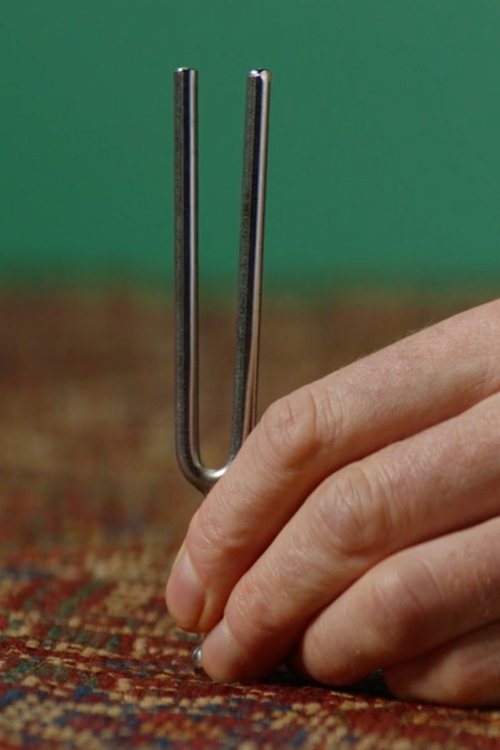
Grand Attack explores a coincidence across time: 19th century hysterics and 20th century yoga practitioners have striken nearly identical poses. The iconic hysterical backbend, for example, which culminated the convulsive grande attaque documented by neurologist Jean-Martin Charcot, is indistinguishable from ashtanga ‘drop backs’. Why were these institutionalised women of the 19th century assuming yoga poses? Is the contemporary wellness industry a new form of hysteria? Four advanced yoga practitioners summon, on film, new somatic states from centuries-old images.
Grand Attack
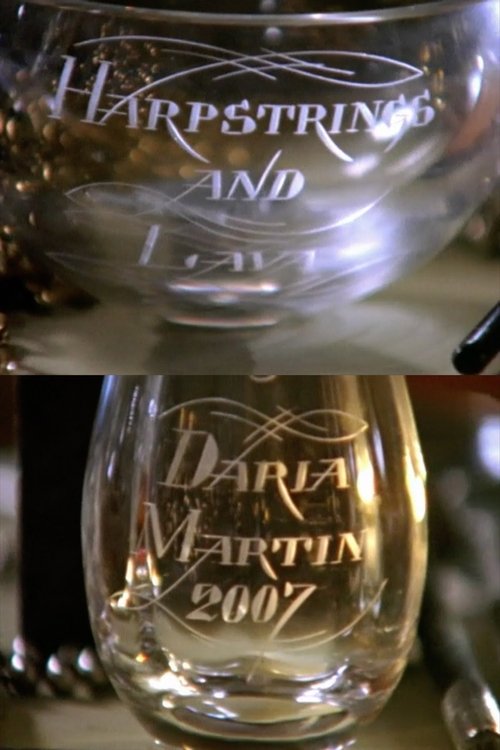
Part of the Performa07 Biennial, Harpstrings and Lava channels the tension inherent in certain nightmares, specifically in one friend's ghoulish fantasy about clashing contradictions. In this particular recurrent dream, tensile harpstrings and viscous lava inhabited the same space simultaneously, creating a sensation of visceral dread. Harpstrings and Lava aims to gently animate such 'hyper-real' dream images, drawing the viewer closer to the feeling of inexorable, anxious attachment shared by the onscreen characters.
Harpstrings and Lava
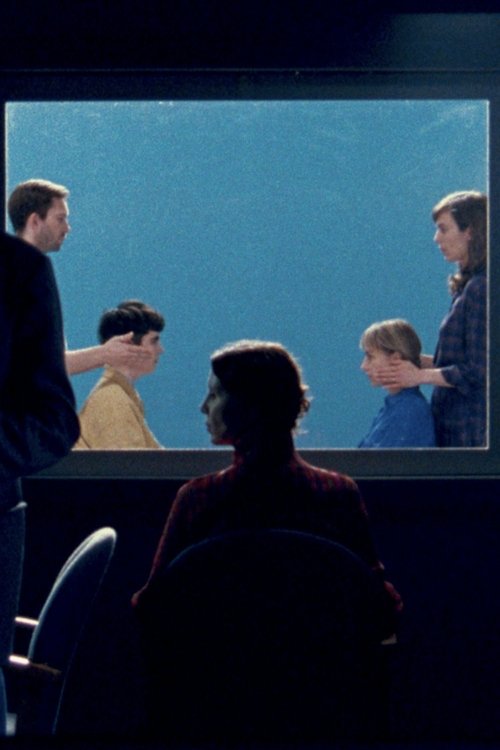
A woman is being measured in a controlled laboratory environment for her capacity to respond to sensory stimuli while two researchers, hidden behind a one way mirror, look on. The subject's responses to selected objects (a speaker, a fan, a lamp, and finally, a person) mimic the real-life neurological phenomenon of synaesthesia, the inextricable joining of normally separate perceptions ('hearing' colors, 'smelling' words, 'tasting' shapes, 'feeling' names). In particular, our protagonist is tested for a form of synaesthesia in which visually observed touch -to objects or to people- is felt viscerally on her own body. As the experiment progresses, the synaesthete begins to sense a presence behind the one-way mirror, imaginatively bridging the alienating strangeness of the situation. Sensorium Tests questions how sensations might be created and shared between people and objects.
Sensorium Tests
Closeup Gallery completes the trilogy of short films that began with In the Palace (2000) and Birds (2001). The small communities of those earlier films are replaced here by an intimate communion of two; the earlier elaborate mise en scene are distilled into the microcosm of a card-covered table; the conceit of ‘hand made magic’ that travels through the trilogy is here literalized through the card players’ world of fakery, where simple materials transform.
Closeup Gallery
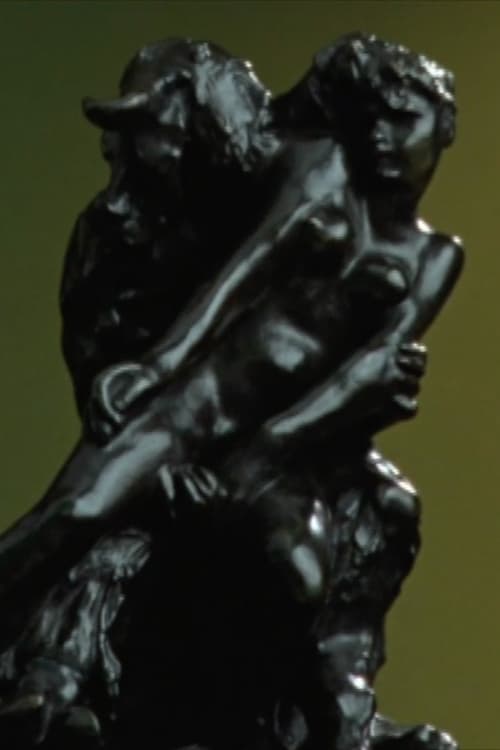
Minotaur was the center of in a solo exhibition at the New Museum, New York. Octogenarian choreographer Anna Halprin, pioneer of postmodern dance, recently created an erotic performance based on Auguste Rodin's rendering of the Greek legend. Minotaur traces labyrinthine transformations, in which photographs, sculpture and dance succeed and replace one another, and in which bodies and objects appear part of a continuous tissue. Fluctuations between disparate media are accompanied by shifts in gender dynamics; in Rodin's original the half-man / half-bull grips an ambivalent nymph, while in Halprin's iteration the female 'victim' turns the story on its head, wresting a melancholic triumph over her captor. A score by Matmos, which includes the sounds of Rodin sculptures being struck like instruments, echoes the sculpture's muscularity.
Minotaur

In the Palace began with a daydream to enter inside two inaccessible places, to penetrate the tinyness of Giacometti’s surrealist sculpture The Palace at 4am (1932) and to move beyond the flatness of various photographs of early Modern stage and dance productions. In this film, Giacometti’s sculpture (which in a sense already resembles a theatrical model) is streamlined and scaled up to become a stage set proper; the posed theatrical stills are restaged as tableaux vivants.
In the Palace
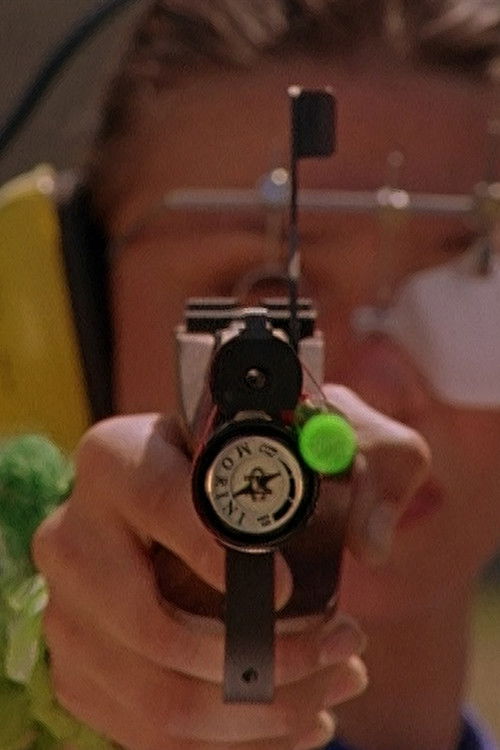
16mm film, 17 minutes, 2004-2005
Loneliness and the Modern Pentathalon
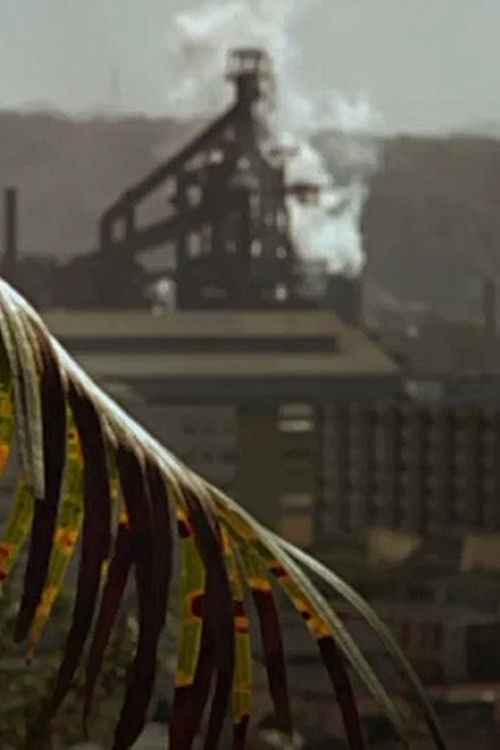
Volta Redonda is a Brazilian steel town surrounded by a tropical forest. The city's economy, and consequently its citizens' lives, revolve around the Companha Siderurgica Nacional (CSN), the biggest steel mill in Latin America. Steel Town, a long-form HD video, will focus on working-class life in Volta Redonda, building a critical dialogue between art, popular television and politics. The idea for the film arose out of Martin's conversations with anthropologist Massimiliano ('Mao') Mollona, a specialist in labour issues and visual anthropology who conducted eight months of fieldwork in Volta Redonda.