Acting
The World's Greatest Classical Music Festival. The BBC Proms is a classical music festival held every summer at the Royal Albert Hall in London, and in recent years has explored an innovative series of Proms around the UK with concerts in all four nations. Its aim: to bring the best in classical music to the widest possible audience, which remains true to founder-conductor Henry Wood’s original vision in 1895. Whether you are a classical connoisseur or think classical music isn’t for you, there is something for everyone in the eight-week stretch of concerts.
No description available.
The musical performance of Gustav Mahler's Second Symphony is interactively connected with the visual interpretation of the piece. The arrangement of the visualization concentrates on what the music expresses and the emotions it brings forth. Thus, Gustav Mahler's cultural-historical setting and the sources of his own inspiration do not come into play in this visualization. This work is a matter of blending together two interpretations: one expressed musically and the other visually.
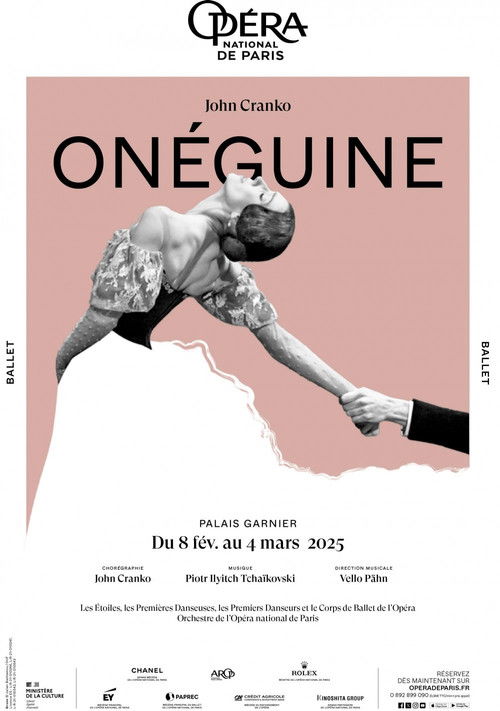
“Eugene Onegin tells a love story that doesn’t work”. This is how Ralph Fiennes sums up the plot of Pyotr Ilyich Tchaikovsky’s opera, inspired by Pushkin’s work. A jaded young dandy, Onegin sets shy Tatiana on fire at first sight. Overcoming her reticence, she writes him a passionate love letter. Alas, he brutally refuses, giving her a lecture on morality. However, years later, after a duel, he falls in love with the young woman who is now Prince Gremin’s wife. Will she yield to his advances? Fascinated by Russian culture and attuned to the dramatic intensity of Tchaikovsky’s music, Ralph Fiennes is directing his first opera. If he chooses to use pictorial simplicity to evoke the Russian countryside or a ballroom, it is all the better to emphasise the emotions of the characters, as complex as they are modern.
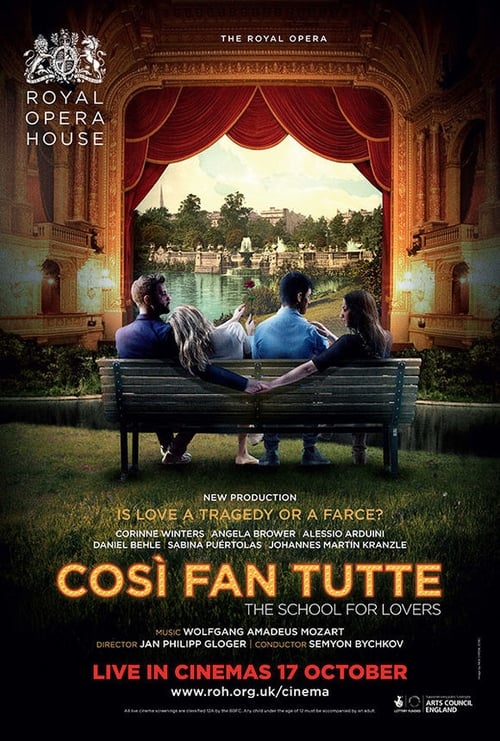
Semyon Bychkov conducts a cast of young, up-and-coming talent including American soprano Corinne Winters in a new production of Mozart’s opera on the nature of love.
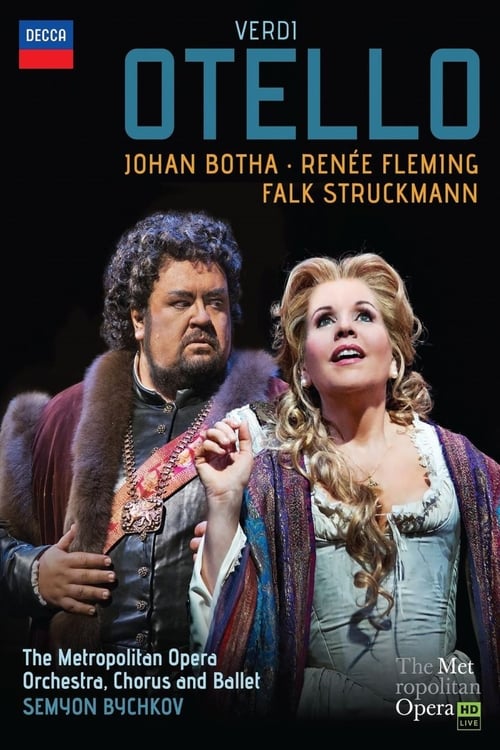
In Verdi’s retelling of Shakespeare’s towering tragedy, Renée Fleming gives a captivating performance as the innocent Desdemona, a role long considered one of her calling cards. Johan Botha as the title hero delivers an imposing portrayal of a proud warrior brought down by jealousy, and Falk Struckmann is thrilling as the villainous Iago. James Morris sings Lodovico. Elijah Moshinsky’s production is conducted by Semyon Bychkov.
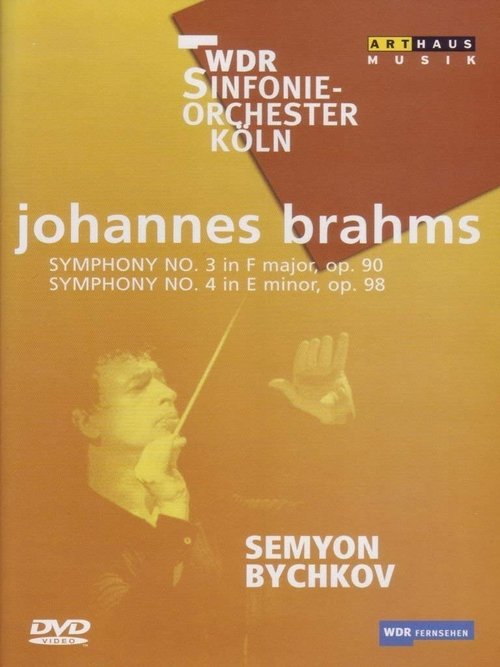
Semyon Bychkov WDR Sinfonieorchester Köln SYMPHONY NO. 3 IN F MAJOR, OP. 90 SYMPHONY NO. 4 IN E MINOR, OP. 98 Far from being conservative, as Brahms often has been referred to, his symphonies show the composer as a groundbreaking pioneer far ahead of his time. He may not have broken dramatic new ground in the same way as his musical colleagues Liszt and Wagner, who invented new genres. Instead, his innovations took place at the mircro-level – within music’s inner palm. In this respect Brahms was far ahead of his time – and this fact explains what half a century later Arnold Schoenberg regards him as “progressive” and was referring to him for his own compositional theory.
This 2004 production of Richard Strauss's three-act comic opera Der Rosenkavalier (1911) emerged from the efforts of the Grosses Festspielhaus Salzburg. It stars Adrianne Pieczonka as Feldmarschallin, Franz Hawlata as Baron Ochs, Angelika Kirchschlager as Octavian and Franz Grundheber as Faninal. The Konzertvereinigung Wiener Staatsopernchor and the Wiener Philharmoniker lend added musical support, with Rupert Huber serving as chorus master of the former and Semyon Bychkov conducting the latter.
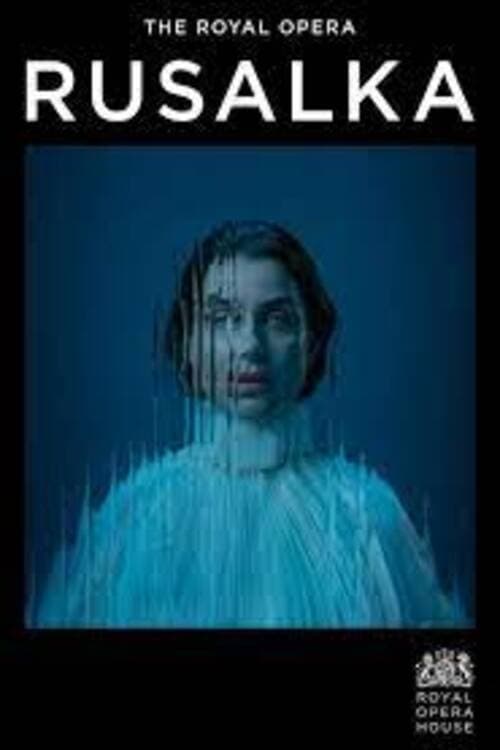
Rusalka, a water spirit, lives with her family in the pure waters of the forest lake. When she falls in love with a Prince, she sacrifices her voice and leaves her home in the hope of finding true love in a new world – a world that does not love her back.
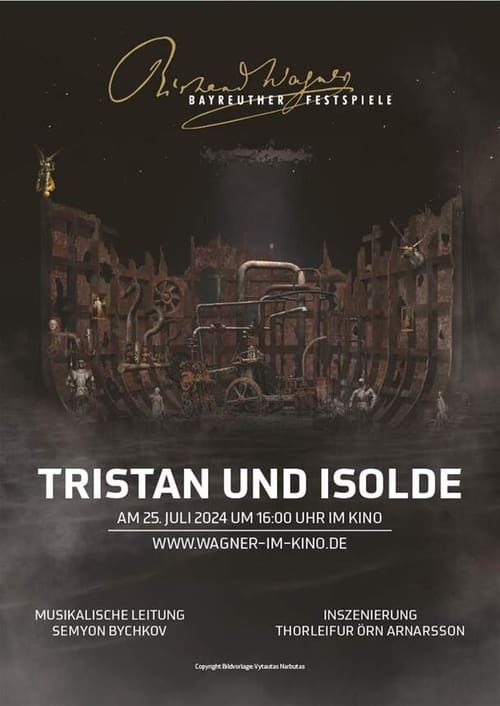
Production Bayreuth 2024. There is no arrival in Tristan and Isolde, only the longing for the unattainable, for the place “where the end of deception promised me my heart”. Two people who strive to fall out of the roles ascribed to them, to escape the supposed lies of the day. Two people suffering from life, whose declaration of love consists of wanting to restore a moment that has irretrievably passed. Two nocturnal devotees who, in their regressive desire to be uplifted and completely abandon themselves, lose touch with reality and who, in their desire to abandon their ego to another and escape their own history, ultimately fail themselves. “To long to die, not to die of longing.”
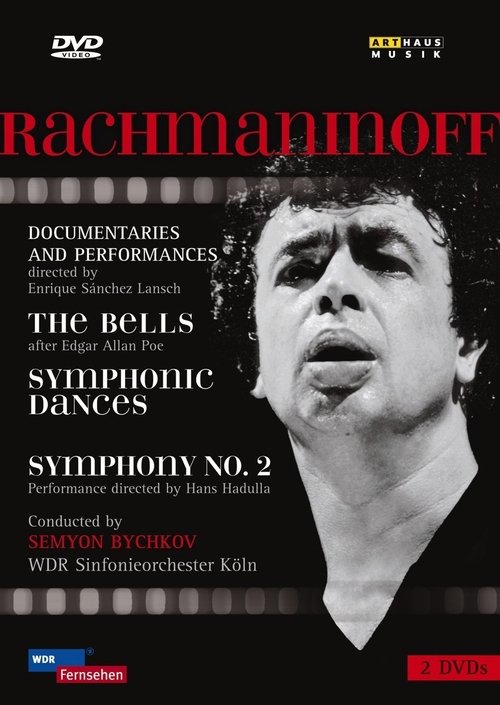
The Bells, Op. 35 by Sergei Rachmaninov Conductor: Semyon Bychkov Orchestra/Ensemble: Cologne West German Radio Symphony Orchestra Period: Romantic Written: 1913; Russia 2. Symphonic Dances, Op. 45 by Sergei Rachmaninov Conductor: Semyon Bychkov Orchestra/Ensemble: Cologne West German Radio Symphony Orchestra Period: Romantic Written: 1940; USA 3. Symphony no 2 in E minor, Op. 27 by Sergei Rachmaninov Conductor: Semyon Bychkov Orchestra/Ensemble: Cologne West German Radio Symphony Orchestra Period: 20th Century Written: 1906-1907; Russia