FEEL IT.STREAM
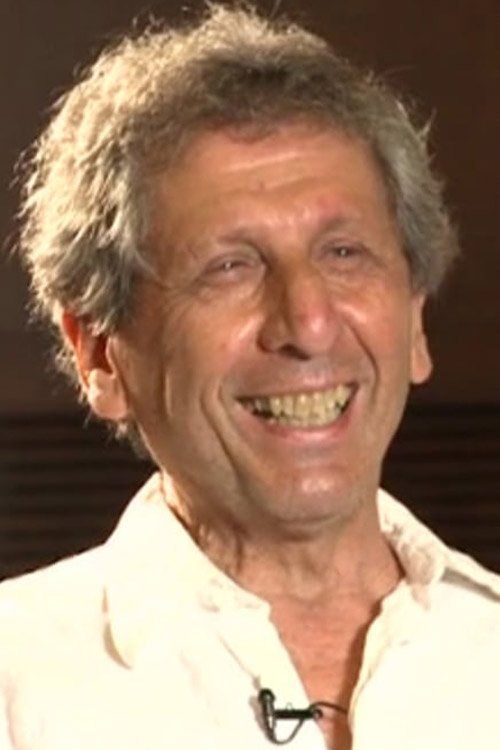
Jorge Honik

Jorge Honik

Directing

Biography

Jorge Silvio Honik, (Argentina, 1940). From an early age to literature, alternating narrative with playwriting. Having completed his university studies in Pharmacy, he traveled extensively through Europe, Africa, Asia and America, alternating periods of settlement with others of transit, a ten-year journey whose memory, transformed and distorted by the myths and obsessions that animate all fiction, forms the living matter of a good part of both his narrative and his films. Throughout this trajectory, the super 8 camera, initially intended for mere visual recording, gradually became, in view of the creative possibilities it offered, the simile of a pen, no longer intended for description and narration through words but using the power, vibration and dazzle of the image, or more precisely of its primordial source: light. He finally settled in the Patagonian Andes, first in San Carlos de Bariloche and finally in El Bolsón, where he has been living for about three decades. Since then, he has been a teacher in the arts and exact sciences, an activity he alternates with cinema, literature, theater and music. In addition to literary awards, publications at provincial and national level and an anthology of his short stories published by the Fondo Editorial Rionegrino, he has coordinated film workshops in secondary schools in Río Negro, one of the productions of these workshops having received first prize in the First Biennial of Young Art (San Carlos de Bariloche, 1993). Considered one of the founding referents of Argentine experimental cinema, Honik is the director of Gaudí asesinado por un tranvía (1968), Komik (1969), Un paseo (1969), El inmortal (1970), Passacaglia y Fuga (1974) and Sueños impresos en acetato (1969-1981).

Known For

Passacaglia and Fugue
7.3

A movie filmed almost entirely in the interior of a house on the outskirts of S.C. de Bariloche, on the shores of Nahuel Huapi Lake, over the course of one full winter and the beginning of a spring. The camera, through frame-by-frame tracking and panning shots, goes along revealing furniture, corners, objects and books, using rails in the first instance and a calibrated disk mounted on a tripod in the second. The house vibrates with its own life, revealing almost ghostlike traces and vestiges while the human presence is barely suggested. These shots alternate with others of the landscape: a lake, snow, bushes rattled by the wind, the passing of the seasons, external signs that accentuate the solitude of the interior spaces.

Passacaglia and Fugue

1975
No image
5.0

Images of the Church of the Sagrada Familia by Antoni Gaudí confronted with brief flashes of housing projects and industrial areas. The furious display of a effervescent imagination is opposed to a grey functionality.

Gaudi Killed by a Tram

1968
El Inmortal
N/A

Based on the Jorge Luis Borges story of the same name, the film, by means of a whirlwind of elusive images, relates the story’s protagonist’s long journey in search of the secret City of the Immortals. Nightmarish animation sequences are interspersed with lush naturalistic photography.

El Inmortal

1968
No image
6.0

The life story of an artist. The fantasy of a poetic burial accompanied by friends of cinema.

Testamento y vida interior

1977
No image
6.0

Clouds, mostly filmed frame by frame on the outskirts of Quarzazate, Tabount, Morocco.

Clouds

1969
No image
6.0

A collage of images filmed mostly in Maghreb and Patagonia. Frenetic rhythms mix with stationary shots: a forest admidst fog, daybreak over a hill, a furious journey along a road on the Algerian coast, a glacier, a desert.

La Mirada Errante

1970
A Walk
6.0

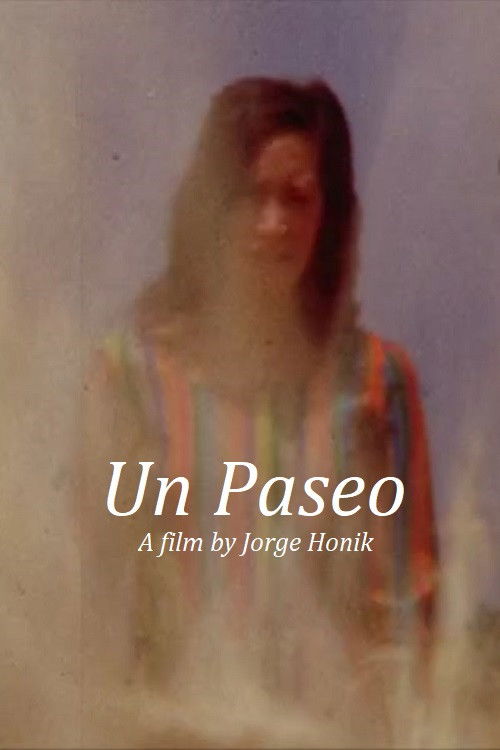
A walk in a wheat farmland in the a village. While moving between the tall sheaves, the walker’s restless eye surveys the fields, the cattle, and settles on the faces of the residents of the small town. Brief animation exercises repeat, and the sketch the figure of a contemplative walker.

A Walk

1969
No image
2.0

Honik's first film in nearly forty years explores the myriad possibilities of digital video by creating an analogy with the four natural elements. The fifth element projects human essence as waste, with a dumping ground serving as metaphor for a medium capable of endless production of images.

Elementos

2017
No image
5.0

A nervous, careless recording of a trip through India and Nepal at the beginning of the 1970s. Fleeting impressions of faces, landscapes, temples, people and things. Images that, having been captured in a ephemeral medium, proceed to fade away (although without aging), alongside the river of time.

India-Nepal

1971
No image
5.5

A ‘divertimento’ performed in an abandoned premises of an Algerian tourist center, uninhabited in winter.

Komik

1969