Camera
Lenka and Míra Hřib are a young married couple with two small children. They are both interested in ecology and sustainable life.
Black comedy about an old servant working for three unmarried sisters.
No description available.
René has been in prison since he was 16. He is sick of life and doesn’t care about his parents (just as René’s parents never cared about him when he was a child); he doesn’t even know how many more children they had. After the general amnesty, René just hangs around, not satisfied in any job, and with his younger brother he starts stealing. In no time he is back in prison, this time joined by his brother who is still a youth. History repeats itself and René’s life philosophy seems to be confirmed: You enjoy your freedom for a while, then go to prison and the same thing happens all over again.
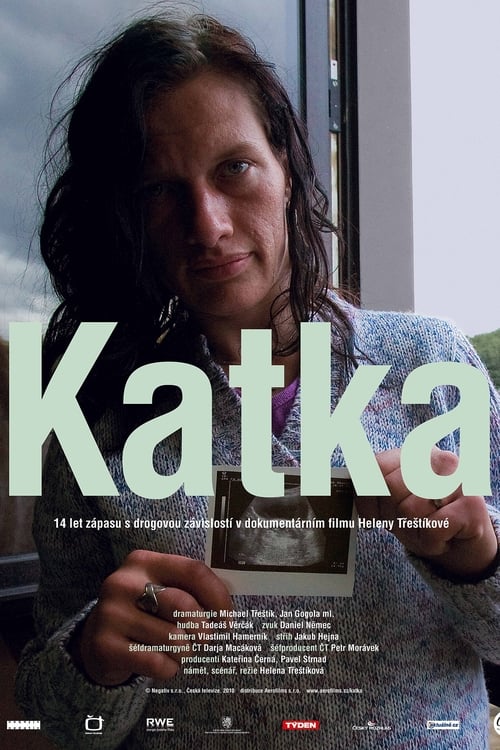
“You bet on someone in the beginning of the process and then you wait and see what life does with them.” This is how Czech director Helena Trestikova explains her long-term documentaries. Following on from the European Film Academy Award winning RENE (2008), Trestikova brings us KATKA – 14 years in the life of a drug addict. KATKA is an extraordinarily raw and uncensored character portrait of a troubled young woman living on the edge of human existence, desperately searching for love and salvation. Will she find it in the rehab? Will she find it in the arms of the man she loves? Or in the first cry of her long-desired baby? Tagging along with her through the back streets and squalors of Prague, Trestikova gets deep under the skin of a person most of us would cross the road to avoid, and shows us Katka’s profoundly human face. You might be angry with Katka, or your heart may go out to her. One thing is certain – you will never forget her.
Lada is a product of "educational“ or "corrective“ institutions. Not only is he not educated or corrected, he simply does not understand anything about life. He solves his problems in his own way – by swallowing sharp objects.
Once upon a time, in the kingdom of Rimini, there lived a beautiful princess named Nicoletta, who ruled alongside her older brother Riccardo after the death of their parents. This cheerful and witty princess, though wise for her age, foolishly fell in love with a song about the perfect and universally admired King of Salerno. Riccardo, like a loving brother, went to offer her hand to the king, regardless of what he thought of the idea. However, the proud king, spoiled by his mother, insultingly rejected her, saying that she was not worthy of his beauty, but he did not know that Nicoletta's other qualities included stubbornness and determination.
Since childhood, the young prince—along with his sister Bela—has listened to his nanny's stories about the Apple Tree Maiden. He hears the words of an old ballad about how the deep forest hides the ruins of a fortress where a nobleman once lived with his son and daughter. They lived there happily until the father brought home a new wife, a witch who destroyed everything and cursed the children into the form of apples on a withering apple tree. Only pure love—and only on All Saints' Day—can free the unfortunate siblings and restore their human form. And now, as an adult, the prince searches for his dream—the Apple Tree Maiden—during his endless wanderings through the forest.
On November 25, 1940, the SS Patria sank in the port of Haifa killing 267 people. The ship was carrying almost 1,800 Jewish refugees from Nazi-occupied Europe whom the British authorities were deporting from Mandatory Palestine to Mauritius because they lacked entry permits. Opposed to the deportation, the Haganah planted a bomb intended to disable the ship to prevent it from leaving Haifa. However, they miscalculated the effects of the explosion and the bomb sank the ship in less than 16 minutes (Dir. Pavel Štingl, 2006, 45 min.). Pavel Stingl an award winning documentary filmmaker studied at the Film and Television Academy of the Performing Arts in Prague (FAMU). The screening is part of the ongoing “Docs in Salute” film series presented by the Library of Congress in collaboration with the Embassy of the Czech Republic.
Nothing seems to disturb Uncle Egon's peace, who lives in his castle under the watchful eye of the strict but fair housekeeper Mrs. Bischlock. The idyll is destroyed by the housekeeper herself, who abruptly resigns because she refuses to live under the same roof as a ghost. And poor Mrs. Bischlock has no idea that the ghost Vasil, who suddenly jumped out of an old Russian domino, now owns almost the entire castle, having won it from Uncle Egon. The already tense situation is exacerbated by the unexpected arrival of Egon's sister Stela with her two daughters – the beautiful Valeria, who is of marriageable age, and the little detective in skirts, Sisinka.
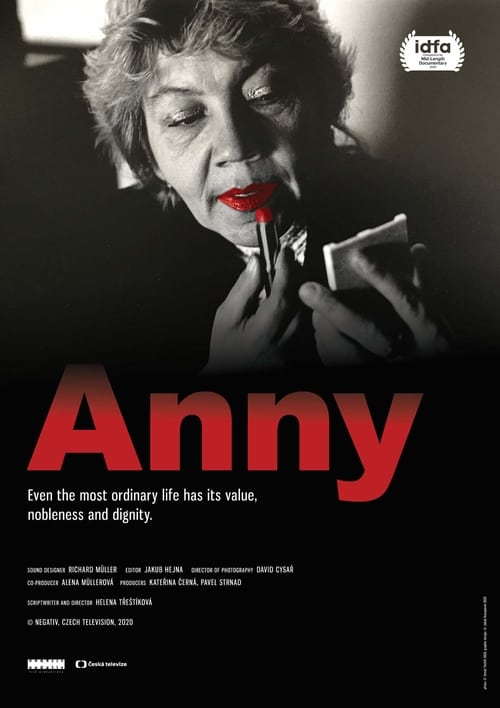
Anny follows the life of the titular, intriguing character for 16 years, from 1996 up until 2012. Living in the Czech Republic, Anny is a 46-year-old woman whose day-to-day life has consisted of several different occupations, from a bathroom attendant and a doorman, to occasional sex work. Her outlook on her jobs is fairly simple, you have to do the work if you want to eat, spoil your grandkids, or buy yourself new clothes.