Acting
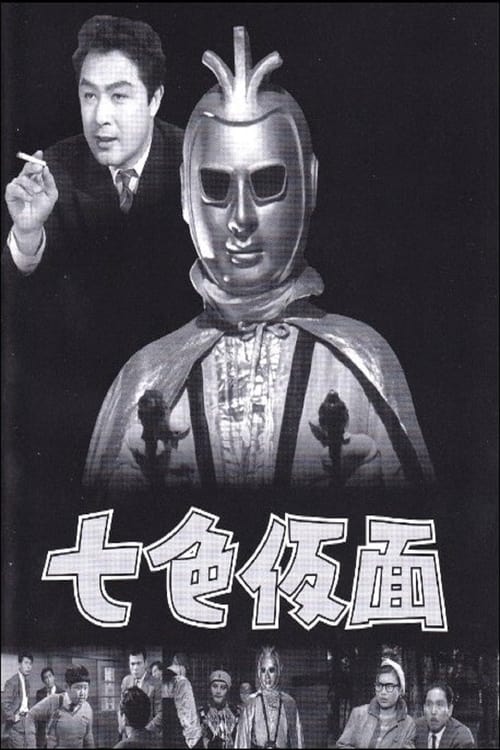
Seven Color Mask (七色仮面, Nanairo Kamen) is the name and title character of a tokusatsu TV series, later called New Seven Color Mask (新七色仮面, Shin Nanairo Kamen). It was created by Kōhan Kawauchi, who also created Moonlight Mask. This B&W TV show was the first superhero TV series by Toei Company Ltd. It was broadcast on NET (now TV Asahi) from June 3, 1959 to June 30, 1960, with a total of 57 episodes divided into 7 segments. Aside from being Toei's first TV superhero show, this series was also the debut of actor Sonny Chiba, who was 19 at the time, who took over the title role from Susumu Namijima after Episode 32.
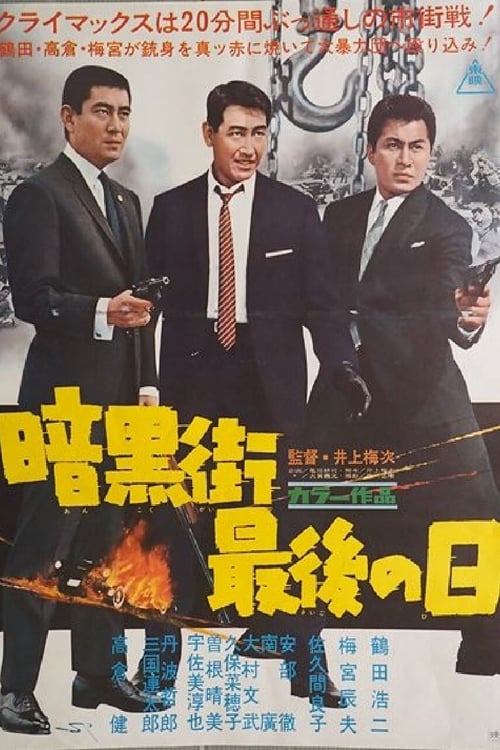
After serving time, a defiant street thug is incensed to find his town overrun by two yakuza factions. He gathers his crew and takes them on.
A war widow determined to clear the name of her disgraced husband, who was court-martialed for desertion and executed. Official records have been destroyed, and the ministry that distributes benefits continues to deny her a pension. Twenty-six years after the war, she seeks out four survivors of her husband's garrison. Each tells a dramatically different story about her husband's conduct, but she is determined to learn the truth.
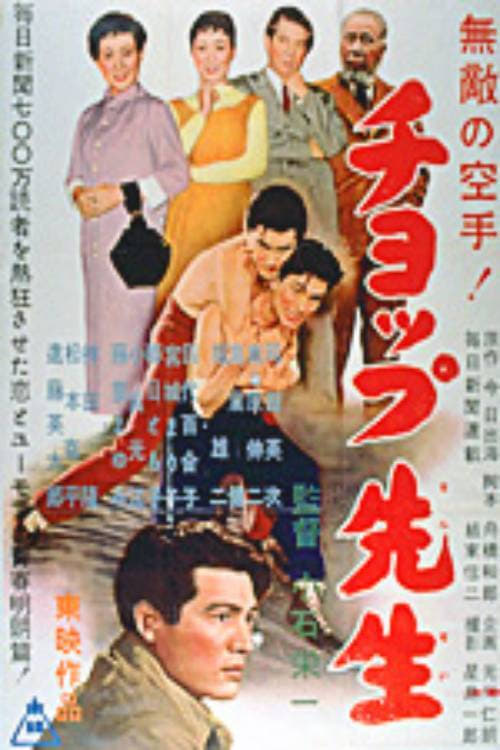
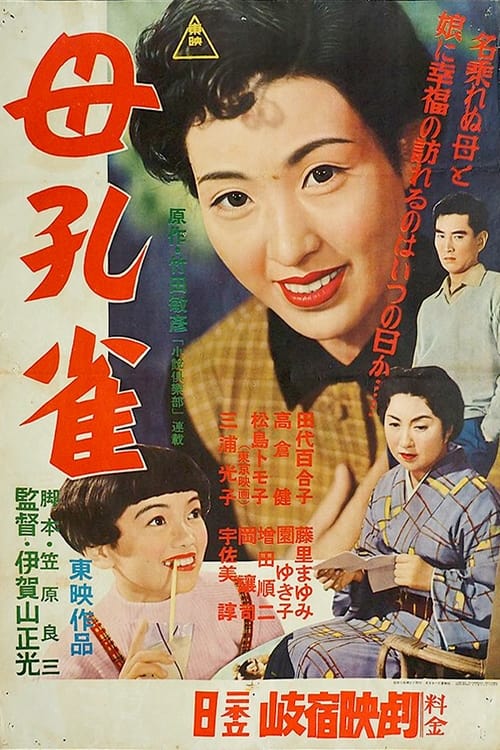
Junpei Kihara, a young president of the University's wrestling club, is nicknamed "Mr. Chop". One day, on the way back from visiting the hospital after being thrown by Nobuyoshi Shinohara during practice and injured, he met Asako, the sister of Arisawa's mother, Katsuko. When they entering a coffee shop run by Asako's best friend Hisako, Hisako misunderstood them as lovers...
No description available.
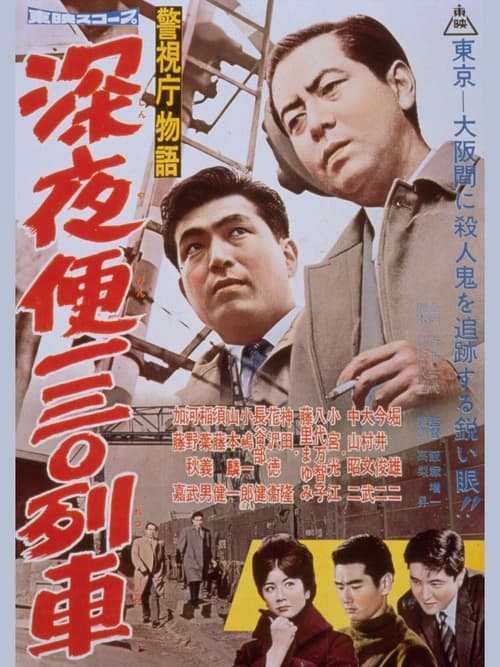
In a corner of a warehouse at Shiodome Station, a alumni trunk, is found with the terrible smell of decay. The dead body of a woman is inside. Since the trunk was shipped from Osaka Tennoji Station, the murder investigation headquarters were established in Tokyo and Osaka
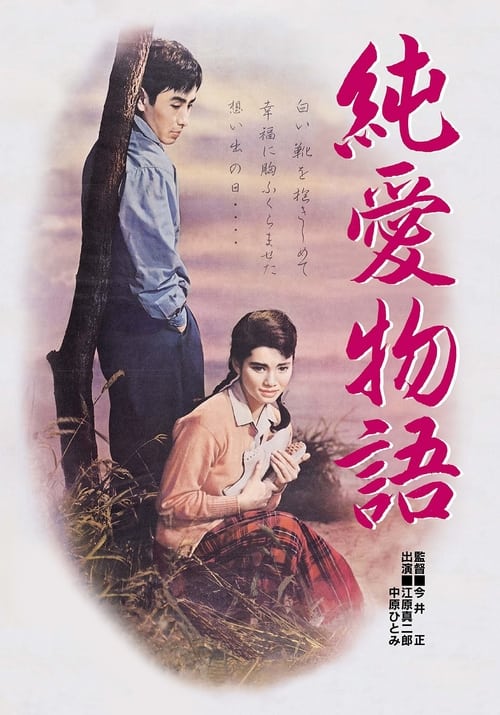
Junai Monogatari AKA Story of Pure Love is about two poor youths, Mitsuko and Kando, rebelling against society in various ways, who are desperately trying to be together despite tortuous circumstances. The film depicts their lives as thieves, menial laborers who can get little pay, society outcasts, and of course, lovers. Junai Monogatari depicts, mostly, their struggles within the Japanese reformatory system and Mitsuko's worsening sickness.
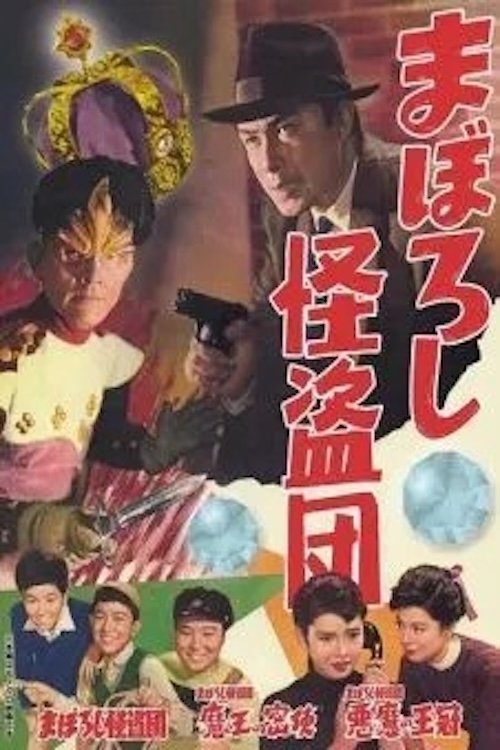
This is the first film in the third installment of the adventure film for boys that depicts the battle between a thief who calls himself "the secret envoy of the Demon Lord" and private investigator Hideo Sayama. In the Toei, the roles are twenty faces and Kogo (Twenty Faces) and Akechi Kogo, with a content that seems to be strongly conscious of the "boys' Detectives" series of Edogawa Rampo, which was later made into a movie.
Japanese drama film.
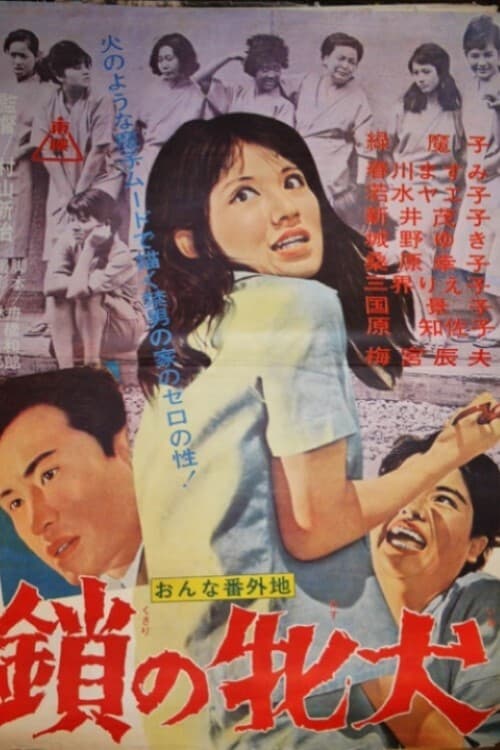
Japanese prison exploitation movie. Part 1 of the 'Onna bangaichi' series
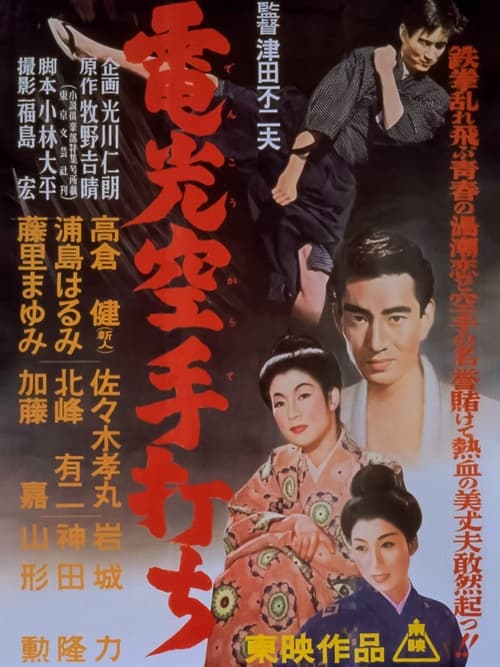
Ken Takakura's screen debut, following his admission into Toei ranks via the studio's annual New Faces program, came surprisingly enough in this pair of Okinawa karate films. The two-parter was released on Jan. 29, 1956 as two thirds of a triple feature. Both halves run just under one hour. The fighting is actually pretty good for the time, and it's fun to see Takakura as an impatient, bearded karate rascal.
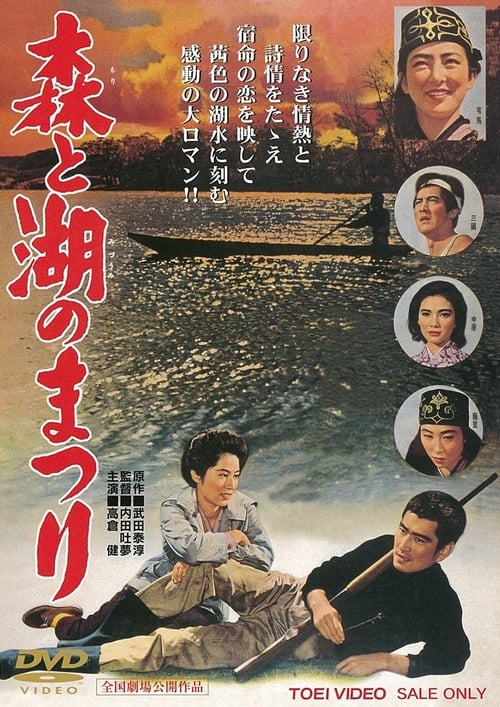
A drama about relations between Japanese immigrants and the indigenous Ainu on Hokkaido, the most northerly island of Japan. From a novel by Taijun Takeda.
1957 Japanese movie.
The corpse of a debt collector, Sakai, is found in the Dobu River in Tokyo. Kinoshita, a shoe shiner who was in debt to Sakai, was soon apprehended. During interrogation, Kinoshita said that he was the one who killed Sakai. However, after a while, he admitted that he lied, because he thought that in prison he could eat plenty of rice for free. The investigation established that Sakai was a repatriate from Manchuria, and after returning to Japan, he had a wife, Rie Kawai. The investigation begins the search for Rie... The 23rd work from the popular series "Keishicho Monogatari", which documents the activities of the First Investigation Division of the Capital Police Department.
A young girl named Michiko is kidnapped and later found dead in a bag. But the kidnapper strikes again. The 18th work from the series "Keishicho Monogatari".
A story of young people in the immediate aftermath of World War II, their post-war careers, sorrows, and triumphs.
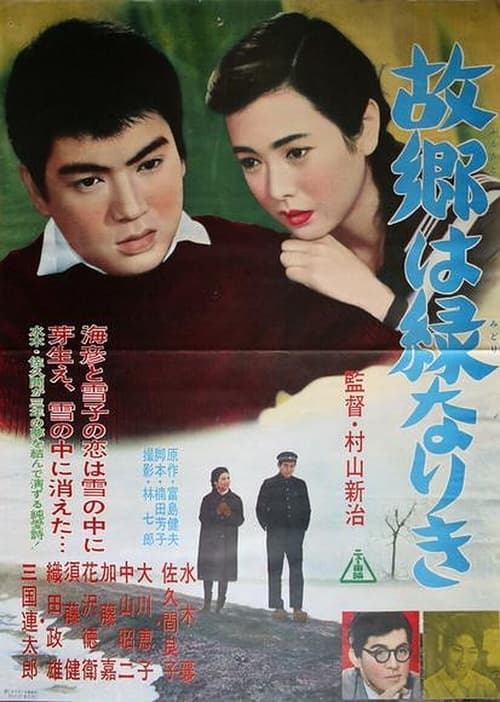
A sad love story between young Umihiko Kojima and a beautiful girl named Yukiko Shino.
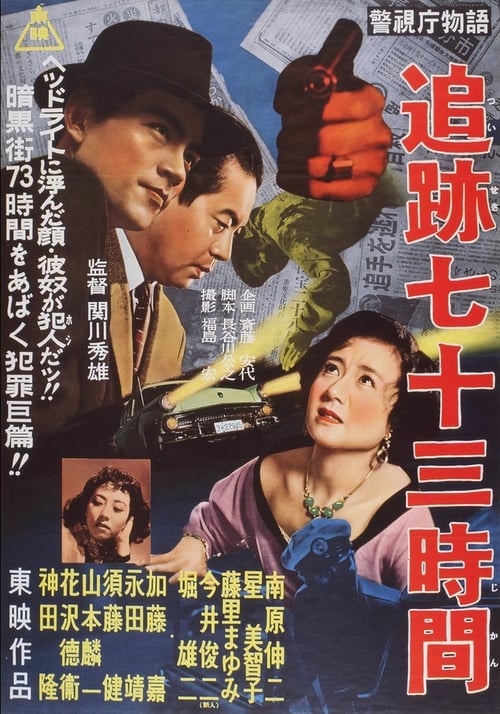
A robbery and murder occurred at a gas station facing the national highway at 1:00am. Detectives Nagata, head of the First Investigation Division, begins investigating. Two bullets were removed from the corpse of a staff member on duty at the station, and the last car to be refilled with gasoline, Sakura Taxi No. 5-E1044, appears on the line of investigation. The same night, a robbery murder case was discovered using the same US military gun that was used on the gas station victim.
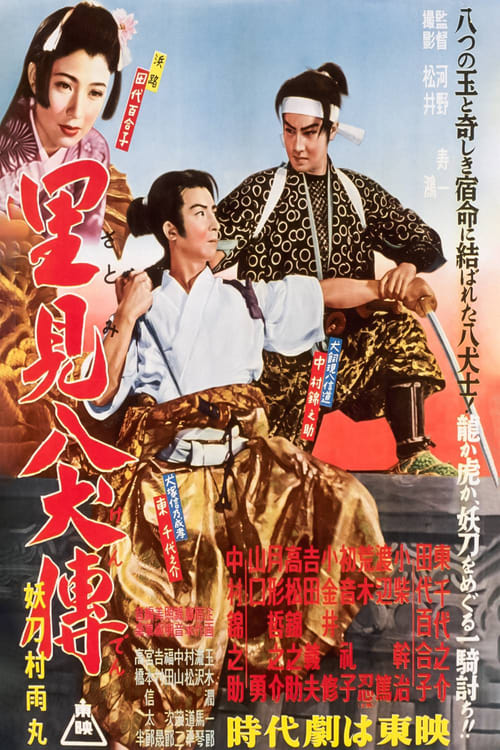
The first part of the series of films based on the Japanese epic novel Nanso Satomi Hakkenden by Kyokutei Bakin