FEEL IT.STREAM
Stan Douglas

Stan Douglas

Directing

Biography

Since the late 1980s, Stan Douglas has created films, photographs, and installations that reexamine particular locations or past events. His works often take their points of departure in local settings, from which broader issues can be identified. Making frequent use of both analog and digital technologies, Douglas appropriates existing Hollywood genres (including murder mysteries and the Western) and borrows from classic literary works (notably, Samuel Beckett, Herman Melville, and Franz Kafka) to create ready-made contextual frameworks for his complex, reimagined narratives that pertain to particular locations or past events.
Known For

The Secret Agent
8.5

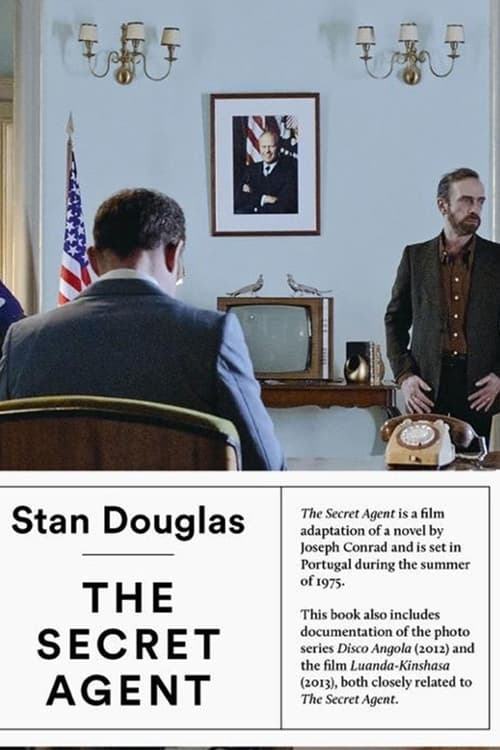
An adaptation of the 1907 political novel of the same title by Joseph Conrad set in Portugal during the so-called "Hot Summer" of 1975, re-contextualizing the anarchist prose within the Carnation Revolution.

The Secret Agent

2015
No image
N/A

During 1864 in the Cariboo Mountains, hostility mounts between the Tsilhqot’in tribe and encroaching settlers seeking gold on the Chilcotin Plateau. Klatsassin leads an insurgency and evades capture. However, he is eventually lured with the gift of tobacco, take prisoner, tried for murder, and hanged.

Klatsassin

2006
No image
N/A

Inconsolable Memories is a black and white film installation consisting of two 16 mm film loops projected alternately onto one screen in a dark gallery space. Both films feature archival documentary material, including footage of the streets of Havana and black and white photographs of artists and intellectuals in Cuba, combined with scenes filmed by Canadian artist Stan Douglas on a set in Vancouver. One of the films consists of five sequential parts, while the other has only three parts. The five-part film is almost twice as long as the three-part film, so that although both loops start playing together, they quickly go out of sync with one other.

Inconsolable Memories

2005
The Art of Time
N/A

Explores some of the most innovative attempts by contemporary artists, filmmakers, architects etc to explore multiple Temporalities and to counter the uniform sense of time promoted by our technology-driven society.

The Art of Time

2009
Win, Place, Or Show
7.0

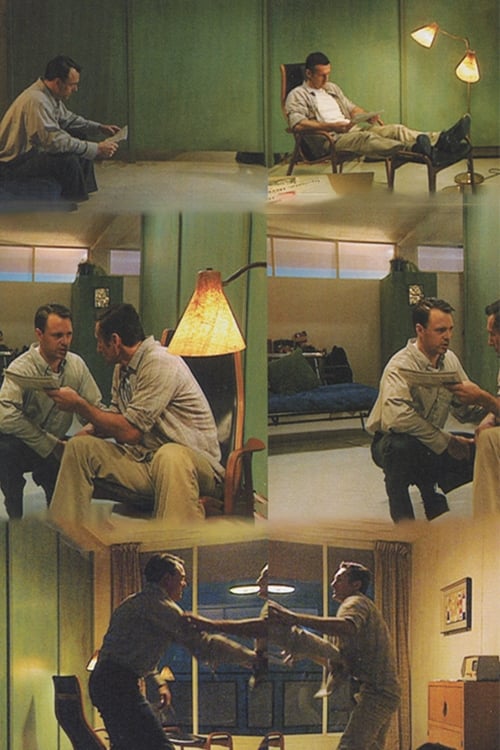
A two-channel video in which the film's protagonists, Donny and Bob, talk, argue and fight in an endless loop that plays out over and over in an ever-shifting and altering array of combinations. The total number of possible combinations is said to total 20,000 hours of play - over two years.

Win, Place, Or Show

1998
Suspiria
10.0

For Suspiria, Stan Douglas brings together the visual style of Dario Argento's 1977 horror movie of the same title; the properties of the now obsolete Technicolor process; the fairytales of the Brothers Grimm and a soundtrack featuring John Medeski and Scott Harding (of the celebrated Jazz ensemble Medeski, Martin and Wood). Stan Douglas's Suspiria takes as its location the Herkules Oktagon, Kassel's most famous historical landmark: a monumental octagonal structure built in the late 17th century, atop Wilhelmshöhe overlooking the city of Kassel.

Suspiria

2003
Overture
N/A

Simple in its conceit, the installation consists of a six-minute audiovisual loop comprised of three archival film segments shot by the Edison Film Company between 1889 and 1901, and six passages from the opening pages (or overture) to Marcel Proust’s monumental À la recherche du temps perdu, as read by Vancouver writer Gerald Creede.

Overture

1986
Der Sandmann
N/A

Der Sandmann investigates the intersection of history and memory as witnessed against the backdrop of post–Cold War Germany.

Der Sandmann

1995
No image
N/A

Stan Douglas entitles his latest film "Journey into Fear". The work is based on two feature films by the same title: Norman Foster's 1942 war-time thriller and its remake, shot in Vancouver in 1975, directed by Daniel Mann. Whereas war-and-weapon espionage drives the plot in Foster's original film, Daniel Mann opted to substitute industrial espionage into the storyline of his remake, reflecting the changed world separating the two filmings of "Journey into Fear".

Journey Into Fear

2001
ISDN
N/A

IDSN is a fictionalized account of two musical collectives, one in London featuring rappers, TrueMendous and Lady Sanity, and the other in Cairo with rappers Raptor and Joker, who are making music collaboratively using ISDN technology, communicating across phone lines from their respective makeshift studios.

ISDN

2022
Nu'tka'
N/A

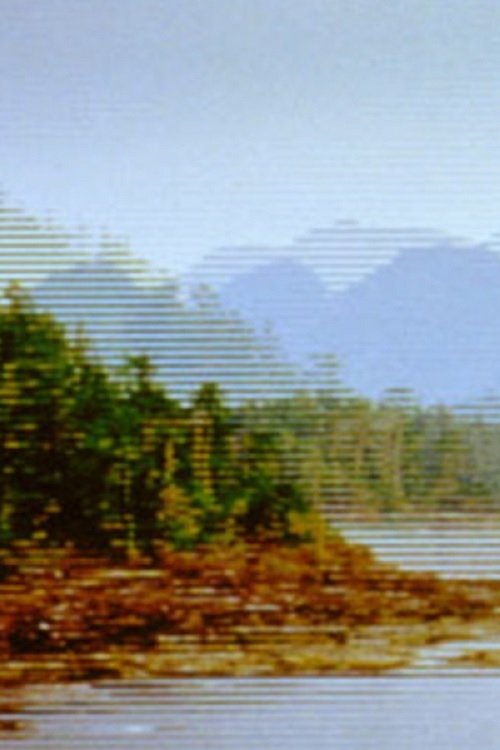
Nu•tka• utilizes image bifurcation to explore the history of colonialization on Vancouver Island, where English and Spanish fleets battled over trade routes in the 18th century. Films of the landscape—the only imagery shown—are superimposed on one screen so that the footage appears doubled. This formal effect is echoed by the soundtrack, which includes excerpts from the sea captains’ diaries, which become increasingly paranoid and irrational. At key moments in the narrative all visual and verbal elements meld together in exquisite clarity.

Nu'tka'

1996
Birth of a Nation
N/A

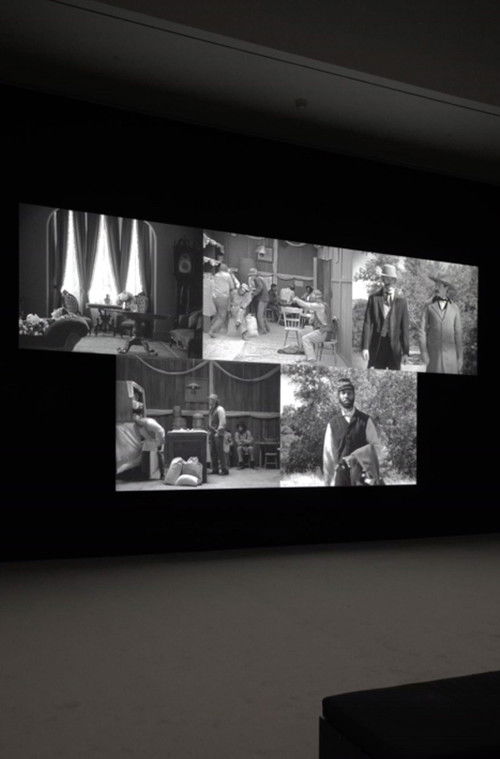
Birth of a Nation reinterprets D.W. Griffith's notorious 1915 film The Birth of a Nation, a technically groundbreaking but deeply racist work that glorifies white supremacy and the Ku Klux Klan. Stan Douglas focuses on one infamous narrative strand from Griffith’s film involving the character Gus—a Black man played in blackface—who is falsely depicted as a threat to a white woman, Flora. In the original, this leads to her death and Gus's lynching by the Klan.

Birth of a Nation

2025
Hors-champs
N/A

A video filmed "live" by STAN DOUGLAS and one other camera man, records the performance of four American musicians playing a Free Jazz composition. In the gallery installation two projections are simultaneously presented on the front and back of a large scale suspended screen. While one side shows the edited version of this two-camera production, the other side presents a simultaneous counter-narrative of all that has been edited out.

Hors-champs

1992
Television Spots
N/A

Produced between 1987 and 1988, the Television Spots are exactly what they claim to be: these twelve, short video sequences were originally planned as inserts within the regular advertisements on Canada’s private television network.

Television Spots

1988
I'm Not Gary
N/A

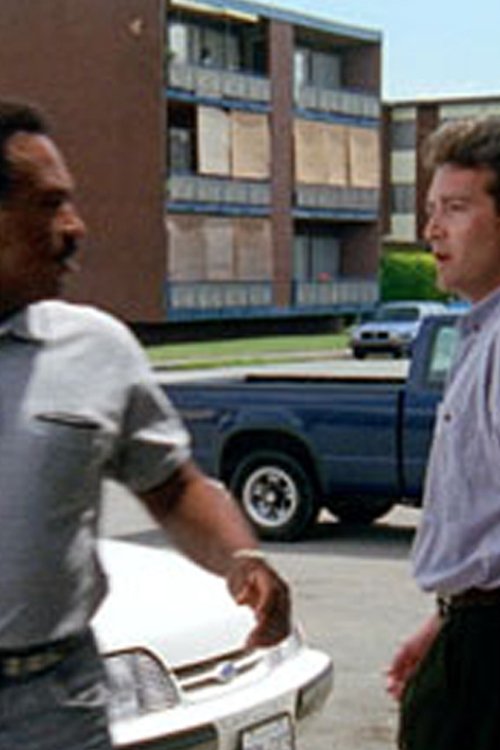
A middle-aged black man is falsely hailed by a passerby: “Hi, Gary!” He stops and turns. “How’s it going?” The camera takes in another careful, evenly lit shot of the man as he frowns and delivers his line with actorly gravitas: “I’m not Gary.”

I'm Not Gary

1991
Monodramas
N/A

Douglas’s Monodramas, ten 30- to 60-second videos conceived as interventions into commercial television, interrupted the usual flow of advertising and entertainment when broadcast nightly in British Columbia for three weeks in 1992. These micronarratives mimic television’s editing techniques, but as kernels of a story they refuse to cohere. They are tales of dysfunction and dislocation, misanthropy and misunderstanding: a car and a school bus nearly collide at an intersection, only to drive away; a pedestrian greets an Afro-Canadian man he encounters on the street but is told in response, “I’m not Gary.” When the videos were aired unannounced during commercial breaks, viewers called the station to inquire about what was being sold, their responses evincing how the media can refocus attention from content to consumption.

Monodramas

1991
Luanda – Kinshasa
N/A

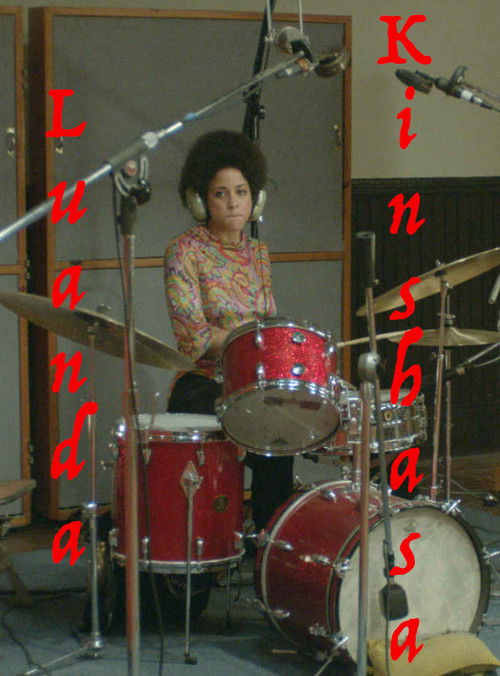
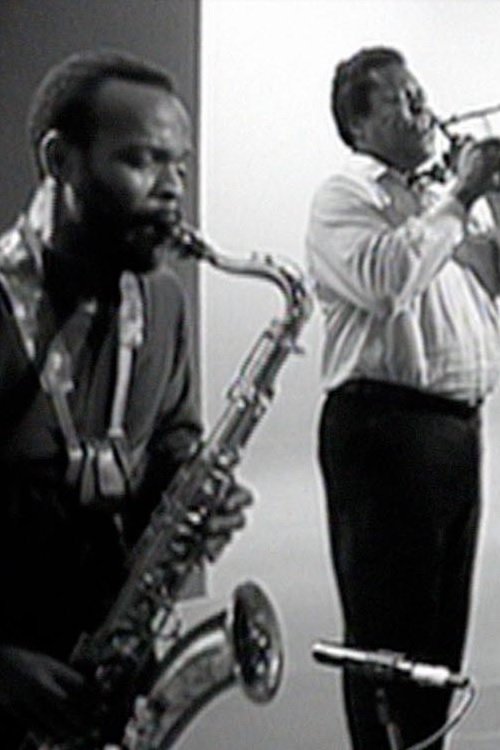
In a meticulous reconstruction of a famous New York studio session, musicians jam for hours non-stop. Inspired by Godard’s film portrait of The Rolling Stones recording their hit single Sympathy for the Devil, Stan Douglas evokes a 1973 Miles Davis recording session.

Luanda – Kinshasa

2013
No image
N/A

The dual-channel videos of Doppelgänger are projected to translucent screens that can be viewed from either side. Two threads of sci-fi narratives occur in parallel and yet are light years apart. This work, pursuant to the dialectics on the nature of moving image medium that Douglas has been excelled at, fuses the dual-channel and viewing from both sides into the threads of retro sci-fi image narrative

Doppelgänger

2019