Writing
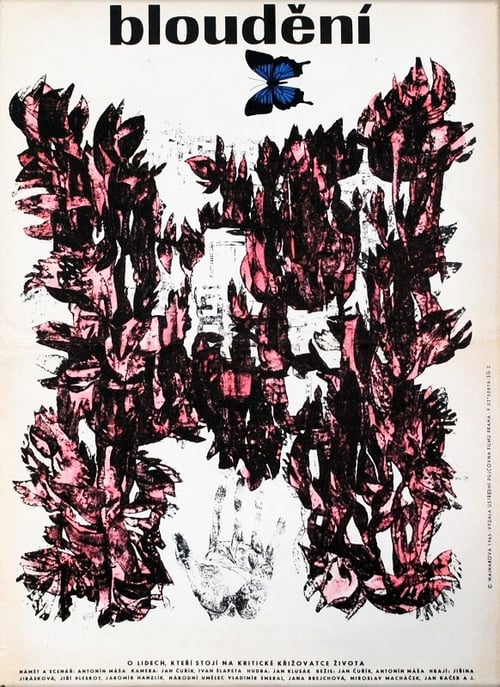
Michal's father and his friends are stigmatized by their war experience and the post-war social deformations in which they took part either directly, or watched them cowardly and in silence. They are trying to repress their feelings of guilt and justify their behavior to the young generation with memories of their heroic war feats. Michal, however, does not want to have anything to do with their problems. He subconsciously perceives the unpleasant atmosphere in the family as well as his father's hypocrisy. After one of many quarrels with his father, he runs away from home, determined to go his own way.
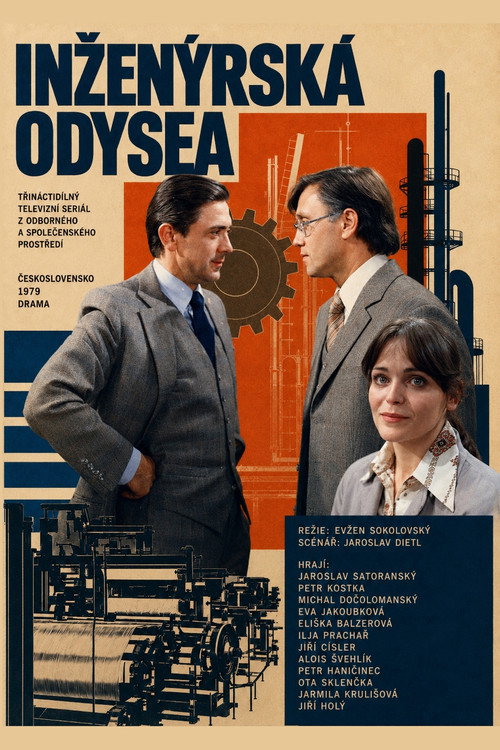
Inženýrská odysea is a Czechoslovak/Czech TV series about three young students and their lives.
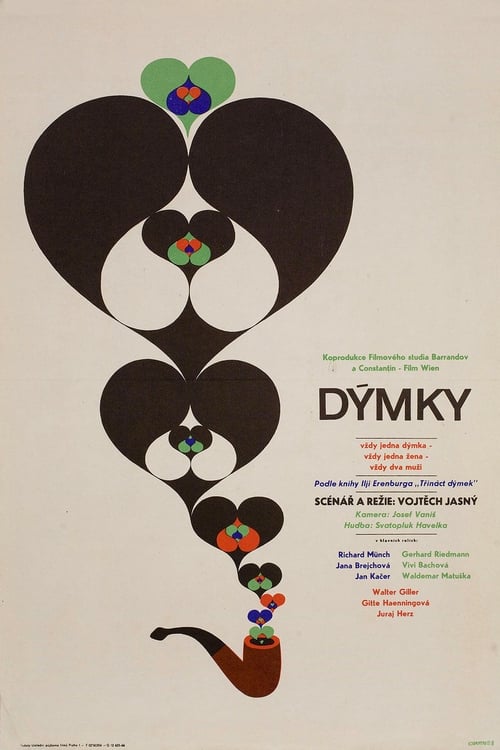
This three-part Austrian/Czech comedy stretches the boundaries of what is considered to be humorous. Part one finds a silent film actor upset because of a rival actor's attention to the former's wife. When he kills his rival, it is only when he is strapped to the electric chair that he realizes that this is his last live scene. The second episode has the wife of an elderly British nobleman having an affair with the young gamekeeper of their estate. Part three finds a peasant woman taking a lover when her husband goes off to fight the war.
Valerie, a Czechoslovakian teenager living with her grandmother, is blossoming into womanhood, but that transformation proves secondary to the effects she experiences when she puts on a pair of magic earrings. Now seeing the world around her in a different light, Valerie must endure her sexual awakening while attempting to discern reality from fantasy as she encounters lecherous priest Gracian, a vampire-like stranger and otherworldly carnival folk.
No description available.
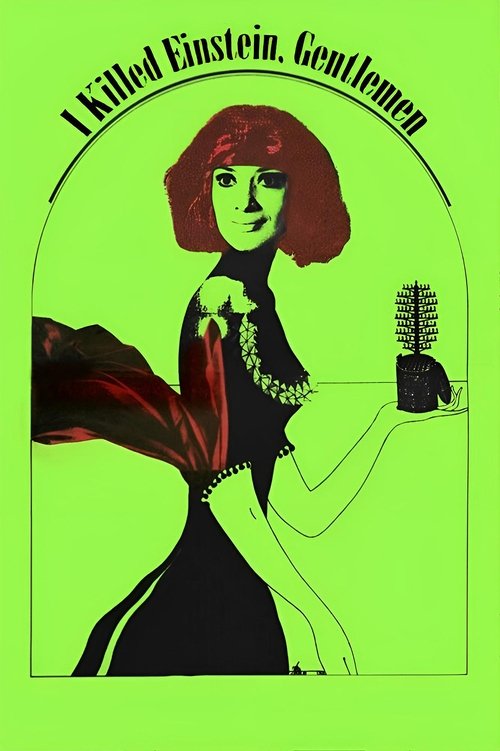
This futuristic science fiction comedy features an atomic bomb blast that causes women to grow beards and lose the ability to have children. A summit meeting is held at the United Nations, with the proposed solution of building a time machine. The decision is made to travel back in time and murder Einstein, with the hopeful result being that without the noted mathematician's research there will be no atomic bombs.
The Counter-Reformation period: Myslivec Machovec is forced by representatives of the Jesuit order to flee his home for his religious beliefs. His teenage children Helenka and Tomáš do not give up the faith and traditions of the Czech Brethren despite the increasing pressure.
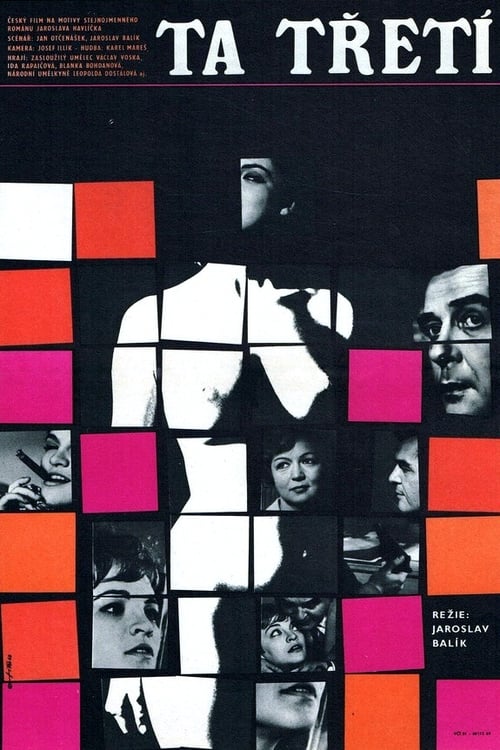
At the funeral of his schoolmate, the nearly-fifty-year old architect Jirí Mánek (Václav Voska) meets his former close acquaintance - physician Jarmila (Blanka Bohdanová). They both are still single. Jarmila has recently returned to Prague after years of work on the frontier. Jirí leaves for a business trip. As a conservationist, he is to grant permission for an adaptation of a Baroque château to office spaces. On the road, a pretty young hitchhiker named Eva (Ida Rapaicová) stops him. Eva is Slovak and her spontaneous behavior enchants Jirí. He thus does not mind making a short detour and takes Eva all the way to the luxurious cottage of her parents. A romance develops between the two people, so different in age and temperament.
A baleful limping man walks through Prague. He is Asmodeus (Juraj Herz), the fiend of lustfulness, entertaining himself by putting together by magic couples of lovers. He only fails at the swimming pool. Zuzana (Jana Sulcová), the good-looking blonde, ignores the men whom the devil foists off onto her. She loves Honza (Václav Neckár) and the boy shares her feelings. The fiend is annoyed by the couple and tries to provoke a row. He sends heavy rain to force them into a hotel and then warns Zuzana's father by phone, but the young lovers manage to get out in time. Then the obstinate Asmodeus takes Honza in his sleep to the Institute for Emotional Disorders, where he shows him the ugly sides of love - hysteria, voyeurism, fetishism, suicide attempts...
In this zany Czechoslovakian comedy, a scientist invents a machine that projects a sleeping person's dream on a screen; disaster soon follows when the machine malfunctions and the cartoon-like dream characters become very real!
Cast out by his father, young Ondrej joins the Order of the Teutonic Knights, where he is raised by strict monk Armin. After years of hardship, Ondrej escapes from the Order when he is wrongly punished, and sets out for his former home. Arriving to discover his father to be dead, Ondrej now not only assumes control of his father's properties, but seeks to marry his former stepmother.
Leopold Kohák married a rich widow a long time ago and now has nothing to do compared to his energetic wife. He's growing old and troubled by the fact that he betrayed his first love Emča and his beloved river Sázava where he spent his childhood and youth. A visit from an old friend Lebeda brings it all back to him. After a nervous breakdown Leopold secretly visits his home instead of going to the spa. A wandering tramp suggest Leopold should bathe in the magical waters of the Sázava, and slowly his youth returns to him.
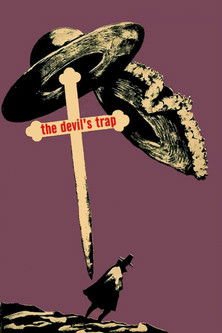
A small town is one day visited by a priest who is there on a secret mission. He is a member of the Inquisition sent to investigate the activities of a local miller. The miller and his son are the descendants of an old family whose ancestral home burned down a century ago, but was rebuilt from scratch. The miller inherited much of his knowledge about the land, water, and a building's stability from generations of family experience. His reputation for finding water and predicting when a structure might collapse have come to the attention of the Inquisition -surely he must be in league with the Devil.
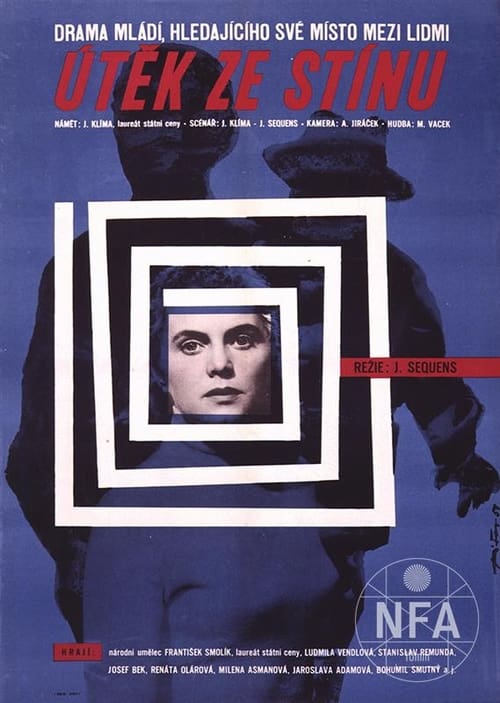
This exemplary "psychological drama" depicts the difficulties with which a new socialist mindset is born. Director Jiří Sequens warns against ill-advised marriages into the families of the defeated bourgeoisie, because the former royalty refuses to accept a man from a different social class. The heroes of this film will find out. The former owner of a pharmacy refuses to accept that his daughter has married a mere technical draughtsman. However, her father's hateful schemes cause the sensitive woman to attempt suicide.
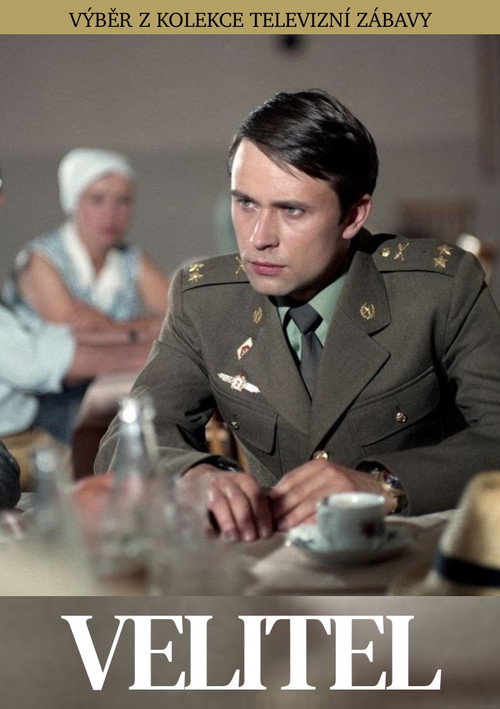
The commander of the military training camp, newly promoted Major Cibulka, keeps his subordinates in line. Because of an unexpected emergency, he refuses to give leave even to the young lieutenant Zabran, whose wife is due to give birth any day. In addition, a false article appears in an army newspaper claiming that Zábrana is an example of a bad company commander. In fact, it is he who has the best leadership skills. Fearing for his wife's health, Zábrana disobeys orders and departs for Prague at night to visit his wife in the maternity ward. Cibulka decides to push the envelope even harder, and drives Zábrana, whom he has long disliked, before the prosecutor.
Young script-writer Frantisek (Petr Cepek) is hired to write a film script based on the successful novel Looking Back. He meets with the novel's female author, a University professor and writer named Olga Machová (Jirina Trebická), approximately ten-years-older than him. In the beginning, they do not understand each other at all. Frantisek is a skeptic experiencing a moral crisis, unsatisfied with both his work and his private life - he lives separated from his wife and has no deeper feelings for his numerous lovers. He even gets drunk from time to time and breaks the public peace. Olga is lonesome, too, but considers her life fulfilled.
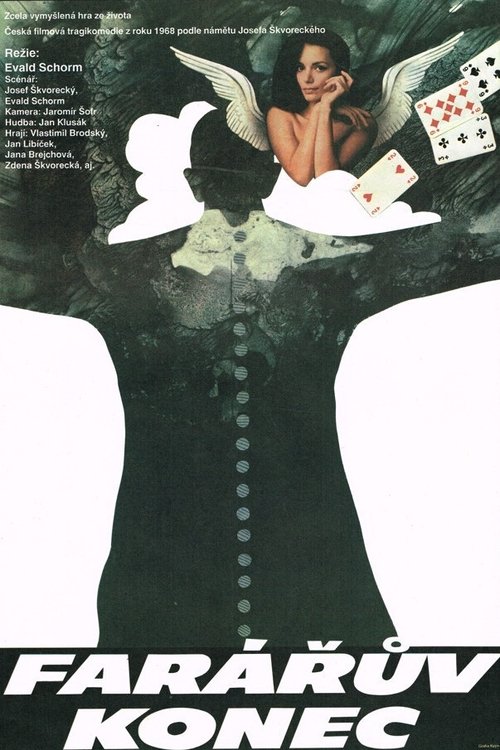
A verger, who likes to dress as a priest, is invited, by one of the villagers, to be the pastor at a vacant church. The atheist teacher resents the pastor, and tries to embarrass him in various ways, including being caught with the local girl, Majka.
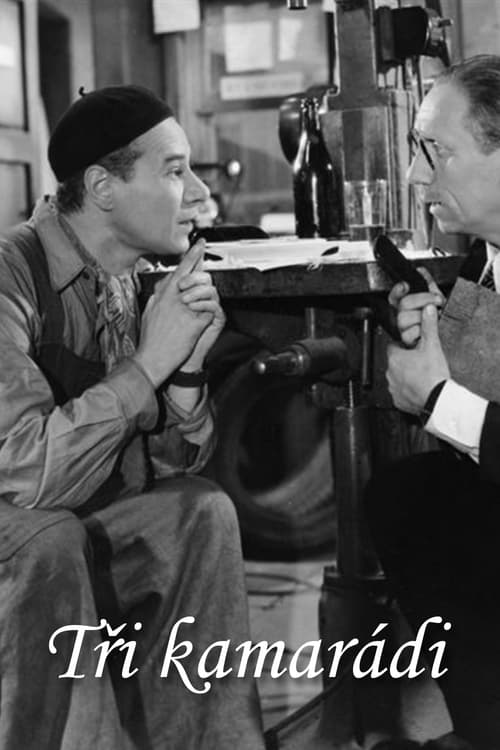
Young men Štěpán, Ludvík and Karel became friends abroad, where they fought during World War II. Now they have returned home and are thinking about their future. Štěpán is a designer, so he starts a car repair shop. There is also work for Ludvík, while Karel gets a job at the Omega car factory. However, the young entrepreneurs are all in debt and their business is not prospering. Štěpán invents a car carburetor, but he has no way to test it. In his greatest need, he receives news that Štěpán will inherit from his uncle from South America...