Directing
From the heaps of rusted scrap metal, a metal, fully functional figure shapes up, trying to get out of there to reach the horizon. He is aiming high. Puppet animation directed by Jerzy Kotowski.
A film sketch for a portrait of Stanislaw Ignacy Witkiewicz by multimedia artist Jozef Robakowski.
The film is an experimental documentary form, made using the stop-motion method. It is a single shot in total plan, showing an aerial view of the Balucki Market in Lodz. The realization method involved recording two frames every five seconds without changing the camera setting. From 'The Workshop of the Film Form'.
An experimental film by Józef Robakowski.
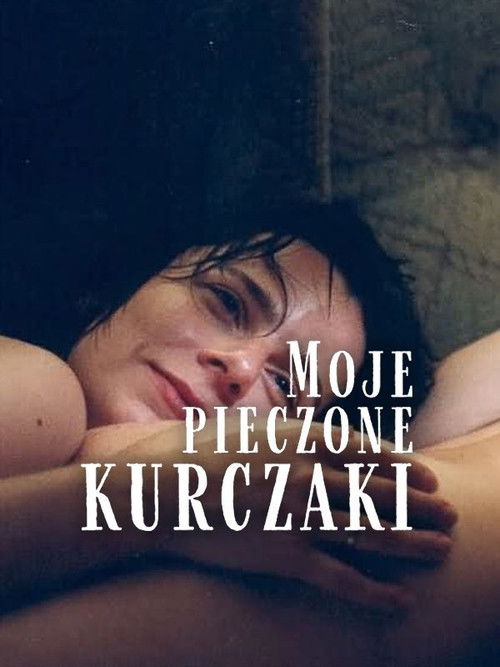
A young married couple and their everyday hardships. Unemployed Wojtek decides to sell grilled chicken from a street stall. His wife Agata is a film student making a documentary on her husband.
Here, the line serves the purpose of manifesting the artists marked pursuit in the 1970s to “brighten various structures of discipline”.
The film is dedicated to the memory of American surrealist Paul Sharits. Sharits sent Robakowski a film score with a proposal to use it in a film production, but the outbreak of martial law prevented the idea from being realised. The film was not made until 2004. The film was created as a result of a very rigorous, constructivist formal procedure, subordinating specific visual values to the melodic line of the musical piece. During the screening, as the notes of the composition are played, corresponding colours appear on the screen, eight colours that correspond to the notes of Fryderyk Chopin's Mazurka Op. 68 No. 4. The vibration of the changing colours and the radiance of the light create a coherent whole with the composer's nostalgic piece. The colourful fields pulsating to the rhythm of the music evoke, on the one hand, the American's structural cinema and, on the other, show the almost vital energy of colour.
Experimental short film by Józef Robakowski & Ryszard Meissner.
Rectangles pulsate to an electronic sound loop.
This film belongs to a group of works that constitute manifestations of Robakowski’s engaged attitude towards social reality. Here, his interests focus on the rhythm of the city, the dynamics of passing cars, recorded with a fast-panning camera set at a single point. The video recording is accompanied by Robakowski’s voice, commenting off-screen, with constantly varying intonation and speed of uttering words, on what is happening in the street. The energy of the urban landscape is contrasted with the calmness of the space in which the camera is placed, which introduces a tension that reflects the author’s emotional state.
Experimental short film by Józef Robakowski.
"...We came to the conclusion that the event recorded on the film does not have to be logically interpreted or named, because its meaning or even nonsense is justified by the fact that this phenomenon took place in a state of war."
A swing imposes its rhythm, independent of the commentator; it forms the rhythmic score for the filmmaker's singing.
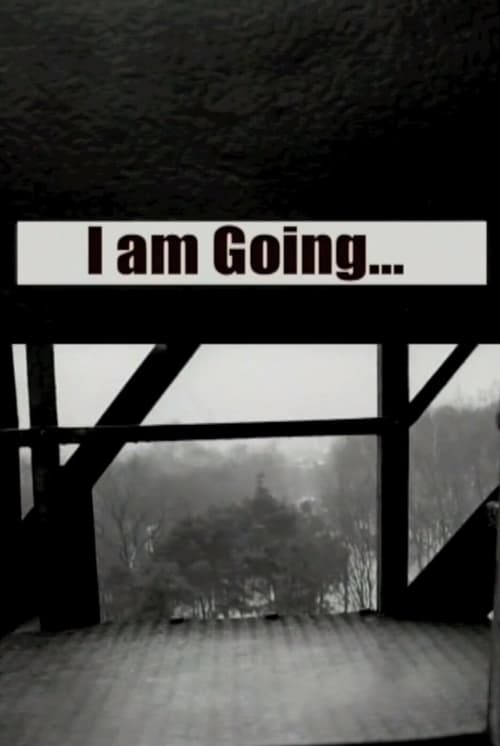
From 'The Workshop of the Film Form'. // In I'm Going Robakowski attempted an iconoclastic representation of the human body. He initiated a situation in which the materiality of film engaged in a dialogue with the materiality of the human body. Over the course of the film, the growing fatigue of the body carrying the film camera can be heard in the artist's voice and increasingly heavy breathing. The effect is that of the artist delving into his own materiality. The subject becomes merely a thing among things, a living fragment of the matter. With their attempt to shift the "film gaze" onto the machine (a non-anthropocentric point of perception of the world), Robakowski's Records most fully illustrate the antivoyeuristic ambitions of structuralist cinema, which aimed to subvert the traditional voyeuristic model.
White circles appear and disappear on a black surface.
The protagonist climbs the steps of a tower, loudly counting each step. The end of his climb also marks the end of the film.
From 'The Workshop of the Film Form'.
The equation of organically generated soundtrack with the video image.
An autobiographical, auto-therapeutic take, laced with deadpan humor. Here we learn about another identity crisis as Robakowski speaks of his fear of putting on his late grandfather’s glasses.
The expression of the fascination of a problem of the ANGLES existance as of its kind intuitive geometry. The imaginary "MODEL" became the main subject of my artistic activity since many years. I am wondering, how the geometry, whose intentions are only practical purposes, can exist in art. I decided to create ANGLES as the energetic, cultural, sign in a form of a personal fetish, in order to make this problem important. I have a feeling, that having three angles at disposal, I will be able to put them, in any way, on the so called REALITY, but also on my biological motivity. Thanks to this operation, I want to cause a kind of the energetic tension. This TENSION should be an essence of this absurd work, i.e. the way of taking on its own articulation to the selfdependent existing matter.