Directing
A young married couple and their everyday hardships. Unemployed Wojtek decides to sell grilled chicken from a street stall. His wife Agata is a film student making a documentary on her husband.
A film sketch for a portrait of Stanislaw Ignacy Witkiewicz by multimedia artist Jozef Robakowski.
Robakowski directs the camera to zoom back and forth.
White circles appear and disappear on a black surface.
Trying to describe oneself is a movie about representation. How it is possible, through film, to describe oneself and describe others. With the camera as mirror and third eye. At first, a collage-like combination of letter-writing, investigation and journey, something between documentary and feature film. Finally, a portrait of Boris Lehman from 1989 to 1995, part II of BABEL.
This film belongs to a group of works that constitute manifestations of Robakowski’s engaged attitude towards social reality. Here, his interests focus on the rhythm of the city, the dynamics of passing cars, recorded with a fast-panning camera set at a single point. The video recording is accompanied by Robakowski’s voice, commenting off-screen, with constantly varying intonation and speed of uttering words, on what is happening in the street. The energy of the urban landscape is contrasted with the calmness of the space in which the camera is placed, which introduces a tension that reflects the author’s emotional state.
The film is an experimental documentary form, made using the stop-motion method. It is a single shot in total plan, showing an aerial view of the Balucki Market in Lodz. The realization method involved recording two frames every five seconds without changing the camera setting. From 'The Workshop of the Film Form'.
A short showing Robakowski peeling and eating an apple, which itself produces the sound.
ince the 1970s, Robakowski has been experimenting with the category of the author, transferring the authorship of his works onto the film camera. Implementing the strategy of biological-mechanical records, Robakowski continues his experiments, carried out since the 1970s, consisting in the transfer of the authorship of the film onto the film camera, as well as initiates relations between the mechanical medium and the human organism. On the one hand, it embraces collaboration, on the other, human struggle with the machine, extending from the “integration” of its logic and the attempts at its “anthropomorphisation”.
An experimental film by Józef Robakowski.
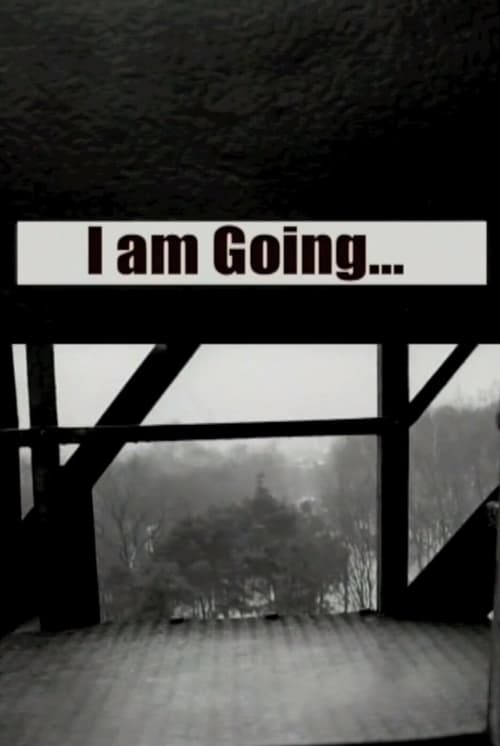
The protagonist climbs the steps of a tower, loudly counting each step. The end of his climb also marks the end of the film.
Video: Józef Robakowski, music: Laibach Werkstatt, production: Exchange Gallery.
From 'The Workshop of the Film Form'. // In I'm Going Robakowski attempted an iconoclastic representation of the human body. He initiated a situation in which the materiality of film engaged in a dialogue with the materiality of the human body. Over the course of the film, the growing fatigue of the body carrying the film camera can be heard in the artist's voice and increasingly heavy breathing. The effect is that of the artist delving into his own materiality. The subject becomes merely a thing among things, a living fragment of the matter. With their attempt to shift the "film gaze" onto the machine (a non-anthropocentric point of perception of the world), Robakowski's Records most fully illustrate the antivoyeuristic ambitions of structuralist cinema, which aimed to subvert the traditional voyeuristic model.
In Impulsators, Robakowski rejects the narrative film form and the representational function in the spirit of his radical manifestations against the illusory character of traditional film in the 1970s, such as e.g. Test, Test II. Like Impulsators, those non-camera films came into being as a result of perforation of film stock, which thus lets through in a desired way the light from the projector, which is in turn “fixed” on the retina and produces after-images. The movement of the film stock generates lively flicker targeted directly at the viewer’s body, above their imagination. Immersed in the trance rhythm, the impulsator becomes a new psychophysical force.
A classical organ composition by Johann Sebastian Bach “stretches” a red strip of film; An exploration of musical memory.
A film consisting of two shots recorded by a camera mounted on a lorry driving through Brooklyn, New York. At the beginning, in the foreground, we see a woman with a camera leaning against the roof of the vehicle, behind her the urban landscape of a run-down neighbourhood flashes by. The camera is mobile, gradually moving from the woman towards the direction of travel, showing an intersection of narrow streets and a cherry-coloured car, which it then follows. We hear the sounds of the surroundings and the creaking of the lorry. The title card appears, followed by the first notes of a song sung off-screen. The song hummed by the author is the pre-war tango ‘Pamiętasz Capri’ from Mieczysław Fogg's repertoire. It is the soundtrack for the second shot showing the viaduct with the expressway. The camera is positioned with its back to the direction of travel, and we see cars driving behind the lorry and heavy traffic on the street, reminiscent of classic shots from American films.
A performance staged during the WRO 96 festival, entitled Monitor Polski. The artist presented a device in which his body was a conductor through which electricity flowed, with the voltage gradually increased at the artist's request and with the participation of the audience. Interest in the phenomenon of energy and reflection on artistic creation had already appeared in Robakowski's earlier works, such as O palcach (About Fingers, 1982) and Moje Videomasochizmy (My Videomasochisms, 1989).
The camera records the trajectory and dynamics of Robakowski's movement: he walks along the white line painted on the football pitch.
Experimental short film by Józef Robakowski & Ryszard Meissner.
Rectangles pulsate to an electronic sound loop.