Catherine Poitevin
Editing
Known For

June 1940. The Wechrmacht appropriates the houses in which are living Pierre, his wife Magdeleine, their son Charles, their two servants Louise and Lea, and Mademoiselle, the beautiful jewish governess.
La Lumière des étoiles mortes

Summer, 1967. La Goulette, the touristic beach of Tunisi, is the site where three nice seventeen-year-old girls live: Gigi, Sicilian and Catholic; Meriem, Tunisian and Muslim; Tina, French and Jewish. They would like to have their first sexual experience during that summer, challenging their families. Their fathers, Youssef, Jojo and Giuseppe, are old friends and their friendship will be in crisis because of the girls, while Hadj, an old rich Arab, would like to marry Meriem.
A Summer in La Goulette
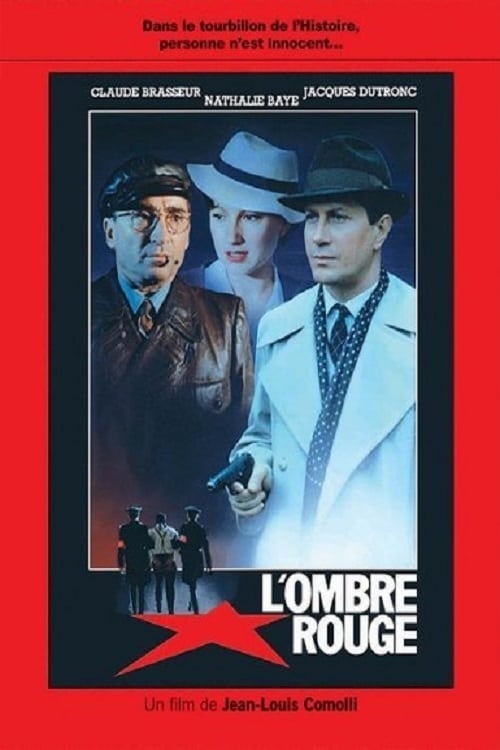
The time is the 1930s and two Soviet spies (both Frenchmen by nationality) have been helping Communist factions during the Civil War in Spain. It is the time of Stalin's iron rule in the USSR, and the two agents are suddenly called to Moscow by the KGB. Knowing that they are in trouble for no fault of their own, fear drives one of them to suicide while the other gets his lover and her child and begins a run for his life, knowing that the KGB will never let him go free.
The Red Shade

No description available.
12 millions de Tokyo

At bottom is a tale of exploring the imagination of a writer, plus a tale of exploring the city of Beirut. The film deals with the initiation to love and the female soul.
What's Going On?

A documentary about Che Guevara in Bolivia, based upon his journal listing daily agendas
Ernesto Che Guevara, the Bolivian Diary

A travelogue of abandoned strip mining sites in France extolling their potential for recreational use.
La Cabale des oursins
During the Gulf War, Serge Daney had written that the conversation, according to him "a typically Franco-Arab art", could no longer be established between him and his Arab friends. Saddened by this observation, we wanted to offer him a frame, both real and cinematographic, in which he could renew a dialogue that was interrupted at that moment. The choice of his interlocutor was immediately obvious: Elias Sanbar, Palestinian, historian, director of the magazine "Palestinian Studies", collector of images: an exile who archives the memory of his people: press photographs, album of family, postcards, etc. For Sanbar, the image is a proof of his identity. Daney spent most of his life watching movies, but has always refused to keep still images. On both sides, there was a very strong desire to confront these two attitudes in the face of the image and to make it, in a way, a parable of the North-South relations.
Conversation nord-sud : Daney/Sanbar
June 10, 1968. After the end of a long strike in the Wonder factory in Saint-Ouen (France), a female worker is dissatisfied with the negotiated compromise and refuses to return to work. Originally, it was a scene of Willemont's Sauve qui peut Trotsky, but the film was never completed.
La reprise du travail aux usines Wonder

Film based on the lyrical tragedy of the same name by Jean Cocteau and Francis Poulenc, directed by Alain Françon at the Théâtre du Châtelet.
La Voix Humaine: Tragédie Lyrique en un Acte

Documentary about the life and work of the Hungarian composer, Gyorgy Kurtag