Jeff Scher
Directing
Biography
Jeff Scher is a painter who makes experimental films and an experimental filmmaker who paints. His work is in the permanent collection of the Museum of Modern Art and the Hirshhorn Museum, and has been screened at the Guggenheim Museum, the Pompidou Center in Paris, the San Francisco Museum of Modern Art, and at many film festivals around the world, including opening night at the New York Film Festival. Mr. Scher has also had two solo shows of his paintings, which have also been included in many group shows in New York galleries. Additionally, he has created commissioned work for HBO, HBO Family, PBS, the Sundance Channel and more. Mr. Scher teaches graduate courses at the School of Visual Arts and at NYU Tisch School of the Arts Kanbar Institute of Film & Television's Animation program. He lives in Brooklyn with his wife and two sons but is about to move to Connecticut. (Fezfilms.net)
Known For

A romantic comedy of misadventure. Indecisive Manhattan newlyweds set out one Sunday on a journey to Hoboken, N.J.
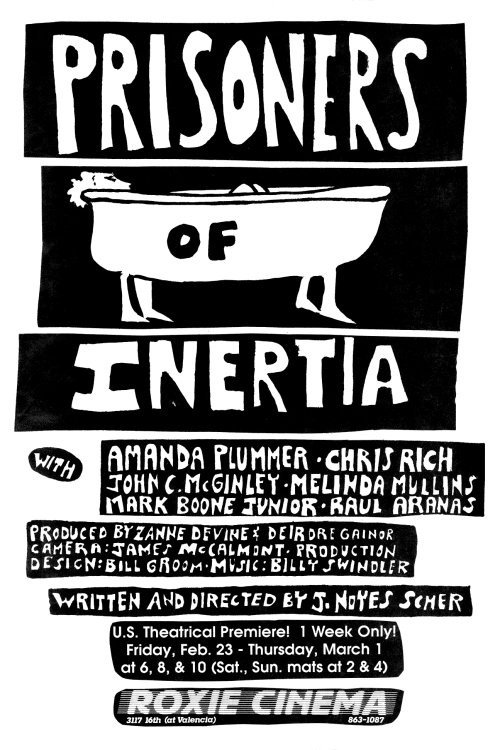
Prisoners of Inertia

Esther Robinson's portrait of her uncle Danny Williams, Warhol's onetime lover, collaborator and filmmaker in his own right, offers a exploration of the Factory era, an homage to Williams's talent, a journey of family discovery and a compelling inquiry into Williams's mysterious disappearance at age 27.
A Walk Into the Sea: Danny Williams and the Warhol Factory

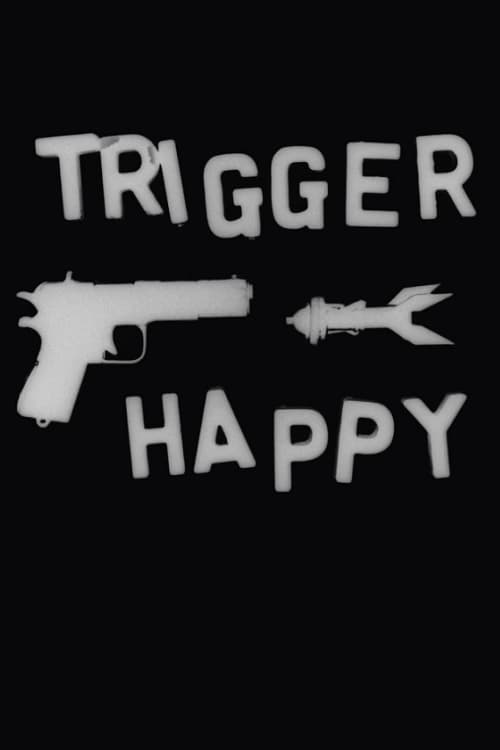
“Trigger Happy” was made with hundreds of objects found on the streets and sidewalks of New York. It began as an attempt to make an animated ballet, but as I was shooting the dance turned rowdy, into more of a nocturnal revel. It was shot on a lightbox with high-contrast film. The backlight silhouetted the objects, making them into graphic icons of themselves. The resulting film is a negative, which turned the objects white and the background black as asphalt. It makes the dance almost phantasmagoric. The trigger I was happy about was on the camera, but the title also fits the velocity of the imagery. Much of the animation happens by the rapid replacement of one object with another. It’s the afterimage in your eyes that animates the difference between the shapes, as one is replaced by another, and another… The music by Shay Lynch perfectly captures the idea of dancing in the streets.” —Jeffrey Noyes Scher
Trigger Happy

During the years preceeding his death, Sonbert channeled his energy into making Whiplash. His vision and motor skills impaired, he gave his companion, Ascension Serrano, detailed instructions about the assembly of specific shots and the music to be used as a counterpoint to the images. Before his death in 1995, he asked filmmaker Jeff Scher (a former student of Sonbert's at Bard) to complete the film. --Jon Gartenberg. Preserved by the Academy Film Archive in partnership with Estate Project for Artists with AIDS in 1996.
Whiplash

Scher made this in 1976 as a student at Bard College. He printed it to negative years later and liked the way it looked better than the now faded original film.
NYC

This film was a test of an idea for bi-pack shooting. I used some outtakes from Trigger Happy and had a positive and negative high-contrast print made. I had access to an Oxberry animation camera which had the ability to shoot “bi-pack,” which is to say two strands of film could be loaded into the camera gate at the same time, sandwiched together. By shooting through the black-and-white high contrast film, I could use it as a sort of filter, or contact print. This lets one fill in all the white or clear areas of the film with whatever artwork was under the camera. By shooting the same raw film through the negative and then winding it back and re-shooting it through the positive, I could replace both the black and the white of the film with whatever was on the stand. It was done very quickly in a spontaneous exploratory way. The resulting film test, one hundred feet of 16mm film had the original Trigger Happy outtakes now colored very vividly.
Nerve Tonic

Dancing flames of a burning log in a fireplace can take you out of yourself and connect you with a deep and primal place. Echoes of holidays past with the sleigh bells that run through the piece while underscoring the enchantment of losing yourself in this elemental ballet.
Where There's Smoke

Garden of Regrets is an experiment in making a film that feels as if it has percolated up from the subconscious; a dream you can watch with your eyes open. It’s one of those big cathartic dreams, a labyrinth of fleeting moments full of metaphor and mischief. I wanted it to feel like a bumpy roller coaster ride in and out of the dark side of the brain where discomforting images are stored away. And, as with all dreams, the meaning and significance are open to interpretation.
Garden of Regrets
Painted on a revolving “wheel” of paper mounted on a rig, the film is an animated series of “loops" as the wheel is rotated over and over and paint is added onto previous layers. The result is a cascading waterfall of colors that grows denser and denser until it’s all paint.
Swanee

The fleeting inverted image of the landscape in the raindrops as they swell from drop to drip is an optical phenomenon, but to me it’s pure magic. And then they form streams and pulse hypnotically like luminous quicksilver. (..) I shot this film with a Beaulieu wind-up 16 mm. movie camera from the ’60s and film stock that was at least ten years out of date. The film was shot on a balcony with an awning while my wife napped in the next room with one of our boys. They slept so deeply that even the thunder did not wake them. - Jeff Scher
While You Were Sleeping

I made this film while experimenting with a home made rotoscope. It was drawn on index cards. It's a sort of valentine to film, to life and to Xavier Cugat too. The original 16mm negative was lost when my lab at the time closed suddenly. Boy, I don't miss film at all. (JS)
Reasons to Be Glad
A diverse compilation of short animations from NYC's popular festival, Animation Block Party. Various genres and narratives. A great mix-tape of student and professional work, featuring old-school and new-school animations of varied genres.
Animation Block Party Mix-Tape, Volume 2

This film was really Sid’s idea, I was just the cameraman. Sid was an obsessive Boston Terrier whose idea of bliss was to be swung around on a rubber pork chop. I was happy to accommodate him. Sid was shot with a 16mm Beaulieu camera which can be seen in shadow at one point in the film. Sid can also be heard barking mixed into Shay’s music. - Jeff Scher
Sid

No description available.
The Shadow's Dream

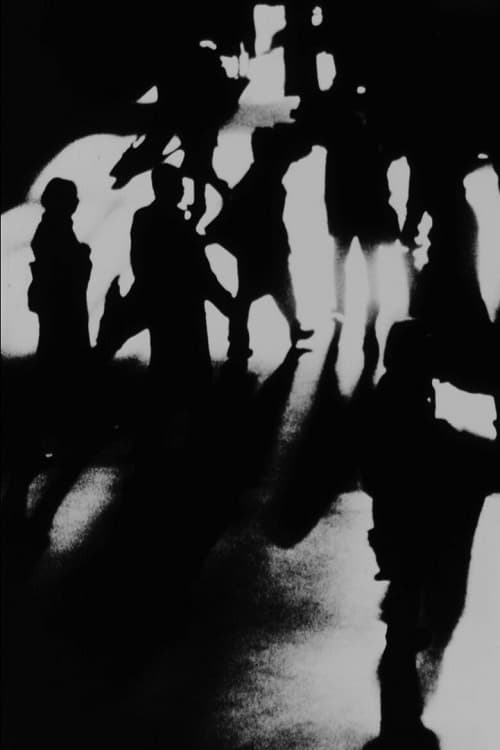
This film was shot before Grand Central became a tourist attraction and overrun with their lazy directionless gait. It would be a different film if shot today, as the tourists have undermined the flow and energy of the crowd motion. (..) - Jeff Scher
Grand Central

The postcards in this film were all sent to me by my friend and filmmaking mentor, Warren Sonbert, who died of AIDS in 1995. Warren was a great traveler and postcards were his preferred method of communication. (..) - Jeff Scher
Postcards From Warren

The idea of this film was to make a movie still life in which only the paint moved. I made fifty or so paintings using the same template, a still life of a loaf of bread and a tiny guitar, and the only difference between the images is the color choice and the texture of the paint. The choice of images was a mild joke referring to the many 19th century still life paintings featuring bread. It was also, along with Spin Cycle, one of my bread films. I was having a two-man show at a gallery in Brooklyn with a painter who only painted butter. Our show was called “Bread and Butter Works.” - Jeff Scher
Still Loaf with Guitar

In Warren, Scher turns the table on his former teacher and mentor, creating an intimate dialogue between friends as well as a battle of directorial wills, at a moment when Scher recognized that Sonbert was becoming ill.
Warren
A Motion picture adaptation of the book. Also, my first film in French.
Abstract

The kiss is particularly interesting to me, as it’s one of the best things we all get to do, yet almost everyone does it with their eyes closed.