Acting
No description available.
Marriage Angle is a Hong Kong Mandarin-language feature film of the drama genre, written and directed by Wang Yin, produced by Shaw Brothers Studio, Liu Chi and Chow Sze-Ching were the cinematographers.
During a night when Mei Liang and his girlfriend, Sima Qiu-Hong are on the same stage during a play for the Dajiang Theater Company, they receive a visit from Qiu-Hong's former classmate, Xie Yu-Lan. Under Yu-Lan's insistence, Mei Liang decides to break up with Qiu-Hong.
This is a historical drama that was produced by the Shaw Brothers Studio.
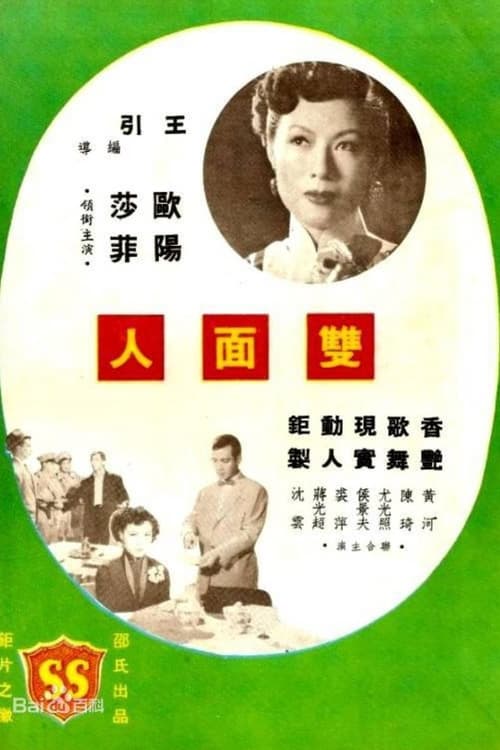
Spies, Military Documents and Traitors.
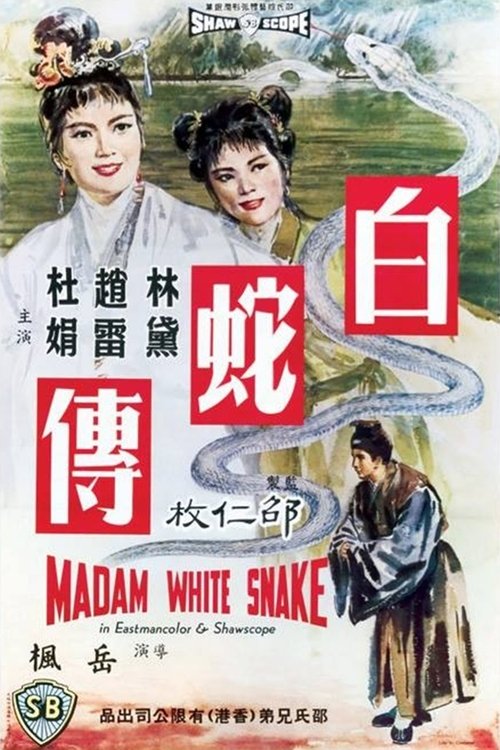
This Classic Seductive tale of two snakes who assume human forms will send chills of pleasure down viewers' backs. The Lovely Linda Lin Dai (Les Belles, The Kingdom And The Beauty) and margaret Tu Chuan (The Dream of The Red Chamber) play the two sister serpents, Pak Su-cheng and Ching Ching. Su-cheng meets Hsu Hsien (Chao Lei) one day and recognizes him as her savior in another life 1,000 years ago. She marries him to reward him but the snake-human union brings about problems beyond imagination.
No known plot
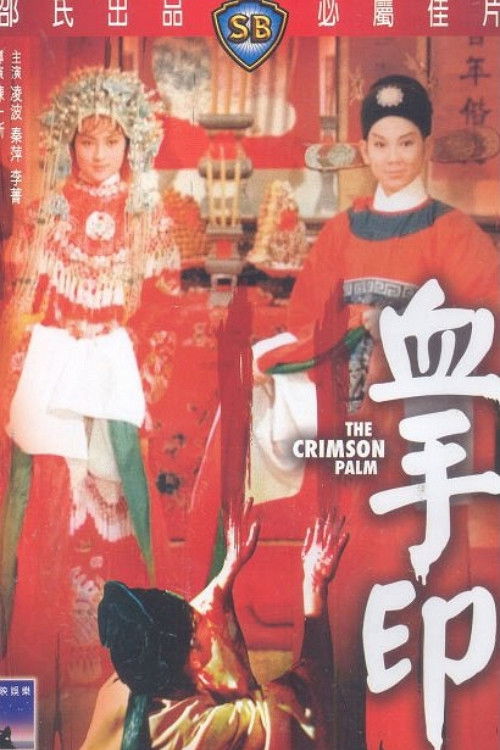
Ling Bo is Lin, a young man engaged to the daughter of a rich man, who now despises Lin because of his family's declining status. Lin visits his beloved fiancee before he heads towards the imperial city to participate in the civil service examination, only to find her maid lying dead in blood. Lin is then accused of murder. How can Judge Bao prove his innocence?
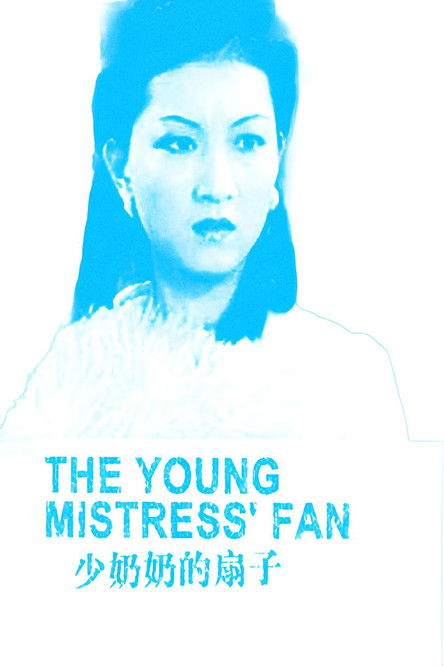
Lady Windermere's Fan, Oscar Wilde's play on moral values, is adapted for a setting in Shanghai. Young wife Meilin mistakenly believes her husband is having an affair with a social butterfly and decides to leave for a suitor. Her reputation, about to be ruined because of a misplaced fan, is saved by the social butterfly who turns out to be …Unlike typical Chinese scripts on parental love, the understated familial love in the original play is aligned with Li's preference for the undramatic. Motherly love is portrayed indirectly while emotions run strong yet subdued in the film. Poking fun at social culture of the times, this is Li's earliest extant feature film in a modern setting and a showcase of his modernistic and crisp directorial approach.
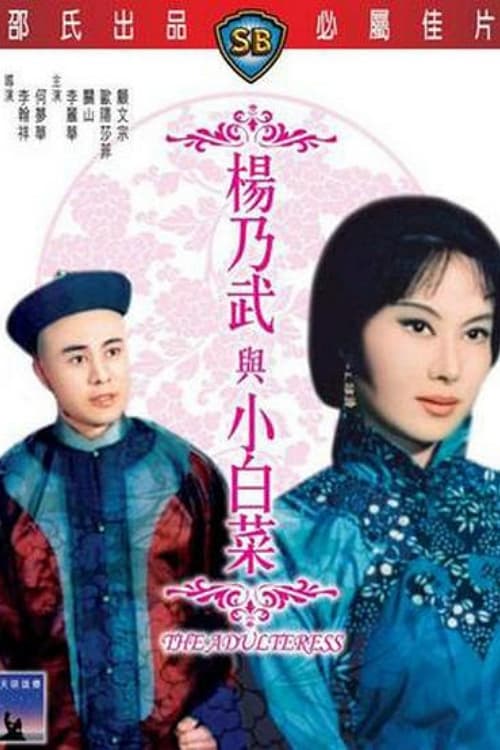
The noted actress Li Li-hua, star of more than sixty films since 1947, beautifully portrays the drugged, then disgraced wife of a peddler in the waning days of the Ching Dynasty. To make matters worse, she’s soon framed for her husband’s murder by her rapist - the son of the local magistrate! And even that isn’t the end of her woes. It’s best to have a box of tissues nearby as two expert directors ratchet up the emotional suspense in this consummate tearjerker.
The film focused on a conflict between Empress Dowager Cixi, her son Guangxi (the nominal emperor) and his wife, Zhen Fei.
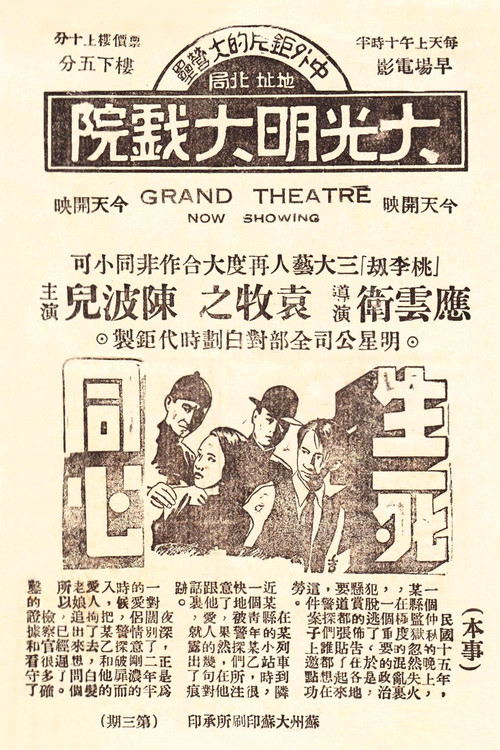
Probably the most sheerly entertaining of all the films made in 1930s Shanghai by 'underground' leftists, this riff on The Prisoner of Zenda is funny and engaging from first to last. The irresistible Yuan Muzhi (director of Street Angel the following year) plays both Li Tao, a revolutionary on the run, and Liu Yuanjie, an American-Chinese teacher visiting China with his fiancée. Liu is mistaken for Li and thrown into jail; Li teams up with the fiancée (Chen Bo'er, Yuan's real life wife) to get him out of prison and into the spirit of revolution. Ying Yunwei (who started out playing female roles in Chinese opera) uses chiaroscuro lighting, highly mobile camerawork and zippy pacing to give it maximum impact, but it's Yuan who really keeps you watching.
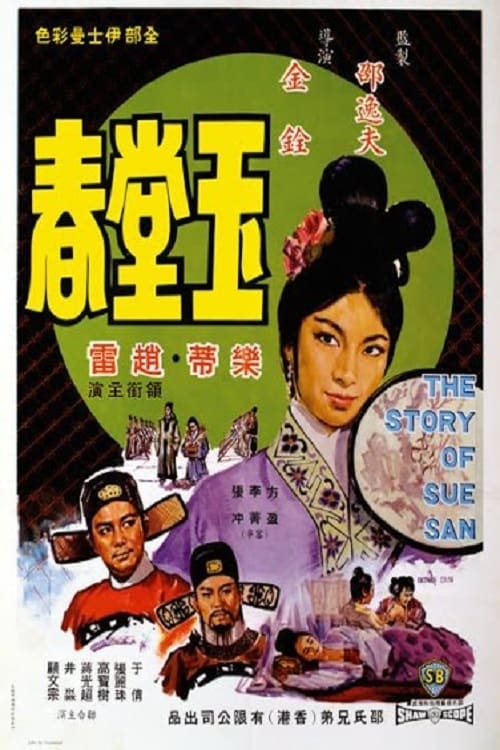
This gripping story centers on the romance between Wang Chin Lung and Sue San. Although they may be perfectly matched when it comes to their love for one other, the two come from remarkably different social ranks. While Chin Lung is the son of a respected government official, Su San is a prostitute, albeit a famous one.
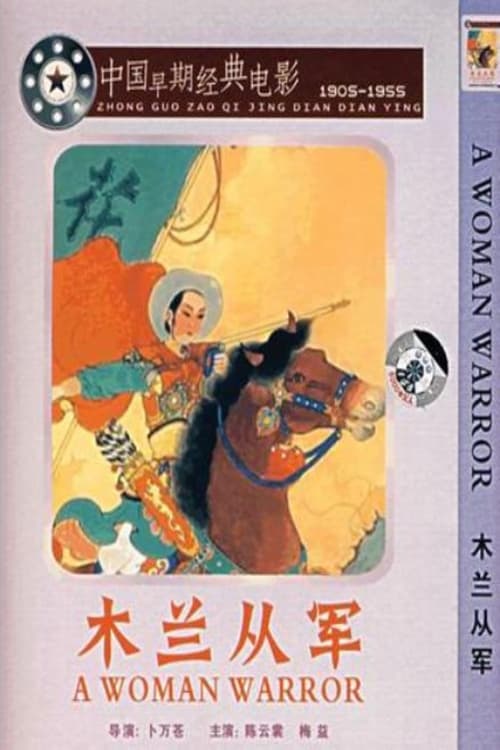
This movie is based on the famous Chinese folklore that is more than one and a half millennium old. The same folklore was what the Disney animation Mulan is based on, and similarly, it was what many Chinese movies/operas/plays based on.
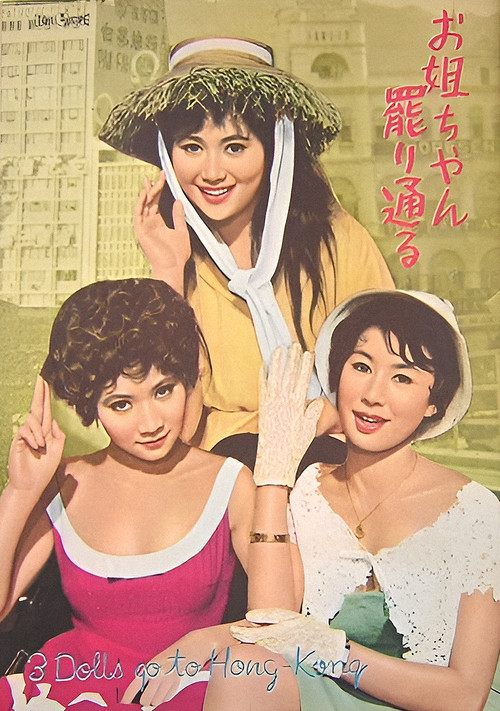
The 3rd film in the Three Dolls series
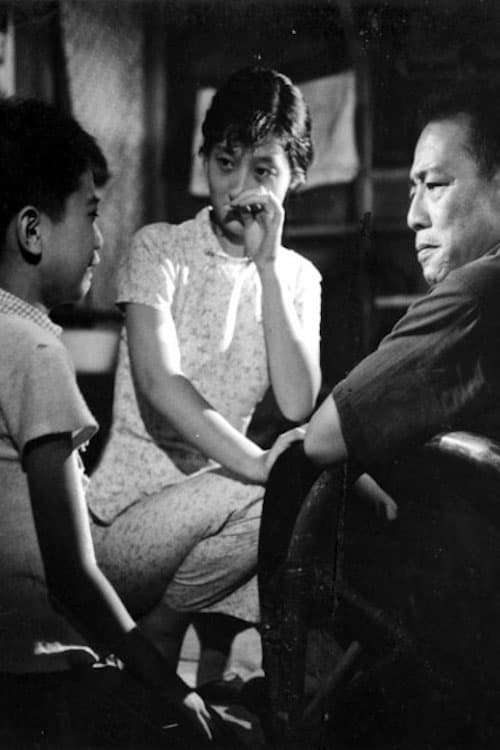
Long unemployed and stone-broke, Shen Jiaguang is dealt a further blow when his wife Lu Xiaoyin has fallen seriously ill and their son Xiaoguang has to quit school.
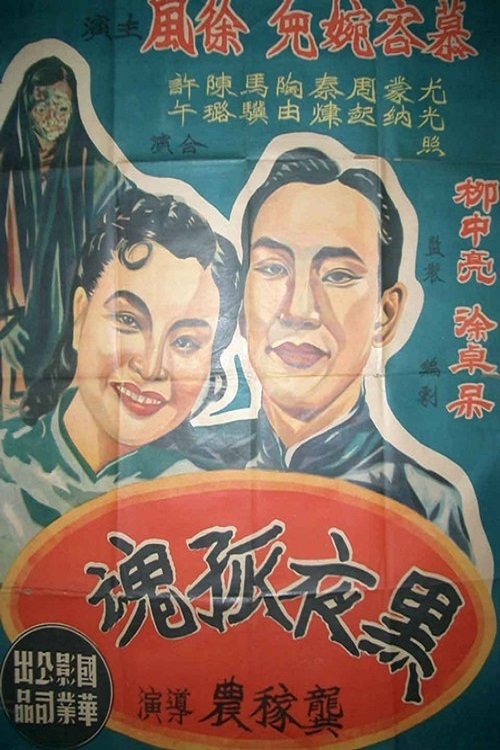
A female ghost appeared in a barren mound near Yangjiazhuang, wailing every night and terrifying the villagers. The feathered priest of the God of Wealth Temple tells the villagers to offer food and paper money to the female ghost, and the female ghost is indeed much quieter, but she only takes food and not paper money. When a young man, Wang Yuan Sheng, comes back from a trip, he does not see his child bride, Xiu Fang. His mother tells him that Xiu Fang has been having an affair with someone since he left and is pregnant, so she has already run away from home. Knowing that Xiu Fang is pregnant with her own child, Yuan Sheng does not believe his mother's story. Mother Wang is frightened by the ghost's screams and falls ill. Yuan Sheng becomes suspicious of the ghost's true identity because the ghost only takes food.
Meal Time is a comedy film about all the mess with housework that director Yan and his wife had to go through after the maid gave up her job.
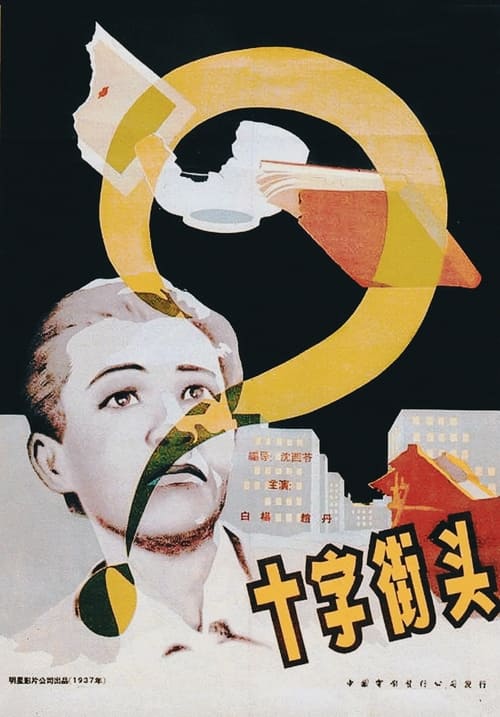
Four students in Shanghai have recently finished university. All are unemployed. Xu contemplates suicide but his friend Zhao talks him out of it. Zhao lives in a shabby room with just a flimsy wall of planks separating him from the room behind. Miss Yang, in town to take a factory job, moves in behind. Her nails into the wall knock Zhao's photos down. The unseen neighbours start playing tit for tat... Zhao gets a job as proofreader at a newspaper. He sees that pretty girl on the tram to work every day. He doesn't know her, but it's Miss Yang... Zhao is assigned to cover labour conditions for the paper. He is sent to a factory, the one where Miss Yang works...