Camera
Ingo Kratisch is a German film director, screenwriter and cinematographer.
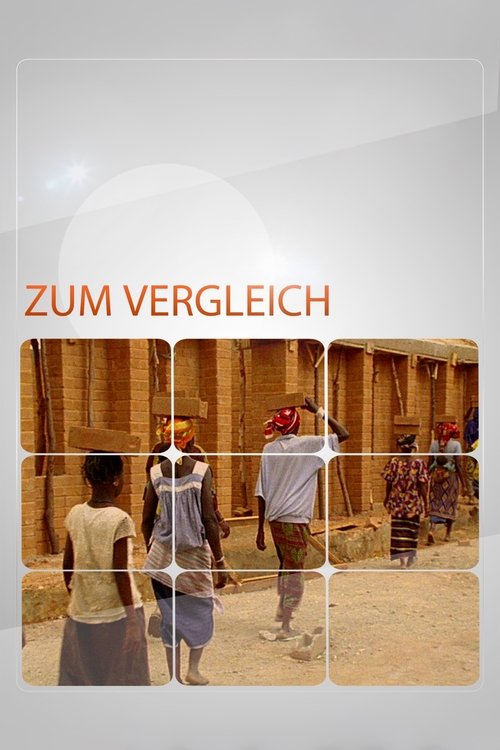
In Comparison revisits issues explored in the director's 2007 two channel installation Comparison Via a Third. Spanning continents and cultures, the film focuses on the brick in its many contexts, from the collective efforts of a community building a clinic in Burkina Faso, through semi industrialized moldings in India, to industrial production lines in Germany, France, Austria and Switzerland. Through its notable structure and its captivating rhythms, In Comparison presents various methods of labor production, allowing for an assessment that changes with every layer and goes well beyond a simple binary divide.
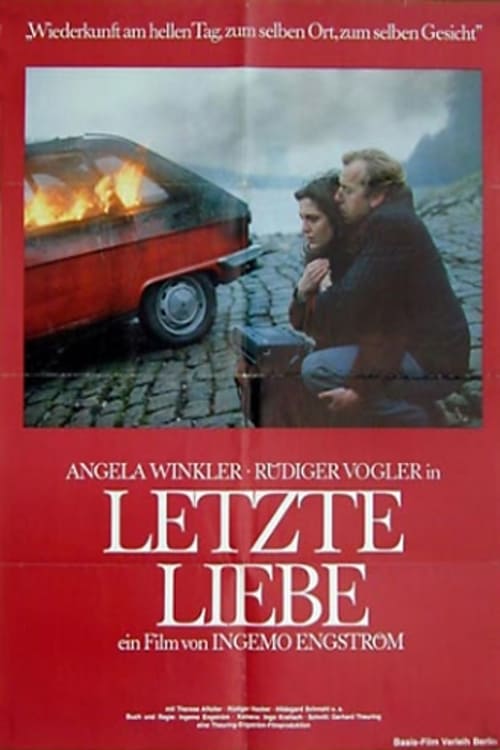
A film about an amour fou between a young doctor and a former teacher. She, daughter of German Jews who emigrated to France, returns to Germany one day: she escapes from her bourgeois life in France into the memory of her childhood.
Mit Pyramiden is a film about Egypt. About Cairo, about the people there, the streets, the history of the country, the sounds, the light, about the colours, the religions, the sand, the pyramids. I see and I hear. Cars honking, cars standing around everywhere, people in long clothes, including men.
Sophie, fourteen years old, rides her bike to a remote area after school to read a book about the holocaust. She collides with Joseph, who is the same age, on her bike, and their paths become intertwined. A pile of paving stones next to a bunker triggers an idea: they want to dedicate a stone to each person murdered by the Nazis.
No description available.
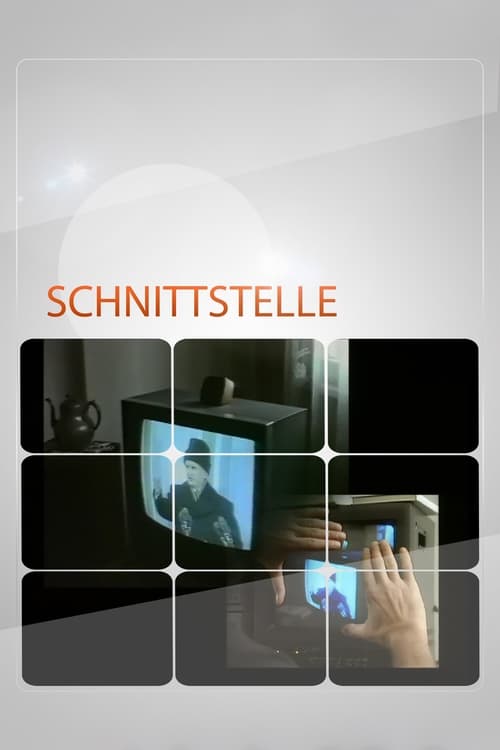
Harun Farocki was commissioned by the Lille Museum of Modern Art to produce a video 'about his work'. His creation was an installation for two screens that was presented within the scope for the 1995 exhibition The World of Photography. The work Schnittstelle developed out of that installation. Reflecting on Farocki's own documentary work, it examines the question of what it means to work with existing images rather than producing one's own, new images. The title plays on the double meaning of 'Schnitt', referring both to Farocki's workplace, the editing table, as well as the 'human-machine interface', where a person operates a computer using a keyboard and a mouse.
Henry Angst receives a farewell letter that promises an unspeakably cheerful death and calls his previous life into question. As a result, he leaves his wife and gives up his job. In a hotel room, he plays heads and tails and chooses the random path. The next day he meets Rita, a young woman whose contradictory nature attracts him.
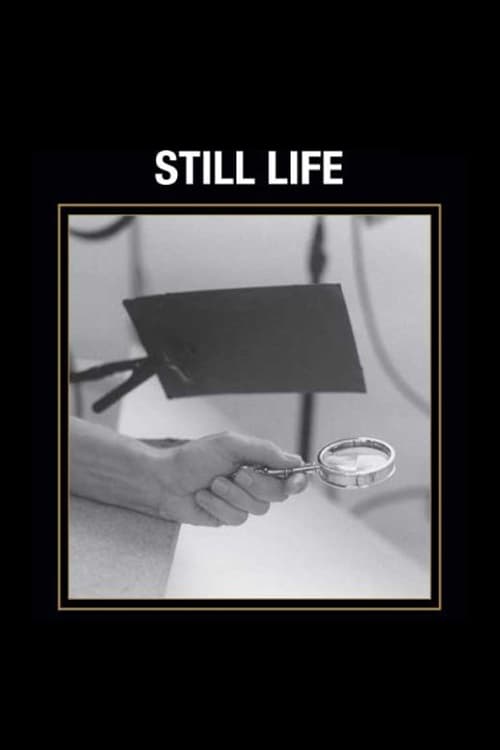
According to Harun Farocki, today's photographers working in advertising are, in a way, continuing the tradition of 17th century Flemish painters in that they depict objects from everyday life - the "still life". The filmmaker illustrates this intriguing hypothesis with three documentary sequences which show the photographers at work creating a contemporary "still life": a cheese-board, beer glasses and an expensive watch.
A man gets on a train to Cologne. Inspired by a poem by Rolf Dieter Brinkman.
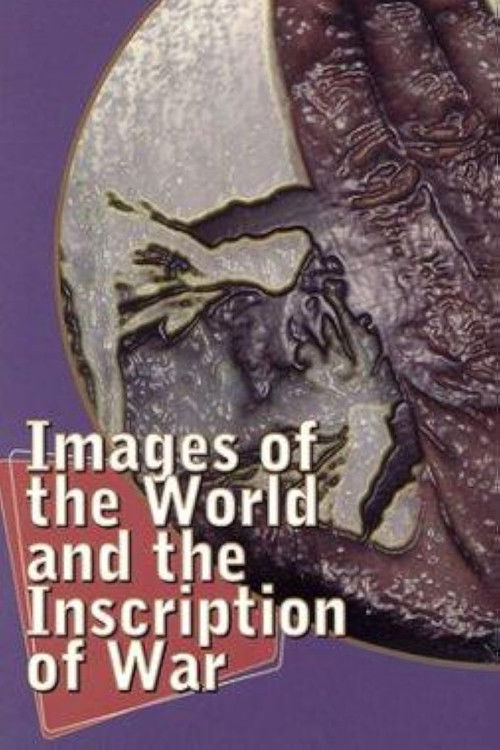
Farocki’s intriguing and troubling film explores the processes of visual perception and how they affect our understanding of history and society. In a work reminiscent of the writings of Paul Virilio and Michel Foucault, Farocki examines a range of phenomena including aerial reconnaissance photos of the Auschwitz concentration camp.
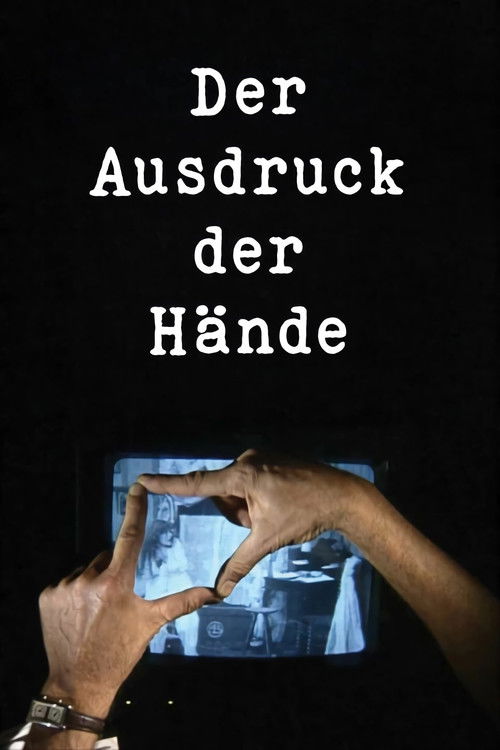
Historically, the cinema close-up was initially employed to convey emotions through facial expressions. But soon filmmakers also began focusing their attention on hands. Using film extracts, Farocki explores this visual language, its symbolism, Freudian slips, automatisms and its music. Often, hands betray an emotion which the face tries to dissimulate. They can also function as a conduit (exchanging money) or witness to a form of competence (work).
This Harun Farocki film shows the creation of a picture on which the artist worked for nine weeks. Sarah Schumann lives in Berlin and is a pioneer of the feminist scene. 1977 together with several other artists she organized the first large exhibition in which only work by women was shown. Sarah Schumann paints figuratively, that is to say she has developed a technique using layers of collage and painting worked on top of and into one another. Regarding a picture becomes an adventure. (harunfarocki.de)
An unconventional essay film that interrogates the visual and ideological legacy of the Vietnam War. Blending staged scenes, archival footage, photographs, and philosophical dialogue, the film follows various characters — including an American soldier captured by North Vietnamese villagers — as they reflect on violence, memory, and image-making. Set partly in West Berlin and partly in reconstructed spaces representing Vietnam, the film avoids traditional dramatic narrative in favor of a fragmented montage of voices, documents, and reenactments. Interweaving love stories, political debate, and historical commentary, Farocki creates a critical reflection on how war is represented, seen, and imagined, both in cinema and in public consciousness. The result is a complex meditation on images as weapons and instruments of perception.
A look at how mall producers design malls in order to maximise traffic and sales.
The film documents the work of an anti-authoritarian and self-organized school store in Witzlebenstraße in Berlin-Charlottenburg, which emerged as a critique of the development of children's stores. The film shows how the teachers discuss the conversion of open spaces into playgrounds with the children and how the children jointly prepare the publication of their newspaper "Radau". The concept of the children's stores was developed by the Action Council for the Liberation of Women, which emerged from the Socialist German Student Union (SDS), at the Free University of Berlin (FU) and was organized as self-help from January 1968. Helke Sander was one of the co-founders of the Action Council.
A film based on the poem of the same name by Georg Heym (1911).
An exploration of how the U.S. military employs video game technology to train troops for war. In A Sun With No Shadow, Farocki calls attention to the subtle differences between the simulations for combat training and PTSD. With the former, the sun can be programmed to cast shadows in the virtual combat zones, while the latter, less expensive technology does not offer this feature.
Single is not a theoretical treatise; it just uses clips to show how a single is produced. The song is Time to Love, the singers call themselves Witchcraft. Also involved are the composer, arranger, producer, the studio musicians and later on the strings. At the beginning the off camera narrator points out a scandalous discrepancy. The film crew spent two days in the recording studio observing a three minute piece of music being produced. The film itself condenses the duration of production: 15 minutes into the film, the narrator announces that the producers are satisfied with the basic backing-track, after a four hour test. After 24 minutes we learn that the crew has left the studio after nine hours filming, whilst work on the guitar tracks continued for some hours.