Tony Cokes
Directing
Biography
Tony Cokes works in video and multi-media installation. Juxtaposing re-edited broadcast and archival footage with quotations in the form of texts and voiceovers, Cokes’s experimental documentaries explore the ideological implications of media representation and rhetoric. His work foregrounds theoretical questions of racial and sexual difference, enunciation, and history.
Known For

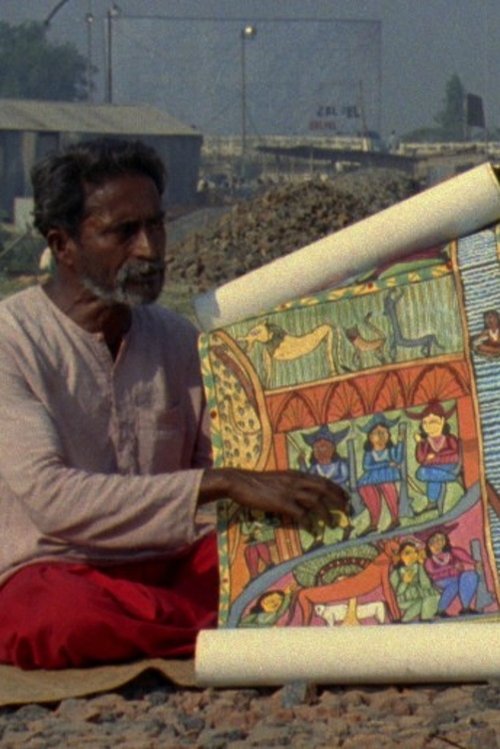
A personal film about a city that may only exist in a film or on TV; a film about various dreams about Calcutta. It starts with a variation on the first image of Francis Ford Coppola's ‘Apocalypse Now’ and takes the spectator along through a strange file full of ideas and images of the city. Some images come from the North - Hollywood films and European television. The commentators are a local, traditional painter and an Afro-American video-artist from New York. [Echo Park Film Center // LA FilmForum]
Tales from the Planet Kolkata

In this meditation on contemporary race relations, two black men discuss in voiceover certain “casual” events in life and cinema that are unnoticed or discounted by whites—gestures, hesitations, stares, off-the-cuff remarks, jokes—details of an ideology of repressed racism.
Fade to Black
Evil.35: Carlin/Owners (2012), uses text from comedian George Carlin set to music by the post-punk band Gang of Four.
Evil.35: Carlin / Owners

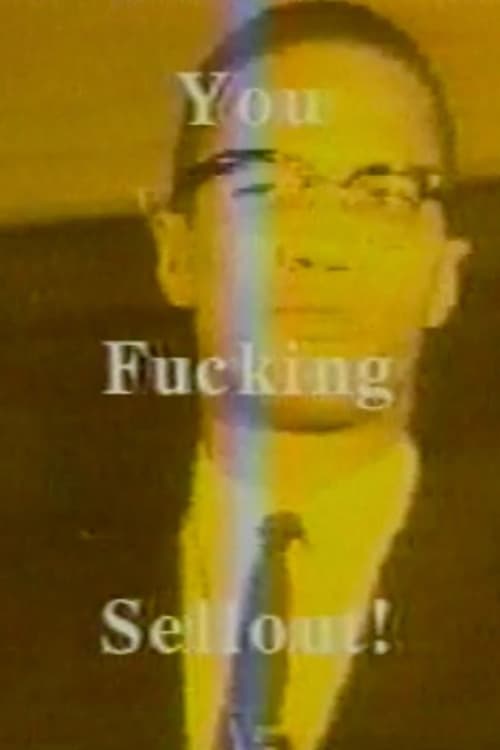
No Sell Out employs desktop video to position images of Malcolm X in tension with commercial culture. It is a result of a series of loaded questions we ask ourselves, and now wish to impose on viewers. Mr. X is the serialized signifier that sparks problematic readings and profits in rap music, “political art,” and fashionable sportswear. Is X the sign of a meaningful difference, or just another hip style thang? Appropriating an MTV-like format to critique and question the capitalist commodification of Malcolm X’s subversive politics, X-PRZ sets computer-manipulated imagery of Malcolm X against advertising logos, archival footage, TV imagery, and a propulsive soundtrack of rock music by R.E.M. and Nine Inch Nails. – Tony Cokes
No Sell Out

The second part in Cokes's Shrink! trilogy in which he "shrinks" criticism.
Shrink! 2.1-4
"Evil.11 (The Katrina Debacle) is a text animated essay about the Bush Administration's response to the 2005 Hurricane Katrina disaster. The text is based on an e-mail I received in Korea in the immediate aftermath of the events. Juxtaposing three songs from diverse pop musical genres with minimal graphic and textual animation techniques, the video reframes a highly charged emotional and political reading of the disturbing events, its media imagery, and the deeply flawed presidential reaction."
Evil.11: The Katrina Debacle

Evil.9 combines an Internet-circulated hip-hop music video by the Canadian-German artist Mocky with an Associated Press text outlining the effect of the U.S.A. Patriot Act on the basic rights of U.S. citizens. Cokes writes: "Our unwillingness to confront the implications of our acts and the consequences of our history represent failures to take responsibility." [Overview courtesy of Electronic Arts Intermix]
Evil.9: (mmmfs) Fundamental Changes
Writes Cokes, "Evil.12 is a 12-minute video animation with sound. The text is excerpted from Brian Massumi's essay 'Fear (The Spectrum Said),' which discusses the Bush Administration's terror alert color-coding system as a method to modulate public affect via media representation. Aimed ultimately at producing a 'startle without a scare,' the Department of Homeland Security's terror alert system is framed as a governmental attempt to install a self-perpetuating, irrational fear mechanism in the public psyche. The insertion of a soundtrack by Modeselektor with uncanny vocals from Paul St. Hilaire (remixed by Dabrye) seeks to double (ghost) and thereby underline the point of Massumi's complex media textual analysis."
Evil.12.edit.b (fear, spectra & fake emotion)

Taking its name from The Notwist’s 1998 album (and no doubt also riffing on the informal term for a psychoanalyst), the ‘Shrink’ videos depict text overlaid on found footage of a pre-9/11, Rudolph Giuliani-era New York skyline. The same four songs – ‘Chemicals’, ‘No Encore’, ‘Shrink’ and ‘Your Signs’ – score a panoply of texts ranging from Susan Buck-Morss’s tome on Walter Benjamin, Dialectics of Seeing (1989), to a 1988 interview between art historian Kellie Jones and Hammons, whose blunt rejection of white cultural imperialism plays against The Notwist’s strummy guitars and rattling electronic beats. This sensory overload of music and text illustrates Cokes’s own media politics and his ideas about labour and creativity. ‘Don’t you know’, reads one of Hammons’s responses, scrolling a bit too fast, ‘chasing these stories is what it is?’ [Overview courtesy of Frieze]
Shrink! 1.1-4

The third part of Cokes's Shrink! trilogy in which he "shrinks" criticism.
Shrink! 3.1-2

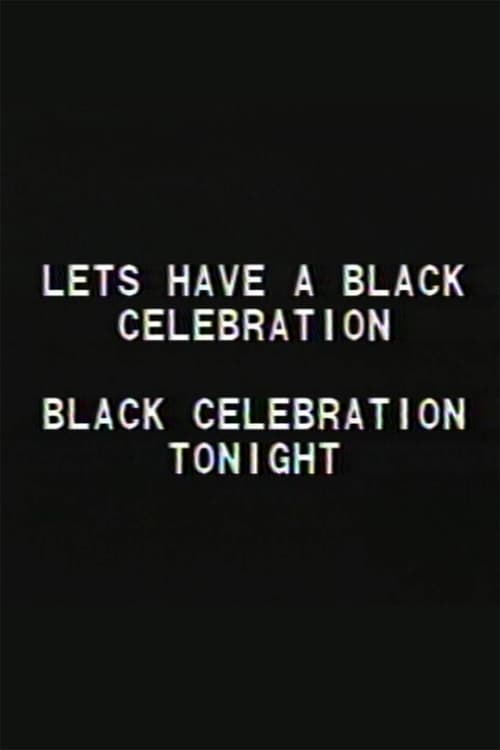
This engaged reading of the urban black riots of the 1960s references Guy Debord’s Situationist text, “The Decline and Fall of the Spectacle-Commodity Economy,” Internationale Situationniste #10 (March 1966). Along with additional commentary adapted from Barbara Kruger and musicians Morrissey and Skinny Puppy, the text posits rioting as a refusal to participate in the logic of capital and an attempt to de-fetishize the commodity through theft and gift. Cokes asks, “How do people make history under conditions pre-established to dissuade them from intervening in it?”
Black Celebration
Starting with a consideration of the Tompkins Square Park Riot of 1988, in New York’s East Village, Cokes’ video expands to a broader critique of the role artists have come to play as a force of gentrification in cities worldwide.
B4 & After the Studio Pt 1

Writes Cokes: "In 1984 I conceived of the idea of producing a documentary that framed its own devices. I was interested in how a woman, specifically a Black woman, would speak in a television context." In The Book of Love, Cokes' mother recounts her life through interview, stories, and song, effectively re-presenting history through the personal. Through intimate subjectivity, Cokes attempts to understand his own present and history by tracing/retracing the life of his mother. - EAI
The Book of Love

Video work on the Civil Rights Movement borrowing its core text from “Notes from Selma: On Non-Visibility” by the Alabama collective Our Literal Speed, mixing this text with lyrics and soundtracking by singer and songwriter Morrissey.
Evil.27: Selma

"Ad Vice consists of a succession of colored projection surfaces with segments of text from the worlds of advertising, sport and popular culture." - Anita De Groot
Ad Vice
“Evil 16 Torture Music,” stylized as “Evil.16 (Torture.Musik),” 2009-2011
Evil.16 (Torture.Musik)

Evil.5: Grin and Bear (No Responsibility Mix) continues Cokes’s investigation of the uses of appropriated text and pop music as a form of political critique. Employing a deliberately didactic approach, Cokes challenges the Bush administration’s policies and the war in Iraq. Statements on the Iraq war and Bush’s “war on terror” by Donald Rumsfeld, Colin Powell, and Richard Clarke, among others, are displayed as on-screen text against flat bands of colour. The graphic presentation and accompanying pop soundtrack suggest the strategies of commercial advertising.