Richard Cohn-Vossen
Directing
Known For
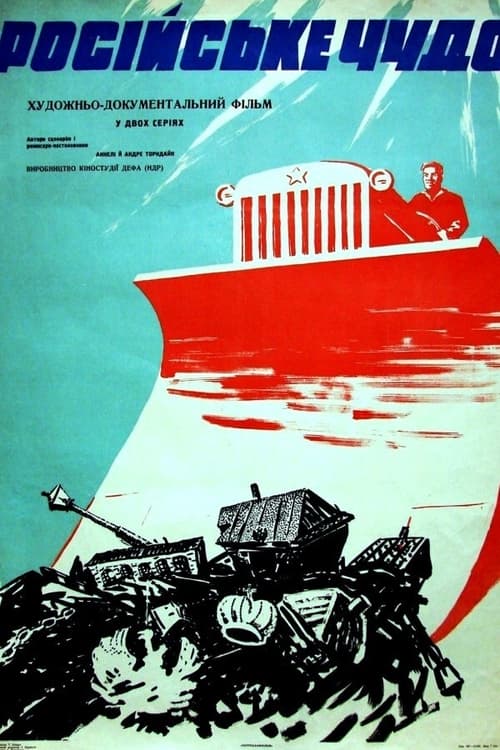
A two-part East German documentary tracing Russia’s transformation from the Tsarist Empire to the Soviet Union, from the 1917 October Revolution to the achievements of the space program. Directed by Andrew Thorndike and Annelie Thorndike, the film assembles extensive archival footage to chart political upheaval, ideological consolidation, and technological ambition in twentieth-century Russia. Produced by DEFA and first broadcast on East German television in 1963.
The Russian Miracle
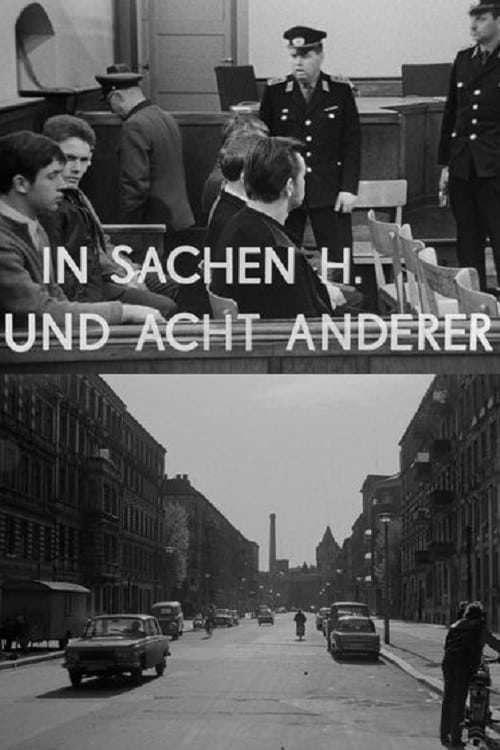
Documentary about juvenile delinquency in East Germany.
The Case of H. and Eight Others
A documentary about Monika Töpper, a young woman in Gebersdorf, Thuringia, who has cared for her two brothers and elderly father since her mother’s death in 1970. Trained as a porcelain maker instead of the nanny she once dreamed of becoming, she channels her creative spirit into her craft yet yearns for a “big” life beyond her village. Noticing her leadership, the factory’s Party secretary recruits her as an FDJ candidate; she wins a seat on the district Health and Social Welfare Commission. There, Monika champions the needs of a local nursing home, fulfilling one of the great tasks she once only imagined. Torn between duty to her family, her budding political role, and her boyfriend’s ambitions, she realizes that to pursue true fulfillment she must eventually leave Gebersdorf—yet for now remains its devoted daughter.
Monika
The film’s subtitle identifies it as a “study of the constructive discontent of a composer”. It is a portrait of the pugnacious musician Paul Dessau (1894 – 1979), who was controversial in East Germany, as a teacher. It follows the composer as he rehearses the “Bach Variations” with the Berlin state opera orchestra, as well during classes at the Polytechnic School I in Zeuthen, where he strives to teach the students a critical attitude. In an interview, Dessau bemoans the simplification of artistic media and elucidates the meaning and necessity of “hard sounds in an era that is not soft”. As we see when he works, “pleasure requires effort” … “art is never comfortable. Building socialism is not comfortable at all. That’s why I’m in favour of the uncomfortable”.
Paul Dessau

Documentary reports on night workers in the German Democratic Republic in the fall of 1973. The camera provides insights into the difficult and often bleak work during the night hours. Examples of work in a large bakery, in a police call center, in a railroad signal box, in a steel and coking plant and finally in a power station show that the city must continue to live at night. Apart from two short commentaries at the beginning and end of the documentary and a few musical sounds, the atmosphere of the workplace captured in each case is only rarely underpinned with speech.
Nachtarbeiter
During the Battle of Stalingrad, five German soldiers and officers are taken prisoner of war by the Soviets. In an interview, they talk about the fear of retribution, the question of guilt and the gradual shattering of an enemy image. The process of their rethinking is also due to their encounter with the "National Committee Free Germany". Pilot officer Charisius got into conversation with the Soviet writer Fedin in the camp. Decades later, Charisius remembers it. Pictures of the destroyed Stalingrad and scenes of the men in their present-day environment complement the conversation.